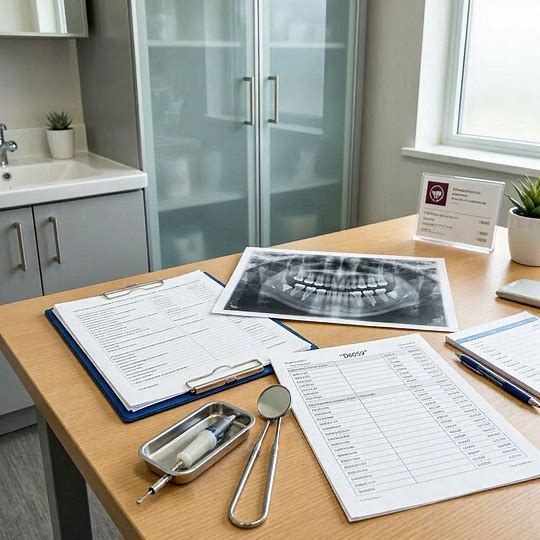
ada dental codes australia
Dental treatment involves a language all its own. When you sit in the chair and hear your dentist call out numbers like “532” or “613,” you are hearing the backbone of dental administration. In Australia, we do not use the American Dental Association (ADA) codes you might read about online. We use the Australian Schedule of Dental Services and Glossary. However, the term “ADA dental codes Australia” has become a common search phrase because many patients and international practitioners look for a direct translation. This guide clears up that confusion. We will explore exactly how dental coding works in Australia, what the item numbers mean, how they affect your wallet, and how they differ from the American system. You will walk away knowing exactly what those numbers on your treatment plan represent.
The Foundation of Dental Coding in Australia
Who Controls the Codes?
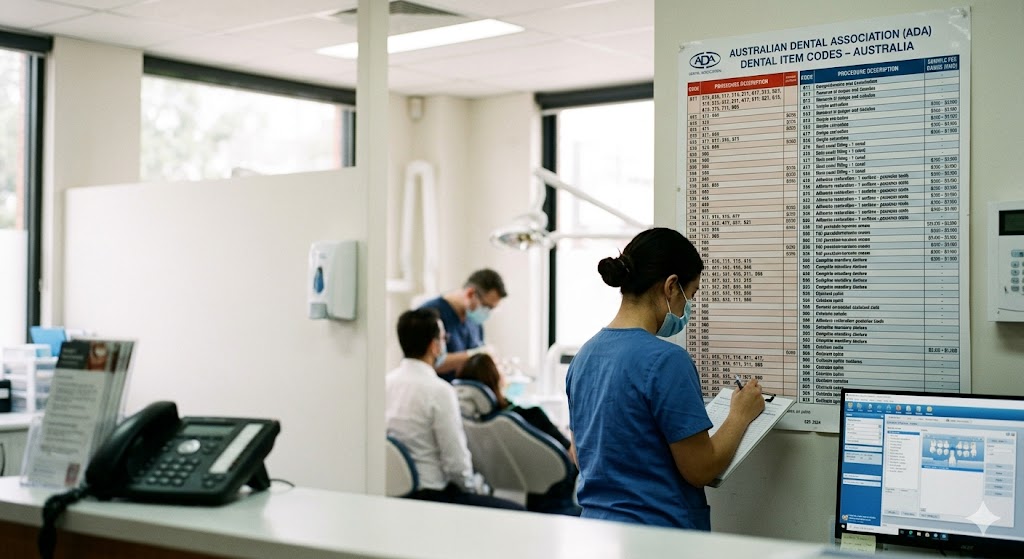
The Australian Dental Association (ADA) is the peak professional body for dentists in Australia. They publish a reference text called The Australian Schedule of Dental Services and Glossary. Most people simply call it “The Schedule.” This document is not a government regulation. It is a guide maintained by the profession. The Schedule assigns a unique three-digit code to every recognized dental procedure. It also provides a strict definition for each service. This ensures that a crown placed in Sydney uses the same descriptor as a crown placed in Perth.
The History and Purpose of the Schedule
Dentistry in Australia needed a unified language. Before standardized coding, communication between practitioners, laboratories, and insurers was chaotic. The ADA introduced the Schedule to bring order. They update it regularly, usually every year or two, to reflect new technology and materials. The purpose of the Schedule is threefold: to facilitate accurate record-keeping, to enable clear communication, and to provide a benchmark for fee determination. It is a living document that evolves as dentistry evolves.
Is the Schedule a Law?
No. The Australian Schedule of Dental Services and Glossary is not a legal document. It is a professional guideline. However, health funds and government programs like the Child Dental Benefits Schedule (CDBS) rely on it heavily. They base their rebates on the item numbers listed in the Schedule. If your dentist uses a code that does not exist in the current Schedule, your health fund will likely reject the claim. This makes the Schedule a de facto standard for the entire industry. You must understand that compliance with the Schedule is voluntary, but functioning outside it is commercially impossible.
The Structure of the Australian Dental Schedule
The Three-Digit System Explained
Australian dental codes almost always consist of three digits. You will see some with a fourth digit or a letter prefix in specific hospital settings, but general practice revolves around the three-digit core. The numbers are grouped into logical ranges based on the type of service. The system starts with diagnostic services in the 000s and works its way up to complex surgical procedures in the 900s. This logical grouping helps you understand the nature of your treatment instantly, even before you read the description.
The Major Code Ranges
The following table breaks down the primary structural divisions of the Schedule. This overview will help you navigate the massive list of codes.
| Code Range | Service Category | Common Example |
|---|---|---|
| 001 – 099 | Diagnostic Services | Comprehensive oral examination (011) |
| 100 – 199 | Preventive Services | Removal of calculus (114) |
| 200 – 299 | Restorative Services | Tooth-coloured adhesive restoration (532) |
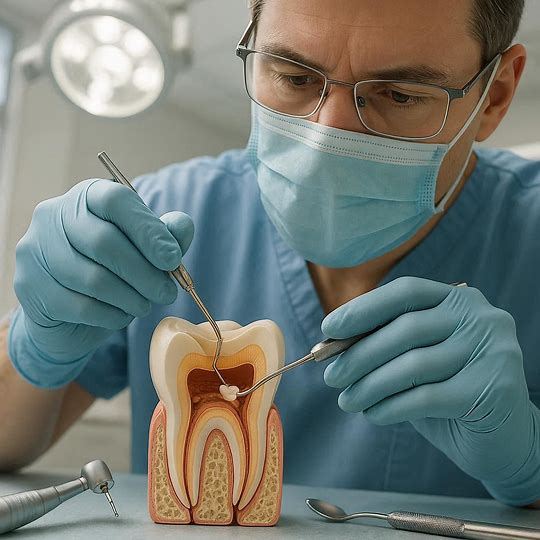
| 300 – 399 | Endodontics | Root canal therapy preparation (415) |
| 400 – 499 | Periodontics | Gingival curettage (211) |
| 500 – 599 | Prosthodontics (Crowns/Bridges) | Full metal crown (613) |
| 600 – 699 | Oral Surgery | Removal of a tooth (311) |
| 700 – 799 | Orthodontics | Comprehensive treatment (881) |
| 800 – 899 | General/Additional Services | Dental splinting (846) |
| 900 – 999 | Implantology | Tissue-integrated implant (012) |
Understanding the “Definitions and Rules”
Every code in the Schedule comes with a strict definition. The ADA does not allow ambiguity. For example, code 532 is not just “a filling.” The glossary defines it specifically as “Direct tooth-coloured adhesive restoration—posterior tooth, involving occlusal and proximal surfaces, where the restoration extends into at least one-half of the intercuspal distance.” Your dentist cannot use 532 for a tiny buccal pit filling. If they do, they risk an audit. This precision protects you from being charged for a complex procedure when you received a simple one.
Diagnostic Services (Codes 011 – 099)
The Entry Point to Your Mouth
Diagnostic codes cover everything needed to find out what is wrong. They form the foundation of your treatment plan. Without a diagnostic code, subsequent treatment appears unfounded. The most common code in this range is 011, which covers a comprehensive oral examination. You usually incur this charge on your first visit to a new practice. It involves a full charting, a soft tissue assessment, and a treatment plan discussion.
Periodic vs. Comprehensive
A periodic exam (012) differs from a comprehensive exam. The periodic exam is shorter. It is intended for a patient of record who returns for a routine check-up. The comprehensive exam (011) is more in-depth and incurs a higher fee. Dentists often take radiographs during a diagnostic visit. The most common radiographic codes are 022 for a single periapical film, 025 for a bitewing, and 037 for a panoramic film (OPG). Cone-beam computed tomography (CBCT) scans fall under more complex codes depending on the field of view.
Why Detailed Charting Matters
When your dentist calls out a series of codes like “15 MO, 46 DO” during the exam, they are mapping your mouth. They record existing restorations, missing teeth, decay, and cracks. This chart becomes a legal document. It is your baseline. If a dispute arises later about whether a tooth was damaged before treatment, the chart protects you. You should always ensure your dentist performs a thorough examination and records everything accurately.
Preventive Services (Codes 100 – 199)
More Than Just a Clean
Preventive care keeps you out of the restorative cycle. These codes cover scaling, cleaning, fluoride application, and oral hygiene instruction. The most commonly used code in this category is 114, which refers to the removal of calculus and plaque. A scale and clean is rarely a single code. It often involves a combination of codes to reflect the complexity of the deposit removal.
Scale and Polish: The Complexity Matrix
A simple removal of supragingival calculus is a completely different code from deep subgingival debridement. The Schedule requires the dentist to select the code that matches the clinical difficulty.
Standard Preventive Code Usage
| ADA Code | Descriptor | Clinical Context |
|---|---|---|
| 111 | Removal of plaque and/or stain | Minimal deposit, primarily cosmetic polish |
| 114 | Removal of calculus—first visit | Generalized supragingival deposits |
| 115 | Removal of calculus—subsequent | Lighter deposits in a well-maintained mouth |
| 222 | Subgingival debridement (per tooth) | Deep cleaning for active periodontitis |
Fluoride and Fissure Sealants
Preventive codes also cover remineralization. Code 121 applies to a topical fluoride application, usually as a gel or varnish. Fissure sealants fall under codes 161 for a fissure sealant on a deciduous tooth and 162 for a permanent tooth. A fissure sealant flows a resin into the deep grooves of a back tooth to prevent decay. You should know that health funds view fissure sealants differently. Some funds limit the number of sealants they will pay for in a single year.
Restorative Services (Codes 200 – 299)
The Art of Rebuilding Teeth
Restorative services repair the damage caused by decay or trauma. This section of the Schedule is the busiest. It details every type of filling material and the specific tooth surfaces involved. The introduction of adhesive dentistry has made this section complex. You cannot simply bill a “filling.” You must specify the number of surfaces and the material used.
Amalgam vs. Composite Resin
Amalgam fillings are silver in color. Composite resins are tooth-colored. The Schedule assigns different ranges to these materials. Amalgam restorations generally sit in the 510s, while adhesive (composite) restorations occupy the 520s and 530s.
Amalgam Restoration Codes
| Code | Tooth Type | Surfaces |
|---|---|---|
| 511 | Posterior tooth | One surface |
| 512 | Posterior tooth | Two surfaces |
| 513 | Posterior tooth | Three surfaces |
| 514 | Posterior tooth | Four surfaces |
| 515 | Posterior tooth | Five surfaces |
Adhesive (Composite) Restoration Codes
| Code | Tooth Type | Surfaces |
|---|---|---|
| 521 | Anterior tooth | One surface |
| 522 | Anterior tooth | Two surfaces |
| 523 | Anterior tooth | Three surfaces |
| 531 | Posterior tooth | One surface |
| 532 | Posterior tooth | Two surfaces |
| 533 | Posterior tooth | Three surfaces |
| 534 | Posterior tooth | Four surfaces |
| 535 | Posterior tooth | Five surfaces |
The Surface Rule
A three-surface composite filling on a back tooth (533) costs significantly more than a one-surface filling (531). The fee rises because the complexity and time increase exponentially with each additional wall of the tooth the dentist rebuilds. When you look at your bill, check the number of surfaces. A misunderstanding often occurs here. A patient might think they had “one filling,” but if it involved three sides of the tooth, the dentist legitimately bills a three-surface code.
Endodontic Services (Codes 300 – 399)
Saving the Nerve or Removing It
Endodontics deals with the inside of the tooth—the pulp. When decay reaches the nerve, you cannot simply fill the tooth. You need a pulp cap, a pulpotomy, or a root canal treatment. The codes in the 400s and 300s cover these procedures.
Direct vs. Indirect Pulp Capping
If the decay is very deep but hasn’t exposed the nerve, the dentist might place a protective liner. This is an indirect pulp cap. If the nerve is microscopically exposed, they might place a direct pulp cap. The code for the application of a base or liner is 214. A direct pulp capping procedure, which is a more deliberate attempt to save the nerve, uses a specific endodontic code.
The Root Canal Code Breakdown
Root canal treatment is billed per canal, not per tooth. A front tooth (incisor) usually has one canal. A molar can have three, four, or even five canals. Your bill reflects the number of canals negotiated and filled. The primary codes are 415 for preparation of the root canal, 416 for obturation (filling) of the canal, and 417 for a complete treatment combining both. The tooth location modifies the code.
Root Canal Code Modifiers
| Code Range | Tooth Group |
|---|---|
| 411 – 413 | Incisors and Canines (1 canal typical) |
| 414 – 416 | Premolars (1-2 canals typical) |
| 415 – 417 | Molars (3+ canals typical) |
Important Note: A common cause of bill shock is the molar root canal. A patient hears “you need a root canal” and expects a fee of $800. The bill arrives for $2,400 because the molar had three canals, and each canal required a separate 415/416 instrumentation and obturation charge.
Periodontal Services (Codes 400 – 499)
The Support System of Your Teeth
Periodontics treats the gums and bone supporting your teeth. Bleeding gums, receding bone, and loose teeth fall into this category. The codes here move beyond a simple scale and clean. They involve deep debridement and surgical intervention.
Non-Surgical Periodontal Therapy
Code 222 is a critical code. It represents subgingival debridement per tooth. This is not a routine clean. It is a deep scaling, often under local anesthesia, to remove calculus from the root surface. You cannot bill a full mouth of 222s without clinical justification. The dentist must record pocket depths and bleeding points. A “periodontal chart” is mandatory for these claims. Some codes, like 221, cover quadrant or full-mouth debridement in specific contexts, but health funds increasingly demand per-tooth coding for precision.
Surgical Codes
When deep pockets persist, surgery becomes necessary. Flap surgery (codes 324, 325, 326) involves lifting the gum away to clean the root and reshape the bone. Gingivectomy (313) removes excess gum tissue. These codes are site-specific. A flap surgery on a single tooth uses a different code than a quadrant flap. You should expect a detailed surgical narrative with any periodontal claim to ensure the health fund recognizes the medical necessity.
Prosthodontics: Crowns and Bridges (Codes 500 – 599)
Restoring the Coronal Structure
When a tooth is too broken down for a filling, you need a crown (cap). Prosthodontic codes cover everything from a simple crown to a complex bridge that replaces a missing tooth by anchoring to adjacent teeth. This is the most expensive section of the Schedule for a reason—it combines laboratory fees, high-skill tooth preparation, and expensive materials.
The Crown Material Spectrum
You cannot simply bill “a crown.” You must specify the material. A full cast metal crown uses a different code from a porcelain fused to metal (PFM) crown. A fully ceramic crown, like a lithium disilicate (e.max) or zirconia crown, uses yet another specific code.
Crown Procedure Codes
| ADA Code | Material and Type |
|---|---|
| 613 | Full metal crown—precious or non-precious |
| 615 | Porcelain fused to metal crown (PFM) |
| 618 | Full ceramic crown (indirect) |
| 643 | Veneer (direct or indirect) |
Bridgework and Pontics
A bridge replaces a missing tooth. The code for a bridge retainer (the crown on the anchor tooth) is similar to a single crown code. The replacement tooth is a pontic. The pontic code varies depending on the material. For a PFM bridge, you will see codes for the retainers and a separate code, usually 650, for the pontic. A three-unit bridge (two retainers, one pontic) consists of three separate item numbers on your treatment plan.
The Veneer Code
A veneer is a thin layer of porcelain or composite bonded to the front of a tooth. Code 643 covers a direct or indirect veneer. Direct veneers are sculpted freehand by the dentist using composite. Indirect veneers are fabricated in a lab from porcelain. The rebate from your health fund is often identical for both, even though the indirect method costs significantly more due to the laboratory fee. You must discuss this gap with your dentist.
Oral Surgery (Codes 600 – 699)
Exodontia: The Removal of Teeth
Oral surgery codes predominantly cover the removal of teeth. The complexity varies immensely. A simple extraction of a mobile tooth is vastly different from the surgical removal of a deeply impacted wisdom tooth completely encased in bone. The Schedule reflects this.
The Simple Extraction
A simple extraction uses forceps only. The dentist does not need to raise a flap of gum or remove bone. These codes fall in the early 300s and are relatively inexpensive. The procedure is quick, and the healing is straightforward.
The Surgical Extraction
When a tooth is broken down to the gum line, ankylosed (fused to bone), or deeply impacted, the dentist must perform surgery. This involves an incision, the removal of bone with a drill, and sometimes sectioning the tooth into pieces. The codes for surgical removal are 322 and 323, depending on the complexity and time.
Extraction Code Complexity
| Code | Procedure Description | Typical Use Case |
|---|---|---|
| 311 | Removal of a tooth—simple | Mobile or fully erupted tooth |
| 322 | Surgical removal—first level | Requires flap and bone removal |
| 323 | Surgical removal—complex | Full bony impaction, tooth sectioning |
| 324 | Wisdom tooth—soft tissue | Partial bony, requires flap |
| 326 | Wisdom tooth—full bony | Complete bony impaction |
Warning: Wisdom tooth removal codes are notoriously misunderstood. A tooth that is visible in the mouth but covered by a gum flap (operculum) is not the same as a tooth buried deep in the jawbone. The pre-operative radiograph (OPG, code 037) determines the correct code. Do not accept a surgical fee unless you have seen the x-ray confirming the tooth’s position.
Orthodontics (Codes 700 – 799)
Moving Teeth, Not Just Straightening Them
Orthodontic codes cover the treatment of malocclusion (bad bites). This is not just about aesthetics. Orthodontics corrects functional issues that cause wear and jaw pain. The codes are broad because treatment spans years and involves many procedures bundled into a single fee.
Comprehensive vs. Simple
Code 881 covers comprehensive orthodontic treatment. This is the “braces” code, whether metal, ceramic, or clear aligners. It includes all adjustments, retainers, and emergency visits during the active treatment phase. Simple treatment, such as a removable plate to move a single tooth, falls under different, much cheaper codes. Anterior alignment only (the “social six”) also has a separate, lower code.
The Payment Structure
Orthodontic treatment creates a unique billing situation. The dentist provides the service over 18 to 24 months. The health fund pays the rebate over the same period. Your treatment plan will specify the total fee for code 881, but the claiming happens in installments. You must understand that if you terminate treatment early, you might owe the practice the remaining balance, and your health fund will stop paying rebates instantly.
Implantology (Codes 900 – 999)
The Modern Replacement Solution
Dental implants have their own dedicated section, reflecting their specific nature. A dental implant is a titanium screw that replaces the tooth root. A crown, bridge, or denture then attaches to this screw. The coding separates the surgical placement from the prosthetic restoration.
The Surgical Phase
Code 012 covers the surgical placement of the first implant. Additional implants in the same arch use a different code. A complex placement requiring a bone graft (sinus lift, code 796) or connective tissue graft is billed on top of the implant code. You must distinguish between the implant body and the abutment. The abutment is the connector that screws into the implant to hold the crown. The abutment has its own code.
The Restorative Phase
Once the implant integrates with the bone (osseointegration), you need a crown. The code for an implant-supported crown is distinct from a tooth-supported crown. Code 661 is a common code for a single implant crown. A full-arch implant bridge, like an “All-on-4,” uses prosthesis codes that are often quoted as a global fee but internally itemized.
Standard Implant Codes
| Code | Component |
|---|---|
| 012 | Surgical placement of first implant fixture |
| 014 | Additional implant fixture |
| 661 | Implant-supported crown |
| 672 | Implant-supported bridge retainer |
The Critical Difference: ADA (USA) vs. ADA (Australia)
A Tale of Two Codes
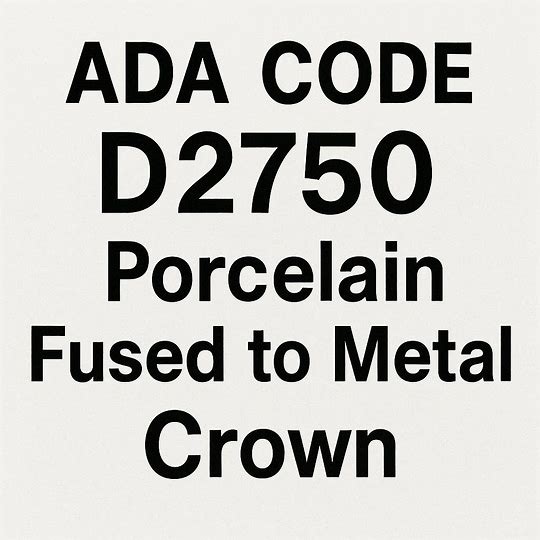
This is the heart of the confusion that brings people to search for “ada dental codes australia.” The American Dental Association publishes the Code on Dental Procedures and Nomenclature (CDT). These codes are alphanumeric and start with a “D.” For example, D1110 is an adult prophylaxis in the USA. The Australian Schedule uses purely numeric, three-digit codes. They are not interchangeable. A D2751 in the USA is a PFM crown. In Australia, a PFM crown is 615. If you walk into an Australian practice and ask about a D-code, the receptionist will look at you blankly.
USA vs. Australia Code Comparison
| Procedure | USA Code (CDT) | Australian ADA Code |
|---|---|---|
| Comprehensive Exam | D0150 | 011 |
| Adult Prophylaxis (Clean) | D1110 | 114 |
| Anterior Composite (1 surface) | D2330 | 521 |
| Posterior Composite (2 surfaces) | D2392 | 532 |
| PFM Crown | D2751 | 615 |
| Molar Root Canal | D3330 | 417 |
| Surgical Extraction | D7210 | 322 |
Why the Confusion Persists
International travel and dental tourism create the problem. A patient from the USA might bring a treatment plan from their home dentist listing D-codes. They expect the Australian dentist to follow the same list. The Australian dentist must clinically re-examine the mouth and generate a new, unique plan using the Australian Schedule. Practice management software in Australia is programmed with the Australian ADA codes, not the American CDT codes. A claim submitted to an Australian health fund with a D-code will fail immediately.
The Australian Dental Health Insurance Matrix
How Health Funds Use ADA Codes
Private health insurance in Australia relies entirely on the Australian ADA Schedule. Each health fund creates a table of benefits. They list every code they recognize and assign a rebate to it. The rebate is a fixed dollar amount, not a percentage of the fee. The dentist sets their own fee. The fund rebate is a contribution. The difference is your “gap” payment.
The Concept of UCR
Health funds often use the term “Usual, Customary, and Reasonable” (UCR). This is the maximum amount the fund will pay for a specific code. If your dentist charges $200 for a filling (code 532) and the fund’s UCR is $150, the fund pays their percentage of $150, not $200. Your gap payment includes the difference between the dentist’s fee and the UCR, plus the fund’s co-payment. You have no way of knowing the UCR for every code unless you ask your fund specifically before treatment.
Preferred Provider Networks
Major health funds have “preferred provider” or “Members’ Choice” networks. Dentists in these networks agree to accept the fund’s set rebate for certain codes, eliminating or capping your gap payment. This is code-dependent. A dentist might be preferred for preventive codes (114, 121) but not for major restorative codes (615, 618). You must ask: “Are you a preferred provider for my specific item numbers, or just for a check-up?”
The Child Dental Benefits Schedule (CDBS)
Government-Funded Dentistry
The CDBS is a government program providing up to $1,095 in benefits over two years for eligible children aged 2 to 17. The government publishes a specific list of ADA codes that are claimable under CDBS. Not all codes are included. Cosmetic procedures and orthodontics are excluded. The program covers essential care: examinations (011), x-rays (022, 025, 037), cleaning (114), fissure sealants (161, 162), fillings (521-535), and extractions (311).
Bulk Billing Under CDBS
A practice can bulk bill CDBS items. This means the practice accepts the government benefit as full payment. You sign the form, and you pay nothing out of pocket. Some practices do not bulk bill. They charge their full fee, and the government benefit covers a portion. You pay the gap. You must always ask the practice if they bulk bill the CDBS before you schedule the treatment. A practice cannot legally charge you a gap on a CDBS item if they told you they bulk bill.
Reading Your Treatment Plan Like a Pro
The Anatomy of a Quote
A proper treatment plan is more than a single number. It is an itemized document. It lists the tooth number (using the FDI two-digit notation, like 36 or 11), the ADA code, the plain English description of the procedure, and the fee per item. A summary at the bottom shows the total fee, the estimated health fund rebate, and your estimated out-of-pocket cost.
Questions You Must Ask
You have the right to understand every code on your plan. Ask these specific questions:
- “Can you walk me through each ADA code and what it clinically means for this tooth?”
- “Is this fee your standard fee, or is it a preferred provider fee for my fund?”
- “Are there any codes here that my health fund specifically excludes?”
- “If you find decay under an old filling during treatment, what additional code will you use, and how much will it add?”
Key Principle: No dentist should surprise you with a new high-value code during treatment without prior discussion. A patient who asks questions is a protected patient.
The Role of Practice Software
Digital Coding in the Operatory
Modern dental practices use practice management software like Exact (SOE), Oasis, or Dentally. These platforms have the Australian ADA Schedule embedded. The dentist clicks a graphic of a tooth and selects the service from a drop-down menu. This theoretically prevents coding errors. However, the software allows customization. A dentist can activate or deactivate specific codes based on their clinical preferences.
Clinical Notes and Audit Trails
The software links the code to the clinical notes. If a dentist bills a 532 (two-surface posterior composite), the clinical note must describe the preparation, the materials used, and the surfaces involved. In an audit by a health fund or Medicare, the note must justify the code. A note that simply says “filling done” is insufficient for a 532 claim. The software timestamp also proves the service happened on that date.
Specialized Coding Scenarios
The “Core Buildup” Dilemma
A tooth needing a crown often has insufficient structure. The dentist builds it up with a filling material first. This is a core buildup. It has no specific dedicated code in the general three-digit section of the Australian ADA Schedule as a standalone “core buildup” item in the way the USA has D2950. Instead, the dentist bills the appropriate restorative code (e.g., a multi-surface composite like 535) for the buildup. A crown code is then billed on top. Some health funds argue this is dual billing for the same tooth and reject it. You need to check your fund’s rules on same-tooth claims.
Crown Lengthening
If a tooth is broken below the gum line, placing a crown would violate the biological width and cause chronic inflammation. The surgeon performs a crown lengthening. This involves removing small amounts of bone and gum to expose more tooth. The codes for this are periodontal surgical codes. The restorative dentist then bills the crown code weeks later. The health fund sees two distinct procedures on the same tooth by different providers and dates. This is perfectly legitimate but frequently triggers a fund review.
Occlusal Splints for Bruxism
Teeth grinding (bruxism) requires an occlusal splint (night guard). The code is 855. The Schedule defines it strictly. It must be a rigid, processed acrylic splint. A soft, rubbery “bite guard” available off the shelf does not qualify for the 855 code and a health fund rebate. Your dentist must take impressions and send the case to a lab for the 855 code to be legitimate.
The Globalization of Dental Codes
The ISO Standard (ISO 3950)
The International Organization for Standardization (ISO) has a standard for dental coding. The Australian system is closer to the ISO standard than the American CDT system. This is why Australian codes are purely numeric. The global trend is moving toward a unified coding language, but local insurance contracts and professional body histories make total unification difficult. You are unlikely to see a global standard replace the local Schedule anytime soon because the economic infrastructure (rebates, contracts) is too deeply embedded.
Dental Tourism and Code Translation
If you take a treatment plan from Australia to Bali or Thailand, the overseas dentist likely uses the American CDT system or a local variant. You must translate your Australian ADA codes into plain English. Write down “I need a 618, which is a full ceramic crown on tooth 46.” Do not just hand them the numbers. Translation is a clinical risk. The diagnostic standards differ. A “comprehensive exam” (011) in Australia involves a specific protocol. Another country’s comprehensive exam might be a visual glance. Caveat emptor.
Advanced Prosthetic Codes: Removable Prosthodontics
Full and Partial Dentures
Dentures have a massive dedicated code section. A complete maxillary denture uses a code in the 710 range. A partial acrylic denture uses a different code set than a partial cast metal (Cobalt-Chrome) denture. The number of teeth on the denture also modifies the code.
Denture Coding Simplified
| Code Range | Prosthesis Type |
|---|---|
| 711 | Complete maxillary denture |
| 712 | Complete mandibular denture |
| 721 | Partial acrylic denture—1 to 4 teeth |
| 727 | Cast metal partial denture—complex |
Relines and Repairs
A denture base must fit the changing ridge of your bone. A reline (code 751) adds a new layer of acrylic to the tissue side of the denture. A simple repair (code 761) fixes a crack. You cannot claim a reline too frequently. Health funds have “minimum period” rules, often limiting relines to one every two years for the same denture.
Adjunctive General Services
Anaesthesia and Sedation
Pain control codes are adjunctive. They sit alongside the main treatment code. Local infiltration of anaesthetic is usually included in the restorative code and not billed separately. However, relative analgesia (happy gas, code 961) and general anaesthesia (code 962) are distinct billable items. Intravenous (IV) sedation uses its own code. You pay for the surgical procedure and a separate sedation fee.
Emergency and After-Hours Codes
A consultation during a declared after-hours emergency uses a different code. Code 013 is an emergency examination. It is restricted in definition. A walk-in patient with a broken tooth during a fully booked day does not automatically qualify for an emergency code surcharge. The dentist must genuinely be providing the service outside normal hours or during a scheduled break.
The Business of Dental Codes
How Codes Affect Practice Valuation
When a dentist buys or sells a practice, the purchasing dentist examines the “code mix.” A practice that generates revenue primarily from high-value codes like 618 (crowns) and 661 (implants) is worth more than a practice that only bills 114 (cleans) and 531 (one-surface fillings). This internal economics drives practice culture. A practice focused on comprehensive care will naturally itemize in ways that reflect the work’s complexity.
The Coding Ethics Mandate
The ADA’s Code of Ethics is strict. A dentist must not “upcode.” Upcoding means billing for a more expensive or complex service than was actually performed. Billing a 533 (three-surface composite) for a procedure that only touched two surfaces is fraud. Billing a surgical extraction (322) when a simple forceps extraction (311) was performed is a disciplinary offence. Your trust relies on the assumption that the item number matches the clinical reality in your mouth.
Navigating Disputes and Rebates
The Pre-Treatment Estimate
If you doubt your treatment plan’s cost, demand a pre-treatment estimate. Your dentist sends the itemized list to your health fund electronically. The fund returns a breakdown of exactly what they will pay for each code. This removes the guesswork. It binds the fund to that rebate figure, usually for a set period. You take this estimate, review the gap column, and make an informed financial decision.
What to Do When a Claim Is Rejected
A rejection does not mean you were tricked. It often means a simple coding syntax error. A single digit typed incorrectly will cause a “Code not recognized” error. Call the fund. Ask for the specific reason for rejection. Common reasons include a missing pre-existing condition waiting period, an item limit reached (e.g., you already had three periapical x-rays this year), or a lack of clinical documentation. Most rejections are resolvable with a phone call or a revised narrative from your dentist.
A Look to the Future
The Digital Shift
Digital scanning (intraoral scanning) is replacing traditional impressions. The coding for digital workflows is adapting. A conventional impression has a code. A digital scan for a crown currently often gets billed under the same laboratory prescription code, but new specific digital planning codes are emerging. The Schedule will continue to add codes for computer-aided design (CAD) and computer-aided manufacturing (CAM) procedures.
The Movement to Item Transparency
The government is pushing for clearer billing. The “No Gap” schemes are expanding, but they often only apply to a limited list of “friendly” codes. There is increasing pressure on health funds to publish their UCR fees publicly for all codes. If this happens, you will be able to shop for a dentist not just on location but on their compliance with the UCR.
Frequently Asked Questions
Can my dentist use American ADA codes in Australia?
No. Australian health funds and the Australian Dental Association use the Australian Schedule of Dental Services and Glossary. American D-codes will not work for insurance claims in Australia. Your dentist must convert the treatment plan to Australian three-digit codes.
What is the difference between code 511 and 531?
Code 511 is a one-surface amalgam (silver) filling on a back tooth. Code 531 is a one-surface tooth-coloured (composite) filling on a back tooth. The material and associated technique are different.
Does code 114 include a polish?
Clinically, code 114 is the removal of calculus. A polish is a separate procedure using a different code (111). Most dentists combine them and bill the 114 for the calc removal and may write off the 111. Ask your practice.
Why is my root canal so expensive when it’s just one tooth?
A molar root canal uses code 417, which is billed per canal. A molar has three to four canals. Your bill multiplies the base code by the number of canals. This covers the complexity and time of cleaning multiple microscopic channels.
How often can I claim a crown (618) on the same tooth?
Health funds typically set a “minimum lifespan” rule. You cannot claim a replacement crown on the same tooth more than once every 5 years. If the crown fails early due to poor oral hygiene, the fund denies the claim.
Is a surgical extraction (322) always covered by general dental?
No. Surgical extractions often fall under “Major Dental” cover, not “General Dental.” Your rebate depends entirely on your level of ancillary cover. Check your policy’s major dental list.
Summary and Conclusion
The Australian ADA dental coding system is a logical, three-digit language that underpins every dental transaction in the country. It protects you through strict procedural definitions and protects the industry through standardized communication. You can navigate your dental care confidently by understanding the major code ranges, the critical difference from American D-codes, and the way health funds translate numbers into rebates. Knowledge of the Schedule transforms you from a passive patient into an empowered consumer.
Additional Resource:
For the official glossary and a full list of the current Australian Schedule of Dental Services, visit the Australian Dental Association website directly. The ADA regularly updates the resource library for both practitioners and the public.
Disclaimer:
This article provides general information about dental coding conventions and is intended for educational purposes only. It does not constitute clinical, financial, or legal advice. Dental codes and health fund rules change frequently. You must always consult your own qualified dental practitioner for a personal diagnosis and treatment plan, and speak to your private health insurer for specific rebate amounts. Relying solely on this article for medical or financial decisions is not recommended.