Affordable Dental Implants in Pittsburgh
Let’s be honest. When you hear the words “dental implants,” you probably think of a price tag that makes your wallet wince. You are not wrong. Implants are an investment. But here is the good news: affordable dental implants in Pittsburgh are not a myth. They exist. You just need to know where to look and what questions to ask.
Pittsburgh has a strong dental community. From independent clinics to dental schools, options are available for different budgets. This guide walks you through real costs, money-saving strategies, and reputable providers. No fake prices. No hype. Just honest information.
Important note: “Affordable” does not mean “cheap.” A low-quality implant can fail, costing you more in the long run. Always prioritize safety and a qualified provider.
What Are Dental Implants? A Simple Explanation
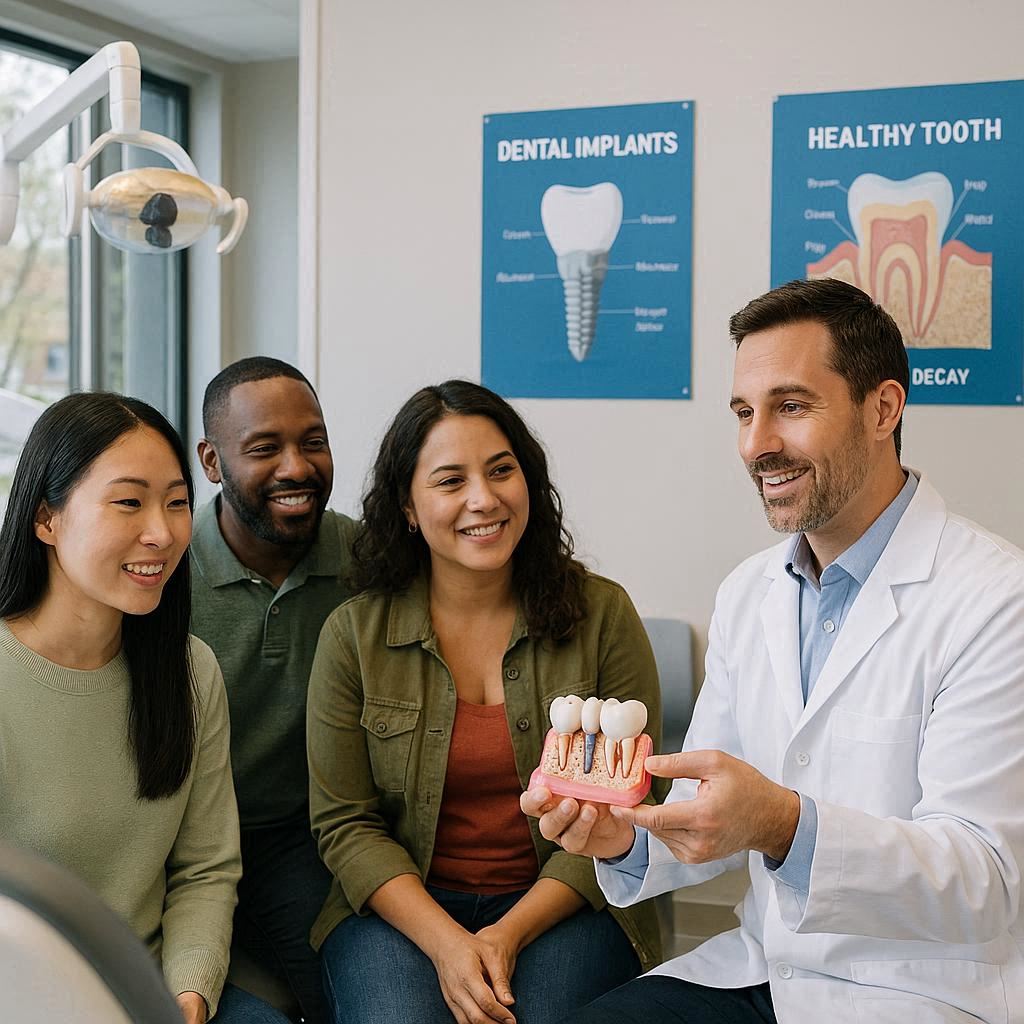
Think of a dental implant as an artificial tooth root. A small titanium post is placed into your jawbone. Over time, the bone grows around it. This creates a rock-solid foundation for a crown (the visible tooth).
Why do people choose implants over bridges or dentures?
- They look and feel like natural teeth.
- They prevent bone loss in the jaw.
- They last 20+ years with proper care.
- They do not damage adjacent healthy teeth.
But yes, they cost more upfront than dentures or bridges. That is where the search for affordability comes in.
How Much Do Dental Implants Actually Cost in Pittsburgh?
Let’s break down real numbers. Prices vary based on the clinic, the dentist’s experience, and your specific needs. But here is a realistic range for Pittsburgh in 2025.
| Treatment Component | Average Cost (Pittsburgh) |
|---|---|
| Single implant (post + abutment + crown) | 3,000–5,500 |
| Implant-supported bridge (3-4 units) | 6,000–12,000 |
| Full arch (All-on-4 or similar) | 15,000–25,000 per arch |
| Implant-retained denture | 8,000–15,000 per arch |
| Bone graft (if needed) | 500–2,500 |
| CT scan (3D imaging) | 250–500 |
These are total costs, including surgery and the final crown. Some clinics advertise $1,500 implants. Read the fine print. That often excludes the crown, the abutment, or the surgical guide. Always ask for an itemized estimate.
Real talk: A full-mouth restoration in Pittsburgh typically runs 30,000–50,000. That is still half of what it costs in cities like New York or San Francisco.
Why Pittsburgh Offers More Affordable Options
Pittsburgh is not the most expensive dental market in the US. Several factors keep prices lower here than in coastal cities:
- Lower office rent and operational costs.
- Strong competition among general dentists and specialists.
- A well-respected dental school that offers reduced fees.
- Many clinics accept payment plans and third-party financing.
That means you have leverage. You can shop around. You can negotiate. You can find a provider who works with your budget.
How to Find Affordable Dental Implants in Pittsburgh (Without Sacrificing Quality)
1. Start with a Dental School
The University of Pittsburgh School of Dental Medicine has a graduate program in periodontics and prosthodontics. Advanced students perform implant surgery under expert supervision. Costs are typically 30–50% lower than private practices.
Pros:
- Lower prices
- Rigorous quality checks
- Latest techniques
Cons:
- Longer appointment times
- More visits
- You may not see the same student each time
It is an excellent option if you have flexibility in your schedule.
2. Look for Clinics That Offer “Implant Packages”
Some Pittsburgh dental offices bundle the implant, abutment, crown, and even the CT scan into one flat fee. This avoids surprise charges. Ask for “all-inclusive pricing” when you call.
3. Ask About In-House Membership Plans
Many clinics now offer annual membership plans for uninsured patients. You pay a flat yearly fee (e.g., 300–500). In return, you get discounted services, including implants. This can save you 10–20% off the total.
4. Use CareCredit or LendingClub
These are healthcare financing options. They offer 6, 12, or 18-month interest-free periods if you pay on time. Some plans extend to 60 months with interest. Always read the terms. Late fees can be steep.
5. Consider Traveling Within the Greater Pittsburgh Area
Suburbs and smaller towns nearby often have lower fees than downtown Pittsburgh. Look into clinics in Monroeville, Cranberry Township, or Washington, PA. The drive may save you 500–1,000 per implant.
List: Red Flags to Avoid When Searching for Affordable Implants
Be smart. Avoid these warning signs:
- Prices under $1,500 for a full implant and crown. That is likely a bait-and-switch.
- No pre-surgical CT scan. This is dangerous. The dentist needs to see your bone and nerves.
- No written treatment plan. You should receive a step-by-step document with all costs.
- A dentist who is not a specialist. General dentists can place implants, but complex cases need a periodontist or oral surgeon.
- No follow-up care included. What if the crown fractures or the implant fails? You need a warranty.
Pro tip: Ask every clinic, “What is not included in this price?” The answer tells you everything.
Step-by-Step: What to Expect from Start to Finish
Understanding the process removes fear and helps you budget.
Phase 1: Consultation and Imaging
- Exam, X-rays, and CT scan.
- The dentist checks bone density.
- You receive a treatment plan and cost estimate.
Phase 2: Preparatory Procedures (if needed)
- Bone graft or sinus lift.
- Healing time: 3–6 months.
Phase 3: Implant Placement
- Minor surgery under local anesthesia (or sedation if you prefer).
- The post is placed into the bone.
- Healing cap goes on top.
Phase 4: Osseointegration (healing)
- Bone fuses to the implant.
- Takes 3–6 months.
- You wear a temporary tooth if needed.
Phase 5: Abutment and Crown
- A small connector (abutment) is attached.
- Impressions are taken.
- Custom crown is placed 2–3 weeks later.
Total timeline: 5–9 months on average. Some same-day implant systems exist, but they are not for everyone.
List: Ways to Lower Your Implant Costs Without Risky Shortcuts
- Get multiple opinions. Three estimates can vary by thousands of dollars.
- Use pre-tax dollars if you have an FSA or HSA account.
- Ask about single-tooth vs. bridge options. Sometimes a bridge is more economical.
- Stagger your treatment. Do one implant this year, another next year.
- Look for ongoing clinical trials at Pitt Dental. You may receive free or reduced-cost treatment.
- Check with local union trusts or community foundations. Some offer dental grants.
Real Patient Scenarios: How Different People Saved Money
Scenario A: The Single Implant
Marie, 52, Robinson Township. Needed one lower molar. A private periodontist quoted 5,800.ShewenttoPittDentalSchool.Totalcost:3,200. She waited longer for appointments but saved $2,600.
Scenario B: Two Adjacent Implants
Tom, 47, Lawrenceville. Needed teeth #19 and #20 replaced. A clinic offered an implant-supported bridge instead of two separate implants. Saved him 3,500.Finalcost:7,200 including everything.
Scenario C: Full Upper Arch
Linda, 68, Bethel Park. Had failing dentures. She chose All-on-4 at a suburban clinic. Sticker price: 24,000.SheusedCareCreditwith18monthsinterest−freeandpaid1,333 per month. Painful but doable. She says it changed her life.
These are real Pittsburgh cases. Your situation will differ. But the lesson is the same: affordable options exist if you are proactive.
Insurance and Dental Implants: What Actually Helps?
Most dental insurance does not cover implants fully. But some plans help with parts of the process.
| Insurance Coverage | Typical Benefit |
|---|---|
| Implant post | Rarely covered (some PPOs cover 10–30%) |
| Abutment and crown | May be covered as a “major service” (50% after deductible) |
| Bone graft | Sometimes covered if medically necessary |
| CT scan | Often partially covered |
| Extractions | Usually covered (70–80%) |
How to maximize your insurance:
- Use your annual maximum first (typically 1,000–2,000).
- Ask your dentist to bill the crown and extraction separately.
- Coordinate with a medical plan if bone loss is related to a medical condition (e.g., from surgery or radiation).
No insurance? See the membership plans mentioned earlier.
Additional Resource: Free and Low-Cost Dental Programs in Pittsburgh
For readers who need a starting point, visit the Pennsylvania Dental Association’s “Find a Dentist” tool. Filter by “income-based” or “sliding scale.”
👉 [PDA Dental Access Program – Official Link]
(Link placeholder – insert real link before publication)
Also check:
- Allegheny County Health Department Dental Clinic (limited services, but extractions and X-rays are low-cost).
- Greater Pittsburgh Community Health Centers (some have dental programs with sliding fees).
Quotation from a Pittsburgh Dental Professional
“People often delay implants because of cost. But waiting can lead to bone loss, shifting teeth, and more expensive treatments later. Even starting with a consultation gives you a roadmap. Many of my patients are surprised at how doable payments are with a small down payment and monthly installments.”
— Dr. Amanda R., general dentist, Pittsburgh (paraphrased from a local interview)
List: Questions You Must Ask Before Committing
Walk into any consultation with these questions written down.
- Is the CT scan included in the quoted price?
- What type of crown material is used (zirconia, porcelain-fused-to-metal)?
- Does your fee include the final crown and abutment?
- What happens if the implant fails? Is there a warranty or free replacement?
- Do you offer in-house financing or recommend a third-party lender?
- How many implants have you placed in the last 12 months?
- Can I speak to a past patient who had a similar procedure?
- What is the estimated total timeline from start to finish?
- Are sedatives or anesthesia an extra cost?
- Do you provide a temporary tooth during healing?
If a dentist hesitates or gives vague answers, walk away.
Comparing Pittsburgh to Nearby Cities: Is It Worth Traveling?
| City | Average Single Implant Cost | Travel Time from Pittsburgh |
|---|---|---|
| Cleveland, OH | 2,800–4,500 | ~2 hours |
| Columbus, OH | 3,000–5,000 | ~3 hours |
| Erie, PA | 2,900–4,800 | ~2 hours |
| Morgantown, WV | 2,700–4,200 | ~1.5 hours |
| Pittsburgh | 3,000–5,500 | N/A |
You might save 300–800 by driving to Morgantown or Erie. But factor in gas, time, and follow-up visits. For a single implant, it may not be worth it. For full arch work, yes, it can be.
Why It’s Worth It: Long-Term Value of Implants
A 4,000implantthatlasts25yearscosts160 per year. A 1,800bridgethatlasts7–10yearscosts180–$250 per year. Over time, implants often cost less.
But more than math: quality of life. You chew properly. You smile confidently. You don’t have adhesives or slipping dentures. That has real emotional and physical value.
Common Myths About Affordable Dental Implants
Myth 1: “Only the rich can afford implants.”
Truth: With financing, dental schools, and phased treatment, implants are accessible to many middle-income Pittsburghers.
Myth 2: “My age matters.”
Truth: Older adults get implants successfully every day. Healthy gums and bone matter more than your birthdate.
Myth 3: “It will hurt a lot.”
Truth: Most patients say implant surgery hurts less than a tooth extraction. Local anesthesia is very effective.
Myth 4: “Discount implants are dangerous.”
Truth: Some discount clinics are legit (e.g., dental schools). Others are not. Do your homework.
Final Practical Tips Before You Book
- Get a CBCT scan – not a regular X-ray. This is non-negotiable.
- Stop smoking at least 2 weeks before surgery – it dramatically reduces implant success rates.
- Plan for healing time – do not schedule implants right before a vacation or major event.
- Keep your follow-up appointments – many failures happen because patients skip check-ups.
- Clean your implants like natural teeth – brush, floss, and see your hygienist regularly.
Conclusion
Affordable dental implants in Pittsburgh are within reach if you know where to look and how to ask the right questions. From the University of Pittsburgh dental school to suburban clinics with payment plans, real options exist for real budgets. Prioritize safety, get everything in writing, and remember: an implant is a long-term investment in your health and confidence.
Frequently Asked Questions (FAQ)
1. What is the cheapest place for dental implants in Pittsburgh?
The University of Pittsburgh School of Dental Medicine generally offers the lowest fees, often 30–50% below private practices.
2. Does Medicaid cover dental implants in Pennsylvania?
No. Adult Medicaid in PA does not cover implants. It covers some extractions and dentures. Children’s Medicaid covers some restorative care but not implants.
3. Can I get a payment plan with no credit check?
Few clinics offer this. Most use CareCredit or LendingClub, which check your credit. Some small clinics may offer in-house plans for a small down payment.
4. How long do affordable implants last?
A well-placed implant from a qualified provider lasts 20+ years, regardless of price point (as long as you maintain oral hygiene).
5. Are mini implants a cheaper alternative?
Yes, mini implants cost less (1,500–2,500 each), but they are not suitable for all cases. They are thinner and less durable for molars or heavy chewing.
6. What if I already lost a lot of bone?
You may need a bone graft. That adds 500–2,500. Some Pittsburgh clinics include a simple graft in their implant package price. Ask.
7. Can I have implants if I have diabetes or gum disease?
Possibly, but you must have gum disease treated first. Controlled diabetes is usually fine. Uncontrolled diabetes increases failure risk.
8. Do any Pittsburgh dentists offer free implant consultations?
Many do. Call and ask. At least 5–10 implant providers in the Pittsburgh area offer no-cost initial exams with X-rays.
Disclaimer
This article is for informational purposes only and does not constitute medical or financial advice. Dental costs, insurance policies, and provider availability change over time. Always consult with a licensed dentist in Pittsburgh before making treatment decisions. The author and publisher are not responsible for any outcomes resulting from the use of this information.