Alcohol After Dental Implant
You just left the dentist’s office. Your mouth is still a bit numb. And you have a question that feels equally important as the surgery itself: can I drink alcohol after my dental implant procedure?
Maybe you have a wedding next weekend. Perhaps a glass of wine helps you unwind after a long day. Or you are simply curious about how long you need to wait.
Let’s be honest. Telling someone to avoid alcohol is easy. But real life is messier than a instruction manual.
This guide gives you the truth. No scare tactics. No unrealistic promises. Just a clear, realistic roadmap for navigating alcohol after dental implant surgery.
We will cover why alcohol can be problematic, when it becomes safe again, what the science says about bone healing, and how to make smart choices without hiding at home for three months.
Why Your Dental Implant Needs Time to Heal
Before we talk about alcohol, you need to understand what actually happened inside your mouth.
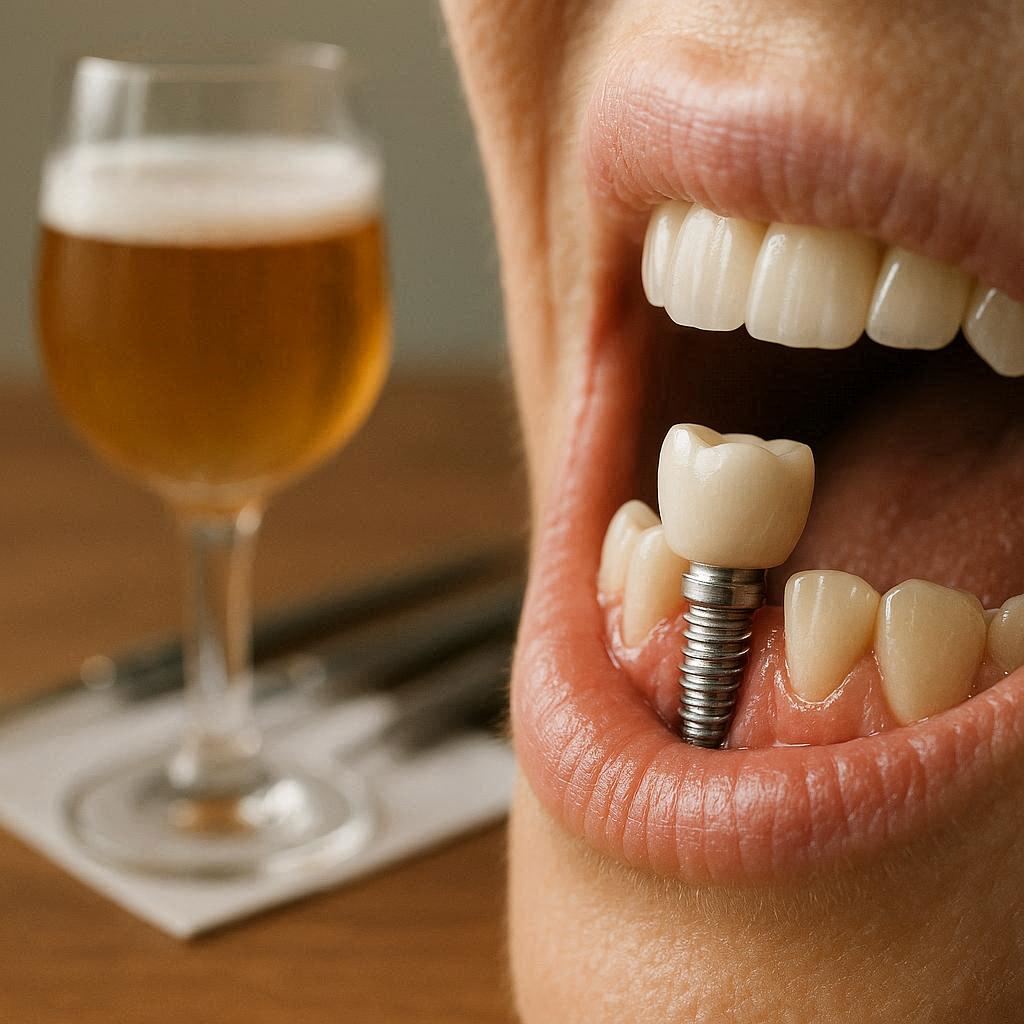
A dental implant is not like a filling or a crown. The surgeon places a small titanium post directly into your jawbone. This post acts as an artificial tooth root.
Your body’s job now is to accept that post. This process is called osseointegration. It sounds complicated, but it simply means your bone cells grow around the titanium and lock it into place.
This does not happen overnight. For most people, osseointegration takes between three to six months.
During this time, several things are happening under the surface:
- Blood clots form to protect the surgical site
- New blood vessels develop to bring oxygen and nutrients
- Bone cells multiply and attach to the implant surface
- Gum tissue seals around the implant neck
Any disruption to these steps can slow healing. Or worse, cause the implant to fail entirely.
Alcohol affects nearly every single one of these processes.
Important Note: Every person heals differently. Age, overall health, smoking habits, and even stress levels influence your recovery. This guide provides general advice. Always follow your own dentist’s specific post-op instructions.
What Happens If You Drink Alcohol Too Soon After Implant Surgery?
Let’s get specific. You had your surgery this morning. Tonight, you have a beer. What actually happens inside your body?
The Immediate Effects (First 48 Hours)
The first two days after surgery are the most delicate. Your mouth is working hard to form a protective blood clot over the implant site.
Alcohol does three problematic things during this period:
1. It thins your blood.
Alcohol acts as a mild blood thinner. This means your blood has a harder time clotting. A weak or dislodged clot exposes the implant and bone underneath. That exposed area is painful and vulnerable to infection.
2. It increases bleeding risk.
Even if you think bleeding has stopped, small blood vessels in the gums remain fragile. Alcohol can restart bleeding that had already stopped. You might wake up with blood on your pillow or an unpleasant metallic taste in your mouth.
3. It dries out your mouth.
Alcohol is a diuretic. It reduces saliva production. Saliva is your mouth’s natural cleanser and antibacterial shield. A dry mouth after surgery creates a perfect environment for bacteria to multiply around the fresh incision.
The Healing Phase Effects (Days 3 to 14)
Once you survive the first 48 hours, you are not in the clear yet. The next two weeks are when your body builds the foundation for long-term success.
Drinking during this phase introduces new risks:
- Delayed soft tissue healing: Alcohol slows down the production of collagen, a protein your gums need to close the wound.
- Increased inflammation: While moderate alcohol can sometimes reduce inflammation elsewhere in the body, after surgery it tends to worsen local swelling in oral tissues.
- Interference with medication: Many post-surgical prescriptions include antibiotics (like amoxicillin or clindamycin) and pain relievers (like ibuprofen or acetaminophen). Alcohol can reduce antibiotic effectiveness and increase liver strain when mixed with painkillers.
- Poor nutrition: Alcohol provides empty calories and can suppress appetite. Your body needs protein, vitamin C, and zinc for wound healing. Replacing a balanced meal with drinks slows your recovery.
How Long Should You Really Wait? A Realistic Timeline
Many dentists give a standard answer: “Avoid alcohol for 72 hours.”
That is technically correct for basic wound healing. But for a dental implant? That timeline is too short.
Here is a more realistic, research-informed timeline.
| Time After Surgery | Alcohol Risk Level | What Happens in Your Mouth | Recommended Action |
|---|---|---|---|
| First 48 hours | Extremely High | Blood clot forming; high bleeding risk; open wound | Zero alcohol. This is non-negotiable. |
| Day 3 to Day 7 | High | Soft tissue healing begins but incision is still open | Zero alcohol. Stick to water and non-alcoholic drinks. |
| Week 2 to Week 4 | Moderate | Gum tissue has mostly closed; bone healing is active | Avoid if possible. Light alcohol (one small drink) may be acceptable for low-risk patients. |
| Week 5 to Month 3 | Low to Moderate | Active osseointegration continues | Occasional moderate drinking likely safe, but avoid bingeing. |
| Month 4 to Month 6 (full integration) | Low | Implant is stable; final crown may be placed | Normal moderate drinking is generally fine, but good oral hygiene remains critical. |
Why Most Dentists Say 7 to 10 Days Minimum
You will find many reputable sources recommending a full seven to ten days of complete abstinence after dental implant surgery. This is not because dentists want to ruin your social life.
The reasoning is solid:
- By day seven, the surgical site has formed a stable epithelial seal (the gum skin has closed over the wound).
- Bleeding risk drops dramatically after day five.
- Most post-op antibiotics run for 7 days. Mixing alcohol with these meds is never a good idea.
If you want to be truly safe and maximize your implant’s chance of success, wait two full weeks before your first drink.
But let’s be realistic. Some people will not wait that long. If you fall into that category, read the next section very carefully.
Can You Drink Alcohol If You Absolutely Must? Harm Reduction Guide
Let me be clear. I recommend you wait two weeks. But I am also a realist.
If you have a special occasion, a social obligation, or simply find abstinence impossible, here is how to minimize the damage.
Choose Your Drink Wisely
Not all alcoholic beverages affect healing the same way.
| Drink Type | Risk Level | Why |
|---|---|---|
| Light beer (one can) | Lowest | Lower alcohol content; less mouth dryness |
| White wine spritzer | Low | Diluted with soda water; reduces direct contact |
| Red wine | Moderate | Higher acidity; can irritate healing tissue |
| Cocktails with juice | Moderate | Sugar promotes bacterial growth |
| Hard liquor (neat or on rocks) | High | High alcohol concentration; severe mouth drying |
| Cocktails with carbonated mixers | High | Carbonation can disturb clots; often high sugar |
Safest choice: One light beer or a single shot of clear liquor diluted in a full glass of water (sipped slowly).
Timing and Technique
If you decide to drink, follow these rules strictly:
- Never drink within the first 72 hours. This is absolute. No exceptions.
- Wait until day 7 at the earliest. Day 10 is better.
- Drink with food. Never on an empty stomach. Food helps buffer the alcohol and reduces direct contact with the surgical site.
- Sip, do not gulp. Small, slow sips reduce the physical washing effect on the clot or incision.
- Use a straw on the opposite side? No. Do not use a straw at all for at least one week. The suction can dislodge clots. Drink directly from the cup or can.
- Rinse immediately after. After finishing your drink, gently rinse your mouth with warm salt water (one teaspoon of salt in a cup of warm water). This neutralizes acidity and washes away sugar and bacteria.
Watch These Warning Signs
If you experience any of the following after drinking, contact your dentist immediately:
- Fresh bleeding (bright red blood)
- Severe throbbing pain at the implant site
- Swelling that suddenly worsens
- A bad taste that does not go away
- Visible bone or implant metal
These could indicate a dislodged clot or developing infection.
The Deeper Risk: Alcohol and Osseointegration
Here is where many online guides stop. They tell you to avoid alcohol for a week and leave it at that.
But as someone who wants you to keep your implant for decades, not just months, I need to share something more important.
Alcohol directly affects bone healing.
Osseointegration is the entire point of a dental implant. Without it, you have an expensive metal post loosely sitting in your jaw. It will eventually fail.
Research on bone healing and alcohol consumption shows concerning findings:
- Chronic alcohol use reduces the activity of osteoblasts (the cells that build new bone)
- Alcohol impairs calcium absorption, which is essential for bone mineralization
- Even moderate drinking can reduce blood flow to healing bone tissue
This does not mean one glass of wine will ruin your implant. But it does mean that regular drinking during the three to six month healing period is risky.
Binge Drinking: The Biggest Danger
Having one drink is very different from consuming four or five in a few hours.
Binge drinking after dental implant surgery is genuinely dangerous because:
- Dehydration becomes severe. Your mouth becomes extremely dry. Bacteria multiply rapidly.
- You lose coordination. You might bump your mouth, bite your cheek, or clench your jaw without realizing it.
- You forget after-care. Brushing, salt water rinses, and medication schedules get ignored.
- You may fall asleep without cleaning your mouth. A full night of bacteria growth on a healing implant is asking for trouble.
If you know you tend to binge once you start drinking, be honest with yourself. Complete abstinence is the only safe choice.
Alcohol and Medications: What Your Dentist Might Forget to Mention
Your dentist will hand you a post-op instruction sheet. It likely says “avoid alcohol” in one sentence. But here is what that sheet often leaves out.
Antibiotics
Many patients receive a 7-day course of antibiotics after implant surgery (typically amoxicillin, clindamycin, or azithromycin).
Here is the truth about mixing alcohol with these specific antibiotics:
- Amoxicillin and azithromycin: Alcohol does not directly interact in a dangerous way, but it can increase stomach upset, dizziness, and nausea. It may also reduce your body’s immune efficiency.
- Metronidazole (Flagyl): This is prescribed sometimes for deeper infections. Never mix this drug with alcohol. It causes severe vomiting, rapid heart rate, and flushing. This reaction can occur even from small amounts of alcohol.
Safe rule: Wait until you finish your entire course of antibiotics before drinking. Then wait an additional 48 hours for the drugs to fully clear your system.
Pain Relievers
Most implant patients use a combination of over-the-counter pain relievers.
- Ibuprofen (Advil, Motrin): Alcohol increases your risk of stomach bleeding when combined with ibuprofen. One drink on a full stomach is usually fine for most people, but regular use is problematic.
- Acetaminophen (Tylenol): This is the dangerous one. Both alcohol and acetaminophen are processed by your liver. Together, they can cause liver damage even at normal doses. Never take Tylenol if you have been drinking.
- Prescription opioids (Vicodin, Percocet): These contain acetaminophen. The same liver warning applies. Also, mixing alcohol with opioids dangerously increases sedation and respiratory depression risk. Never do this.
Sedatives or Anti-Anxiety Medication
If your dentist prescribed a sedative for the procedure (like Valium or Halcion), alcohol can cause extreme drowsiness, confusion, and dangerously slowed breathing. Wait at least 24 hours after your last sedative dose before any alcohol.
Special Situations: When the Rules Change
You Are a Regular Drinker
If you consume alcohol daily or near-daily, stopping suddenly after surgery can cause withdrawal symptoms. These include anxiety, rapid heartbeat, sweating, and in severe cases, seizures.
Do not stop drinking abruptly without medical advice if you have alcohol dependence.
Instead, talk to your dentist and doctor before surgery. They may prescribe medications to manage withdrawal or adjust your post-op plan. Your safety comes first.
You Smoke and Drink
Smoking is already one of the leading causes of dental implant failure. Smoking reduces blood flow to the gums and bone by up to 40%.
When you combine smoking and drinking after implant surgery, the failure rate climbs dramatically. The dry mouth from alcohol plus the vasoconstriction from smoking creates a terrible environment for healing.
If you smoke and plan to drink, you are significantly reducing your implant’s chance of long-term success. This is not judgment. It is biology.
Consider this a moment to honestly evaluate your habits.
You Have Diabetes or Liver Disease
Diabetes impairs wound healing and increases infection risk. Adding alcohol makes blood sugar control more difficult and further impairs immune function.
Liver disease means your body processes alcohol and medications differently. Your bleeding risk may already be elevated. Avoid alcohol entirely during implant healing.
In both cases, disclose your full medical history to your dentist before surgery. Do not rely on general online advice.
What Does a Failed Implant Look and Feel Like?
Let me describe what happens when healing goes wrong. Not to scare you, but so you know what to watch for.
A failing implant may show these signs:
- Persistent pain: Normal post-surgery pain improves every day. If pain returns or worsens after day five, be concerned.
- Implant mobility: The post should feel rock solid. If it wiggles, osseointegration has failed.
- Gum recession around the implant: The gum tissue pulls away, exposing metal threads.
- Pus or discharge: This indicates infection (peri-implantitis).
- Radiographic bone loss: Your dentist sees on x-rays that bone is not growing around the implant.
If your implant fails, you face:
- Removal of the failed implant (another surgical procedure)
- Bone grafting to rebuild lost bone (additional surgery and cost)
- Waiting several months for graft healing
- A second implant attempt with lower success odds
The total cost of a failed implant easily reaches 5,000to10,000 or more, depending on how much reconstruction is needed.
Compared to that, waiting two weeks for a drink seems like a very small sacrifice.
Healthy Alternatives to Alcohol During Implant Healing
You came to this article looking for permission to drink. But let me offer something possibly more valuable: alternatives that won’t jeopardize your implant.
For Relaxation and Stress Relief
- Herbal teas: Chamomile, peppermint, and rooibos are soothing and anti-inflammatory. Drink them warm, not hot.
- Magnesium supplements: Ask your dentist first, but magnesium can reduce anxiety and promote better sleep.
- Breathing exercises: Four seconds inhale, hold four, exhale four. This genuinely reduces stress without any substance.
- Short walks: Gentle movement lowers cortisol and improves blood flow to healing tissues.
For Social Situations
You can still attend parties and dinners. Here is how to handle them:
- Bring your own non-alcoholic drink: Sparkling water with lime, non-alcoholic beer, or a mocktail.
- Hold a glass: People rarely notice what is in your glass. A seltzer with a lime wedge looks like a cocktail.
- Have a one-sentence response: “I’m on medication right now, so I’m taking a break.” No one argues with that.
- Leave early if needed: Your healing is more important than a party.
For Taste and Enjoyment
- Kombucha: Contains trace alcohol (usually less than 0.5%), but generally considered safe after week one. The probiotics may even help oral health.
- Seedlip or Ritual Zero Proof: These non-alcoholic spirits taste complex and interesting. Mix with tonic water and lime.
- Flavored sparkling water: La Croix, Spindrift, or Waterloo give you the ritual of a cold can without the alcohol.
Step-by-Step Post-Op Drinking Plan (If You Choose to Drink)
Again, I recommend waiting two weeks. But if you decide to drink earlier, follow this exact protocol.
Days 1-3: Zero alcohol. No discussion.
Day 4: Still zero. Your clot is still fragile.
Day 5-7: Still strongly recommend zero. If you absolutely must drink:
- Choose one light beer only
- Drink slowly over 1 hour
- Eat a full meal first
- Rinse with salt water after
- Skip your evening ibuprofen
Week 2 (Days 8-14):
- Maximum one drink per day
- No hard liquor
- Drink through a straw? No. Still no straws.
- Rinse after every drink
- Brush gently before bed
Week 3 and beyond:
- Maximum two drinks in one day, with at least two alcohol-free days per week
- Avoid binge drinking entirely until month three
- Maintain excellent oral hygiene: brush twice daily, floss carefully, use alcohol-free mouthwash
- Keep your follow-up appointments so your dentist can monitor osseointegration
Frequently Asked Questions (FAQ)
Q1: Can I use alcohol-based mouthwash after dental implant surgery?
No. Alcohol-based mouthwashes are too harsh for a healing surgical site. They dry out tissues and can delay healing. Use a non-alcoholic, chlorhexidine-based rinse only if your dentist prescribes it. Otherwise, warm salt water is best.
Q2: What about non-alcoholic beer or wine?
These contain very small amounts of alcohol (usually 0.5% or less). They are likely safe after day three or four. However, carbonated beer can still disturb clots, so sip slowly. The bigger risk is the sugar and acidity, so rinse afterward.
Q3: I had my implant placed months ago. Can I drink normally now?
If your implant has fully integrated (confirmed by your dentist with x-rays, typically at four to six months), normal moderate drinking is fine. However, keep your mouth clean. Alcohol still dries your mouth, which increases cavity risk on your natural teeth and gum disease risk around the implant.
Q4: Does the type of implant matter? What about mini implants or same-day implants?
Same-day implants (immediate load implants) receive a temporary crown on the same day as placement. These are more vulnerable to failure because they immediately bear chewing forces. Avoid alcohol even more strictly with same-day implants. Mini-implants are smaller and less stable; treat them the same as standard implants.
Q5: Can I drink alcohol before dental implant surgery?
No. Do not drink for at least 24 hours before surgery. Alcohol thins your blood and can cause excessive bleeding during the procedure. Many dentists will reschedule your surgery if you arrive having consumed alcohol.
Q6: I accidentally drank on day two. What do I do?
Do not panic. One drink is unlikely to destroy your implant. However, take immediate action:
- Rinse gently with warm salt water
- Apply gentle pressure with clean gauze if you see bleeding
- Avoid any more alcohol for at least another week
- Watch for the warning signs listed above
- Mention it to your dentist at your follow-up appointment
Q7: Will one glass of wine really ruin my implant?
Probably not. Dental implants fail for many reasons. One isolated drink on day five is low on the list. The danger is repeated drinking, binge drinking, or drinking during the critical first 72 hours. Your body is resilient. But why take an unnecessary risk with something you paid thousands of dollars for?
Q8: Does alcohol affect the abutment or crown placement later?
Yes, indirectly. If you drink heavily during the osseointegration phase and the implant fails to integrate, there will be no stable foundation for the abutment and crown. If you wait until after full healing (month 4–6), alcohol does not directly damage the crown or abutment, but it still contributes to gum disease, which is the leading cause of late implant failure.
Additional Resource
For the most current, evidence-based information on dental implant aftercare, visit the American Academy of Implant Dentistry (AAID) patient education section:
Link: www.aaid-implant.org/patient-resources
This resource provides dentist-reviewed guides, videos of implant procedures, and answers to common patient questions. Always cross-reference online advice with your own dentist’s instructions, as they know your specific case best.
Conclusion:
Wait at least 72 hours absolutely, but aim for two full weeks before drinking alcohol after your dental implant. One isolated drink is rarely catastrophic, but regular or binge drinking during the three to six month osseointegration period genuinely increases failure risk. Prioritize salt water rinses, excellent oral hygiene, and honest communication with your dentist over any temporary social pressure to drink.
Disclaimer: This article is for informational purposes only and does not constitute medical advice. Dental implant healing varies significantly between individuals. Always follow the specific post-operative instructions provided by your own dentist or oral surgeon. If you experience severe pain, bleeding, or signs of infection, contact your dental professional immediately. The author and publisher are not liable for any outcomes resulting from the application of this information.