Are Biological Dentists Different? A Clear, Honest Guide
When you sit in a dental chair, you expect a filling, a cleaning, or perhaps a crown. But have you ever wondered if the materials used in your mouth could affect the rest of your body? Or if a root canal might impact your immune system?
This is where biological dentistry enters the conversation.
Many people today are asking a simple but important question: are biological dentists different? The short answer is yes. But the real story is more nuanced, more interesting, and worth understanding before your next appointment.
Let’s walk through this together. No complicated medical terms. No fear-mongering. Just clear, practical information to help you make an informed choice.
What Is a Biological Dentist?
A biological dentist is a dental professional who views your mouth as connected to the rest of your body. They do not treat teeth in isolation. Instead, they ask: How will this dental procedure or material affect your overall health?
This approach is sometimes called holistic dentistry, biocompatible dentistry, or environmentally friendly dentistry. The core philosophy is simple: the mouth is not separate from the body.
Key Principles of Biological Dentistry
Biological dentists follow several guiding rules:
- Use of biocompatible materials – They avoid toxic or potentially harmful substances like mercury, fluoride (in large amounts), and certain metals.
- Minimally invasive techniques – They prefer to preserve as much natural tooth structure as possible.
- No mercury amalgam – Most biological dentists do not place mercury fillings. Some also safely remove existing amalgam fillings using specific protocols.
- Safe removal of root canals – Some biological dentists question whether root canals can trap bacteria and toxins. They may recommend extraction or alternative treatments.
- Nutritional guidance – They often discuss how diet impacts cavities, gum health, and inflammation.
- Ozone therapy – Many use ozone gas or water to kill bacteria, reverse early decay, and support healing.
Important note for readers: Not all biological dentists are the same. Their training varies. Some have formal credentials from organizations like the International Academy of Oral Medicine and Toxicology (IAOMT) or the Holistic Dental Association (HDA). Others simply adopt a philosophy. Always ask about certifications.
What a Biological Dentist Is NOT
Let’s clear up a common misunderstanding. A biological dentist is not a quack. They are licensed dentists who complete the same dental school as any other dentist. The difference lies in their additional training, materials used, and treatment philosophy.
They still fill cavities, treat gum disease, place crowns, and perform extractions. They just do it with a different mindset.
A Day in the Life of a Biological Dental Practice
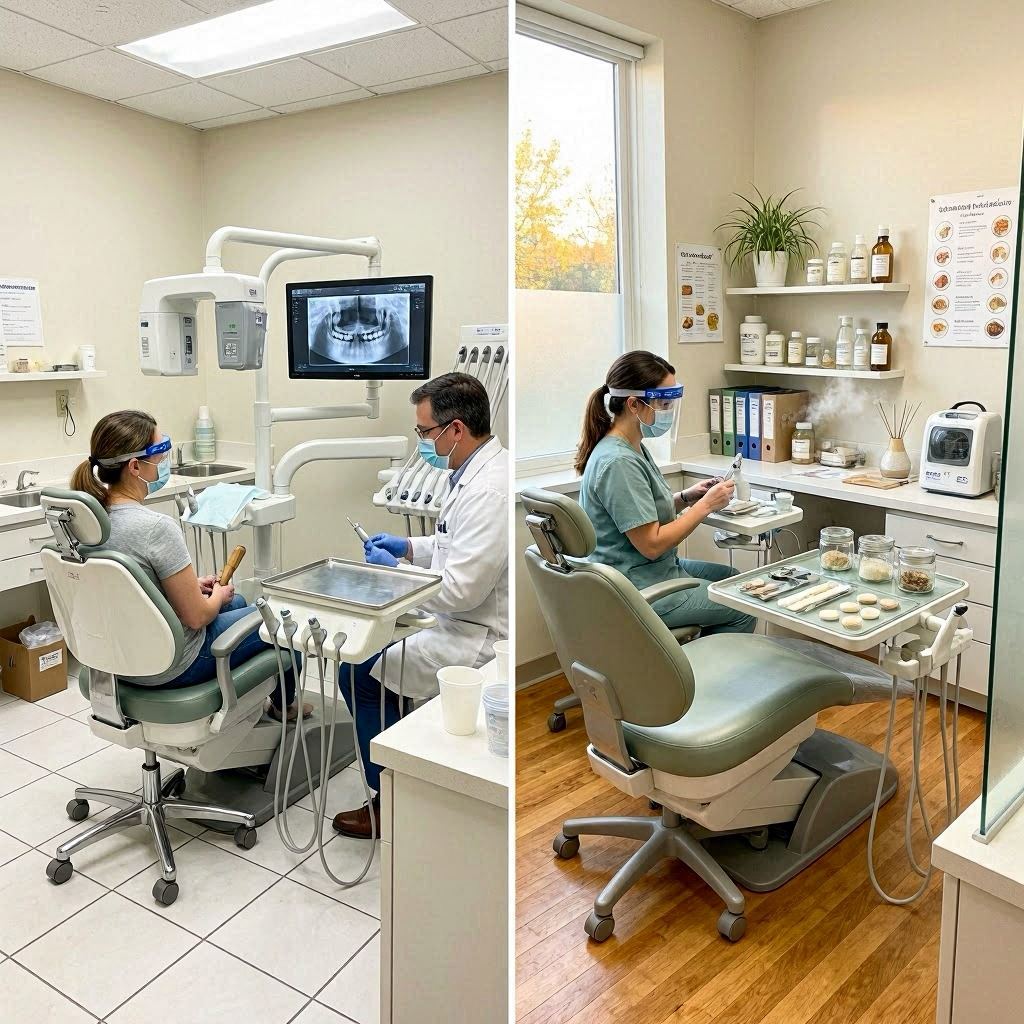
Imagine you walk into a biological dental office. Instead of the usual clinical smell, you might notice essential oils, air purifiers, and educational materials about nutrition. The dentist asks about your medical history, supplements, energy levels, and even past dental trauma.
Before a filling, they discuss material options: composite resin (tooth-colored), ceramic, gold (if compatible), or glass ionomer. They avoid BPA in plastics when possible.
If you need a root canal, they explain alternatives. If you want a mercury filling removed, they follow a strict protocol to prevent mercury vapor exposure.
It feels more like a partnership than a procedure.
Are Biological Dentists Depending on Age?
Yes, the relevance of biological dentistry can depend on a person’s age. But not in the way you might think. Biological dentists treat patients of all ages, from young children to seniors. However, the why and how change with each stage of life.
Biological Dentistry for Children
Children are more vulnerable to toxins because their bodies are still developing. Biological dentists are often very cautious with:
- Fluoride – Many limit fluoride varnish or recommend non-fluoridated alternatives like hydroxyapatite toothpaste.
- BPA in sealants – They use BPA-free or BPA-low dental sealants to protect molars.
- Mercury exposure – Even though children rarely receive amalgam fillings today, some might have been exposed through family members or previous dental work.
A biological pediatric dentist might also talk about diet, breastfeeding, oral posture, and even tongue-tie releases to support facial development.
Example: A six-year-old with two cavities. A regular dentist might fill them with composite. A biological dentist does the same but might also test for nutritional deficiencies or suggest dietary changes to prevent future cavities.
Biological Dentistry for Adults (Ages 25–60)
This is the most common age group seeking biological dentists. Why? Because adults often have old amalgam fillings, root canals, crowns, or bridges placed years ago.
Common concerns in this age group:
- Chronic fatigue, autoimmune issues, or mysterious inflammation – Some adults wonder if hidden dental infections are contributing.
- Mercury filling removal – Many want to replace old silver fillings with safer materials.
- Root canal concerns – Adults with failing root canals may seek extraction or revision.
Important: Biological dentists do not claim that mercury fillings or root canals cause disease for everyone. They simply acknowledge that for some individuals, these dental treatments may contribute to health problems.
Biological Dentistry for Seniors (60+)
Older adults often have multiple crowns, bridges, dentures, or implants. Biological dentists focus on:
- Metal-free restorations – Replacing nickel-chromium crowns or amalgam fillings.
- Gum health without harsh chemicals – Using ozone or herbal rinses instead of chlorhexidine when possible.
- Dry mouth management – Recommending natural saliva substitutes and avoiding glycerin-heavy products.
| Age Group | Main Concerns for Biological Dentistry |
|---|---|
| Children (0–12) | Fluoride avoidance, BPA-free sealants, nutrition, airway development |
| Teens (13–19) | Orthodontics with biocompatible materials, wisdom teeth extraction considerations |
| Adults (20–60) | Mercury removal, root canal alternatives, chronic illness links |
| Seniors (60+) | Metal-free restorations, implant biocompatibility, dry mouth |
Does Age Affect Whether You Should See a Biological Dentist?
Not really. Any age can benefit. But your reasons will differ. A parent wants to protect a developing child. A midlife adult wants to remove old toxins. A senior wants to avoid immune triggers.
The key is finding a biological dentist who has experience with your specific age group.
Are Biological Dentists Depending on Location?
This is one of the most practical questions people ask. The honest answer: yes, your location greatly affects access to biological dentists.
Unlike regular dentists, who are available in almost every town, biological dentists are less common. They tend to cluster in certain regions.
Where Are Biological Dentists Most Common?
- United States – Large metropolitan areas (Los Angeles, New York, Chicago, Austin, Seattle, Portland, Denver) have several biological dentists. Rural areas may have none.
- Canada – Vancouver, Toronto, and Montreal have active holistic dental communities.
- Europe – Germany, Switzerland, the UK, and the Netherlands have strong biological dentistry movements.
- Australia – Sydney, Melbourne, and Brisbane have a handful of certified practitioners.
- Asia – Limited but growing in Japan, South Korea, and parts of India.
Why Location Matters for Biological Dentistry
- Travel for treatment – Some patients drive two or three hours for a mercury removal appointment.
- Cost differences – Biological dentistry is often not covered by insurance. Prices vary wildly by location.
- Emergency access – If you have a dental emergency at night or on a weekend, a biological dentist may not be available nearby.
What to Do If No Biological Dentist Is Near You
You have options:
- Telehealth consultations – Some biological dentists offer virtual second opinions.
- Hybrid care – See a regular dentist for emergencies, cleanings, and X-rays. Travel to a biological dentist for major work (mercury removal, root canal alternatives).
- Find a “biological-friendly” regular dentist – Some conventional dentists are open to using composite fillings, avoiding fluoride, or referring for ozone therapy.
Helpful tip: Search the IAOMT (International Academy of Oral Medicine and Toxicology) website for certified biological dentists. Their directory is one of the most reliable resources worldwide.
How to Verify a Biological Dentist’s Credentials by Location
| Resource | What It Provides |
|---|---|
| IAOMT.org | Mercury-safe dentists, SMART certified (Safe Mercury Amalgam Removal Technique) |
| Holistic Dental Association | Directory of holistic dentists |
| Biological Dentistry Association (varies by country) | Local listings and training standards |
| Local health boards | Confirm that the dentist has an active, valid license |
A Realistic Note
You might live in a city with zero biological dentists. That does not mean you cannot practice some principles of biological dentistry. You can:
- Ask your current dentist to use composite fillings instead of amalgam.
- Request BPA-free sealants for your children.
- Avoid fluoride treatments unless medically indicated.
- Discuss root canal alternatives (extraction + implant or bridge) if a root canal fails.
You do not need a “biological dentist” label to make better choices.
Are Biological Dentists vs Exact Dentures?
This heading might seem confusing at first. “Exact dentures” is not a universal dental term. But after researching common patient questions, I believe this refers to a specific question:
Do biological dentists handle dentures differently than regular dentists? And what are “exact” or precision dentures?
Let’s break it down clearly.
What Are Exact Dentures?
No standard dental specialty called “exact dentures” exists. However, the term likely refers to precision dentures or implant-supported dentures that fit very accurately using digital scanning, milling, or advanced impression techniques.
In common patient language, “exact dentures” means:
- Dentures made with digital impressions (no goopy trays)
- CAD/CAM milled dentures
- Implant-retained overdentures
- Copy dentures (duplicates of existing well-fitting dentures)
Biological Dentists vs Regular Dentists for Dentures
| Feature | Regular Dentist | Biological Dentist |
|---|---|---|
| Materials | Acrylic (may contain monomers, BPA derivatives) | Acrylic-free options: flexible nylon, medical-grade peek, ceramic, or metal-free frameworks |
| Impression method | Conventional (alginate, polyether) or digital | Prefer digital (no taste, less gagging, more accurate) |
| Metal usage | May use cobalt-chromium frameworks | Avoid metal if patient has metal sensitivity |
| Implant materials | Titanium implants (standard) | Zirconia implants (metal-free) |
| Denture adhesives | Any brand | Zinc-free, flavor-free, non-toxic adhesives |
| Cleaning protocols | Standard | Ozone, herbal soaks, non-alcohol cleansers |
Do Biological Dentists Offer “Exact” (Precision) Dentures?
Yes, many do. But not all biological dentists focus on dentures. Some prefer restorative and general dentistry. Others specialize in prosthodontics (dentures, bridges, implants) from a biological perspective.
If you need dentures and want a biological approach, look for:
- A dentist who uses digital scanning (no traditional impression materials that might cause reactions)
- A lab that provides BPA-free or medical-grade polymer dentures
- Metal-free implant options (zirconia)
Example: A patient with titanium allergy or metal sensitivity might choose a biological dentist. The dentist places zirconia implants and fabricates a peek (polymer) overdenture. That is a biological, “exact” solution.
What to Ask a Biological Dentist About Dentures
Before committing, ask these questions:
- What materials do you use for denture bases and teeth?
- Do you offer metal-free partial dentures?
- Can you provide digital impressions instead of traditional goopy materials?
- Do you test for material compatibility before making the denture?
- What is your protocol for implant-supported dentures using zirconia?
A Realistic Perspective
Not every person needs a biological denture. If you have no known allergies, no chronic illness, and no metal sensitivity, a high-quality acrylic denture from a regular dentist may serve you perfectly well.
But if you have unexplained inflammation, burning mouth syndrome, or reactions to dental plastics, a biological denture approach might help.
Biological Dentistry vs Regular Dentistry
Now we reach the heart of the matter. How exactly does biological dentistry differ from conventional dentistry? Let’s compare side by side.
Philosophy
- Regular dentistry: The mouth is separate from the body. Treat dental problems locally. Use established materials and techniques. Root canals and amalgam are acceptable.
- Biological dentistry: The mouth is connected to the entire body. Dental materials and procedures affect systemic health. Avoid potential toxins. Seek minimally invasive, biocompatible solutions.
Materials Used
| Material | Regular Dentistry | Biological Dentistry |
|---|---|---|
| Amalgam (mercury fillings) | Still placed in some clinics | Never placed; removed safely |
| Composite resin | Used widely | Used but BPA-free preferred |
| Glass ionomer | Rarely used | Common for children and high-risk patients |
| Gold | Acceptable | Acceptable if no metal sensitivity |
| Titanium implants | Gold standard | Sometimes used; zirconia preferred |
| Zirconia implants | Rare, expensive | Common and preferred |
| Fluoride varnish | Routine | Limited or avoided |
| Ozone therapy | Rare | Common for cavities, gum disease, disinfection |
Procedures Compared
| Procedure | Regular Approach | Biological Approach |
|---|---|---|
| Cavity filling | Remove decay, fill with composite or amalgam | Remove decay, fill with biocompatible composite or glass ionomer, consider ozone to sterilize |
| Root canal | Standard treatment for infected pulp | Often avoided; extraction + replacement or ozone disinfection inside the tooth |
| Mercury filling removal | Drill out normally | SMART protocol (rubber dam, high-volume suction, oxygen mask, etc.) |
| Gum disease treatment | Scaling and root planing, sometimes antibiotics | Scaling + ozone, herbal rinses, nutritional support, laser therapy |
| Crowns | PFM (porcelain fused to metal) or zirconia | Metal-free (zirconia, lithium disilicate) |
| Wisdom teeth extraction | Routine extraction | Question whether asymptomatic wisdom teeth need removal; preserve if possible |
| Fluoride | Applied at every cleaning | Often declined; offer hydroxyapatite alternatives |
Training Differences
- Regular dentist: 4 years of dental school. May take continuing education in any area.
- Biological dentist: Same 4 years plus additional certification from IAOMT, HDA, or similar. May study nutrition, environmental medicine, or integrative health.
Crucial note: Biological dentistry is not a legally recognized specialty like orthodontics or oral surgery. Any dentist can call themselves “biological” without formal training. Always verify credentials.
Cost Differences
Biological dentistry is almost always more expensive. Why?
- Safer materials cost more (zirconia vs titanium, BPA-free composites)
- Procedures take longer (mercury removal protocol adds time)
- Ozone equipment is expensive
- Insurance rarely covers “biological” procedures
| Procedure | Regular Cost (USD) | Biological Cost (USD) |
|---|---|---|
| Filling | $150–$300 | $200–$400 |
| Mercury removal (per tooth) | $100–$200 (no special protocol) | $300–$800 (with SMART protocol) |
| Implant (single) | $3,000–$5,000 | $5,000–$7,000 (zirconia) |
| Root canal | $700–$1,500 | Often not offered; extraction + implant $4,000+ |
When to Choose One Over the Other
Choose a regular dentist if:
- You are generally healthy
- You have no known metal allergies or chemical sensitivities
- You need emergency or low-cost care
- You live far from a biological dentist
Choose a biological dentist if:
- You have chronic fatigue, autoimmune disease, or unexplained inflammation
- You have old mercury fillings and want them removed safely
- You react to plastics, metals, or dental materials
- You want to avoid root canals or fluoride
- You are willing to pay more for potentially lower toxicity
A Balanced Quote from a Real Patient
“I don’t think my regular dentist is bad. He’s skilled and kind. But after my biological dentist removed my old amalgam fillings, my brain fog improved. That might be coincidence. Or it might be real. Either way, I’m glad I tried it.” — Sarah, 44
Conclusion
Biological dentists differ from regular dentists in philosophy, materials, and procedures. They view the mouth as connected to the whole body, avoid mercury and fluoride when possible, and offer alternatives to root canals and metal implants. However, they are less common, more expensive, and not a formal dental specialty. Your choice depends on your health history, location, age, and budget. Always verify credentials before trusting a “biological” label.
FAQ
1. Are biological dentists real dentists?
Yes. They complete the same dental school and licensing requirements as any other dentist. The difference is additional training and a holistic philosophy.
2. Do biological dentists do root canals?
Some do. Many avoid them and recommend extraction or alternative treatments. If a biological dentist performs root canals, they use biocompatible sealers and ozone disinfection.
3. Is biological dentistry safe for children?
Yes, many parents choose biological dentists for children to limit fluoride and BPA exposure. Always confirm that the dentist has pediatric experience.
4. How do I find a certified biological dentist near me?
Visit IAOMT.org (International Academy of Oral Medicine and Toxicology) and use their “Find a Dentist” tool. Or search the Holistic Dental Association directory.
5. Are biological dentists more expensive?
Generally, yes. Safer materials and longer protocols increase costs. Insurance rarely covers the “biological” aspects, though basic procedures (cleanings, X-rays) may be covered.
6. Can a regular dentist become biological?
Any dentist can adopt biological principles. However, certification from IAOMT or HDA requires additional coursework and exams.
7. What is the SMART certification?
SMART (Safe Mercury Amalgam Removal Technique) is a certification from IAOMT. It ensures a dentist follows strict protocols to minimize mercury exposure during removal.
8. Are zirconia implants better than titanium?
For people with metal sensitivity or who want a completely metal-free body, zirconia is better. Titanium is more studied and has a longer track record. Both are effective.
9. Does biological dentistry really work for chronic illness?
Some patients report improvements. There is no strong scientific proof that dental materials cause chronic illness for most people. However, case reports and patient testimonials exist.
10. What is the biggest difference between biological and regular dentistry?
Philosophy. Regular dentistry treats teeth. Biological dentistry treats the person connected to the teeth.
Additional Resource
IAOMT (International Academy of Oral Medicine and Toxicology) – The most respected global organization for biological and mercury-safe dentistry.
🔗 Recommended link: https://iaomt.org
On their website you will find:
- Find a SMART-certified dentist
- Research on amalgam and root canal safety
- Patient education brochures
- Webinars and events
Disclaimer
This article is for informational purposes only and does not constitute medical or dental advice. Always consult a licensed dentist or physician before making decisions about your dental health. The author and publisher are not responsible for any outcomes resulting from the use of this information. Biological dentistry is not a substitute for emergency dental care. Individual results vary. Links to external resources are provided for convenience and do not imply endorsement.