Do I Really Need a Night Guard?
You wake up with a dull headache. Your jaw feels tight, almost sore. Your partner mentions that you made a strange grinding sound during the night again.
You start researching online. And then you see it: night guards. They promise relief. They promise protection. But the prices range from twenty dollars to over eight hundred. So you ask yourself a fair question.
Do I really need a night guard?
The short answer is: it depends on your specific situation. But for a large number of adults, the answer is yes. And waiting too long to get one can lead to expensive dental work later.
Let us walk through everything you need to know. No confusing jargon. No scare tactics. Just honest, practical information to help you decide.
Understanding the Problem: What Is Teeth Grinding?
Before we talk about night guards, we need to understand what you are dealing with.
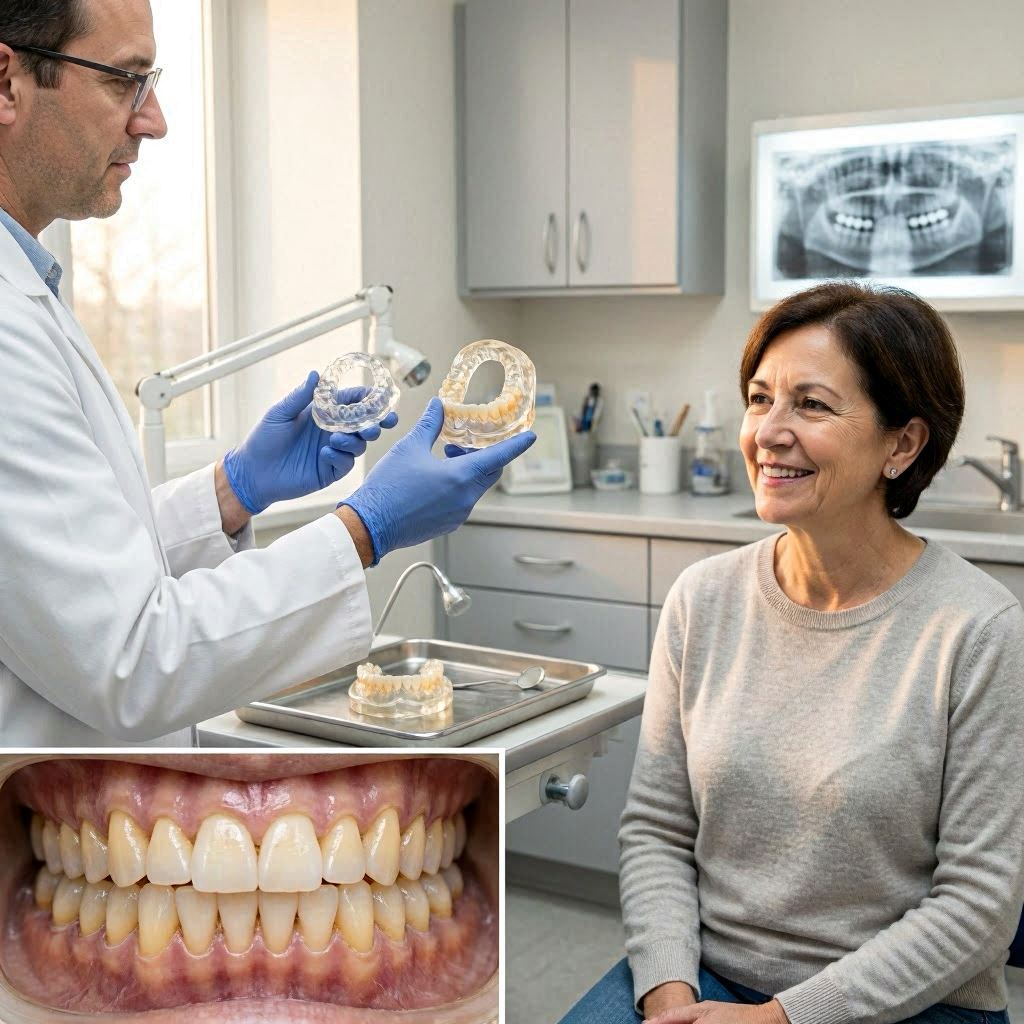
Teeth grinding has a medical name: bruxism. It is the involuntary clenching, grinding, or gnashing of your teeth. You can do it during the day, but most people do it while they sleep. That is why it is so hard to stop. You cannot control what you do when you are unconscious.
Signs You Might Be Grinding Your Teeth at Night
Many people do not know they grind their teeth. A dentist often spots the signs before the patient does. Here are common clues:
- Worn, flat, or chipped teeth. Your teeth should have ridges and peaks. If they look flat on top, you are grinding.
- Increased tooth sensitivity. Hot, cold, or sweet foods cause sharp pain.
- Jaw pain or tightness. Especially in the morning.
- Earaches without an infection. Jaw muscles refer pain to the ear area.
- Headaches near your temples. Often mild to moderate.
- Damage inside your cheeks. You may notice lines or bites on your cheek tissue.
- Your partner hears grinding sounds. This is a clear giveaway.
Important Note: Not everyone with bruxism needs a night guard. Mild cases may not cause damage. But moderate to severe grinding almost always requires protection.
What Does a Night Guard Actually Do?
A night guard is a removable dental appliance. You wear it while you sleep. It sits between your upper and lower teeth.
Think of it like a helmet for your teeth. It does not stop you from grinding. Instead, it absorbs the pressure and prevents tooth-to-tooth contact.
The Three Main Benefits
- Prevents wear. Your teeth do not grind directly against each other. The guard takes the damage.
- Reduces muscle strain. A properly made guard can relax your jaw muscles by creating a slight separation.
- Protects dental work. If you have fillings, crowns, or implants, a night guard protects your investment.
Do I Really Need a Night Guard? The Honest Decision Tree
Let us make this easy. Answer these questions honestly.
Question 1: Do you wake up with jaw pain or headaches three or more times per week?
- Yes → Likely need a guard
- No → Move to question 2
Question 2: Has a dentist told you that your teeth show visible wear or cracks?
- Yes → Likely need a guard
- No → Move to question 3
Question 3: Do you have expensive dental restorations (crowns, implants, bridges)?
- Yes → You should get a guard to protect your investment
- No → Move to question 4
Question 4: Are you under significant stress, or do you take medications known to cause grinding (some antidepressants)?
- Yes → Monitor closely. Consider a guard if symptoms appear
- No → You may not need one right now, but watch for changes
If you answered “likely need a guard” to any of the first three questions, you should talk to a dentist. Do not buy a cheap over-the-counter guard yet. Read on to understand why.
Over-the-Counter vs. Custom Night Guards: What Is the Difference?
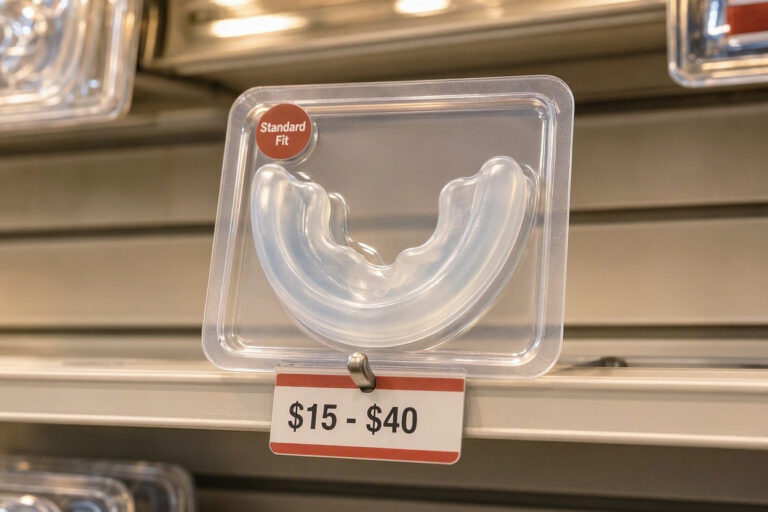
This is where people get confused. You see a “night guard” at the pharmacy for thirty dollars. Your dentist offers one for five hundred dollars. The difference is massive.
| Feature | Over-the-Counter (Boil-and-Bite) | Custom (Dentist-Made) |
|---|---|---|
| Fit | One-size-fits-most | Precisely molded to your teeth |
| Material | Soft plastic | Hard or dual-layered acrylic |
| Durability | 3 to 6 months | 5 to 10 years with care |
| Protection Level | Low to moderate | High |
| Risk of Causing Bite Issues | Yes, possible | No |
| Cost | $20 – $60 | $300 – $800+ |
| Insurance Coverage | No | Often partially covered |
Why Cheap Guards Can Cause Problems
A soft, boil-and-bite guard seems like a good deal. But for many people, it makes things worse.
Here is why. Your jaw wants to find a stable position. A soft guard lets your teeth sink into the material. This creates an unstable biting surface. Your jaw muscles work harder to find balance. That can increase clenching, not reduce it.
Some people also develop an open bite from using soft guards long-term. That means your front teeth no longer touch when you close your mouth. Fixing an open bite requires braces or other treatment.
Dr. Sarah Mitchell, DDS (Kansas City restorative dentist):
“I see patients every month who come in with more pain after using a drugstore night guard for six months. They thought they were helping themselves. In reality, they wasted money and delayed proper care. A custom guard is an investment, not an expense.”
What Is the Typical Price Range for All-on-X Implants in Kansas City?
You might wonder why we are discussing implants in an article about night guards. Here is the connection.
Untreated grinding destroys teeth. Over years, you can crack teeth so badly that they cannot be saved. When that happens, you face major restorative work. One of the most common full-mouth solutions is called All-on-X.
So what does All-on-X cost in Kansas City?
Based on current market rates from reputable Kansas City implant centers:
| Treatment Type | Typical Price Range (per arch) |
|---|---|
| All-on-4 (basic materials) | $15,000 – $20,000 |
| All-on-4 (premium materials) | $20,000 – $25,000 |
| All-on-6 (more implants) | $22,000 – $30,000 |
| Full mouth (both arches) | $30,000 – $55,000 |
These prices usually include:
- Implant placement surgery
- Temporary fixed bridge
- Final zirconia or acrylic bridge
- Basic anesthesia fees
These prices typically do not include:
- Extractions (can add $1,500 – $3,000)
- Bone grafting if needed (adds $500 – $3,000 per site)
- Sinus lifts (adds $1,500 – $3,000)
- CT scans ($300 – $700)
The Night Guard Math
Let us do simple math.
A custom night guard costs around $500. It lasts five to ten years.
All-on-X implants for one arch cost around $18,000. That does not include the extra procedures many patients need.
If a night guard prevents you from needing implants for just five more years, you have saved nearly twenty thousand dollars. That is a return on investment of 3,500%.
In other words, a night guard is cheap insurance against a very expensive problem.
Differences Between General Dentists and Periodontists for Implants
If you already have damage from grinding, you might need implants now. Or you might want to know who to trust if that day comes.
Not all dentists are the same when it comes to implants. General dentists and periodontists have different training and focus areas.
General Dentist
A general dentist is your primary dental care provider. They handle cleanings, fillings, crowns, and basic root canals.
For implants:
- Many general dentists place implants after taking continuing education courses
- They typically handle single-tooth implants or small cases
- They often refer complex cases to specialists
When a general dentist works well: Simple cases with good bone and healthy gums.
When to consider a specialist: Multiple implants, significant bone loss, or cosmetic concerns in the front of your mouth.
Periodontist
A periodontist completes three additional years of training focused on gums and the supporting bone around teeth.
For implants:
- They are specialists in the bone and gum tissues
- They handle difficult cases with bone grafting
- They manage gum disease before implant placement
- They place implants routinely, often hundreds per year
When a periodontist is worth the extra cost: Complex cases, significant bone loss, gum disease history, or aesthetic areas (front teeth).
| Factor | General Dentist | Periodontist |
|---|---|---|
| Years of implant training | Varies widely (weekend courses to mentorship) | 3 years full-time specialty training |
| Typical case complexity | Simple to moderate | Moderate to complex |
| Bone grafting ability | Some, but limited | Extensive |
| Cost per implant | $3,000 – $4,500 | $4,000 – $6,000 |
| Insurance coverage for implant placement | Usually covered at same rate | May have higher co-insurance |
Reader Note: Many excellent general dentists place implants successfully. Do not assume a periodontist is always better. Ask about experience. A general dentist who places 100 implants per year is likely better than a periodontist who places 20. Numbers matter more than titles.
Does The University of Kansas Health System Accept Dental Insurance?
You may be researching dental care in the Kansas City area. The University of Kansas Health System (UKHS) is a major medical center. But dental insurance is different.
Here is what you need to know.
UKHS has a department of oral and maxillofacial surgery. They provide:
- Extractions (including wisdom teeth)
- Dental implants
- Jaw surgery
- Treatment for oral pathology
- Dental care for medically complex patients
Regarding dental insurance:
The University of Kansas Health System does accept many dental insurance plans for qualifying procedures. However, there are important limits.
- Traditional dental insurance (Delta Dental, Cigna, MetLife, etc.): Accepted for oral surgery procedures when medically necessary.
- Dental HMO plans: Generally not accepted.
- Medicaid (KanCare): Accepted for eligible patients, but primarily for medically necessary extractions, not routine implants or night guards.
- Medicare: Does not cover routine dental care. May cover extractions or jaw surgery if part of a medical condition.
The Most Important Distinction
UKHS is primarily a medical hospital. If you need a night guard or a routine dental cleaning, they are not the right place. You need a general dentist’s office.
If you need complex implant surgery, jaw reconstruction, or have a serious medical condition (heart disease, transplant history, bleeding disorders), UKHS may be your best option because the care is fully integrated with your medical team.
Recommendation: Call the number on the back of your dental insurance card. Ask if UKHS is in-network for your specific plan. Dental networks vary even within the same insurance company.
How Long Is the Recovery Period for a Single Dental Implant Procedure?
If your grinding habit has already cost you a tooth, you may need a single implant. Recovery time is a common concern.
Let us break down the timeline realistically.
The Short Answer
Most people return to normal activities the next day. Full healing of the bone around the implant takes three to six months.
The Detailed Timeline
| Time Period | What Happens | What You Feel |
|---|---|---|
| Day of surgery | Implant placed into jawbone | Numb from anesthesia. Some pressure during procedure |
| Days 1 to 3 | Initial healing begins | Swelling, mild to moderate discomfort. Soft food diet |
| Days 4 to 7 | Swelling goes down | Some soreness. Can return to desk work day after surgery |
| Weeks 2 to 4 | Sutures dissolve or are removed | Minimal discomfort. Chewing carefully on other side |
| Months 1 to 3 | Osseointegration (bone grows to implant) | No pain. You forget the implant is there |
| Month 3 to 6 | Abutment and crown placement | Numb again for crown work. Mild soreness for 1-2 days |
Factors That Speed Up or Slow Down Recovery
Faster recovery:
- Good overall health (no diabetes, autoimmune disease, or smoking)
- Adequate bone at time of placement (no grafting needed)
- Front tooth implant (less chewing force)
- Young to middle age
Slower recovery:
- Smoking (significantly delays healing)
- Poorly controlled diabetes
- Heavy grinding or clenching (ironic, right?)
- Need for bone grafting
- Lower molar implant (highest chewing forces)
Honest Advice: If you grind your teeth and get an implant, you absolutely need a night guard. Implants have no ligament. They feel every ounce of pressure. Grinding on an implant can cause it to fail or break the crown. Your implant surgeon will likely require you to wear a night guard before they agree to place implants.
Which Practices Offer Sedation Dentistry During Implant Surgery?
Dental implant surgery sounds scary. The word “surgery” alone makes some people anxious. That is normal. You are not alone.
The good news: sedation dentistry is widely available. You do not need to be awake or aware during implant placement.
Types of Sedation Available
| Sedation Level | How It Feels | Who Can Provide It | Typical Cost (not covered by insurance) |
|---|---|---|---|
| Nitrous oxide (laughing gas) | Relaxed but fully awake | Any dentist | $50 – $150 |
| Oral sedation (pill) | Drowsy, may fall asleep | Any dentist with training | $200 – $400 |
| IV moderate sedation | Sleepy, little memory of procedure | Dentist with special permit or anesthesiologist | $400 – $800 |
| Deep sedation / general anesthesia | Completely unconscious | Anesthesiologist or oral surgeon | $800 – $1,500+ |
Finding Sedation Dentistry in Kansas City
Most implant-focused practices in the Kansas City metro offer at least one form of sedation. Here is what to look for:
Oral surgeons and periodontists almost always offer IV sedation. Many have a nurse anesthetist or anesthesiologist on staff.
General dentists placing implants typically offer nitrous oxide or oral sedation. Some bring in a traveling anesthesiologist for IV sedation once per month.
Ask these questions when you call:
- “Do you offer IV sedation for implant placement?”
- “Is the sedation provider a separate anesthesiologist, or does the dentist do both?”
- “Is the sedation fee included in my implant quote?”
- “Does my medical insurance cover any of the sedation cost if a separate anesthesiologist is used?” (Sometimes yes if you have a diagnosed anxiety disorder)
Practices Known for Sedation Options in Kansas City
Note: This is not an exhaustive list or an endorsement. Always verify current offerings directly with the practice.
- Kansas City Oral & Maxillofacial Surgery – Multiple locations. Offers IV sedation and general anesthesia. Periodontists and oral surgeons on staff.
- Periodontal Associates of Kansas City – Specializes in implants and gum health. Offers IV sedation.
- Aspen Dental (various KC locations) – Offers nitrous oxide and oral sedation for implant procedures. Lower cost option.
- Comfort Dental Sedation Dentistry (Lee’s Summit) – Focuses specifically on anxious patients. Oral sedation available.
Important note about insurance and sedation: Dental insurance rarely covers sedation for implants unless you have a documented medical need (severe gag reflex, anxiety disorder with psychiatric diagnosis, or developmental disability). Expect to pay sedation fees out of pocket.
Additional Signs You Need a Night Guard (Beyond the Obvious)
Most articles stop at jaw pain and worn teeth. But there are other signs that are less common but equally important.
You Have Frequent Cracked Teeth
If you have cracked a tooth more than once in the past two years, grinding is likely the cause. One crack can be bad luck. Two or more cracks point to a habit.
Your Fillings Keep Breaking
Dental fillings have a lifespan. But if your fillings break or fall out every year or two, your bite is under too much force. A night guard spreads that force out.
You Wake Up With a Sore Tongue
Look at the edges of your tongue. Do you see scalloped, wavy indentations? That happens when you press your tongue against your teeth during clenching. It is a classic bruxism sign.
You Have Unexplained Loose Teeth
Teeth have tiny ligaments that hold them in place. Constant grinding stretches those ligaments. Your teeth may feel slightly loose even though there is no gum disease. A night guard allows those ligaments to rest and tighten back up.
Your Partner Complains About the Noise
This is one of the most reliable indicators. People who sleep alone may not know they grind. If someone hears it, you grind. And the noise means high force. Get a guard.
What Happens If You Ignore Grinding? The Long-Term Reality
Let us be direct.
Ignoring moderate to severe grinding will not make it go away. Stress might pass. But the habit often remains. Over years, here is what typically happens:
Year 1 to 3: Minimal visible change. Maybe some flattening of back teeth. Slight sensitivity.
Year 3 to 7: Noticeable wear. Front teeth look shorter. Cracks appear. One or two crowns become necessary.
Year 7 to 12: Multiple crowns or root canals. Some teeth crack below the gum line and require extraction. You start talking about partial dentures or bridges.
Year 12 to 20: Significant tooth loss. You are now a candidate for partial or full dentures, or All-on-X implants. The cost reaches tens of thousands of dollars.
A night guard interrupts this timeline completely. It does not cure the grinding. But it protects your teeth from the damage.
Can You Fix Grinding Without a Night Guard?
Some people hope to stop grinding entirely, not just protect against it. That is a good goal. But it is difficult.
Approaches That Help Some People
- Stress reduction. Meditation, therapy, exercise, and better sleep hygiene reduce grinding for about 30% of people.
- Muscle relaxants. Low-dose medications at bedtime can help. But they are not a long-term solution due to side effects and dependency risks.
- Botox injections. Botox into the masseter muscles weakens them. This reduces grinding force. Results last three to four months. Cost is $500 to $1,500 per session.
- Physical therapy. Jaw stretches, warm compresses, and massage reduce muscle tension. This treats symptoms but not the cause.
The Honest Truth
Most people cannot stop grinding permanently. The habit is often rooted in genetics, sleep disorders (like sleep apnea), or deep stress patterns. A night guard remains the most reliable, safest, and most cost-effective solution.
How to Get a Custom Night Guard: Step by Step
If you have decided to get a night guard, here is exactly what to expect.
Step 1: Schedule an exam with a general dentist. Tell them you suspect grinding.
Step 2: The dentist examines your teeth, checks for cracks and wear, and likely takes x-rays.
Step 3: If a guard is recommended, the dentist takes impressions (molds) of your teeth. Digital scans are becoming common and are more comfortable.
Step 4: The impressions go to a dental lab. A technician fabricates your custom guard. This takes one to three weeks.
Step 5: You return to the office for a fitting. The dentist checks the guard’s fit and bite. They make any adjustments.
Step 6: You wear the guard every night. Most people adapt within one week.
Caring for Your Night Guard
- Brush it with a soft toothbrush and mild soap (not toothpaste, which is abrasive).
- Rinse it every morning.
- Store it in a hard case when not in use.
- Bring it to your dental cleanings so the dentist can check for wear.
- Expect to replace it every five to ten years.
Night Guards and Dental Implants: A Critical Combination
We mentioned this briefly, but it deserves its own section.
Dental implants are incredible technology. They look like teeth. They feel like teeth. They function like teeth.
But they are not teeth. Real teeth have a periodontal ligament. That ligament is a shock absorber. It allows a tooth to move slightly under pressure.
Implants do not have that ligament. They are fused directly to bone. Every ounce of biting force transfers directly to the bone.
Why this matters for grinders:
When you grind with real teeth, the ligament absorbs some shock. Your teeth may hurt, but they survive.
When you grind with implants, there is no shock absorption. You can actually fracture the implant screw or break the bone around it.
The rule: If you have dental implants, you must wear a night guard. No exceptions. Your implant surgeon should tell you this. If they do not, find another surgeon.
Cost Comparison: Night Guard vs. Alternative Treatments
Let us put everything into a single table to show the financial argument clearly.
| Treatment | Approximate Cost | Duration of Protection | Does It Address Grinding? |
|---|---|---|---|
| Over-the-counter night guard | $30 | 3-6 months | Poorly. May worsen some cases |
| Custom night guard (dentist) | $400 – $800 | 5-10 years | Excellent |
| Botox for grinding | $500 – $1,500 per session | 3-4 months | Good but temporary |
| Single crown (from grinding damage) | $1,200 – $2,000 | 10-15 years | No. Treats damage, not cause |
| Single root canal + crown | $2,500 – $4,000 | 10-15 years | No. Treats damage, not cause |
| Single dental implant | $4,000 – $6,000 | 20+ years | No. Replaces lost tooth |
| All-on-4 (one arch) | $15,000 – $25,000 | 15-20 years | No. Replaces multiple teeth |
| Full mouth reconstruction | $30,000 – $80,000 | Varies | No. Repairs catastrophic damage |
A custom night guard costs less than one crown. It costs far less than one implant. And it protects all of your teeth simultaneously for years.
Common Myths About Night Guards
Let us clear up some misinformation.
Myth 1: Night guards are uncomfortable and disrupt sleep.
Reality: The first two nights may feel strange. By night three, most people forget they are wearing one. A well-made custom guard is thin (1.5 to 2 mm) on the biting surface.
Myth 2: Insurance never covers night guards.
Reality: Many dental PPO plans cover 50% of a custom night guard if you have a bruxism diagnosis. Some cover 80%. Call your insurance and ask about “occlusal guard” coverage.
Myth 3: Children do not need night guards.
Reality: Children grind frequently. Most grow out of it as permanent teeth come in. But if a child is wearing down baby teeth severely, a guard may be appropriate. Ask a pediatric dentist.
Myth 4: You can wear a night guard during the day.
Reality: No. Daytime clenching is different. A night guard is too bulky for daytime wear and can affect your speech. Daytime clenching requires different strategies.
Myth 5: A night guard will stop your snoring.
Reality: A standard night guard (flat plane guard) does nothing for snoring. That is a different appliance called a mandibular advancement device. Do not confuse them.
When a Night Guard Is NOT the Answer
We have focused on when you need a night guard. But let us be fair. Sometimes you do not.
You likely do NOT need a night guard if:
- A dentist has examined you and found zero signs of wear or cracks.
- You have no jaw pain, headaches, or other symptoms.
- You have no expensive dental restorations to protect.
- Your grinding happens only during high-stress periods and stops when stress resolves.
You may need something else instead of a night guard if:
- Your primary symptom is snoring or waking up gasping (possible sleep apnea). You need a sleep study, not a night guard.
- Your jaw pain comes from chewing gum all day or a habit like nail biting. You need behavioral change, not an appliance.
- You have arthritis in your jaw joint. You may need a different type of splint from an orofacial pain specialist.
Final Verdict: Do You Really Need a Night Guard?
Let us bring this home.
A night guard is not magic. It does not cure grinding. It does not fix stress. It does not treat sleep apnea.
But if you grind your teeth at night and you want to keep your natural teeth for life, a custom night guard from a dentist is the single best investment you can make.
The cost is reasonable. The protection is proven. The alternative is a slow, expensive path of cracked fillings, broken teeth, crowns, root canals, implants, and eventually dentures.
Do you really need a night guard?
If your teeth show wear, if your jaw hurts in the morning, or if you have already spent money on dental work, then yes. You really do.
If you have none of those things, hold off. But check in with your dentist every year. Grinding can start at any age.
Conclusion (Three Lines)
Grinding destroys teeth slowly but surely, leading to expensive treatments like crowns and implants. A custom night guard costs far less than repairing the damage and protects your smile for years. If you have symptoms or existing dental work, a night guard is not an option—it is an investment in your long-term oral health.
Frequently Asked Questions (FAQ)
Q1: Can I wear a night guard if I have braces or retainers?
Yes, but you need a special guard designed to fit over your braces. Your orthodontist can make one. Do not use a standard guard.
Q2: How long does a custom night guard take to arrive?
Typically 1 to 3 weeks from the day your dentist sends the impressions to the lab.
Q3: Will my night guard make my teeth shift?
No. A properly made custom guard holds your teeth in their natural position. It does not cause movement.
Q4: Can I use a sports mouthguard instead of a night guard?
No. Sports mouthguards are thick and designed for impact, not grinding. They can worsen jaw pain.
Q5: My dentist said my grinding is mild. Do I still need a guard?
Not necessarily. Your dentist may recommend monitoring. If mild grinding stays mild, you can wait. If it worsens, get a guard.
Q6: Does medical insurance cover night guards?
Almost never. Dental insurance sometimes covers them. Check your dental plan under “occlusal guard” or “bruxism appliance.”
Q7: Can children wear night guards?
Yes, but only if a pediatric dentist recommends it. Many children outgrow grinding naturally.
Q8: I have TMJ disorder. Will a night guard help?
Possibly. Some TMJ patients benefit from a specific type of splint. But standard night guards are not designed for TMJ. See a specialist.
Q9: How do I know if my night guard needs replacement?
Check for cracks, holes, or rough spots. If the guard feels loose or you can see through it, replace it.
Q10: Can grinding cause receding gums?
Yes. The excessive force can damage the bone around teeth, leading to gum recession. A night guard helps prevent this.