Are Implants Covered By Welfare Dental?
The need for dental care does not discriminate based on income. For individuals and families who rely on public assistance programs, often referred to colloquially as “welfare,” access to dental services is a critical component of overall health. When a significant and expensive procedure like a dental implant is needed, a common and important question arises: Will welfare dental cover it?
The answer, as with most public assistance programs, is complex and depends on several factors, most notably your age, your state of residence, and the specific circumstances of your dental need.
This guide will provide a clear, realistic, and comprehensive overview of how dental coverage works within welfare programs, explain the general policies regarding dental implants, and give you actionable steps to determine your eligibility.
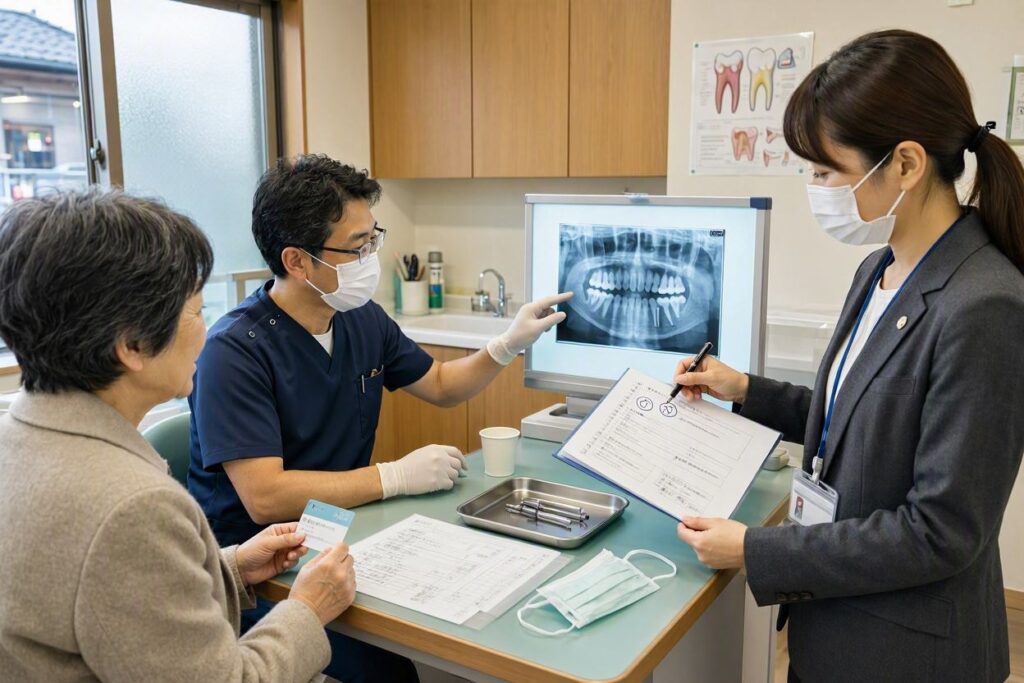
Understanding “Welfare Dental”: The Role of Medicaid
When people refer to “welfare dental,” they are almost always talking about Medicaid. Medicaid is a joint federal and state program in the United States that provides health coverage to eligible low-income adults, children, pregnant women, elderly adults, and people with disabilities.
It is crucial to understand that Medicaid is not a single, uniform program. It is administered by each individual state, within broad federal guidelines. This means your dental benefits are determined by the state you live in, not by a single national policy.
Another key point is the difference between Medicaid dental benefits for children and adults.
Dental Coverage for Children (Under 21)
Under a federal mandate known as the Early and Periodic Screening, Diagnostic and Treatment (EPSDT) benefit, all children enrolled in Medicaid are entitled to comprehensive dental care. This means any dental service that is deemed “medically necessary” must be provided.
This is a powerful protection. It creates a legal requirement for states to cover a wide range of treatments to ensure a child’s oral health, from routine cleanings to more complex procedures.
Dental Coverage for Adults (21 and Over)
For adults, the rules are very different. Dental coverage for adults is considered an “optional” benefit under federal law. This means states are not required to provide it. While most states do provide some level of dental benefit for adults, the scope of that benefit varies dramatically from state to state.
Some states offer a relatively comprehensive adult benefit, while others offer only emergency services, like extractions for pain relief. This is the primary reason why the question about implant coverage is so difficult to answer nationally.
The Big Question: Does Welfare (Medicaid) Cover Dental Implants?
The most direct and realistic answer is that dental implants are almost never covered for adults under Medicaid. They are classified as a cosmetic or elective procedure, not a medically necessary one.
For adults, Medicaid’s dental benefits are designed to provide essential care. This typically includes:
- Exams and cleanings (often with limits)
- X-rays
- Fillings
- Simple tooth extractions
- Root canals on certain teeth
- Emergency pain relief
- Dentures and partials (often with strict limits and prior authorization)
The goal of the adult benefit is to treat infection, relieve pain, and restore basic chewing function. A dental implant, while a superior option, is also the most expensive one. When a cheaper alternative like a partial denture or a bridge is deemed clinically adequate, Medicaid will not pay for the more expensive implant.
The Exception for Children: A Narrow Window
For children under 21, the situation is slightly different due to the EPSDT mandate. Because the state must cover all “medically necessary” services, there is a theoretical pathway for an implant to be covered for a child.
However, this is not a routine benefit. It is reserved for very specific, medically justified cases. A dentist would need to demonstrate that an implant is truly a medical necessity. This might occur in situations such as:
- A child is born with a congenital condition (like ectodermal dysplasia) that prevents the normal development of permanent teeth.
- A child suffers severe facial trauma that results in the loss of a permanent tooth.
- An implant is required as part of a larger, medically necessary reconstruction.
In these cases, the dentist must submit a request for “prior authorization” with extensive documentation to prove the medical necessity. This is a high bar to clear, and approvals are not common.
The “Alternative Benefit” Clause: The Financial Reality
Even in the rare case where an implant might be considered for an adult, or where a prior authorization is submitted, there is another hurdle: the “alternative benefit” or “least expensive treatment” rule.
Medicaid programs are stewards of public funds. They have a responsibility to provide cost-effective care. If a missing tooth can be adequately replaced with a less expensive option, such as a partial denture, the program will only pay for the cost of that denture. If you still want the implant, you would be responsible for the entire difference in cost out of pocket. This effectively makes the implant a non-covered benefit.
How to Find Out Your Specific State’s Rules
Since dental coverage is state-specific, you must find out the rules for your own state. Here is a step-by-step guide.
Step 1: Identify Your State’s Medicaid Program
Your Medicaid card will have the name of your state’s program on it. This is your starting point. Common names include Medi-Cal (California), KanCare (Kansas), MaineCare (Maine), and many others.
Step 2: Find the Official Website
Search online for “[Your State Name] Medicaid dental benefits.” This should lead you to the official website for your state’s Medicaid or Health and Human Services department.
Step 3: Look for the “Member Handbook” or “Dental Provider Manual”
These documents outline the covered and non-covered services. Look for the “Dental” section and search for “implants.” You will likely find it listed under “Exclusions” or “Non-Covered Services.”
Step 4: Call Member Services
The phone number on your Medicaid card will connect you with a representative who can answer specific questions. Ask them directly: “Does my Medicaid plan cover dental implants for adults?” or “What is the process for getting a dental implant approved for my child under EPSDT?”
Here is a summary of the general landscape:
| Age Group | Federal Mandate | Dental Implant Coverage |
|---|---|---|
| Children (Under 21) | Comprehensive care required (EPSDT). | Rare. Only if proven medically necessary (e.g., congenital defect, trauma). Requires prior authorization. |
| Adults (21-64) | No federal mandate. State option. | Almost Never. Considered cosmetic/elective. The covered alternative is usually a denture or bridge. |
| Seniors & Disabled | Same as adults. | Almost Never. Same rules apply. |
What Are Your Options if Welfare Won’t Pay?
If you find that your Medicaid coverage will not pay for a dental implant, you are not without hope. There are other avenues to explore.
- Use the Covered Alternative: This is the most practical option for many. A partial denture or a fixed bridge is a covered benefit in many states. While not as comfortable or permanent as an implant, it can restore your smile and your ability to chew.
- Seek Out a Dental School: Dental schools offer high-quality care provided by students under the close supervision of experienced faculty. The cost is often significantly lower than private practice. If a dental school is near you, it is an excellent option to explore.
- Find a Community Health Center: Federally Qualified Health Centers (FQHCs) provide care on a sliding fee scale based on your income. They may not offer implants, but they can provide essential care and help you understand your options.
- Ask About Payment Plans: Some private dentists offer in-house payment plans or financing that can break the cost of an implant into affordable monthly payments.
Important Note: Just because a procedure is not covered by insurance does not mean you are without options. Talk to your dentist about your situation. They may be able to work with you or point you toward resources in your community.
Conclusion
The question of whether welfare dental covers dental implants has a stark answer for most adults: no. Medicaid programs, focused on providing essential and cost-effective care, classify implants as an elective, cosmetic procedure. The covered alternatives are almost always dentures or bridges.
For children, there is a narrow exception due to the federal EPSDT mandate, which requires coverage for medically necessary services. This could potentially include an implant in cases of congenital defects or severe trauma, but it requires a demanding prior authorization process.
Your first step is always to check the specific rules of your state’s Medicaid program. Understanding the limitations of your coverage allows you to have a realistic conversation with your dentist and explore the available alternatives to achieve the best possible outcome for your oral health.
Frequently Asked Questions
Can I get dental implants on Medicaid if I have a medical need?
For adults, it is extremely unlikely. Even with a medical need, the program will typically only pay for the least expensive, adequate treatment, which is usually a denture or bridge. You would have to pay the difference for an implant.
Do any states cover dental implants for adults on Medicaid?
Coverage is always changing, and some states may have pilot programs or specific exceptions. For example, some states may cover implants as part of reconstructive surgery after an accident. However, as a general rule, it is not a standard covered benefit for adults in any state.
What is the best way to find affordable dental implants without insurance?
The best options are to seek treatment at a dental school, look for a community health center with a sliding fee scale, or discuss a payment plan with a private dentist. Comparing prices from multiple providers can also help you find the most competitive rate.
Why are dental implants so expensive?
The cost reflects several factors: the surgical skill and time of the dentist, the cost of the precision-engineered titanium implant and the custom-made crown, the use of advanced technology like 3D imaging, and the fees for the dental laboratory.
Additional Resource
To find a Federally Qualified Health Center (FQHC) near you that may offer dental services on a sliding fee scale, you can use the search tool provided by the Health Resources and Services Administration (HRSA): https://findahealthcenter.hrsa.gov/