Best Dental Insurance For Implants
Let’s be honest for a second.
Dental implants are expensive.
If you have lost a tooth—or several teeth—you already know that implants are the gold standard for replacement. They look natural. They feel strong. And they can last a lifetime.
But the price tag?
That can stop anyone in their tracks.
A single implant can cost anywhere from 3,000to6,000. Full-mouth reconstruction? That can easily exceed $30,000 or more.
So you start searching for help. You type into Google: best dental insurance for implants.
And suddenly, you are wading through confusing policy language, annual maximums, and waiting periods that feel designed to frustrate you.
Here is the truth most websites won’t tell you.
Most standard dental insurance plans do not cover implants fully. Some don’t cover them at all. Others offer partial coverage after long waiting periods.
But that does not mean you are out of luck.
This guide will walk you through exactly how dental implant coverage works, which plans come closest to covering your needs, and what alternatives exist when insurance falls short.
Let’s get realistic.

Understanding How Dental Implant Coverage Actually Works
Before we compare providers, you need to understand one thing.
Dental insurance is not the same as medical insurance.
Most dental plans focus on prevention and basic procedures. They want to pay for cleanings, fillings, and simple extractions. Major procedures like implants? Those are often treated as “optional” or “cosmetic” by older insurance models.
That is changing.
More insurance companies now recognize that implants are a functional necessity, not just a beauty treatment. But the coverage still comes with strings attached.
The Three Parts Of An Implant Procedure
Here is why insurance gets complicated.
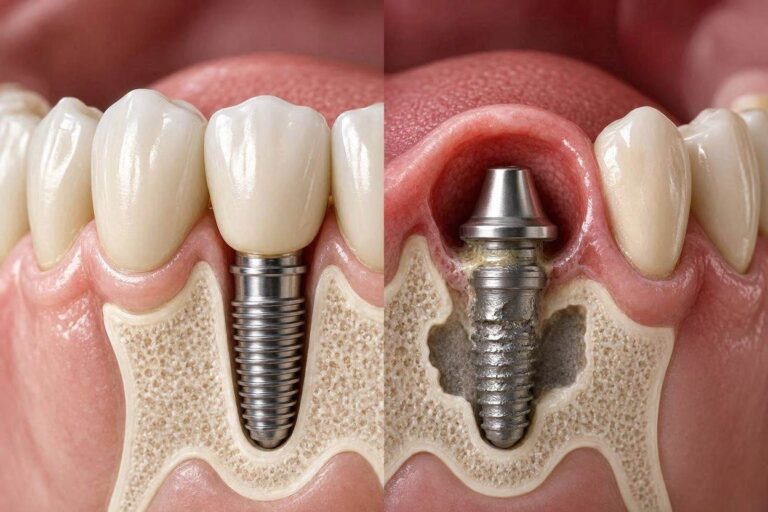
A single dental implant is not one procedure. It is three separate phases:
- The surgical placement – The dentist surgically places a titanium post into your jawbone.
- The abutment – A small connector piece attaches to the post.
- The crown – The visible tooth portion sits on top.
Each phase has its own cost. And insurance may cover each phase differently—if at all.
Some plans cover the crown but not the surgical placement. Others cover extractions but not the implant post.
This is why you must read the fine print.
Typical Coverage Percentages For Implants
When you find a plan that includes implant coverage, here is what you can generally expect:
| Procedure Type | Typical Coverage | Patient Responsibility |
|---|---|---|
| Preventive care (cleanings, exams) | 80% – 100% | $0 – 20% |
| Basic procedures (fillings, extractions) | 70% – 80% | 20% – 30% |
| Major procedures (crowns, bridges, dentures) | 50% | 50% |
| Implant surgical placement | 0% – 50% | 50% – 100% |
| Implant crown | 50% | 50% |
As you can see, even the best dental insurance for implants rarely covers more than 50% of the total cost.
And that coverage only applies after you meet your deductible and stay within your annual maximum.
The Annual Maximum Problem
This is the hidden obstacle that surprises most people.
Dental plans have an annual maximum. That is the most money your insurance will pay in a single year.
For most plans, the annual maximum ranges from 1,000to2,500.
Let’s do simple math.
If your implant costs 5,000andyourplancovers502,500. That fits within a 2,500annualmaximum.Youpaytheother2,500.
But what if you need two implants? That would be 10,000total.At505,000. But your annual maximum is only 2,500.Soinsurancestopspayingafter2,500. You cover the remaining $7,500.
This is why many people space out implant procedures over multiple years.
“I always tell my patients: do not buy a dental plan solely for implants without calculating your annual maximum first. A plan that covers 80% sounds great until you realize they stop paying after $1,500.”
— Dr. Elena Marquez, DDS, prosthodontist
Key Features To Look For In Implant Coverage
Not all dental plans are created equal.
If you are searching for the best dental insurance for implants, focus on these five features.
No Waiting Period For Major Services
Waiting periods are the number one frustration in dental insurance.
Many plans make you wait six to twelve months before they cover major procedures like implants. Some make you wait up to twenty-four months.
Why? Insurance companies want to prevent you from buying a plan, getting expensive work done immediately, and then canceling.
But some plans offer no waiting periods for major services. Those are rare, but they exist. You will typically pay higher monthly premiums for them.
High Annual Maximum
Look for an annual maximum of at least 2,500.Ideally3,000 to $5,000.
Some premium plans offer no annual maximum at all. Those are expensive, but for patients needing multiple implants, they can save you thousands.
Implant-Specific Coverage Language
Here is a trick.
Do not assume a plan covers implants just because it covers crowns or bridges.
Read the policy’s “Exclusions” section carefully. Some plans explicitly say: “Dental implants are not a covered benefit.”
Other plans use softer language: “Coverage for implant-supported prostheses is limited to the prosthetic portion only.”
That means they will pay for the crown but not the surgical post.
Look for plans that say: “Dental implants are covered at 50% of the contracted rate.”
In-Network vs. Out-Of-Network
Most PPO plans have a network of dentists.
If you stay in-network, you get lower rates. Your insurance covers a higher percentage.
If you go out-of-network, you pay more. Sometimes much more.
Before buying a plan, check if your preferred implant dentist is in-network. If you do not have a dentist yet, check the plan’s network directory for prosthodontists or oral surgeons who specialize in implants.
No Missing Tooth Clause
This is a nasty surprise you need to know about.
Many dental insurance plans have a “missing tooth clause.” If you lost a tooth before your coverage started, the plan will not pay to replace that tooth with an implant.
Why? They consider it a pre-existing condition.
Some plans waive this clause if you have had continuous dental coverage for twelve months or more. Others do not.
If you already have a missing tooth, ask the insurance representative directly: “Does your plan have a missing tooth clause that would exclude my specific missing tooth?”
Top Insurance Options For Dental Implants
Let’s look at real plans available in the market (as of this writing).
Remember: plans change. Always verify current details before purchasing.
1. Delta Dental PPO Premier Plan
Delta Dental is one of the largest dental insurance providers in the United States.
Their PPO Premier Plan is often recommended for people needing major work.
- Implant coverage: Yes – surgical placement and crown covered at 50% after waiting period
- Waiting period for majors: 12 months
- Annual maximum: $2,500
- Deductible: $50 per person
- Monthly premium (approx): 45–65
Pros: Large nationwide network. Implants explicitly covered. No missing tooth clause for continuous coverage holders.
Cons: Long waiting period. Annual maximum still limits you to one implant per year.
2. Cigna Dental 1500
Cigna offers a solid mid-tier plan that includes implant coverage.
- Implant coverage: Yes – 50% coverage for surgical placement and crown
- Waiting period for majors: 12 months (waived if you had prior dental insurance)
- Annual maximum: $1,500
- Deductible: $50
- Monthly premium (approx): 35–55
Pros: Lower monthly premium. Waiting period waiver available with proof of prior coverage.
Cons: Low annual maximum means you will pay out-of-pocket for most of the cost.
3. MetLife TakeAlong Dental
MetLife’s individual plan is popular among people without employer-sponsored insurance.
- Implant coverage: Yes – classified as a major service at 50%
- Waiting period for majors: 6 months for basic, 12 months for majors
- Annual maximum: $2,000
- Deductible: $50
- Monthly premium (approx): 40–70
Pros: Shorter waiting period than some competitors. Large network.
Cons: Annual maximum is average. Some policy versions exclude implants, so read carefully.
4. Physicians Mutual Insurance
Physicians Mutual offers a unique plan that positions itself as covering “everything from cleanings to dentures” with no annual maximum on some procedures.
- Implant coverage: Partial – covers crown but not surgical post in some states
- Waiting period: Varies by state
- Annual maximum: None on some tiers
- Monthly premium (approx): 55–90
Pros: No annual maximum is huge for multiple implants. Broad coverage for related procedures.
Cons: Implant post coverage is inconsistent. Premiums are higher.
5. Spirit Dental
Spirit Dental is known for offering plans with no waiting periods on major services.
- Implant coverage: Yes – 50% coverage after deductible
- Waiting period for majors: None
- Annual maximum: 3,000–5,000 depending on plan tier
- Deductible: $100
- Monthly premium (approx): 50–85
Pros: No waiting period. Higher annual maximum. Immediate coverage.
Cons: Higher monthly cost. Network is smaller than Delta or Cigna.
Comparison Table Of Leading Plans
| Plan | Implant Coverage | Waiting Period | Annual Max | Monthly Premium (est.) | Best For |
|---|---|---|---|---|---|
| Delta Dental PPO Premier | 50% | 12 months | $2,500 | $45-65 | Nationwide access |
| Cigna Dental 1500 | 50% | 12 months (waiver possible) | $1,500 | $35-55 | Low monthly cost |
| MetLife TakeAlong | 50% | 12 months | $2,000 | $40-70 | Shorter waiting period |
| Physicians Mutual | Varies by state | Varies | None (some tiers) | $55-90 | No annual max |
| Spirit Dental | 50% | None | $3,000-5,000 | $50-85 | Immediate coverage |
Discount Dental Plans As An Alternative
Here is something most articles will not tell you.
A discount dental plan is not insurance. But it might save you more money than traditional insurance for implants.
How Discount Plans Work
You pay an annual membership fee—usually 100to150 per year.
In exchange, you get access to a network of dentists who agree to charge reduced rates for their services.
For implants, the discount can be significant. A 5,000implantmightcostyou3,000 at the discounted rate. That is a 40% savings.
Pros Of Discount Plans
- No waiting periods. You can use the plan the next day.
- No annual maximums. You can get all your work done at once.
- No deductibles.
- No claim forms. You just show your card and pay the discounted rate.
- No pre-existing condition exclusions.
Cons Of Discount Plans
- You still pay for everything out-of-pocket at the discounted rate.
- The discount percentage varies by dentist.
- Network quality varies by location.
- Not all implant specialists accept discount plans.
Best Discount Dental Plans For Implants
- DentalPlans.com – Offers multiple networks. Look for the Aetna Dental Access or Careington 500 series.
- Careington – Established network with good implant discounts in many states.
- 1Dental – Offers the Aetna network at competitive annual fees.
*“For a patient needing three or more implants, a discount plan often beats traditional insurance. With insurance, you hit your annual max after one implant. With a discount plan, you save 30-40% on every implant with no cap.”*
— Sarah Jenkins, dental benefits consultant
Health Insurance And Medical Necessity
This is a strategy many people overlook.
Sometimes, your medical insurance will cover part of your dental implant procedure.
When Medical Insurance Pays
Medical insurance may cover implant surgery if:
- The tooth loss resulted from an accident or trauma.
- You have a congenital condition affecting your teeth or jaw.
- You need jaw reconstruction that includes implants.
- The implant is part of cancer treatment recovery (oral cancer, for example).
In these cases, the surgical placement of the implant post might be covered under your medical plan. The crown (the visible tooth) is usually still considered dental.
How To Pursue This Path
- Ask your oral surgeon to write a letter of medical necessity.
- Submit a pre-determination to your medical insurance.
- Be prepared to appeal if denied.
Some patients successfully get 50% to 80% of the surgical cost covered this way.
Medicare And Implants
Original Medicare (Parts A and B) does not cover dental implants. Medicare Advantage plans (Part C) sometimes include dental benefits, but implant coverage is rare. If you find a Medicare Advantage plan with implant coverage, expect a high premium and limited network.
Dental Schools: The Low-Cost Alternative
If insurance is not working for you, consider dental schools.
Dental schools treat patients at significantly reduced rates because supervised students perform the work.
Typical Costs At Dental Schools
- Single implant: 1,500to2,500 (compared to 3,000to6,000 at private practice)
- Full arch: 10,000to15,000 (compared to $30,000+)
What You Should Know
- Appointments take longer (sometimes twice as long).
- You will have multiple visits with different student providers.
- Every step is supervised by experienced faculty dentists.
- Quality is generally excellent because of the high supervision ratio.
How To Find A Dental School
Search online for “dental school implant clinic” followed by your state name. Major universities with dental schools include:
- University of Washington
- University of Michigan
- New York University
- University of Texas Health Science Center
- University of California, Los Angeles (UCLA)
- University of Florida
Additional Resource
For an up-to-date list of accredited dental schools offering implant services, visit the American Dental Education Association (ADEA) website at www.adea.org and look for “Dental School Clinics.”
Financing Options To Cover The Gap
Even with the best dental insurance for implants, you will likely have out-of-pocket costs.
Here are common financing options.
CareCredit
CareCredit is a healthcare credit card accepted by many dentists.
- Promotional financing options: 6, 12, 18, or 24 months with no interest if paid in full
- Longer-term plans with fixed interest rates
- Quick application process
LendingClub And Prosper Healthcare Lending
These are personal loan platforms that partner with healthcare providers.
- Fixed interest rates
- Terms from 12 to 84 months
- Higher approval rates than traditional banks
In-House Payment Plans
Some dental offices offer their own payment plans.
- No credit check (sometimes)
- Low or no interest
- Requires a down payment
Ask your dentist directly: “Do you offer an in-house financing plan for implants?”
HSA And FSA Funds
If you have a Health Savings Account (HSA) or Flexible Spending Account (FSA), you can use those pre-tax dollars to pay for implants.
This does not reduce the total cost, but it reduces your taxable income. That saves you money on your taxes.
A Realistic Cost Breakdown By Scenario
Let’s look at three common situations. This will show you how different insurance plans affect your actual out-of-pocket cost.
Scenario 1: Single Implant – $5,000 Total
| Plan Type | Insurance Pays | You Pay | Notes |
|---|---|---|---|
| No insurance | $0 | $5,000 | Full price |
| Discount plan (35% off) | $0 | $3,250 | No waiting, no cap |
| Traditional dental insurance (50% coverage, $2,500 annual max) | $2,500 | $2,500 | Good option for single implant |
| Premium plan (50% coverage, $5,000 annual max) | $2,500 | $2,500 | Same as above, but better if you need more work |
Scenario 2: Two Implants – $10,000 Total
| Plan Type | Insurance Pays | You Pay | Notes |
|---|---|---|---|
| No insurance | $0 | $10,000 | Unaffordable for most |
| Discount plan (35% off) | $0 | $6,500 | Best option |
| Traditional dental insurance (50% coverage, $2,500 annual max) | $2,500 | $7,500 | You hit the max after one implant |
| Premium plan (50% coverage, $5,000 annual max) | $5,000 | $5,000 | Much better |
Scenario 3: Full Arch (4-6 Implants) – $25,000 Total
| Plan Type | Insurance Pays | You Pay | Notes |
|---|---|---|---|
| No insurance | $0 | $25,000 | Only feasible with savings or financing |
| Discount plan (35% off) | $0 | $16,250 | Excellent savings |
| Traditional dental insurance | $2,500 | $22,500 | Insurance is almost pointless here |
| Premium high-max plan | $5,000 | $20,000 | Better but still expensive |
Key takeaway: For one implant, traditional insurance works reasonably well. For multiple implants, discount plans or dental schools offer better value.
Important Notes For Readers
📌 Never buy a plan without reading the exclusions page. That is where implant coverage lives or dies.
📌 Call the insurance company directly. Ask: “Does this plan cover the surgical placement of a single dental implant post?” Record the name of the representative and the date.
📌 Ask about the missing tooth clause. If you already have a gap, this clause can make your policy useless.
📌 Check if your dentist accepts the plan. An in-network discount of 40% is worthless if your implant specialist is not in-network.
📌 Consider timing. If you need multiple implants, schedule them across two or three policy years to use multiple annual maximums.
📌 Remember that insurance is a math problem. Add up your total expected implant costs. Subtract the annual maximum. Then decide if the monthly premium is worth it.
📌 Discount plans are not scams. They just work differently. For implants, they often outperform traditional insurance.
Step-By-Step Action Plan To Find Your Best Option
Follow this list to make an informed decision without getting overwhelmed.
Step 1: Get A Treatment Plan
Visit an implant dentist for a consultation. Ask for a written treatment plan with all costs broken down by procedure.
Step 2: Check Your Current Insurance
If you have dental insurance through your employer, call and ask about implant coverage. You might already have it.
Step 3: Get Quotes From Three Insurance Plans
Use the table above as a starting point. Call each provider for a personalized quote based on your zip code and age.
Step 4: Get A Quote From A Discount Plan
Visit DentalPlans.com or Careington. Enter your zip code and search for implant providers in your area.
Step 5: Contact Your Local Dental School
Ask for their implant fee schedule and waitlist information.
Step 6: Do The Math
Create a simple spreadsheet comparing:
- Total implant cost
- Insurance/discount savings
- Your final out-of-pocket cost
- Monthly premium (annualized)
- Waiting period implications
Step 7: Make Your Decision
Choose the option that gives you the lowest total cost to completion, not the lowest monthly premium.
Frequently Asked Questions (FAQ)
Does any dental insurance cover implants fully?
No. No standard dental insurance plan covers 100% of implant costs. The best plans cover 50% of the implant and crown, subject to annual maximums and deductibles.
Is it cheaper to get implants without insurance?
In some cases, yes. If your insurance has a low annual maximum (1,000to1,500), you might pay more in premiums than you receive in benefits. For multiple implants, a discount plan or dental school is often cheaper than traditional insurance.
How long do I have to wait for implant coverage?
Most plans impose a 12-month waiting period for major services like implants. Some premium plans (like Spirit Dental) offer no waiting period for an additional cost.
Can I buy dental insurance just for implants and then cancel?
You can, but it is not smart. Insurance companies are aware of this strategy. Most plans have waiting periods specifically to prevent this. Also, if you cancel within the first year, you may not receive any benefit at all.
What is the best dental insurance for implants with no waiting period?
Spirit Dental is the most commonly recommended no-waiting-period option. However, verify current policy details because insurance products change frequently.
Does Aetna cover dental implants?
Some Aetna plans cover implants at 50% after a 12-month waiting period. Aetna’s discount plan (Aetna Dental Access) does not cover implants but offers discounted rates through network providers.
Will my medical insurance cover implant surgery after an accident?
Yes, possibly. If tooth loss resulted from trauma, a medical claim might cover the surgical placement of the implant post. You will still need a dental plan or out-of-pocket payment for the crown.
Can I use an FSA or HSA for implants?
Yes. Implants are considered eligible medical expenses by the IRS. You can use FSA or HSA funds tax-free to pay for any portion of implant costs not covered by insurance.
How much does a single dental implant cost with insurance?
Assuming 50% coverage and a 2,500annualmaximum,a5,000 implant would cost you 2,500out−of−pocketplusmonthlypremiums.Ifyourpremiumstotal600 per year, your total cost would be approximately $3,100.
Is it worth buying dental insurance for full-mouth implants?
Generally, no. For full-mouth reconstruction costing 30,000ormore,traditionalinsurancewitha2,500 annual maximum barely makes a dent. A discount plan or dental school is a better fit.
Conclusion: Three Lines To Remember
The best dental insurance for implants typically covers 50% of the cost with a $2,500 annual maximum, making it reasonable for a single implant but insufficient for multiple implants. Discount dental plans and dental schools offer better value for patients needing extensive implant work, with savings of 30-40% and no annual caps. Always read exclusions carefully, watch for missing tooth clauses, and do the math on total out-of-pocket costs before choosing any plan.
Additional Resource Link:
For a state-by-state guide to accredited dental school implant clinics, visit the American College of Prosthodontists patient resource page at www.gotoapro.org/find-a-prosthodontist. This tool helps you find specialists who offer implant services, often with free initial consultations.