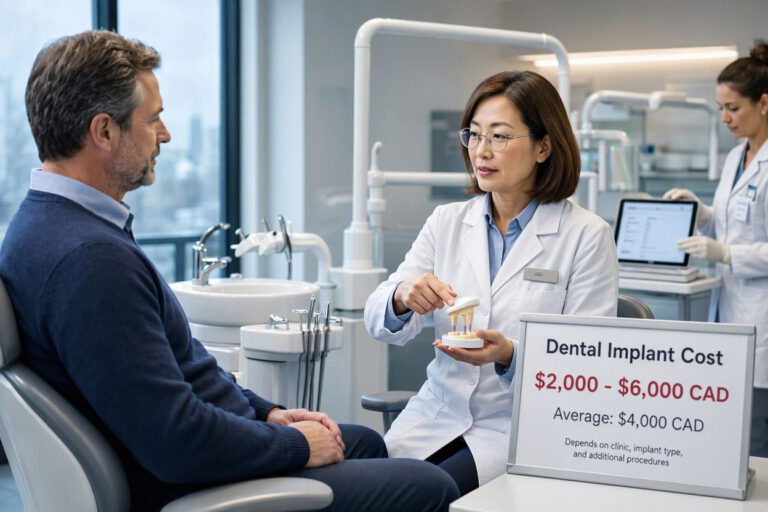
Best One-Day Dental Implant Procedures Technology
Imagine walking into a dental office with a broken smile and walking out the same day with a full set of secure, beautiful teeth. That sounds like science fiction, right? For many people, it feels too good to be true.
But here is the honest reality. Modern dentistry has changed fast. What used to take six months of healing and multiple surgeries can now happen in a single appointment.
However, not everyone is a candidate. And not every “one-day” solution is the same.
In this guide, we will explore the real technology behind best one-day dental implant procedures. We will look at the machines, the methods, and the human factors. You will learn what works, what costs, and how to protect your health.
Let us begin with the most important question first.
What Exactly Is a One-Day Dental Implant?
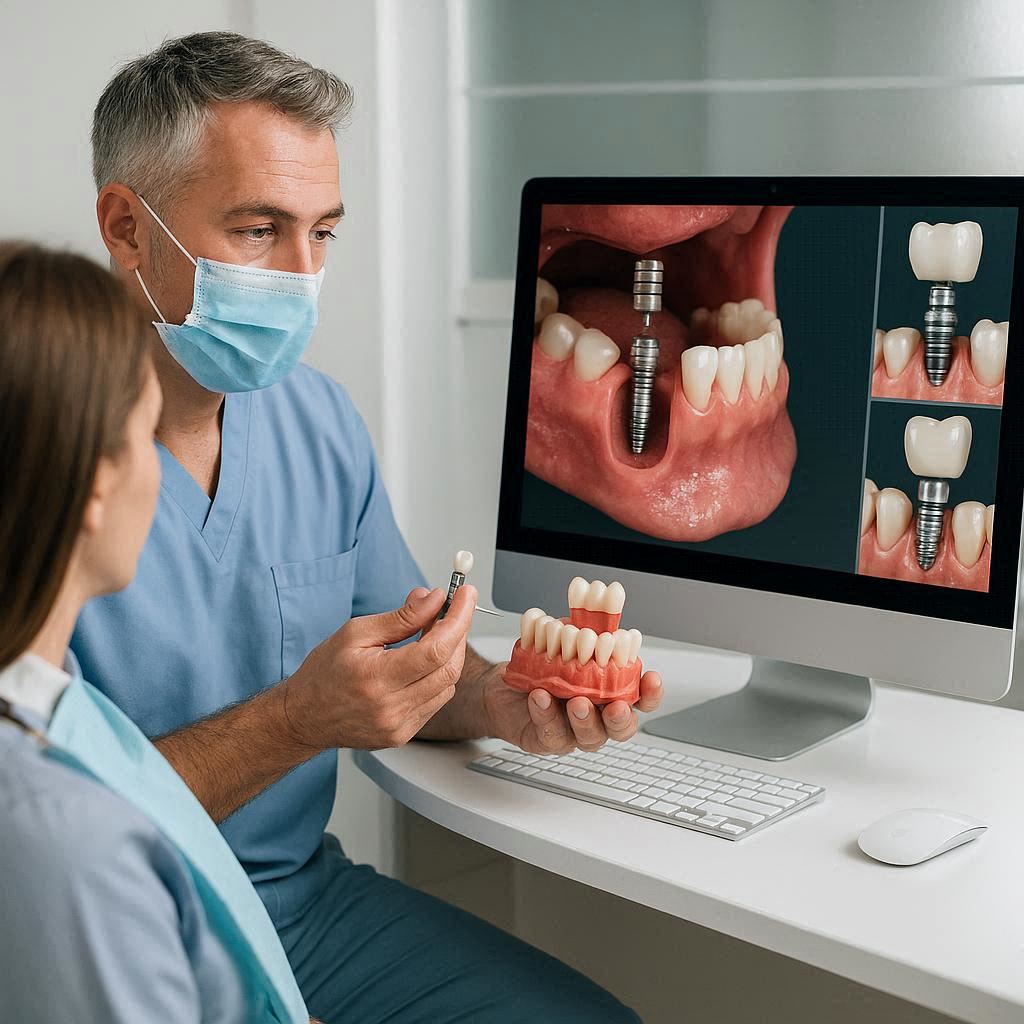
A one-day dental implant, often called “same-day implants” or “teeth in a day,” refers to a protocol where a dentist places the implant post and attaches a temporary (or sometimes final) crown during the same visit.
Traditionally, dental implants required three steps:
- Extraction and bone grafting (wait 3–6 months)
- Implant placement (wait 4–6 months for osseointegration)
- Final crown placement
With one-day technology, steps two and three merge. In some advanced cases, step one also merges.
Important note for readers: A true one-day implant does not mean your permanent crown is ready on day one. In most cases, you receive a temporary crown. The final ceramic crown comes later, after your bone and gum have properly healed around the implant.
The Evolution of Implant Technology (A Short History)
To understand where we are, we need to look back. Dental implants have existed for decades. But they were slow, painful, and unpredictable.
In the 1950s, a Swedish orthopedic surgeon named Per-Ingvar Brånemark discovered that titanium fuses with living bone. He called this phenomenon “osseointegration.” That discovery changed everything.
For the next 40 years, implants required long healing times. Dentists feared loading the implant too soon. They believed pressure would break the bone-implant bond.
Then, in the early 2000s, something shifted. New implant surfaces, stronger alloys, and 3D imaging allowed for immediate loading. The first “teeth in a day” protocols emerged for completely edentulous (toothless) jaws.
Today, we have technology that can place multiple implants and a fixed bridge in a single day. But let’s not get ahead of ourselves. We need to look at the tools that make this possible.
The Core Technologies Behind Same-Day Implants
The best one-day dental implant procedures technology relies on four pillars. Without any one of these, same-day implants would be too risky.
1. Cone Beam Computed Tomography (CBCT)
This is your dentist’s superpower. A CBCT scan is a 3D X-ray that shows your jawbone, nerves, sinuses, and teeth in incredible detail.
Why does this matter for one-day implants? Because the dentist must plan the perfect position for the implant before making a single cut. With CBCT, they can measure bone density, avoid the inferior alveolar nerve, and determine exactly how much bone volume you have.
Most reputable same-day implant centers will not touch your mouth without a CBCT scan first. If they do, walk away.
2. Digital Smile Design (DSD) and CAD/CAM
Computer-Aided Design (CAD) and Computer-Aided Manufacturing (CAM) allow dentists to design your new tooth on a screen and mill it right in the office.
Here is how it works:
- A digital intraoral scanner captures a 3D model of your mouth.
- The software designs the crown based on your neighboring teeth and bite.
- A milling machine carves the crown out of a solid block of ceramic or resin.
- The dentist bonds the crown to the implant an hour later.
This process used to take two weeks and required messy impressions. Now it takes about 60 minutes.
3. Immediate Loading Implants (Surface Technology)
Not all implants are designed for same-day placement. Traditional implants had smooth surfaces. Bone took 4–6 months to grow into them.
Modern immediate-load implants have highly textured surfaces. Think of them like Velcro for bone cells. Popular examples include:
- SLActive (Straumann)
- OsseoSpeed (Dentsply)
- Xeal (Straumann)
These surfaces attract bone cells faster. They also provide better initial stability, which we will discuss next.
4. High-Strength Ceramics and Titanium Alloys
The crown material matters. In the past, dentists used plastic temp crowns that broke easily. Now, many use high-strength lithium disilicate (E.max) or zirconia.
Zirconia is particularly impressive. It is white, biocompatible, and almost as strong as metal. Some one-day protocols use monolithic zirconia crowns that can withstand full biting forces immediately.
However, a note of caution: even the best temporary crown is still temporary. Your dentist will likely recommend a soft food diet for 4–6 weeks after same-day implant surgery.
A Typical Same-Day Implant Procedure: Step by Step
Let me walk you through what a real same-day implant appointment looks like. I will be honest about the sensations, the time, and the recovery.
Step 1: Consultation and CBCT Scan (Separate day or morning)
You come in. The dentist reviews your medical history. They take a CBCT scan and intraoral photos. They discuss whether you are a candidate.
Time: 45 minutes
Pain: None
Cost often included in the procedure fee
Step 2: Anesthesia and Sedation (Day of procedure)
You receive local anesthetic to numb the area. For anxious patients or full-arch cases, you may receive oral sedation, nitrous oxide (laughing gas), or IV sedation.
You will feel pressure but not pain.
Step 3: Tooth Extraction (If needed)
If you have a damaged tooth remaining, the dentist extracts it carefully. They preserve as much bone as possible.
Time: 5–15 minutes per tooth
Step 4: Implant Placement
The dentist uses a surgical guide created from your CBCT data. This guide fits over your teeth and tells the drill exactly where to go.
They drill a precise hole. They insert the titanium implant. They check the torque (tightness).
For a single tooth: 15–20 minutes
For a full arch: 1–2 hours
Realistic expectation: You will hear drilling and feel vibration. It is not painful, but it is strange. Bring headphones if you are sensitive to sound.
Step 5: Immediate Temporary Crown Placement
The dentist attaches an abutment (connector piece) to the implant. They screw or cement the temporary crown.
They check your bite. They polish the crown. You look in the mirror.
Time: 20–30 minutes
Step 6: Home Care Instructions
You receive antibiotics, pain medication (usually ibuprofen), a special mouth rinse, and dietary restrictions. No chewing on the new tooth for at least 4 weeks.
Total chair time for a single tooth: 2.5 to 4 hours
Comparison Table: One-Day Implants vs. Traditional Implants
| Feature | One-Day Implant (Same-Day) | Traditional Implant |
|---|---|---|
| Number of surgeries | 1 (extraction, implant, temp crown) | 2 (implant placement then crown) |
| Time to temporary tooth | Same day | 4–6 months |
| Time to final crown | 3–6 months | 4–6 months |
| Candidate requirements | High bone density, no infection | Most healthy adults |
| Cost per tooth | 4,000–6,500 | 3,000–5,000 |
| Risk of failure | Slightly higher (10-15% higher than traditional in first year) | Low (95-98% success over 10 years) |
| Aesthetic quality of temp | Good (CAD/CAM milled) | N/A |
| Diet restrictions | Soft foods for 1–2 months | Soft foods for 1–2 weeks after implant placement |
Who Is a Good Candidate for Same-Day Implants?
This is where many online guides mislead you. They make it sound like everyone can get same-day implants. That is false.
You are likely a good candidate if:
- You have excellent bone density. Not just bone height, but bone quality. Soft, spongy bone will not hold an implant securely for immediate loading.
- You have no active infection. Gum disease or an abscess must be treated first.
- You do not smoke heavily. Smoking reduces blood flow to the bone. Heavy smokers have significantly higher failure rates with same-day implants.
- You are not a tooth grinder (bruxer). Nighttime grinding can apply 500+ pounds of pressure to a healing implant. That is a recipe for failure.
- The site is not a molar. Yes, you read that correctly. Lower molars experience the highest biting forces. Many experienced dentists will not place same-day implants on lower second molars.
Important note for readers: If your dentist says you are not a candidate for same-day implants, do not push them. They are protecting you from failure and financial loss. Listen to their advice.
Full-Arch Same-Day Implants: “All-on-4” and “All-on-6”
For people missing all teeth in one jaw, same-day technology offers a life-changing solution. The most famous protocols are All-on-4 and All-on-6.
How All-on-4 Works
The dentist places four implants in specific positions:
- Two straight implants in the front
- Two angled implants in the back
The angled back implants avoid the maxillary sinuses (upper jaw) and the inferior alveolar nerve (lower jaw). This means no bone grafting in most cases.
On the same day, they attach a fixed temporary bridge. You leave with a full arch of non-removable teeth.
The Technology That Makes It Possible
- Multi-unit abutments: These special connectors allow the dentist to correct the angle of the implants.
- Titanium bar framework: A milled titanium bar connects the implants and distributes biting forces evenly.
- Immediate load acrylic bridge: This temporary bridge is reinforced with glass fiber or metal mesh.
Success Rates and Realistic Expectations
All-on-4 has a 10-year success rate of approximately 95% for the lower jaw and 93% for the upper jaw. However, the temporary bridge has a lifespan of only 6–18 months. You will need a final bridge made of zirconia or reinforced acrylic.
Cost for full-arch same-day implants: 20,000to35,000 per arch (USA). Overseas prices range from 8,000to15,000, but quality control varies widely.
The Role of Digital Dentistry in One-Day Procedures
We have touched on CBCT and CAD/CAM. But let’s go deeper. Digital dentistry is the engine driving best one-day dental implant procedures technology.
Intraoral Scanners (IOS)
Devices like the iTero Element, 3Shape TRIOS, and Medit i700 create perfect digital impressions in 2–3 minutes. No goopy impression material. No gagging.
The scanner projects laser light or structured light onto your teeth. A camera captures thousands of images per second. Software stitches them into a 3D model accurate to 20 microns.
3D Printing of Surgical Guides
This is the real magic. Once the dentist plans the implant position in software (using coDiagnostiX, RealGuide, or similar), they export a file to a 3D printer.
The printer creates a sterile surgical guide that fits over your remaining teeth or gums. During surgery, the dentist locks the guide in place and drills through the guide’s metal sleeves. The implant goes exactly where planned.
Result: Less trauma, faster surgery, and higher predictability.
In-Office Milling Machines
Companies like Sirona (CEREC), Dentsply Sirona, and Straumann manufacture chairside milling machines. They carve crowns out of ceramic or resin blocks in under 15 minutes.
For the patient, this means:
- No temporary crown made of plastic
- No lab fees
- No second appointment for try-in
Limitations and Risks of Same-Day Implants
I promised you an honest, realistic guide. So let’s talk about what can go wrong.
Risk 1: Implant Failure from Micro-movement
Implants need absolute stability to integrate with bone. If the temporary crown moves even slightly during healing (micro-movement), a soft tissue scar forms around the implant instead of bone. This is called fibrous encapsulation. The implant will eventually fail.
Risk 2: Occlusal Overload
Your bite is incredibly strong. A same-day implant does not have the nerve endings that natural teeth have. You could chew something hard, feel no pain, and crush the bone around the implant without knowing it.
Risk 3: Poor Aesthetics
Most same-day implants compromise aesthetics for speed. The temporary crown might look bulky, the wrong color, or sit too high. Your final crown will fix this, but you may live with an imperfect smile for 3–6 months.
Risk 4: Higher Cost for Marginal Benefit
Here is a hard truth. For a single tooth, the difference between a same-day implant and a traditional implant is mostly convenience. The final result after 12 months is identical. You are paying an extra 1,000–1,500 to skip a second surgery and avoid a temporary flipper.
Is that worth it? Only you can decide.
Quotation from an Expert
“Same-day implants are a miracle for patients who cannot tolerate removable dentures or have high aesthetic demands in the front zone. But I tell every patient the same thing: speed is a privilege, not a right. You earn the right to a same-day implant with good bone, good health, and good habits.”
— Dr. Michael Sonick, DMD, Past President of the American Academy of Implant Dentistry
Cost Breakdown: What You Actually Pay For
Let us look at the real numbers. These are average US fees for 2026. Your location and dentist experience will change these numbers.
| Service | Traditional Implant | Same-Day Implant |
|---|---|---|
| Consultation and CBCT | 250–500 | 250–500 |
| Extraction (simple/surgical) | 200–600 | 200–600 |
| Bone graft (if needed) | 300–1,200 | Often avoided or same |
| Implant fixture | 1,500–2,500 | 1,800–2,800 |
| Abutment | 300–600 | 300–600 |
| Temporary crown/flipper | 200–500 (flipper) | 600–1,200 (CAD/CAM temp) |
| Final crown | 1,200–2,500 | 1,200–2,500 |
| Total (single tooth) | 3,950–3,950–7,900 | 4,350–4,350–8,100 |
Notice the overlap? At the lower end, traditional implants can actually be cheaper. At the higher end, same-day implants cost more. The premium is for the temporary crown and the convenience of one surgery.
What insurance covers: Most dental insurance covers 50% of the implant crown but nothing for the implant itself (rated as “major” service with a $1,500 annual max). Medical insurance may cover implants if tooth loss is due to injury or tumor removal.
Helpful Checklist Before Committing to a Same-Day Implant
Before you schedule that one-day appointment, run through this list.
- Have you had a CBCT scan within the last 6 months?
- Does your dentist routinely perform same-day implants (minimum 25 per year)?
- Has your dentist shown you before-and-after photos of their own same-day cases?
- Do you have a written treatment plan that includes what happens if the implant fails?
- Have you received a firm price that includes the temporary crown, final crown, and any unexpected bone grafting?
- Are you prepared to follow a soft-food diet for 4–8 weeks?
- Are you willing to return for follow-up visits at 2 weeks, 3 months, and 6 months?
- Do you have ibuprofen (Advil) at home and no medical reason to avoid it?
If you answered “no” to any of the first five questions, slow down. Get a second opinion.
Aftercare and Long-Term Maintenance
You made it through surgery. Now what?
First 24 Hours
- Bite on gauze for 30–60 minutes
- No rinsing, spitting, or drinking through a straw
- Apply ice packs (20 minutes on, 20 off)
- Take prescribed antibiotics exactly as directed
- Do not check the site with your tongue or finger
First 2 Weeks
- Rinse gently with warm salt water after meals
- Brush the temporary crown lightly with a soft brush
- Do not floss around the implant (yet)
- Eat only soft foods: yogurt, smoothies, soup, scrambled eggs, mashed potatoes
- Absolutely no smoking or vaping
Week 2 to Week 8
- Gradually introduce semi-soft foods: pasta, soft bread, cooked vegetables
- Begin gentle flossing with superfloss
- Wear a nightguard if you grind your teeth
- Report any mobility, pain, or swelling to your dentist immediately
Long-Term (After Final Crown)
- Treat your implant like a natural tooth, but gentler
- Use a water flosser daily
- Visit your dentist every 6 months for implant monitoring
- Expect to replace the crown every 10–15 years (normal wear)
Regional Differences: USA vs. Europe vs. Asia
Same-day implant technology is global. But the cost, regulations, and standard of care vary dramatically.
United States: Highest cost, strictest regulations. Dentists must have 100+ hours of continuing education for implant placement. Surgical guides and CAD/CAM are standard. Minimal risk of counterfeit implants.
Western Europe (Germany, Switzerland, UK): Similar standards to the US. Costs are 20-30% lower. Excellent outcomes. Popular for dental tourism from the US.
Eastern Europe (Hungary, Poland, Turkey): Very low costs (800–1,500 per implant). Many clinics advertise same-day All-on-4 for 6,000–10,000. Quality varies from outstanding to dangerous. Verify accreditations (ISO, TÜV). Ask about implant brand (avoid no-name brands).
Asia (Thailand, South Korea, India): South Korea produces some of the world’s best implant systems (Osstem, Dentium). Thailand and India offer low prices (1,000–2,000 per implant) but variable follow-up care. Excellent for simple single-tooth cases. Risky for complex full-arch.
Important note for readers: If you travel for same-day implants, budget for a second trip if complications arise. Also factor in the cost of a local dentist to manage emergencies. Many US dentists refuse to touch implants placed overseas.
The Future of One-Day Dental Implants (2026–2030)
What comes next? Based on current research and patents, here is what we can realistically expect.
Regenerative Coatings
New implant surfaces coated with growth factors (BMP-2, P-15) may reduce healing time from 3 months to 4 weeks. Some are already in clinical trials in Europe.
AI Surgical Planning
Software like Diagnocat and Overjet already use AI to detect pathology on CBCT scans. The next step is fully automated implant positioning. The dentist approves the plan, but the AI does the work in seconds.
Same-Day Final Crowns
Most one-day implants still require a separate final crown. New materials and faster milling machines may eliminate that step. Some early adopters now offer same-day final zirconia crowns for single-rooted teeth in low-bite-force areas.
Smart Implants
Researchers are developing implants with embedded sensors that measure osseointegration in real-time. Your dentist would scan the implant with a reader to know exactly when it is ready for loading. No more guesswork.
Common Myths About Same-Day Implants (Debunked)
Myth 1: Same-day implants are weaker than traditional implants.
False. Once fully healed (6–12 months), a same-day implant is identical to a traditional implant. The difference is only in the healing phase.
Myth 2: You can eat steak the same day.
Absolutely false. You will be on a liquid and soft-food diet for weeks. Anyone who claims otherwise is lying.
Myth 3: Same-day implants never need bone grafting.
False. In many cases, you still need grafting. The dentist simply places the graft at the same appointment as the implant. It is still a “one-day” procedure, but healing is slower.
Myth 4: Any dentist can do same-day implants.
False. Same-day implants require advanced training, expensive equipment (CBCT, intraoral scanner, milling machine or 3D printer), and significant experience. Many excellent general dentists do not offer them. That does not mean they are bad dentists.
Helpful Resource Links (Additional Resource)
For further reading and to verify the information in this guide, we recommend the following trusted sources:
- American Academy of Implant Dentistry (AAID): Find a qualified implant dentist near you.
- ClinicalTrials.gov: Search for ongoing studies on immediate loading and implant surface technologies.
- PubMed Central (PMC): Read peer-reviewed research on one-day implant success rates.
- Straumann SLActive Clinical Evidence: Review the published data on fast-osseointegrating surfaces.
Link placeholder: Insert your internal link to a related article or a trusted external resource here.
Conclusion (Summarized in Three Lines)
Same-day dental implants offer remarkable convenience and faster aesthetics, but they are not for everyone. Success depends on excellent bone quality, a skilled dentist using CBCT and CAD/CAM technology, and your willingness to follow strict post-op care. Always prioritize long-term health over short-term speed, and never let price alone drive your decision.
Frequently Asked Questions (FAQ)
Q: How painful is a same-day dental implant?
A: Most patients report mild to moderate discomfort after the anesthesia wears off. The pain is usually managed with over-the-counter ibuprofen. The procedure itself is not painful due to local anesthesia.
Q: Can I get a same-day implant for a back molar?
A: Sometimes, but it is riskier. Many experienced dentists avoid same-day implants for lower second molars due to high biting forces. Ask your dentist about their specific success rate for molars.
Q: What happens if the same-day implant fails?
A: Your dentist will remove the implant (a 15-minute procedure), place bone graft material, and let it heal for 4–6 months. You can then try again with a traditional implant. Most practices do not charge for the failed implant, but you pay for the graft and new implant.
Q: How long does the temporary crown last?
A: A well-made CAD/CAM temporary crown can last 6–12 months with careful use. Avoid nuts, ice, hard candy, and sticky foods. The final crown is much stronger.
Q: Are same-day implants covered by insurance?
A: Rarely. Most dental insurance plans cover the crown portion (up to 50%) but not the implant fixture itself. Medical insurance may cover implants if tooth loss is due to an accident or congenital condition.
Q: Can I have same-day implants if I have diabetes?
A: Possibly. Well-controlled diabetes (HbA1c below 7.0) is not a contraindication. Uncontrolled diabetes significantly increases failure risk. Your dentist will request a blood test.
Q: How do I find a qualified same-day implant dentist?
A: Look for a prosthodontist or oral surgeon who is a Diplomate of the American Board of Oral Implantology (ABOI) or a Fellow of the AAID. Ask how many same-day implants they place per month. Check online reviews specifically for implant procedures.
Q: Is the technology safer than it was five years ago?
A: Yes, significantly. CBCT resolution has improved, surgical guides are more accurate, and implant surfaces promote faster bone integration. The biggest safety improvement is better patient selection, not just better tools.
Disclaimer: This article is for informational purposes only and does not constitute medical advice. Dental implant outcomes vary based on individual health conditions, anatomy, and clinician skill. Always consult with a licensed dental professional before undergoing any surgical procedure. The author and publisher disclaim any liability for any adverse effects arising from the use or application of the information contained herein.