biohorizon dental implant catalog
The landscape of modern implant dentistry moves fast. New materials emerge. Digital workflows evolve. Yet, one constant remains for thousands of restorative clinicians: the need for a reliable, well-organized, and scientifically sound inventory. When you sit down to plan a case, the first thing you often reach for is the product reference guide. You are not just looking for a part number; you are looking for a solution to a specific biological or anatomical challenge.
This guide serves as an exhaustive walkthrough of the BioHorizons implant portfolio. We will not just list products. We will contextualize them. We will explore why a particular connection matters, how surface technology influences healing, and where to find the critical information you need in the catalog.
BioHorizons occupies a unique space in the market. They are not the oldest conglomerate, nor are they the newest budget startup. They sit squarely in the premium, research-driven sector with a specific focus on periodontal health and tissue preservation. The company’s philosophy revolves around the concept of Laser-Lok and Maestro compatibility. Understanding this catalog means understanding how these two pillars support the entire system.
Whether you are a seasoned surgeon transitioning from another system or a recent graduate building your first fully guided protocol, navigating the catalog efficiently saves chair time and reduces ordering errors. Let’s dive deep into the components, the part numbers, and the clinical reasoning behind the inventory.
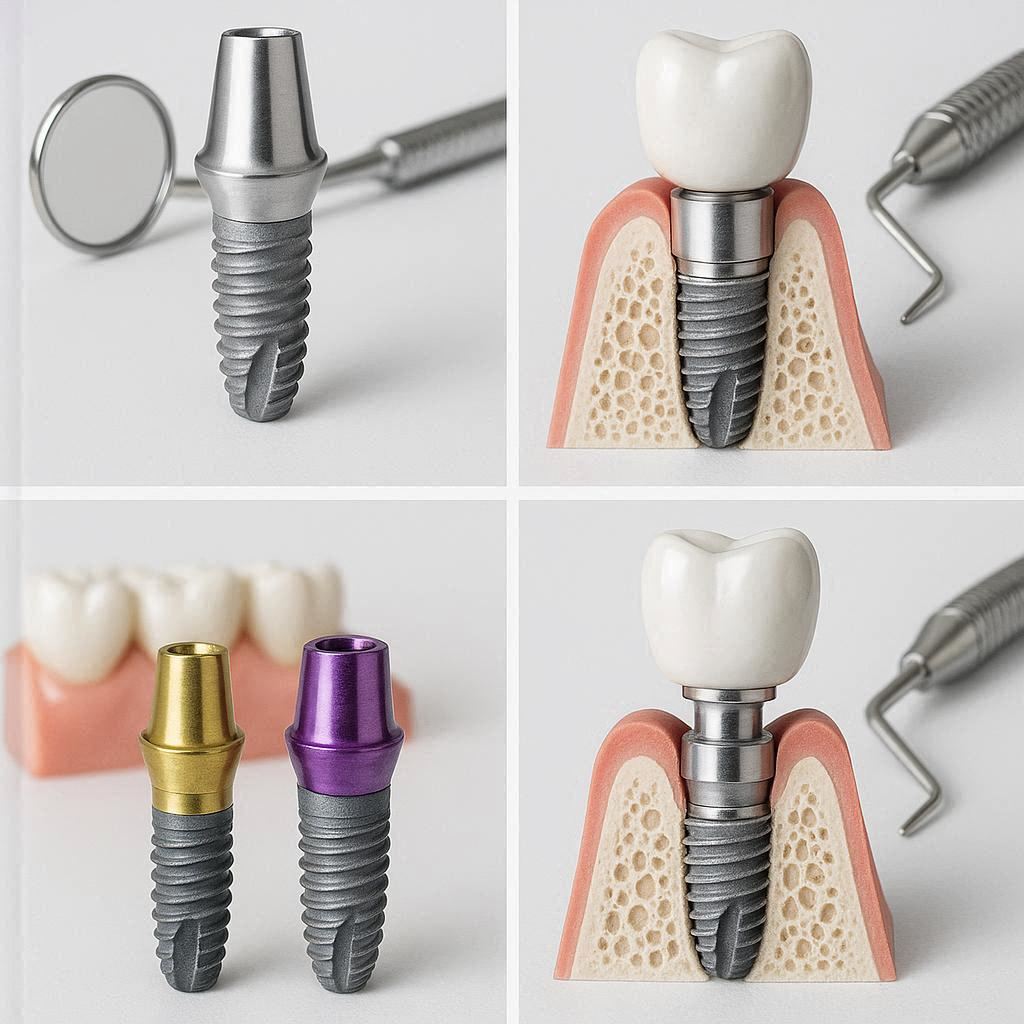
The Foundation: Understanding the BioHorizons Connection and Platform
Before we open the catalog to any specific page, we must establish a common language. The most critical aspect of any implant system is the prosthetic connection. If you misunderstand this section of the catalog, you will order mismatched parts and face frustration during delivery.
BioHorizons employs a specific internal conical connection. They refer to this as the Certain® Internal Connection. Over the years, this connection has been refined, but the core geometry remains consistent across most modern product lines.
The Certain® Internal Connection: A Technical Snapshot
The connection features a deep internal hex (or conical hex) combined with a 1.5mm internal lead-in bevel. What does this mean for you in the operatory?
- Platform Switching: The catalog will frequently reference “Dual-Affinity™ Platform Switching.” This is not just marketing. The connection is designed so the abutment is narrower than the implant platform. This shifts the inflammatory cell infiltrate inward, away from the crestal bone. When you see part numbers in the catalog with suffixes like
-PS, pay attention—they denote this specific bone-preservation geometry. - Seating and Tactile Feedback: The connection provides a distinct, audible “click” upon full seating. If you are verifying parts from the catalog, note that only Certain® components fit Certain® implants. They are not compatible with external hex systems from the 1990s.
The Catalog’s Major Product Segments
When you download the digital catalog or flip through the physical binder, BioHorizons organizes the implant section into four primary buckets. Knowing these buckets prevents you from getting lost in the 300+ pages of options.
- Tapered Internal (The Workhorse): The majority of cases you treat will fall here.
- Tissue Level (One-Piece): For specific immediate load and removable protocols.
- Short Implants (The Anatomical Solution): For avoiding vertical bone grafting.
- Laser-Lok (The Biological Differentiator): The proprietary surface that defines the brand’s niche.
Important Note: The catalog version changes annually. Part numbers in this guide reflect the 2024/2025 Master Catalog nomenclature. Always verify the latest revision with your local representative, as legacy parts (especially for the older Tapered Internal Plus line) may have transitioned to the newer Tapered Pro line.
Deep Dive into the Tapered Implant Portfolio
The tapered implant is the dominant design in the industry for a reason. It mimics the natural root shape, provides high primary stability in soft bone, and works beautifully in immediate extraction sites. BioHorizons offers several iterations of this theme. Let’s break down the catalog entries for these specific lines.
Tapered Pro: The Next Generation Platform
This is the flagship line and the one you will interact with most frequently in the current catalog. The Tapered Pro replaced the older Tapered Internal Plus in most diameters.
Catalog Identification:
Look for the prefix TP followed by a series of numbers denoting diameter and length.
- Example Part Number:
TP4010- TP: Tapered Pro
- 40: 4.0mm Diameter (or Platform)
- 10: 10mm Length
What’s Different in the Catalog?
You will notice the Tapered Pro catalog page highlights a Deeper Apical Thread Design. Compared to the older version, the threads extend further toward the apex. This is a critical detail for immediate placement. In a Type IV bone extraction socket, those deep apical threads are often the only thing engaging bone to keep the implant still.
Available Catalog Diameters:
| Diameter (mm) | Platform Designation | Restoration Code | Primary Clinical Use |
|---|---|---|---|
| 3.6 | 3.6mmD | Yellow | Narrow incisor spaces, mandibular incisors |
| 4.2 | 4.2mmD | Green | Most common molar/premolar replacement |
| 4.7 | 4.7mmD | Blue | Large molars, immediate molar sockets |
| 5.8 | 5.8mmD | Red | Over-engineering wide ridges, molar extraction |
Tapered Internal Plus (Legacy Line)
You will still find this section in the back of the catalog under “Mature Products” or “Discontinued/Special Order.”
Part Number Prefix: TL or TML (Tapered Internal Laser-Lok).
Clinician’s Advisory: If you are restoring a patient who had an implant placed in 2018 by another dentist, and you see the radiograph shows a Tapered Internal Plus body, do not order a Tapered Pro impression coping. The catalog clearly states that the prosthetic drivers and connection depths differ. The Plus uses a 1.2mm hex depth, while the Pro uses a 1.5mm hex depth. Mixing these components leads to screw loosening or, worse, fracture of the driver tip inside the implant well. The catalog has a dedicated Cross-Compatibility Chart on the inside cover—use it religiously.
Tapered Short: The 6mm and 8mm Solutions
This section of the catalog is a lifesaver for posterior mandibles hovering over the inferior alveolar nerve.
Catalog Section Header: Tapered Internal Short Implants
Available Lengths (Tapered Pro Short):
- 6.0mm
- 7.0mm
- 8.0mm
Key Catalog Finding:
You will see a footnote in the catalog regarding “Increased Aggressiveness of Thread Pitch.” The thread pitch on the 6mm implant is not the same as the 10mm implant. The short implant has fewer threads, but they are “fatter” and more deeply cut. This design compensates for the reduced surface area. When you look at the surface area comparison chart in the catalog, you will see that the 6mm x 4.6mm implant provides surface area comparable to a standard 10mm implant from a previous generation of competitors.
Comparative Table: Tapered Pro vs. Tapered Plus (Catalog Cross-Reference)
| Feature | Tapered Pro (Current) | Tapered Plus (Legacy) |
|---|---|---|
| Implant/Abutment Interface | 1.5mm Internal Hex | 1.2mm Internal Hex |
| Color Code | Gold Tube/Green Band | Silver Tube/No Band |
| Surgical Drill Sequence | DSP Series Drills | DSG Series Drills |
| Healing Collar | PCHA or TPHC Series | CH Series |
| Catalog Availability | Full Stock | Limited Stock (Special Order) |
The Laser-Lok Phenomenon: Reading the Biological Section
No guide to the BioHorizons catalog is complete without a dedicated section on Laser-Lok. If you are unfamiliar, this is the “groovy” looking collar near the implant neck. It is not a coating; it is a precision-engineered series of 8-12 micron cell-sized channels machined directly into the titanium.
Why the Catalog Devotes So Much Space to This
BioHorizons publishes a separate Laser-Lok Clinical Compendium as a supplement to the catalog. This is because the science supporting this surface is the cornerstone of their soft tissue and crestal bone claims.
What You’ll Find in the Catalog Description:
The catalog describes the surface as “A proprietary cell-sized laser-machined topography designed to establish a physical, connective tissue attachment.”
Implant Models Featuring Laser-Lok
The catalog does not offer Laser-Lok on every single implant. It is strategically placed where soft tissue management is paramount.
TLXSeries (Tapered Internal Laser-Lok): These are the standard tapered implants but with the laser-machined collar in the first 1-2mm.MLSeries (Mono-Lok): These are one-piece tissue-level implants with Laser-Lok grooves extending supragingivally.
Reading the Laser-Lok Part Numbers
This is where the catalog gets specific with suffixes.
TP4010L: TheLsuffix indicates Laser-Lok. Crucial: This implant is 10mm long. However, the Laser-Lok collar occupies the coronal 1.0mm. Therefore, the osseointegrated length is effectively 9.0mm. The catalog has a specific “Bone Level Planning Guide” table that shows:- Implant Length vs. Surface Area Available for Bone Contact.
- Note: Do not subtract the collar length when reading the drill protocol. The drill stops account for this geometry.
Catalog Warning: Laser-Lok and Cement
There is a highlighted box in the catalog section on Prosthetic Procedures for Laser-Lok. It reads something akin to:
“Cement extrusion into the Laser-Lok microchannels will negate the biologic seal and may lead to chronic inflammation. Use of a custom healing abutment impression technique or screw-retained restoration is strongly recommended.”
This is not a suggestion; it is a critical design limitation. The grooves are 8 microns wide. Cement is sticky. Once cement flows into those grooves, you cannot remove it. You have turned a bioactive surface into a plaque trap. If you plan to cement, the catalog directs you toward the Tapered Pro (non-Laser-Lok) line.
Navigating the Prosthetic Catalog: From Impression to Crown
The implant body is the foundation. The prosthetic catalog is where the restoration comes to life. This section of the BioHorizons manual is thick. It uses a color-coded system that, once learned, makes ordering simple.
The Color-Coding System (Platform Matching)
BioHorizons uses a simple, intuitive color band system on all components and packaging. You must match the Color to the Implant Diameter.
| Platform Diameter | Color Code | Abutment Part Number Suffix |
|---|---|---|
| 3.6mm | Yellow | -Y |
| 4.2mm | Green | -G |
| 4.7mm | Blue | -B |
| 5.8mm | Red | -R |
Example: A 4.2mm implant requires a Green Scan Body. The part number might be CIBSG.
Impression Coping Options in the Catalog
You have three primary paths here. The catalog presents them in three distinct columns on the page.
1. Closed Tray (Transfer Coping)
- Catalog Code:
CT-followed by color code (e.g.,CTG). - When to use: Multiple implants with divergent angles where a rigid open tray impression would lock in the tray. Also used for single units where you prefer a snap-fit technique.
2. Open Tray (Pick-Up Coping)
- Catalog Code:
OT-followed by color code (e.g.,OTBfor Blue Platform). - When to use: Best accuracy for single posterior units. This is the standard of care in the catalog’s recommended workflow.
- Important Catalog Note: The catalog distinguishes between Short and Long open tray copings. For deep tissue (5mm+ depth), use the Long version (
OTL-G).
3. Intraoral Scan Bodies (Digital Workflow)
- Catalog Section: Digital Solutions
- Part Number:
CIBS-(Certain Intraoral Scan Body). - Workflow: The catalog includes a QR code linking to the BioHorizons Digital Library. This library contains the
.STLor.DMEfiles for all scan bodies. You must import the correct library into your CAD software (exocad or 3Shape).
Abutment Selection: A Catalog Walkthrough
This is the densest part of the book. It is broken down by restoration type.
A. Ti Bases for Screw-Retained Crowns
These are the most popular items in the modern catalog. They are titanium inserts that bond into a custom-milled zirconia or PMMA crown.
- Catalog Identifier:
GPH-(Gold anodized Ti Base). - Screw Access: Angled Screw Channel (ASC) options are available. The catalog indicates ASC with the suffix
Aand a number denoting angle (e.g.,GPH-GA25for a 25-degree correction). - Pro Tip: The catalog includes a Screw Torque Value Table. Always refer to this table. Ti Base screws for BioHorizons are typically torqued to 30 Ncm. Do not assume it’s 15 Ncm or 35 Ncm. The catalog table is the definitive source.
B. Stock Titanium Abutments
For cement-retained crowns or bridges.
- Straight Contoured:
PCHA- - Angled (15° or 25°):
PACA-15-G(15-degree angled abutment, Green Platform).
C. Gold/Plastic Castable Abutments
For those still doing cast gold UCLA-style restorations.
- Code:
UCA-
The “Maestro” Abutment System
This is BioHorizons’ version of a multi-unit abutment system for full-arch restorations. The catalog separates this into a distinct chapter (usually Chapter 6).
Catalog Definition: Maestro™ Abutments are non-engaging, conical interface abutments designed for splinted full-arch restorations where a passive fit is required.
Reading the Maestro Page:
- Collar Heights: 1mm, 2mm, 3mm, 4mm, 5mm.
- Angulations: 0°, 17°, 30°.
- Titanium Bases: The Maestro MUA Ti Bases have a wider diameter cylinder. You cannot use a standard
GPH-base on a Maestro abutment. The catalog will clearly state “For Maestro Use Only.”
Surgical Instrumentation: The Drill and Kit Catalog
You cannot place the implant without the drills. The catalog includes a detailed Surgical Instrumentation section. This is where many inventory management mistakes happen. Drills have a limited lifespan. The catalog specifies the exact number of uses.
Drill Stops and Sequencing
The catalog features a Drill Sequence Chart for every implant line. This chart is essential for the scrub tech and the assistant.
Example Sequence for a Tapered Pro 4.2mm x 10mm in Dense Bone:
- Round Bur (Initial Penetration)
- Lance Drill (Orientation)
- 2.5mm Pilot Drill
- 3.2mm Mid-Body Drill
- 3.8mm Final Drill (Coronal widening)
Catalog Table Reference:
The catalog uses a “Traffic Light” System for bone density.
- Green (Soft Bone/D4): Under-prep by one drill size (Osteotome recommended).
- Yellow (Normal/D2-D3): Standard sequence.
- Red (Dense/D1): Use Bone Tap
BTT-42(BioHorizons Bone Tap for 4.2mm). Failure to tap in dense mandibular bone is the #1 cause of implant insertion torque exceeding 80 Ncm and potential driver fracture. The catalog warns about this explicitly in the Surgical Complications appendix.
Surgical Kit Part Numbers
BioHorizons sells fully loaded cassettes or modular trays.
SK-TP: Tapered Pro Surgical Kit.SK-SHORT: Tapered Short Implant Kit (Crucial: These drills are shorter and have wider stops. Do not use standard TP drills for a 6mm implant osteotomy, or you will perforate the IAN. The catalog has a SAFETY ALERT symbol next to this section).
Quotation from Catalog Warning Section:
“The Tapered Short Implant Drill Set (SK-SHORT) is designed with a positive stop that is 2mm shorter than the standard surgical drills. Utilization of standard length drills for short implant placement may result in iatrogenic injury to vital structures.”
The Regenerative and Biologics Section
A comprehensive dental implant catalog is no longer just about titanium screws. It includes the “dirt and juice” we use to grow bone. BioHorizons has a significant presence in the biologics market, and this is often the most confusing section of the catalog due to varying shelf lives and storage requirements.
MinerOss® X: The Particulate Allograft
This is the most frequently ordered biologic in the BioHorizons catalog.
- Catalog Variants:
- Cortical (MXC-): 250-1,000 micron size. Slower resorption. Good for ridge preservation shell technique.
- Cancellous (MXL-): 250-1,000 micron size. Faster turnover.
- Blend (MXB-): A mix of both.
MinerOss® Cortical & Cancellous Putty
The catalog describes this as “Particulate bone in a lecithin carrier.”
- Key Benefit: Hydrates instantly. You do not need to mix with saline or blood. You open the syringe and inject.
- Part Number Lookup:
MXP-05(0.5cc Syringe)MXP-10(1.0cc Syringe)
Comparing Graft Options in the Catalog
| Product Name | Type | Carrier | Handling Property | Best Use Case |
|---|---|---|---|---|
| MinerOss X Particulate | Allograft | None | Free-flowing powder | Mixing with PRF, large defects |
| MinerOss XP Putty | Allograft | Lecithin | Moldable, Sticky | Socket grafting, minor ridge augmentation |
| MinerOss A | Anorganic Bovine | None | Slow resorbing | Sinus lift bulk fill |
| Mem-Lok | Resorbable Membrane | N/A | Up to 26 weeks barrier | Guided Bone Regeneration (GBR) |
Digital Workflow Integration: The 2025 Catalog Update
The modern catalog features a QR code on almost every page leading to the BioHorizons Online Store or Digital Library. The shift from a static PDF to an interactive resource is significant.
Navigating the Digital Library
You will find a reference to the library under “SmartShape™ Digital Solutions.”
- File Types Available:
.STL(Standard Tessellation Language) and.DME(exocad specific). - What’s included?
- Implant body analogs (for 3D printed models).
- Scan bodies.
- Ti Base geometries (for designing emergence profiles).
3D Printed Model Analogs
For in-office printing of surgical guides or models, the catalog lists the Lab Analog part numbers.
- Digital Analog (Printed Model):
DA-followed by color code (e.g.,DAGfor Green 4.2mm). - Important Distinction: The catalog differentiates between Digital Analogs (friction fit for printed resin) and Laboratory Analogs (metal with retention grooves for stone). Using a lab analog in a printed model can crack the model. Using a digital analog in stone allows it to spin. The catalog’s “Analog Selection Matrix” is a one-page cheat sheet that prevents this error.
Comparing BioHorizons to the Broader Market
To truly understand the value of the catalog, we must contextualize where BioHorizons stands relative to other systems you might be considering. This is not about “better” or “worse”—it is about different features that might align with your specific treatment philosophy.
Comparison: BioHorizons vs. Straumann vs. Nobel Biocare
| Feature | BioHorizons | Straumann (BLX/TLX) | Nobel Biocare (Active/Parallel) |
|---|---|---|---|
| Connection Type | Certain Internal Hex/Conical | CrossFit (TorcFit) | Conical Connection (Omnigrip) |
| Platform Switch | Dual-Affinity (Mandated) | Available | Available (On Active) |
| Surface Tech Focus | Laser-Lok (Soft Tissue) | SLActive (Hydrophilic) | TiUnite (Anodized Porous) |
| Catalog Organization | Color-Coded Platform | Diameter Based | Platform Based |
| Short Implant Offering | 6mm Tapered Pro | 4mm TLX | 7mm N1 |
| Catalog Learning Curve | Low (Color system is intuitive) | Medium (Line extension names) | Medium (Conical vs Tri-Channel) |
Analysis: BioHorizons wins on catalog simplicity. The color-coding system is arguably the most foolproof in the industry for a busy restorative practice. A green impression coping always fits a green implant. There is less room for error when the package is bright green versus reading fine print for a 4.1mm vs 4.3mm designation.
Comparison: BioHorizons vs. Zimmer Biomet
| Feature | BioHorizons | Zimmer Biomet |
|---|---|---|
| Connection | Certain Internal | Certain® Internal (Legacy Name) / TSV |
| Soft Tissue Claim | Laser-Lok (Physical Attachment) | OsseoSpeed (Chemical Fluoride) |
| Full Arch Solution | Maestro | Revitalize |
Historical Note: You might notice the word “Certain” in both catalogs. This is a vestige of industry consolidation. The connection geometries, while sharing a name origin, are NOT cross-compatible between modern BioHorizons and Zimmer implants. Do not attempt to place a Zimmer abutment on a BioHorizons implant based on the name.
Real-World Applications: Using the Catalog in Daily Practice
Let’s move beyond the technical specs and look at how a practitioner actually uses this catalog on a Tuesday morning.
Scenario 1: The “Loose Healing Abutment” Emergency
A patient calls. “My healing cap fell out.” They are 4 months post-op. You do not remember what implant you placed. You pull up the chart.
Using the Catalog:
- Radiograph: Look at the X-ray. Is the implant parallel-walled or tapered? Is there a “Laser-Lok” micro-texture visible near the crest?
- Chart Entry: You noted
TP4010. - Catalog Lookup: Go to Tapered Pro Prosthetics > Healing Abutments.
- Selection: You need a Green (4.2mm) Healing Abutment.
- Tissue Height: You probe with a perio probe. It’s 3mm deep.
- Part Number:
TPHC-G3(Tapered Pro Healing Collar, Green, 3mm profile).
Result: You order the exact part. The patient is in and out in 10 minutes. No guesswork. No cross-threading.
Scenario 2: Immediate Molar Replacement
You extract #30. The socket is wide. You want to place a 5.8mm Tapered Pro immediately.
Catalog Guidance:
- Implant:
TP5811L(5.8mm x 11mm, Laser-Lok). TheLis chosen for the biologic seal to protect the buccal plate. - Surgical Note: Check the “Drilling Protocol for Extraction Sockets” in the catalog’s surgical guide. It directs you to engage the palatal wall and apex only.
- Prosthetic Planning: You cannot use a standard impression coping because the tissue height is 7mm on the buccal. The catalog’s Open Tray Coping page shows
OTL-R(Open Tray Long, Red Platform). You order this specifically to reach the implant connection below the tissue crest.
Scenario 3: Edentulous Mandible – Full Arch Conversion
You are planning an All-on-X case.
Catalog Navigation Path:
- Implant Selection:
TP4010(4.2 x 10mm) for anterior zone.TP4710(4.7 x 10mm) for posterior tilted distal extension. - Multi-Unit Section: Navigate to Chapter 6: Maestro Abutments.
- Angulation Correction: The posterior implant is tilted 30 degrees distal. You select Maestro 30° Angled Abutment:
MUA30(Collar Height 2mm). - Cylinder/Ti-Base: Select Maestro Ti-Base for Bridge:
MTB-G(Green) andMTB-B(Blue).
Understanding Packaging and Inventory Management
The catalog is also your inventory control system. Understanding the unit of sale is crucial for budgeting.
Vial vs. Multi-Pack
- Single Vial: Most implants come sterile in a single vial with a cover screw included. This is the standard for single units.
- Multi-Pack: The catalog lists “Value Packs” or “Surgical Kits” containing multiple implants of the same size at a reduced price per unit. Look for part numbers ending in
-MPor-3PK. - Non-Sterile Implants: For large full-arch cases, the catalog offers Non-Sterile (Bulk) Implants. These are identical in manufacturing but require in-house sterilization. They are a significant cost-saver for high-volume surgeons. Catalog Suffix:
-NS.
Shelf Life and Lot Tracking
The catalog includes a page on “Traceability and Compliance.”
- Implant Level: Every implant box has a unique UDI (Unique Device Identifier) and LOT number. The catalog advises that you must log these in the patient’s chart for FDA compliance and recall management.
- Biologics: MinerOss X has a 5-year shelf life from date of manufacture when stored at room temperature. Do not freeze it. The catalog specifies storage conditions clearly.
Advanced Prosthetics: CAD/CAM and Custom Solutions
For the laboratory technician reading the catalog, the Lab Procedure Manual section is the holy grail. It contains the specifications for milling.
The BioHorizons Milling Library
The catalog lists the BHX Library.
- Compatibility: exocad, 3Shape, Dental Wings.
- What’s inside: The library contains the exact geometry of the Certain® Connection. When the lab designs a custom abutment in Atlantis or a local milling center, the mill uses this library file to carve the hex interface with micron precision.
- Screw Access Hole: The catalog provides a “Minimum Screw Access Hole Angulation Chart.” If you are designing an anterior screw-retained crown and you use the ASC (Angled Screw Channel) Ti Base, the catalog tells you the maximum angle allowed before the screwdriver shaft binds. For 4.2mm Green, the max is 25 degrees. For 4.7mm Blue, the max is 25 degrees. For 5.8mm Red, the max is 20 degrees.
Verification Jigs
The catalog offers a Passive Fit Verification Jig part: PASS-VER.
- Use Case: Full arch restorations.
- Description: A titanium bar that screws into the multi-unit abutments. If the bar seats passively without rocking, the master model is accurate. If it rocks, the impression was distorted, and the framework will not fit intraorally. The catalog recommends this step for every full-arch hybrid case.
Specialized Applications: Zygomatic and Pterygoid References
While BioHorizons is primarily known for conventional root-form implants, the catalog does contain a section on “Advanced Surgical Solutions.” This section is thin but specific.
Zygomatic Implants
- Catalog Code:
ZYG - Lengths: 30mm to 52.5mm.
- Note: The catalog provides a disclaimer that this product line requires “Advanced Surgical Training Certification.” The catalog will not sell these parts to a general practitioner without proof of course completion. The part numbers are listed, but they are “Call for Availability” items.
Pterygoid Implants
- Catalog Code:
PTG - Design: Tapered implant specifically for the pterygomaxillary suture.
- Catalog Distinction: The Pterygoid implant uses a different surgical kit (
SK-PTG). The drills are extra-long (28mm+). This is a separate, high-cost inventory investment.
The All-Important Cross-Compatibility and Transition Guide
One of the most valuable, yet underutilized, pages in the BioHorizons catalog is the Cross-Compatibility Chart (often found near the index or inside the back cover).
Legacy vs. Current Parts Matrix
If you are taking over a practice from a retiring dentist, you will find a drawer full of old components. This chart helps you identify if you can use a new part on an old implant.
| Old Implant (Placed 2010-2016) | New Healing Abutment (Current) | Compatible? |
|---|---|---|
Tapered Internal Plus (TL4210) | TPHC-G3 | NO |
Tapered Internal Plus (TL4210) | PCHAG | YES (Platform matches) |
| External Hex (Pre-2005) | GPH-G (Certain Ti Base) | NO (Different connection) |
Reader’s Note: BioHorizons maintains a “Legacy Care Promise.” The catalog states they will continue manufacturing components for the Tapered Internal Plus line for a minimum of 10 years from the date of discontinuation announcement. However, these parts are often “Special Order” and may have a 2-3 week lead time. If you have a patient with a loose screw on an old
TLimplant, order the screw before you schedule the patient. The screw isCSK-TL(Cover Screw Kit – Tapered Internal).
Troubleshooting Common Catalog Confusions
Even with a color-coded system, certain items trip up even experienced users. Let’s address the most frequent “Catalog Confusion Points.”
Confusion #1: The 4.2mm vs 4.5mm Platform
In the early 2010s, BioHorizons had a 4.5mm implant. It has been discontinued in favor of the 4.7mm Blue platform.
- Problem: A dentist calls looking for a 4.5mm abutment.
- Catalog Solution: The “Legacy Cross-Reference” table shows that 4.5mm implants take the 4.7mm (BLUE) restorative components. Do not order a Green component for a 4.5mm implant, even though the diameter is closer to 4.2mm than 4.7mm. The catalog is clear: Match the Platform, Not the Diameter Number.
Confusion #2: Screw Types
The catalog has a dedicated screw section. It is a dense page of tiny part numbers.
- Fixing Screw (Prosthetic Screw): Used to attach the crown to the implant or abutment. Gold anodized.
PSG(Prosthetic Screw Green). - Cover Screw: Seals the implant during submerged healing. Silver.
CSG. - Healing Abutment Screw: Integrated into the healing abutment.
- Lab Screw: For holding the analog in the model. Brass color.
LSG.
Important Safety Note: Never use a Lab Screw in the mouth. The catalog has a warning about this. Lab screws are not manufactured to the same torque tolerance and are not biocompatible for long-term tissue contact.
Confusion #3: The “Certain®” Naming Convention on Scanners
When you select the implant library in your iTero or Medit scanner, you will see two options:
- BioHorizons Certain
- BioHorizons Internal
- Select “Certain” for all Tapered Pro, Tapered Internal Plus, and Tissue Level implants.
- Select “Internal” only if you have a very old, obscure implant line (pre-2005).
A Deeper Look at the Maestro Full-Arch Protocol
Given the rise of same-day teeth, the Maestro section deserves a closer examination. This is not just a set of abutments; it is a workflow documented extensively in the catalog.
The Maestro Driver Tip
Part Number: MTIP-050
Description: 0.050″ Hex Driver Tip, Extra-Long.
Why this matters in the catalog: Standard driver tips are 25mm long. Maestro abutments are often placed deep. The Maestro driver is 30mm long. If you try to torque a Maestro abutment with a standard short driver, the handpiece head will hit the adjacent abutment, preventing full seating. The catalog recommends the Maestro Torque Wrench Adapter (MTWA) specifically for this reason.
The Maestro Verification Jig
We mentioned the PASS-VER earlier.
- Catalog Description: “Ensures passive fit of the master model prior to framework fabrication.”
- Cost Consideration: This is a consumable item. You use it once and either dispose of it or send it to the lab. The catalog lists it as a “Single Patient Use” item.
The Maestro Conversion Prosthesis Screw
- Part Number:
MTS-C(Maestro Temporary Cylinder Screw). - Difference: This screw is designed for the PMMA temporary cylinder. It has a larger head than the final prosthetic screw. This prevents the temporary acrylic from rotating. The catalog specifies 15 Ncm torque for this screw, not 30 Ncm.
The Biologics Catalog: A Deeper Dive into Grafting Protocols
Let’s revisit the Biologics section with a clinical eye. The catalog does more than list sizes; it suggests protocols.
The “Sticky Bone” Protocol Reference
The catalog references the use of MinerOss Cortical Cancellous mixed with Platelet Rich Fibrin (PRF) .
- Catalog Instruction: “Mix 0.5cc MinerOss X with PRF membrane fragments to create a moldable graft composite.”
- Why Cortical Cancellous? The catalog explains that the cortical component provides the scaffold (slow resorption) while the cancellous provides the initial osteoconductive surface. The lecithin carrier in the Putty version makes this mixing process easier.
Membrane Selection: Mem-Lok vs. AlloDerm
The catalog offers both synthetic and allograft membranes.
| Membrane Type | Product Name | Resorption Time | Handling |
|---|---|---|---|
| Synthetic | Mem-Lok | 26 Weeks | Stiff, must be trimmed, requires tack fixation |
| Allograft | AlloDerm RTM | 8-12 Weeks | Pliable, hydrates quickly, adapts to sockets |
Catalog Guidance Note:
For socket preservation where you want to protect the clot but do not need rigid space maintenance, the catalog suggests AlloDerm RTM. For lateral ridge augmentation with particulate graft, the catalog specifies Mem-Lok plus Fixation Tacks (MTACK-4).
Handling and Sterilization Protocols Referenced in the Catalog
The back of the catalog contains a Technical Data Sheet (TDS) section. While most users skip it, it contains critical legal and clinical safety information.
Cleaning Implants: The “Do Not” List
The catalog explicitly warns:
“Do not use ultrasonic cleaners on implantable devices. Do not use acidic cleaning agents. Do not air abrade the Laser-Lok surface with bicarbonate soda.”
- Why? Ultrasonic cavitation can damage the delicate edge of the internal hex. Acidic agents can alter the surface oxide layer. Air abrasion fills the Laser-Lok microchannels, rendering them inert.
Steam Sterilization (Autoclave) Parameters
For non-sterile implants or drills:
- Cycle: Pre-Vacuum (Class B).
- Temperature: 132°C – 135°C (270°F – 275°F).
- Time: Minimum 4 minutes exposure.
- Drying: Minimum 20 minutes.
Expiration Date Vigilance
This is especially true for MinerOss X Putty. The lecithin carrier degrades over time. A tube of putty that is 6 months past its expiration date will be dry and crumbly, not moldable. The catalog emphasizes checking the lot expiration date prior to opening the sterile barrier.
The Future of the Catalog: Digital vs. Print
As we approach 2025, BioHorizons has largely transitioned to a “Print-on-Demand” model for the physical catalog. The digital interactive PDF remains the most up-to-date resource.
Features of the Digital Catalog (eCatalog)
- Search Function: Type
TP4010and hit enter. Instantly taken to the Tapered Pro page. - Hyperlinked Cross-References: Click on
GPH-Gin the abutment table, and it jumps to the Ti-Base torque values page. - Video Links: Embedded videos demonstrating the “Click” of the Certain connection.
Why Keep a Physical Copy?
Despite the digital shift, many seasoned clinicians prefer a physical binder.
- Reason: Visual Context. When planning a case, scrolling on an iPad limits your view to one screen. A full 11×17 catalog spread allows you to see the Implant, Abutment, Healing Collar, and Impression Coping all at once without clicking back and forth. The physical catalog serves as a cognitive map of the inventory.
Optimizing Your Practice Inventory Using the Catalog
Let’s talk strategy. How does a practice owner use this document to save money and reduce waste?
The 80/20 Rule of Implant Inventory
Analyze the last 100 implants placed in your practice. You will find that 80% of them are the Tapered Pro 4.2mm x 10mm or 11.5mm.
Catalog-Informed Stocking Plan:
- High Stock (Always on Shelf):
TP4010(4.2 x 10mm)TP4011(4.2 x 11.5mm)TP4710(4.7 x 10mm)TPHC-G3(Green Healing Abutment, 3mm)OTG(Green Open Tray Impression Coping)
- Medium Stock (Re-order Monthly):
TP4012(4.2 x 13mm)TP5811(5.8 x 11mm)GPH-G(Green Ti-Base)
- Low Stock / Consignment (Order as Needed):
- Narrow 3.6mm implants
- Extra-Wide 5.8mm implants
- Angled Screw Channel bases
- Maestro Full Arch components
Consignment Inventory
The catalog mentions “BioHorizons Consignment Program.” This is a service where the company stocks your shelves with the full range of products, and you only pay for what you use (scan out) each month.
- Benefit: You have a 6mm x 4.2mm Tapered Short implant sitting there for that one patient this year who needs it. You do not pay for it until you open the box.
- How to Find Info: Look for the “Practice Solutions” tab in the eCatalog.
Educational Resources Within the Catalog
BioHorizons has always emphasized education. The catalog itself contains a bibliography. It is not just a shopping list; it is a reference tool.
Peer-Reviewed References
At the bottom of the Laser-Lok section, you will find citations:
- Nevins M, et al. “Evidence of a connective tissue attachment to laser microtextured implant collars.” Int J Periodontics Restorative Dent.
- Pecora GE, et al. “The influence of Laser-Lok surface on peri-implant tissues.”
These citations allow you to validate the marketing claims with scientific evidence. This is a hallmark of a premium catalog.
The “BioHorizons Online Campus”
The catalog contains a section on continuing education.
- Link:
biohorizons.com/education - Content: Webinars on full-arch conversion, guided surgery workflows, and soft tissue management.
Step-by-Step Guide: Finding a Part in Under 60 Seconds
Let’s create a practical workflow for navigating the dense PDF.
Goal: Find the Ti-Base for a screw-retained crown on a 4.7mm Tapered Pro implant with a 15-degree angle correction.
- Open eCatalog.
- Ctrl+F (Search): Type
GPH(Ti-Base code). - Scan Results: You will see a list:
GPH-G,GPH-B,GPH-GA15,GPH-BA25. - Decode:
GPH= Gold Prosthetic Base.B= Blue Platform (4.7mm).A15= Angled 15 degrees.
- Select:
GPH-BA15. - Verify Compatibility: Click the hyperlink “Compatibility.” The catalog confirms: “For Tapered Pro and Tapered Internal Plus Implants, 4.7mm Platform.”
- Check Torque: Click the hyperlink “Torque Table.” Reads: 30 Ncm.
Time Elapsed: 45 seconds.
Understanding Abutment Emergence Profiles from the Catalog
The catalog includes a 1:1 scale Emergence Profile Chart. This is a lifesaver for the restorative dentist.
Reading the Healing Abutment Chart
The chart shows a cross-section of the tissue.
- Profile
S(Straight): For tissue that is thin and scalloped. - Profile
C(Contoured): For tissue that is thick and flat. - Profile
W(Wide): For molars where you want to push tissue out.
Catalog Guidance:
“Select a healing abutment that approximates the emergence profile of the planned final restoration to minimize tissue rebound and cement entrapment.”
If you place a Wide (W) healing abutment in a skinny incisor site, you will have a hole too big to close. The catalog advises “Undersizing the healing abutment by 1mm relative to the final crown width for anterior esthetics.”
Comparative Table: BioHorizons Catalog Platforms (Quick Reference)
This table synthesizes the entire implant portfolio into one quick-glance reference. Keep this page bookmarked.
| Implant Line | Catalog Code | Diameters (mm) | Lengths (mm) | Connection | Best For |
|---|---|---|---|---|---|
| Tapered Pro | TP | 3.6, 4.2, 4.7, 5.8 | 6 – 16 | Certain Internal | 90% of all cases |
| Tapered Pro Laser-Lok | TPL | 3.6, 4.2, 4.7, 5.8 | 8 – 14 | Certain Internal | Esthetic zone, thin tissue |
| Tapered Short | TP-S | 4.2, 4.7 | 6, 7, 8 | Certain Internal | Posterior mandible, limited height |
| Mono-Lok | ML | 3.8, 4.6 | 10 – 15 | One-Piece | Overdentures, immediate load |
| Tapered Plus (Legacy) | TL | 3.8, 4.5, 5.7 | 8 – 15 | 1.2mm Hex | Restoring old cases |
The Importance of the “Patient-Specific” Catalog Page
Buried in the digital resources is a tool called “My Implant Plan.” This allows you to generate a custom, patient-specific catalog page.
How it works:
- You select the implant (
TP4010). - You select the planned abutment (
GPH-G). - You select the healing collar (
TPHC-G3). - Output: A single PDF page containing ONLY those three items with their part numbers, torque values, and re-order numbers.
Clinical Use Case:
Print this custom page and place it in the patient’s paper chart or attach it to their digital file in Eaglesoft or Dentrix. When the patient returns in 10 years for a loose screw, you do not have to dig through the whole catalog. The answer is right there in their chart.
A Note on Quality Assurance and Guarantee
The catalog includes the BioHorizons Lifetime Warranty statement.
- Coverage: Implant body replacement if the implant fails to osseointegrate or fractures.
- Condition: Must be placed according to the catalog’s surgical protocol.
- Replacement Policy: Free replacement implant. Does not cover the cost of surgery or restoration.
This is a standard industry warranty, but the catalog language is very clear on the “Attached Components” clause. “Failure of a non-BioHorizons abutment connected to a BioHorizons implant voids the implant warranty.” Using a generic “Zimmer-style” Ti-Base from a discount lab to save $30 can cost you the warranty on a $400 implant.
Advanced Digital Planning: The Guided Surgery Catalog
The final section of the catalog covers Guided Surgery Kits (GSK) .
Components Listed in Catalog:
- Guide Sleeves:
SLEEVE-50(5.0mm outer diameter sleeve). - Drill Handles:
DH-20(20mm offset for posterior access). - Guided Drill Keys:
GDK-22(2.2mm pilot drill key).
Workflow Summary from Catalog:
- CBCT Scan: Patient wearing radiographic guide.
- Digital Planning: Software (coDiagnostiX or RealGUIDE) using BioHorizons Library.
- Guide Fabrication: 3D printed surgical guide with metal sleeves.
- Surgery: Fully Guided Protocol. The drills go through the sleeves.
Catalog Warning:
“Fully guided surgery requires the use of specific Guided Surgical Drills (GSD- series). These drills are longer than the standard freehand drills to accommodate the guide offset. Use of standard drills in a guide may result in incomplete osteotomy or drill fracture.”
Conclusion
The BioHorizons dental implant catalog is more than a list of parts. It is a clinical roadmap. It organizes a complex inventory of surgical and prosthetic components into a logical, color-coded system that prioritizes patient safety and restorative simplicity. By understanding the distinction between the Tapered Pro and legacy lines, leveraging the Laser-Lok technology appropriately, and utilizing the digital workflow resources, clinicians can navigate even the most challenging restorative cases with confidence.
The catalog’s true value lies in its cross-referencing capabilities. It prevents the costly and embarrassing mistake of mixing incompatible connections. It provides the torque specifications that prevent screw loosening. And it offers the biologic insights that lead to long-term crestal bone stability. Whether you are placing your first implant or your ten-thousandth, keeping this catalog—digital or physical—within arm’s reach ensures that your clinical execution matches your treatment plan.
Frequently Asked Questions (FAQ)
Q1: Is the BioHorizons Certain connection compatible with Zimmer Biomet Certain implants?
A: No. Despite sharing the “Certain” name due to historical industry connections, the internal geometries and hex depths are different. Mixing components is not recommended and can lead to component failure. Always use BioHorizons components with BioHorizons implants.
Q2: Where can I find the torque value for a BioHorizons prosthetic screw?
A: The torque values are listed in the “Torque Value Table” located in the Prosthetic Procedures section of the catalog. Most standard Ti-Base screws require 30 Ncm. Healing abutments typically require finger pressure plus a light final turn with a driver (do not torque healing abutments to 30 Ncm).
Q3: What is the difference between a “TP” and a “TL” implant in the catalog?
A: TP stands for Tapered Pro (current generation, 1.5mm hex depth). TL stands for Tapered Internal Plus Laser-Lok (legacy generation, 1.2mm hex depth). They require different impression copings and driver tips.
Q4: Can I use standard Tapered Pro drills for the Tapered Short 6mm implant?
A: Absolutely not. The Tapered Short system requires a dedicated Short Surgical Kit (SK-SHORT) with specific stops to prevent over-drilling into the Inferior Alveolar Nerve.
Q5: How do I clean a BioHorizons healing abutment that has been contaminated?
A: The catalog specifies steam autoclave sterilization. Do not use ultrasonic cleaners with acidic solutions, as this can damage the surface finish and the internal hex drive feature.
Additional Resources
- Official BioHorizons Digital Catalog & Library Access: