Can Dental Implants Cause Canker Sores?
You have invested time, money, and hope into a new dental implant. The surgery is over, the healing is progressing, and you are starting to enjoy the benefits of a complete smile again. Then, an unwelcome guest appears: a painful, annoying canker sore near the site of your new tooth.
Immediately, the questions begin. Is it a sign of something wrong? Did the implant cause it? Could it be an infection or a sign of implant failure?
It is a common and concerning experience. The good news is that while the sore can be a nuisance, it is rarely a sign of a serious problem with the implant itself. This guide will explain the complex relationship between dental implants and canker sores, distinguish between them and other mouth ulcers, and give you practical advice on how to manage and prevent them.
Understanding the Mysterious Canker Sore
To understand the connection, you first need to know what a canker sore actually is.
A canker sore, known medically as an aphthous ulcer, is a small, shallow lesion that develops on the soft tissues of your mouth. This includes the inside of your lips and cheeks, the base of your gums, and under your tongue. They are not on the outside of your mouth, like cold sores.
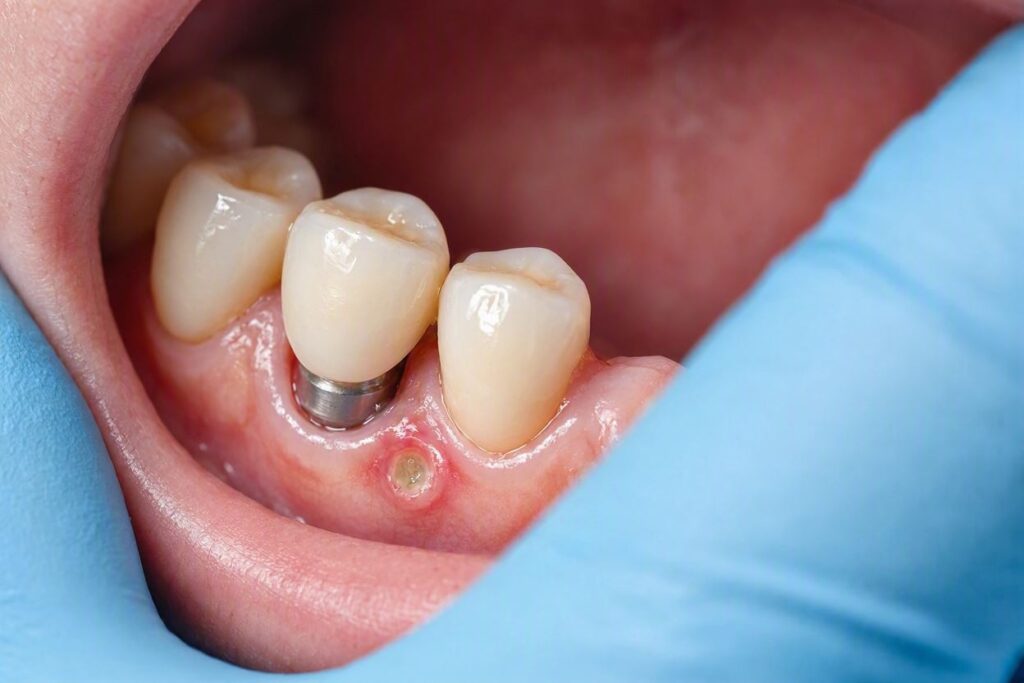
A typical canker sore is round or oval with a white or yellowish center and a red, inflamed border. They can be quite painful, especially when eating, drinking, or talking. The exact cause of canker sores remains a bit of a mystery, but they are not contagious and are not caused by a virus, unlike cold sores (fever blisters).
What Triggers a Canker Sore?
There is no single cause, but rather a collection of potential triggers. Some of the most common include:
- Minor Tissue Injury: This is a big one. An accidental bite to the cheek, a sharp food item like a chip, or aggressive tooth brushing can create a small wound that develops into a canker sore.
- Stress and Fatigue: Emotional stress and lack of sleep are well-known triggers for many people.
- Dietary Factors: Acidic or spicy foods, as well as sensitivities to certain foods (like chocolate, coffee, or strawberries), can be culprits.
- Nutritional Deficiencies: A lack of vitamin B-12, zinc, folate (folic acid), or iron can make you more susceptible.
- Hormonal Changes: Some women find they get canker sores at certain points in their menstrual cycle.
- Immune System Reactions: An overactive immune response can sometimes attack the soft tissue, leading to ulceration.
- Oral Hygiene Products: Some toothpastes and mouthwashes contain an ingredient called sodium lauryl sulfate (SLS), which can trigger sores in sensitive individuals.
The Connection: Can a Dental Implant Cause a Canker Sore?
The short answer is: the implant itself does not cause canker sores. A canker sore is a disease of the soft tissue (the gums, cheeks, and lips). The implant is made of titanium and is anchored in the bone. It is biologically inert and does not trigger an immune response that leads to aphthous ulcers.
However, the process of getting an implant can absolutely create the perfect conditions for a canker sore to form. It is not a direct cause but a significant, indirect trigger. Let’s explore how.
The Role of Tissue Trauma and Irritation
As mentioned, minor tissue injury is a primary trigger for canker sores. Dental implant surgery, while designed to be gentle, is still a form of controlled trauma. The gums are cut, tissues are manipulated, and stitches are placed.
This trauma can kickstart the process. The body’s inflammatory response, while necessary for healing, can sometimes lead to the formation of an aphthous ulcer in the surrounding tissue. The sore is a response to the injury, not an infection from the implant.
Friction from the Healing Abutment or Temporary Crown
After the implant has integrated with the bone, a second minor surgery is sometimes needed to place a “healing abutment”—a small metal post that shapes the gum tissue. Later, the permanent crown is attached.
Any new object in the mouth, whether it is a healing abutment, a temporary crown, or the final crown, changes the oral landscape. Your cheeks, lips, and tongue need time to adapt to this new shape. Until they do, the soft tissue can rub against the new hardware, causing friction.
This constant rubbing is a classic cause of tissue irritation. It’s akin to a new pair of shoes causing a blister. The friction from the new dental work can irritate the inside of the cheek or the edge of the gum, and a canker sore can develop at that precise spot.
Stress as a Common Denominator
Never underestimate the power of stress. The decision to get a dental implant, the financial investment, and the anxiety about the surgery are all significant stressors. Even the physical stress on the body during and after surgery is a factor.
As we know, stress is a major trigger for canker sores. Therefore, the entire experience of getting an implant can make you more susceptible to developing one, even if the surgical site itself is healing perfectly.
Reaction to Dental Materials
This is a much rarer cause, but it is worth mentioning. While dental implants are made of highly biocompatible titanium, a small percentage of the population may have a sensitivity or allergy to certain metals. In these rare cases, a reaction could manifest as oral lesions. However, this is the exception, not the rule. It is far more likely that the cause is the trauma and friction described above.
Here is a summary of the potential links between implants and canker sores.
| Potential Link | How It Works | Likelihood |
|---|---|---|
| Surgical Trauma | The incision and tissue manipulation from surgery triggers an inflammatory response, which can lead to ulceration in some people. | Moderate |
| Mechanical Friction | New hardware (healing abutment, crown) rubs against the cheek, lip, or tongue, causing irritation that develops into a sore. | High (Most Common) |
| Physical & Emotional Stress | The stress of surgery and recovery lowers the body’s defenses and makes it more prone to canker sore outbreaks. | Moderate |
| Material Allergy | A rare hypersensitivity to titanium or other metals used in the restoration. | Very Low |
Distinguishing a Canker Sore from Other Problems
It is crucial to be able to tell a common canker sore apart from other, more serious issues that can occur after implant surgery. This will help you know when to be concerned and when to simply manage the discomfort.
Canker Sore vs. An Infection (Peri-implantitis)
A canker sore is a well-defined ulcer on the surface of the soft tissue, like on your inner cheek or the side of your gum. An infection around an implant, on the other hand, involves the gum tissue directly surrounding the implant post.
- Canker Sore: A small, flat, white or yellow ulcer with a red border. It is located on a movable surface like the cheek or the outer edge of the gum. It is not associated with swelling of the entire area or pus.
- Infection: The gum around the implant will be red, swollen, and may bleed easily when you brush or floss. You might see pus, experience a foul taste, or notice that the implant feels loose. The pain is often a deeper, throbbing ache rather than the surface-level sting of a canker sore.
Canker Sore vs. An Abscess
An abscess is a pocket of pus caused by a bacterial infection. It appears as a pimple-like bump or swelling on the gum. It can be very painful and may even cause facial swelling or a fever. This is a sign of a dental emergency and is completely different from the appearance and behavior of a simple canker sore.
Canker Sore vs. Implant Failure
Early implant failure is characterized by a lack of healing. The implant may feel mobile, and there may be persistent pain in the bone. It is not typically associated with a small, superficial ulcer on the cheek or gum. While a failed implant can become infected, a canker sore alone is not a sign that your implant is failing.
How to Treat and Prevent Canker Sores After Implant Surgery
If you develop a canker sore, the goal is to manage the pain and allow it to heal on its own. Most canker sores will resolve within one to two weeks.
Effective Treatment Options
- Over-the-Counter Topical Agents: Products like Orajel or Anbesol can numb the area temporarily and provide relief.
- Antimicrobial Mouth Rinses: Rinsing with a chlorhexidine mouthwash (as prescribed by your dentist) or a warm salt water rinse can help keep the area clean and prevent secondary infection.
- Protective Pastes: Products like Orabase can form a protective film over the sore, shielding it from irritation from food and the new dental work.
- Avoid Irritating Foods: While the sore is healing, stay away from spicy, acidic, or crunchy foods that can aggravate the pain.
Prevention Strategies: What You Can Do
Preventing the initial trigger is the best medicine. After your implant procedure, your main focus should be on minimizing irritation and managing stress.
- Maintain Excellent Oral Hygiene: But be gentle. Use a soft-bristled toothbrush and be careful around the surgical site. A clean mouth heals faster and is less prone to inflammation.
- Manage Stress: This is easier said than done, but prioritize rest, get plenty of sleep, and engage in calming activities during your recovery.
- Identify and Avoid Food Triggers: If you know that acidic or spicy foods trigger your canker sores, avoid them, especially during the recovery period.
- Eat a Balanced Diet: Ensure you are getting enough vitamins and minerals, particularly B-12, iron, and zinc, to support your immune system and healing.
- Consult Your Dentist About a Rough Restoration: If you suspect a temporary or permanent crown has a rough or sharp edge that is causing repeated sores, contact your dentist. They can easily polish and smooth the restoration to eliminate the source of friction.
Important Note: Do not apply any medication directly to the implant site without first consulting your dentist. If you are ever unsure whether what you are seeing is a canker sore or a sign of a problem, the safest course of action is always to call your dental office. A quick examination can provide you with peace of mind.
Conclusion
While the stress and trauma of dental implant surgery can create the perfect conditions for a canker sore to form, the implant itself is not the direct cause. These painful ulcers are typically a temporary reaction to tissue injury or friction from the new restoration.
By understanding the difference between a harmless canker sore and a more serious issue like an infection, you can avoid unnecessary worry. In most cases, the sore will heal on its own with simple, supportive care. If you have any doubts, or if a sore persists for more than two weeks, contacting your dentist is always the wisest course of action.
Frequently Asked Questions
How long does a canker sore from a dental implant last?
A canker sore, regardless of its cause, typically heals on its own within 7 to 14 days. If a sore lasts longer than two weeks, you should see your dentist to rule out other causes.
How do I know if it is a canker sore or an infection from my implant?
A canker sore is a shallow, white ulcer with a red border, often on the cheek or outer gum. An infection is characterized by redness, swelling, and bleeding of the gums directly around the implant, possibly with pus or a bad taste.
What should I put on a canker sore near my implant?
You can use an over-the-counter topical anesthetic like Orajel for pain relief. Rinsing with warm salt water is also helpful. Avoid using any medicated creams or gels directly on the implant site without your dentist’s approval.
Can I get canker sores months or years after getting my implant?
Yes. If you are prone to canker sores, you can get them at any time. A permanent crown that is even slightly bulky can create a source of friction for your cheek or tongue. If you notice you are getting sores in the same spot repeatedly, talk to your dentist about polishing the crown.
Additional Resource
For more information on canker sores, their causes, and treatments, visit the American Dental Association’s Mouth Healthy website: https://www.mouthhealthy.org/en/az-topics/m/mouth-sores