Can Dentures Stay In Without An Implant?
For centuries, dentures have been the standard solution for replacing missing teeth. They have helped millions of people chew, speak, and smile. However, anyone who has worn dentures knows the struggle: the constant fear of them slipping, the need for messy adhesives, and the discomfort of a bulky appliance in the mouth.
In the age of dental implants, where dentures can be anchored securely to titanium posts, a common question arises: “Can traditional dentures stay in without an implant?”
The answer is yes, but with significant limitations. Traditional dentures can stay in place, but they rely on entirely different mechanisms than implant-supported dentures. Understanding these mechanisms is key to managing your expectations and deciding if an implant is worth the investment.
This guide will explore how traditional dentures stay in place, the challenges they face, and how that compares to the security offered by implants.
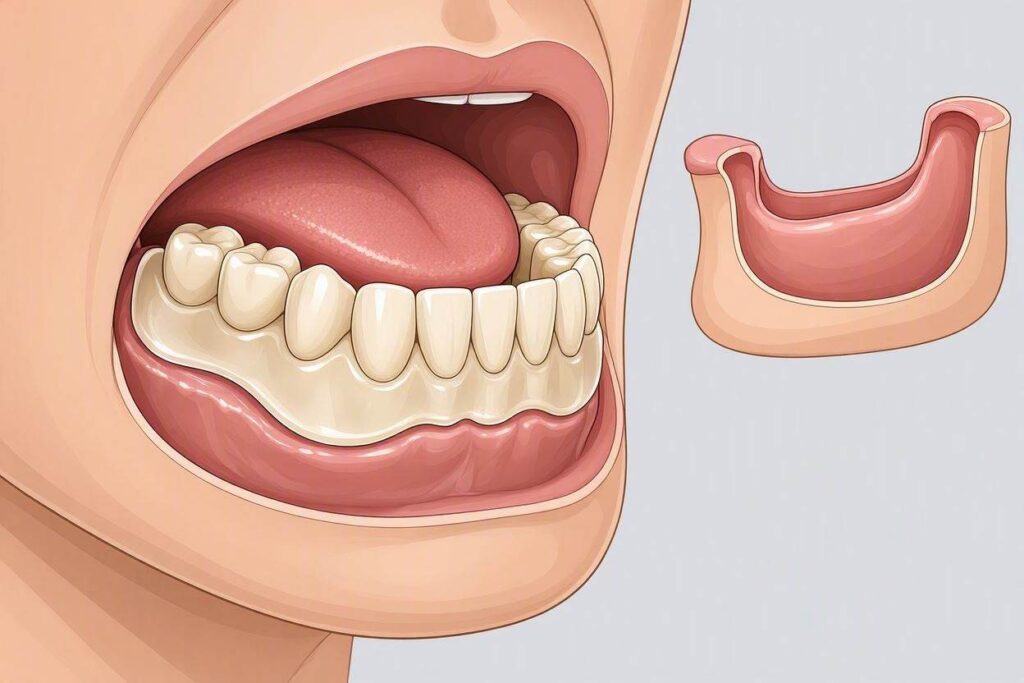
How Traditional Dentures Stay In (The Science of Suction and Gravity)
A traditional denture is a removable appliance that rests directly on the gums. There are no implants or anchors. It relies on a combination of physics and muscle control to stay put.
1. Suction (The Upper Denture Advantage)
This is the primary mechanism for holding an upper denture in place. The upper denture covers the entire palate (the roof of your mouth). When the denture is pressed firmly against the palate, a thin layer of saliva creates a seal. This seal acts like a suction cup, holding the denture up.
This is why an upper denture is generally more stable than a lower one. The large surface area of the palate provides a good surface for suction.
2. Gravity and Muscle Control (The Lower Denture Challenge)
The lower denture is a different story. It is a horseshoe-shaped piece of acrylic that rests on the lower gums. It cannot create the same kind of suction because the lower jaw has a much smaller surface area and the tongue is constantly moving.
A lower denture relies on:
- Gravity: It simply sits on the ridge of the lower jaw.
- Muscle Control: The patient must learn to use their tongue, lips, and cheeks to hold the denture in place. This takes practice and is not always successful.
This is why lower dentures are notoriously unstable. They float, they shift, and they can pop out of place during eating or speaking.
The Role of Denture Adhesive
Many denture wearers turn to adhesive to supplement the natural retention of their dentures.
- What it does: Denture adhesive is a paste, powder, or strip that creates a sticky layer between the denture and the gums. It helps to fill in gaps caused by an imperfect fit and provides temporary extra hold.
- The Limitations: Adhesive is a crutch, not a solution. It is messy. It needs to be reapplied daily. It does not address the underlying problem of bone loss, which causes the denture to fit poorly in the first place. Over-reliance on adhesive can mask the need for a denture adjustment or reline.
The Problem: Bone Resorption Over Time
Even if your traditional denture fits well on day one, it will not fit well forever. This is due to a natural process called bone resorption.
When your teeth are removed, the bone that once supported them begins to shrink. This is because the bone is no longer being stimulated by the tooth roots. A traditional denture does not stimulate the bone; it merely rests on top of the gums. In fact, the pressure of the denture can actually accelerate bone loss.
As the bone shrinks:
- The ridge of the jaw flattens.
- The denture no longer fits snugly.
- The suction of the upper denture weakens.
- The lower denture becomes even more unstable.
This is why long-term denture wearers often complain that their dentures “float” or “rock.” The bone has literally disappeared underneath them.
A Comparison: Traditional vs. Implant-Supported
To understand the true value of implants, it is helpful to compare the two approaches.
| Feature | Traditional Denture | Implant-Supported Denture |
|---|---|---|
| Retention Mechanism | Suction, gravity, muscle control | Mechanical attachment to implants |
| Stability | Poor to moderate | Excellent |
| Need for Adhesive | Often required | Not needed |
| Effect on Bone | Accelerates bone loss | Preserves bone |
| Ability to Chew | Limited (soft foods) | Significant (most foods) |
| Comfort | Bulky, may rub | Streamlined, comfortable |
| Confidence | Constant worry of slipping | Peace of mind |
Can You Make a Traditional Denture Stay Better?
If you are not ready for implants, there are ways to improve the fit of your existing denture.
1. Denture Reline
This is a procedure where the dentist adds new material to the underside of the denture to better match the current shape of your gums. This should be done every 1-2 years to compensate for bone loss.
2. Denture Adjustment
Small, sore spots and pressure points can be adjusted by the dentist to improve comfort.
3. A New Denture
If your denture is very old and the bone has changed significantly, a new denture may be necessary.
These solutions can improve the fit, but they do not solve the fundamental problem of instability. They do not stop the bone loss.
The Bottom Line
Can dentures stay in without an implant? Yes, but they are fighting a losing battle. Traditional dentures rely on suction and muscle control, which are imperfect mechanisms, especially for the lower jaw. Over time, bone loss makes the problem worse.
Dental implants are the only solution that addresses the root cause of denture instability. By replacing the tooth roots, they stimulate the bone, preserve the jaw structure, and provide a solid, mechanical anchor for the denture. If you are tired of fighting your dentures, implants are a life-changing investment.
Frequently Asked Questions (FAQ)
Q: Why does my lower denture float around?
A: The lower denture has no suction. It relies on gravity and muscle control. As the bone in the lower jaw shrinks, the ridge flattens, and the denture has nothing to hold onto. This is the most common complaint among denture wearers.
Q: How often should I use denture adhesive?
A: A small amount of adhesive can be helpful for a well-fitting denture that needs a little extra security. However, if you find yourself using large amounts of adhesive every day, it is a sign that your denture needs to be relined or replaced.
Q: Can I sleep with my dentures in?
A: It is generally recommended to remove your dentures at night. This allows the gum tissue to rest and breathe. It also gives you a chance to clean the denture properly.
Q: Will a denture reline stop the bone loss?
A: No. A reline simply adjusts the fit of the denture to the current shape of your gums. It does not stop the bone loss. The bone will continue to shrink, and the denture will eventually need to be relined again.
Q: How many implants do I need to stop my denture from moving?
A: For a lower denture, a minimum of two implants is the standard. These implants provide the anchors for a “snap-on” denture. For an upper denture, four implants are usually recommended.
Additional Resource:
To learn more about the benefits of implant-supported dentures over traditional dentures, you can visit the American College of Prosthodontists (ACP): https://www.gotoapro.org/