Can Nerve Damage Result From A Dental Implant?
Dental implant surgery is one of the most successful procedures in modern dentistry. Success rates exceed 95%. However, like any surgical procedure, it carries some risks. One of the most concerning potential complications is nerve damage. This leads to a serious question: “Can nerve damage result from a dental implant?” The answer is yes, it is possible, but it is rare. When it does occur, it is usually temporary. This guide will explain which nerves are at risk, how damage can occur, the symptoms, and what can be done to prevent and treat this complication.
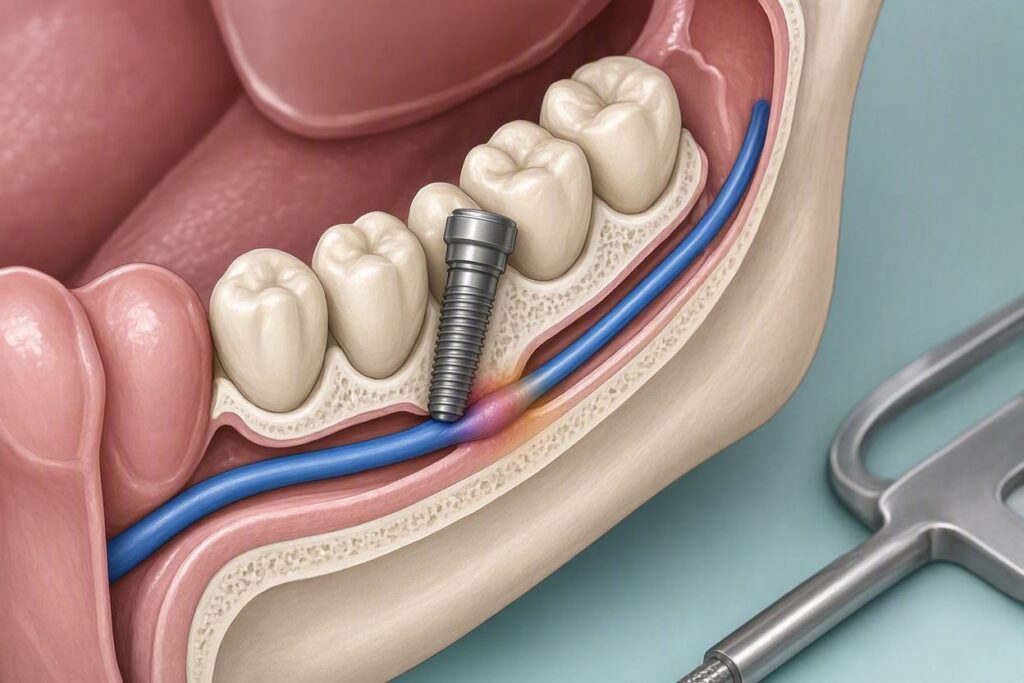
Understanding the Nerves in Your Jaw
To understand the risk, you need to understand the anatomy. The lower jaw (mandible) contains a major nerve called the inferior alveolar nerve. This nerve runs through a canal in the bone. It provides sensation to your lower teeth, your lower lip, and your chin.
Another important nerve is the lingual nerve. This nerve runs near the surface of the gum on the inner side of the lower jaw. It provides sensation and taste to the front two-thirds of your tongue.
In the upper jaw (maxilla), the nerve supply is more diffuse. The risk of significant nerve damage in the upper jaw is much lower. The main concern in the upper jaw is the sinus cavity, not major nerves.
How Can Nerve Damage Occur?
Nerve damage during dental implant surgery can happen in a few ways.
1. Direct Trauma from the Drill
This is the most common cause. When the dentist drills into the jawbone to create the hole for the implant, the drill can come too close to the nerve canal. If the drill actually touches or penetrates the nerve, it can cause direct injury.
2. Pressure from the Implant
If the implant is placed too close to the nerve, or if it slightly impinges on the nerve canal, the pressure can irritate the nerve. This can happen even if the drill did not directly hit the nerve.
3. Compression from Swelling or Bleeding
After surgery, swelling and bleeding are normal. If there is excessive swelling or a hematoma (a collection of blood) near the nerve, it can compress the nerve and cause temporary dysfunction.
4. Stretching or Bruising of the Nerve
During the surgery, the retraction of the gum tissue or the manipulation of the area can stretch or bruise the nerve, especially the lingual nerve.
The Symptoms of Nerve Damage
The symptoms of nerve damage depend on which nerve is affected and the severity of the injury.
Inferior Alveolar Nerve Damage (Lower Lip and Chin):
- Numbness or tingling (paresthesia): This is the most common symptom. It feels like your lip or chin is “asleep” or “pins and needles.”
- Loss of sensation (anesthesia): You may not be able to feel touch, pain, or temperature in the affected area.
- Burning or electric shock sensations (dysesthesia): This is a more severe symptom. It can be painful and persistent.
Lingual Nerve Damage (Tongue):
- Numbness or tingling in the tongue.
- Loss of taste.
- Difficulty speaking or swallowing (rare).
- Burning sensation in the tongue.
How Common Is Nerve Damage?
Nerve damage is a rare complication, but it is more common with implants in the lower back jaw, where the inferior alveolar nerve is located. The reported incidence varies, but it is generally considered to be between 0.5% and 2% of cases. The vast majority of these cases are temporary.
Temporary vs. Permanent Damage:
- Temporary Nerve Damage: This is the most common scenario. The nerve is bruised or compressed, but not severed. The symptoms usually resolve over a period of weeks or months as the nerve heals. Full recovery is common.
- Permanent Nerve Damage: This is rare. It occurs when the nerve is severely injured or severed. The symptoms may not resolve completely. Permanent damage can have a significant impact on quality of life.
The Crucial Role of 3D Imaging
The most important tool for preventing nerve damage is the 3D Cone Beam CT scan. This imaging technology provides a three-dimensional view of your jaw. It shows the exact location of the nerve canal in relation to your bone.
Before the surgery, the dentist uses the 3D scan to:
- Measure the height and width of the bone available.
- Identify the precise location of the inferior alveolar nerve.
- Plan the implant placement to maintain a safe distance from the nerve (usually at least 2 millimeters).
Without a 3D scan, the dentist is essentially working blind. They are relying on two-dimensional X-rays, which do not show the exact position of the nerve. A dentist who uses 3D technology is significantly reducing the risk of nerve injury.
How to Minimize Your Risk
You can take steps to protect yourself from this complication.
1. Choose an Experienced Surgeon
This is the most important factor. An experienced implant surgeon has the skill and knowledge to avoid the nerve. They have placed hundreds or thousands of implants and know how to handle difficult cases.
2. Insist on a 3D Scan
Do not proceed with implant surgery in the lower jaw without a 3D Cone Beam CT scan. This is the standard of care. If your dentist does not offer this technology, find one who does.
3. Ask About Surgical Guides
Many dentists use computer-guided surgery. This involves creating a custom-made surgical guide based on the 3D scan. The guide fits over your teeth and directs the drill into the exact planned position, minimizing the risk of error.
4. Discuss Your Medical History
Be honest about any medical conditions or medications. Conditions that affect nerve function, such as diabetes, may increase your risk.
What Happens If Nerve Damage Occurs?
If you experience numbness or tingling after implant surgery, it is important to inform your dentist immediately.
1. Monitoring
In most cases, the dentist will monitor the situation. If the nerve is simply bruised or compressed, the symptoms will likely improve over time. They may schedule follow-up appointments to track your recovery.
2. Medications
In some cases, medications may be prescribed. Steroids can help reduce inflammation around the nerve. Pain medications can manage any discomfort. Vitamin B complex supplements are sometimes recommended to support nerve healing.
3. Microsurgical Repair (Rare)
In very rare cases of severe nerve injury, microsurgical repair may be considered. This involves a specialist surgeon attempting to repair the damaged nerve. This is a complex procedure with variable results.
A Surgeon’s Perspective on Prevention
“Nerve damage is my biggest fear as a surgeon. That is why I never place an implant in the lower jaw without a 3D scan. I plan every case meticulously. I always maintain a safety margin. The technology is there to prevent this. There is no excuse for taking shortcuts.” – Dr. Michael Torres, DDS, Oral and Maxillofacial Surgeon
Important Notes for Readers
- Do Not Panic: If you experience numbness after surgery, remember that it is usually temporary. The vast majority of patients recover full sensation.
- Report Your Symptoms: Do not be shy about reporting your symptoms to your dentist. Early intervention can improve outcomes.
- The Risk Is Low: While nerve damage is a serious concern, it is important to keep it in perspective. The overall risk is low, especially when you choose an experienced provider who uses 3D technology.
- The Benefits Outweigh the Risks: For the vast majority of patients, the benefits of dental implants far outweigh the small risk of nerve damage.
The Bottom Line
Can nerve damage result from a dental implant? Yes, it is a possible but rare complication. It primarily affects the inferior alveolar nerve in the lower jaw, causing numbness or tingling in the lip and chin. In most cases, the damage is temporary and resolves on its own. The most effective way to prevent this complication is to choose an experienced surgeon who uses 3D Cone Beam CT imaging to plan the surgery precisely and maintain a safe distance from the nerve.
Frequently Asked Questions (FAQ)
Q: How long does it take for nerve damage to heal after a dental implant?
A: If the nerve is bruised or compressed, recovery typically takes several weeks to several months. The timeline depends on the severity of the injury. In rare cases, the damage may be permanent.
Q: What does nerve damage from a dental implant feel like?
A: The most common sensation is numbness or tingling, like your lip or chin is “asleep.” Some people describe a burning or electric shock sensation. You may also have difficulty feeling touch or temperature.
Q: Can nerve damage be repaired?
A: In some cases, microsurgical repair is possible, but the results are variable. This is a highly specialized procedure performed by an oral and maxillofacial surgeon with microsurgical training.
Q: Is nerve damage more common with certain types of implants?
A: The type of implant is less important than the location. Implants in the lower back jaw, near the mental foramen (where the nerve exits the bone), carry a higher risk of nerve injury. Proper planning with a 3D scan is essential for these cases.
Additional Resource
For a detailed overview of the risks and complications of dental implant surgery, visit the American Association of Oral and Maxillofacial Surgeons: https://myoms.org/