Can Teeth Whitening Cause Enamel Loss?
A bright, white smile often feels like the ultimate accessory. You see it on celebrities, colleagues, and friends. You naturally want that radiant confidence for yourself. But a nagging question might hold you back. You wonder if that quest for a luminous smile could permanently damage your teeth. The fear is real. You might picture your protective tooth surface eroding away under a barrage of harsh chemicals.
This concern brings us to a central, crucial question. It is a question dentists hear almost daily. It is the reason many people hesitate before trying a new product. Can teeth whitening cause enamel loss?
The short answer is reassuring. When you use products correctly, the risk of losing healthy enamel is extremely low. The long answer is more nuanced. It requires a journey into tooth anatomy, chemistry, and safe practices. This comprehensive guide will provide that journey. We will separate myth from scientific reality. We will explore how whitening works, what sensitivity really means, and how to protect your precious smile.
By the end of this article, you will have a clear, realistic understanding. You will know how to achieve a brighter smile without compromising your dental health. Let’s put your fears to rest and empower you with knowledge.
What Is Tooth Enamel?
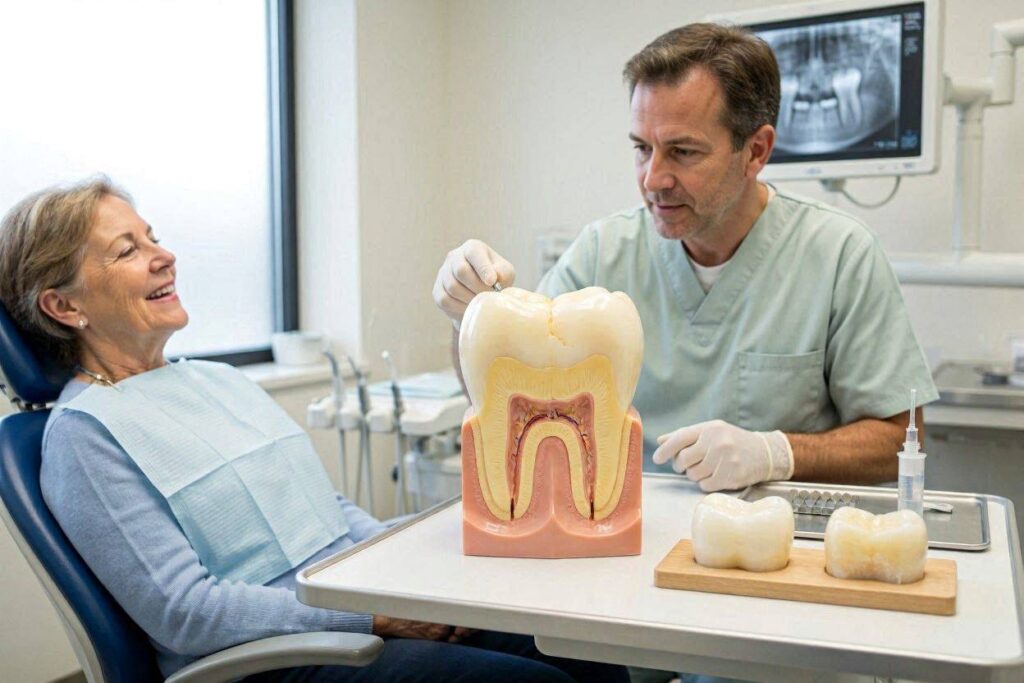
To understand the potential for damage, you must first understand the armor itself. Tooth enamel is a remarkable substance. It is the hardest and most mineralized tissue in the entire human body. It forms the visible outer layer of each tooth’s crown. Think of it as a shield, a thin but incredibly strong helmet protecting the more vulnerable inner structures.
Structure and Function
Enamel’s structure is a masterpiece of natural engineering. It is composed primarily of a mineral called hydroxyapatite. This is a crystalline form of calcium phosphate. These crystals arrange themselves into tight rods or prisms. Millions of these rods run parallel from the surface of the tooth to the inner layer beneath. This intricate, densely packed architecture gives enamel its incredible strength.
The primary function of this layer is protective. It shields the inner tooth layers from a hostile environment. Your mouth cycles through extreme temperatures, abrasive forces from chewing, and corrosive acids produced by bacteria. Enamel takes the brunt of this assault. Without it, every bite of ice cream or sip of hot coffee would be a painful experience. It is the fortress wall that allows you to enjoy a normal diet without constant pain.
Why Enamel Loss Matters
Enamel loss is a serious and irreversible process. This is because enamel, unlike other body tissues, is acellular. It contains no living cells. Your body cannot regenerate or regrow it once it is gone. You cannot heal a chip in your enamel the way your skin heals a cut. This fact makes preserving your enamel a top health priority.
When the shield thins or erodes, the underlying layer called dentin becomes exposed. Dentin is a living tissue filled with microscopic tubules that lead directly to the tooth’s nerve center. Exposed dentin is the root cause of tooth sensitivity. Sharp pains from cold, hot, sweet, or even cold air signal this exposure. More critically, losing enamel makes your teeth drastically more susceptible to cavities, decay, cracks, and structural failure. Preserving enamel is not just about comfort; it is about the long-term survival of your teeth.
How Teeth Whitening Works
To answer the central question about enamel loss, you need a clear grasp of the whitening process itself. It is not a surface scrub like cleaning a countertop. It is a sophisticated chemical reaction that happens within the tooth’s structure. The goal is to alter the appearance of the tooth from the inside out, without physically stripping away its protective layer.
Types of Whitening Treatments
The market offers a dizzying array of products, but they fall into a few broad categories. Each delivers the active ingredient in a different format and concentration.
- Professional In-Office Whitening: A dentist performs this procedure. It uses high-concentration gels and often a specialized light to accelerate the process. This method provides the fastest and most dramatic results under strict safety protocols.
- Dentist-Dispensed At-Home Trays: Your dentist creates custom-fitted mouth trays. You receive a professional-grade whitening gel to use at home. This offers a strong balance of efficacy and safety with professional supervision.
- Over-the-Counter Strips and Gels: These are flexible plastic strips coated with a lower-concentration gel. You apply them directly to your teeth. They are widely accessible and affordable.
- Whitening Toothpastes and Mouthwashes: These products are designed for daily use. They typically contain very mild concentrations of whitening agents or gentle abrasives to remove surface stains. Their effect is subtle and gradual.
Mechanism of Action
The true workhorse in almost all effective whitening products is a chemistry compound, either hydrogen peroxide or carbamide peroxide. These are the active ingredients. Carbamide peroxide breaks down into hydrogen peroxide and urea upon contact with water in your saliva. So, hydrogen peroxide is the ultimate star of the show.
The mechanism is one of oxidation, not abrasion. The peroxide solution is a small molecule. It can freely penetrate the porous structure of your enamel. It diffuses through the microscopic spaces between the enamel rods. Once inside, it reaches the dentin layer. Here, it encounters complex organic molecules called chromogens. Chromogens are deeply embedded pigment compounds that have accumulated over years. They are responsible for the yellow or brown discoloration.
The whitening agent breaks the strong chemical double bonds that give these chromogens their color. Think of it as a molecular scissor snipping the colored links. As these bonds break, the pigment molecules become smaller, simpler, and lighter in color, or they reflect light differently. The result is a tooth that looks significantly whiter. This entire process happens internally. It does not involve melting, stripping, or physically dissolving the enamel matrix itself.
Does Teeth Whitening Cause Enamel Loss?
We now arrive at the core of your concern. This is the question that brought you here. It is time to address it directly and definitively, drawing on the science we have just explored. The anxiety is valid, but the science provides a clear and overwhelmingly reassuring picture.
Short Answer
The direct, short answer is no. When used as directed, effective whitening agents do not cause the loss of enamel. A substantial body of scientific research consistently supports this conclusion. The peroxide compounds work through oxidation, a chemical process that bleaches stain molecules. They do not function like acidic demineralizers, such as the phosphoric acid in soft drinks, which literally dissolve and etch away the enamel’s mineral structure. The whitening process leaves the physical architecture of your enamel intact and unharmed.
Scientific Perspective
Leading dental authorities and decades of peer-reviewed studies have investigated this very question. The consensus is robust. Studies using scanning electron microscopy show no significant change in the surface topography of enamel after treatment with peroxide-based whiteners at recommended concentrations and times. The enamel rods remain dense and well-structured.
Research published in reputable journals frequently concludes that professionally applied and prescribed whitening is safe for enamel. The American Dental Association confirms that available scientific data supports the safety and effectiveness of dentist-dispensed, custom-fitted tray home-use products containing 10% carbamide peroxide. The key lies in the neutral pH of modern, well-formulated gels. They are chemically designed to whiten without eroding.
“The active ingredients in teeth whiteners are peroxides, which work by penetrating the enamel to reach the discolored molecules inside. This process does not soften, demineralize, or erode the enamel.”
This scientific perspective is the foundation of safe cosmetic dentistry. The fear of dissolving your enamel is a myth, provided you are not misusing the product.
What Actually Happens to Enamel
Here is a crucial and easily misunderstood point. While whitening does not cause a permanent loss of mineral content, it does cause transient, minor changes. A temporary increase in “porosity” can occur during the process. The peroxide slightly increases the permeability of the enamel. This allows the whitening agent to diffuse deeply, but it also means the enamel can temporarily lose a tiny fraction of its mineral content.
This is a short-term chemical effect, not a destructive erosion. Your body’s natural defense system, your saliva, is incredibly efficient at correcting this. Saliva is a mineral-rich fluid, supersaturated with calcium and phosphate ions. Once the whitening treatment stops, these minerals in your saliva immediately begin to re-penetrate the enamel. This natural remineralization process repairs the temporary porosity within a few hours. The enamel returns to its normal, fully mineralized state. This cycle is similar to the constant demineralization and remineralization from eating everyday foods. The danger comes only if you interrupt this natural repair cycle with constant, excessive exposure.
When Whitening Can Be Harmful
Although the process itself is safe, the user is often the wildcard. Problems arise not from the chemical action on healthy enamel, but from misuse and bad judgment. Under specific circumstances, whitening can indeed become harmful. The danger is almost always related to user error, pre-existing conditions, or a reckless pursuit of results. It is a classic case of “the dose makes the poison.”
Overuse of Whitening Products
This is the single most common pathway to damage. The “more is better” mentality is your enemy here. Some people, chasing an impossibly white shade, will wear whitening trays overnight every night for weeks or use multiple strips back-to-back. This constant chemical assault overwhelms the saliva’s natural ability to remineralize. The enamel stays in a porous, weakened state for a prolonged period. This can lead to permanent structural damage over time, not from direct dissolution, but from chemical degradation of the protein scaffold within the enamel. The enamel can become brittle and more prone to microfractures. Irritating the dentin and nerve tissue relentlessly leads to excruciating, lingering pain that is far more intense than common sensitivity.
High Concentration Products Without Supervision
The internet is a marketplace for dangerously strong whitening gels. You can find products with hydrogen peroxide concentrations far exceeding the 6% limit typically found in consumer strips or the 35% used in a controlled dental office. Using a 35% or higher gel in a one-size-fits-all tray at home is a recipe for disaster. The gel can readily spill onto and burn your gum tissue, causing severe chemical burns. Without a dentist’s isolation and protection, you risk swallowing significant amounts of the chemical. Prolonged contact of these high-concentration gels on your teeth, without professional monitoring, can lead to permanent nerve damage and tooth death. The risk simply does not outweigh any perceived benefit.
Existing Enamel Damage
You must not whiten a compromised tooth. If you already have signs of enamel erosion, such as translucent biting edges, visible dents on the surface, or significant wear, whitening poses a direct threat. Your enamel layer is already dangerously thin. The peroxide can rapidly penetrate through the weakened, thin enamel and flood the large, unprotected dentin tubules. This can cause immediate, sharp, and lasting pain. More seriously, the chemical can diffuse directly to the pulp chamber, causing inflammation or irreversible damage to the nerve. Whitening on a tooth with a crack or an active cavity is an emergency in waiting, as the agent can directly access the nerve, causing agony and abscess.
Difference Between Enamel Loss and Sensitivity
This distinction is the most critical piece of knowledge you can take away. It is the key to understanding your own body’s signals. Almost every person who fears their whitening treatment is “eating away at their enamel” is actually just experiencing sensitivity. The two phenomena are fundamentally different. Conflating them causes unnecessary panic and prevents you from managing a very common, temporary side effect.
Understanding Sensitivity
Tooth sensitivity from whitening is a well-known, temporary side effect. It is a chemical phenomenon, not a structural one. During treatment, the tiny hydrogen peroxide molecules diffuse through the enamel and into the dentin. The dentin is not a solid, impermeable wall. It is a sponge-like tissue filled with thousands of microscopic channels called dentinal tubules. Each tubule is filled with fluid and connects directly to the tooth’s nerve center.
The peroxide causes a mild, transient inflammation of this pulp tissue, a condition called reversible pulpitis. This inflammation lowers the nerve’s pain threshold. The movement of the fluid within the dentinal tubules, triggered by stimuli like cold water or air, is then perceived as a sharp, short shock of pain. This is the “zing” or “twinge” you might feel. It is your nerve saying it is irritated, not your enamel saying it is dissolving.
Why Sensitivity Is Not Enamel Loss
These two conditions have completely different causes and signs. Enamel loss is a permanent physical wearing away of the hard outer layer. Its primary cause is long-term acid erosion from diet or stomach acid, or mechanical abrasion from aggressive brushing. The key symptom is a change in the tooth’s appearance: a yellowing as the underlying dentin becomes more visible, a translucent look at the edges, or a smooth, shiny, cupped-out appearance on the chewing surfaces.
Whitening sensitivity does not change the shape or volume of your tooth. The sensitivity is transient, typically lasting for 24 to 48 hours after treatment. The pain is stimulus-dependent, a quick shock triggered by cold, not a constant, dull ache. Once you stop the treatment, the peroxide diffuses out of the tooth, the pulp inflammation subsides, and the sensation vanishes completely. No enamel was lost. Your tooth is the exact same size and shape. This is a predictable, manageable side effect, not a sign of permanent destruction.
Factors That Affect Whitening Safety
Safety is not a monolithic guarantee; it exists on a spectrum. The final outcome of your whitening journey hinges on a delicate interplay of several key factors. You can control many of these. Understanding these variables empowers you to predict your experience and tailor a safe, effective treatment plan for yourself. Ignoring them is what leads to problems.
Concentration of Whitening Agent
This is the most powerful variable. A product’s “strength” is a direct measure of the percentage of hydrogen peroxide (HP) or carbamide peroxide (CP) it contains. A 3% HP daily strip works slowly, causing minimal chemical irritation. A 25% HP in-office gel works powerfully and fast, requiring professional isolation. A 44% CP gel (which breaks down to about 15% HP) is a potent prescription-grade product.
Higher concentrations deliver faster, more dramatic whitening, but they also intensify the transient side effects. The chemical inflammation in the pulp is dose-dependent. Using a high concentration for a short, supervised session is often safer than using a low concentration for an excessively long, unsupervised time. It is not just the number on the syringe; it is the combination of concentration and time that matters.
Duration of Treatment
The length of time the chemical is in contact with your teeth is equally critical. Whitening is a cumulative chemical process. There is a therapeutic window where the reaction happens efficiently. Exceeding this window offers diminishing returns and exponentially increases risk. A product designed for a 30-minute daily application used for 4 hours straight is no longer a cosmetic treatment; it’s a chemical insult. The active agent will be long depleted, and you will just be soaking your teeth in an acidic, peroxide-depleted solution, promoting dehydration and severe sensitivity with no whitening benefit. Strict adherence to the specified time, whether 5 minutes, 30 minutes, or overnight, is a non-negotiable safety step.
Individual Tooth Condition
Your teeth are unique, and their starting condition is a major predictor of your response. A young person with thick, dense, healthy enamel and no restorations will likely have a very smooth experience. Their enamel is a robust barrier. An older adult, whose enamel has naturally thinned over decades and has countless microscopic stress cracks from a lifetime of chewing, will be far more vulnerable. Someone with pre-existing gum recession exposing the tooth root is a high-risk candidate. The root surface is cementum, not enamel, and it has no protective barrier. Applying whitening gel to exposed roots guarantees an immediate, sharp burning sensation. You must honestly assess your mouth before starting. A person with worn, sensitive teeth should not use the same protocol as someone with thick, resilient enamel.
Frequency of Use
More is not better. The pursuit of a “Hollywood white” smile can lead to a dangerous cycle of constant whitening. Your teeth need a recovery period. After a treatment cycle, your enamel’s permeability is temporarily increased, and your saliva needs time to restore mineral balance. Jumping into another box of strips immediately, or constantly touching up every other day, never allows this recovery. You essentially keep your teeth in a constant state of low-grade chemical strain. This chronic irritation can transition from a temporary, reversible sensitivity into a persistent, painful condition. A responsible cadence involves completing a full course, then waiting months before a maintenance touch-up.
Professional Whitening vs Over-the-Counter Products
The decision between seeing a dentist or buying a kit at the pharmacy is more significant than just cost. It represents a fundamental choice in your risk profile, the oversight you receive, and the speed of results. This is not about one being universally “better” without context. It is about matching the right tool to your specific needs, risk tolerance, and oral health status. A detailed comparison makes the distinction clear.
Professional Whitening
Professional whitening is a dental procedure built on a safety-first framework. It begins with a comprehensive oral examination. Your dentist does not just sell you a product; they diagnose the cause of your discoloration and rule out active decay, cracks, or gum disease. The process uses high-concentration gels, often 15% to 35% hydrogen peroxide. Safety protocols are paramount. The dentist or hygienist will meticulously isolate your teeth, often placing a liquid rubber dam or a protective gel over your gum tissue to prevent any contact with the powerful agent.
The treatment occurs in a controlled environment. If sensitivity becomes intense, the procedure stops. Custom-fitted trays for at-home professional kits ensure a perfect seal, holding the gel against the teeth and dramatically minimizing leakage onto gums. This precision offers two distinct paths: the rapid, dramatic result of an in-office power session, or the gradual, controlled, and often more profound whitening of custom home trays under professional guidance. The higher upfront cost is an investment in safety, speed, and predictable outcomes.
Over-the-Counter Products
The world of over-the-counter (OTC) products is one of accessibility and variety. Whitening strips, paint-on gels, and prefabricated trays are the most common. Their primary advantage is lower cost and convenience. They are designed for a “good enough” result for a broad population. To ensure safety for unsupervised use, the concentration of the active ingredient is significantly lower, typically around 3% to 6% hydrogen peroxide for strips.
The critical variable with OTC products is fit. A one-size-fits-all tray is a significant compromise. It will not perfectly fit your unique dental arch. This poor fit leads to two problems: diluted efficacy as saliva washes the gel from the tooth surface, and a high risk of gel squeezing out onto your gum tissue and oral mucosa, causing chemical irritation or burns. The onus of safety is entirely on you. You must interpret the instructions, manage the time, and decide when to stop. For a healthy mouth with mild, general staining, OTC products are a valid, economical choice. For complex cases, pre-existing sensitivity, or heavily restored teeth, they are a riskier gamble.
| Feature | Professional Whitening (In-Office/Take-Home) | Over-the-Counter Products |
|---|---|---|
| Active Ingredient Concentration | High (15-35% HP in-office; 10-15% CP take-home) | Low to Moderate (3-6% HP for strips) |
| Safety Protocol & Supervision | Dental exam, professional isolation, gum protection, custom trays. | User-dependent. One-size-fits-all trays risk gum irritation. |
| Speed of Results | Very fast (in-office) or predictable over 1-2 weeks (custom trays). | Slower, typically requiring consistent use over 2-4 weeks. |
| Suitability for Complex Cases | Ideal for tough intrinsic stains, tetracycline cases, and sensitive teeth with direct monitoring. | Best for individuals with generally healthy teeth and mild, uniform yellowing. |
| Cost | Higher upfront investment reflecting expertise and safety. | Low to moderate cost, widely accessible. |
How to Protect Enamel During Whitening
Achieving a brighter smile while safeguarding your dental health requires a proactive, defense-first strategy. You are not a passive recipient of a chemical process. You are an active guardian of your enamel. By integrating a few simple, non-negotiable habits into your routine, you can minimize side effects and ensure that only the stains disappear, not your precious tooth structure. Treat these steps not as suggestions, but as your mandatory pre-whitening ritual.
Follow Instructions Carefully
This is the single most important rule, and the one most often broken. The printed insert in your whitening kit is not a generic suggestion. It is a scientifically validated safety protocol. Reading it requires your full attention. If the product says “use for 30 minutes daily,” it does not mean 45 minutes gives better results. It means 45 minutes exponentially increases the risk of severe sensitivity with zero whitening benefit. The active peroxide depletes, and you are just dehydrating your tooth. Set a timer. Do not fall asleep in non-overnight trays. Discontinue use if you experience sharp, persistent pain, not just a minor tingle. Treating the instructions as law is the bedrock of safe whitening.
Use Dentist-Approved Products
The source of your whitening product matters immensely. Products that earn the American Dental Association (ADA) Seal of Acceptance or are dispensed directly through a licensed dentist have undergone rigorous testing. This independent evaluation confirms the product’s safety and efficacy when used as directed. Avoid the temptation of deeply discounted products from online marketplaces with unverifiable origins. These may contain dangerously high, unregulated concentrations of peroxide or highly acidic, enamel-damaging formulas. A product from a reputable dental company, recommended by your dentist, is an investment in safety. Steer clear of the “magic cure” products you see on social media with no professional oversight.
Maintain Good Oral Hygiene
The state of your mouth before you begin a whitening course is critical. Inflammation is a multiplier for side effects. A healthy mouth is less reactive. For two weeks before you start whitening, focus on perfecting your gum health. Brush gently but thoroughly with a soft-bristled toothbrush and floss meticulously. The goal is to resolve any gingival inflammation. If your gums bleed when you floss, they are inflamed. Applying even a mild whitening gel to tissues that are already raw and irritated will cause a stinging, burning pain. A clean, healthy, non-inflamed mouth provides a calm, resilient foundation that tolerates the whitening process with far fewer complaints.
Avoid Acidic Foods During Treatment
This is a powerful but often overlooked protective measure. Your whitening treatment temporarily increases your enamel’s permeability. During this window, your teeth are in a slightly weakened state and are more susceptible to an acid attack. Consuming acidic foods and drinks immediately before or after a whitening session is like putting your enamel in a pincer movement. Beverages like soda, citrus juices, sports drinks, and wine are primary culprits. If you must have a glass of wine, wait several hours after a treatment or do it on a non-whitening day. Shielding your teeth from acid during the entire course of treatment is a powerful way to prevent unnecessary mineral loss.
Use Desensitizing Toothpaste
Leverage chemistry to your advantage. A toothpaste containing 5% potassium nitrate is a clinically proven tool for managing whitening sensitivity. Brands like Sensodyne or similar are perfect for this. Potassium nitrate works by penetrating the dentinal tubules and calming the nerve fibers inside the tooth’s pulp. For maximum effectiveness, start using this toothpaste two weeks before you begin your whitening course. Apply it as your regular toothpaste. Then, during treatment, you can use it as a “leave-on” gel. After your whitening session, rub a small amount of the desensitizing toothpaste directly onto the most sensitive teeth and let it sit for 5 to 10 minutes before rinsing. This proactive chemical barrier can make the difference between a comfortable experience and a painful one.
Role of Saliva in Enamel Protection
You have a silent, 24/7 guardian inside your mouth. It is your saliva. This remarkable biological fluid is not just water; it is your body’s primary defense system for your teeth. Its role in safe whitening is so fundamental that the entire process hinges on its function. Understanding and supporting your natural protective mechanism is the smartest strategy you can adopt.
Natural Remineralization
Saliva’s most critical job is to facilitate a constant cycle of repair. It is a naturally supersaturated solution, teeming with calcium and phosphate ions. These are the exact mineral building blocks that make up your enamel. After a whitening session, the peroxide molecules have temporarily increased the microscopic spaces within your enamel. Your saliva immediately floods these spaces. The calcium and phosphate ions rush in and begin to re-deposit onto the enamel crystals. This is the process of natural remineralization.
It is nature’s way of perfectly repairing the temporary porosity caused by whitening. By the next day, the enamel is back to its normal, hardened, fully mineralized state. This cycle is the entire reason tooth whitening is safe. The chemical action is a brief, transient event that the saliva’s powerful healing capacity immediately corrects.
Importance of Hydration
A dry mouth is a vulnerable mouth. The remineralization process is completely dependent on a healthy, consistent flow of mineral-rich saliva. If you suffer from xerostomia, or dry mouth, whether from medication, a medical condition, or simple chronic dehydration, you are in a high-risk category for whitening complications. Your natural repair system is offline. The temporary enamel porosity is not repaired quickly, leaving your teeth weak and hypersensitive.
Before, during, and after a whitening course, you must optimize your hydration. Sip plain water regularly throughout the day. This mechanical rinsing action also helps wash away food debris and dilute acids. Stimulating saliva flow by chewing sugar-free xylitol gum is another powerful tactic. Xylitol itself has the added benefit of inhibiting cavity-causing bacteria. Supporting your saliva is not a passive concept; it is an active, daily practice of hydration and stimulation that directly protects your enamel.
Special Considerations
A one-size-fits-all approach to whitening is a recipe for failure, or worse, pain. Your mouth is not a generic test case. It has a history, specific sensitivities, and possibly decades of dental work. Acknowledging these nuances separates a responsible practitioner from an amateur. Whether you have sensitive teeth, are enjoying your golden years, or have a history of dental restorations, your whitening plan must be tailored to your unique landscape.
Whitening for Sensitive Teeth
If your teeth already tingle when you eat ice cream, you must approach whitening with a deliberate, defensive strategy. A traditional high-concentration, rapid regimen is not for you. Your path requires patience. Lower-concentration, desensitizing formulas are your starting point. Many professional brands offer gels with built-in amorphous calcium phosphate or potassium nitrate. Your pre-treatment with a desensitizing toothpaste is not just a suggestion; it is mandatory. Begin weeks before.
Your application schedule should be conservative. Instead of daily treatments, you might whiten every other day or even every third day. This vital recovery window allows any pulpal inflammation to fully subside and your saliva to complete its repair cycle. The goal is to gently coax the stains out without triggering a painful crisis. For someone with sensitive teeth, a successful whitening journey is measured not just by shade change, but by the absence of pain.
Whitening for Older Adults
Aging gracefully brings wisdom, experience, and inevitable changes to your smile. Tooth enamel, after a lifetime of faithfully serving you, naturally thins. This physiological wear exposes more of the underlying yellow dentin. Your teeth may have micro-cracks that are invisible to the naked eye but act as superhighways for whitening agents to reach the nerve. Gum recession, another common sign of a life well-lived, is a critical factor. The exposed root surface is covered with cementum, a much softer and more permeable tissue than enamel. Whitening gel on a root surface causes an immediate, sharp pain and can easily penetrate to the nerve.
A dental consultation before whitening is vital for older adults. A dentist must map out the areas of recession and identify any cracks. A custom strategy, perhaps using a lower concentration for shorter periods and meticulously avoiding the root zones, is non-negotiable for a safe and comfortable outcome.
Whitening for Patients with Dental Work
This is a realm of absolute physical limits. Tooth-colored restorations like composite bonding, porcelain veneers, and dental crowns are impervious to whitening chemicals. They are color-stable, man-made materials. The peroxide molecules cannot penetrate them. They will remain their exact original shade while your natural tooth structure around them whitens. The result is a mismatched, polka-dot smile.
Before any cosmetic work, a dentist will always recommend whitening your natural teeth first to a stable shade. Then, the new crown or veneer is custom-made to perfectly match this newly whitened foundation. If you already have visible fillings or crowns on your front teeth and wish to whiten, you must accept the high probability of needing to replace those restorations afterward to match. Whitening will not damage a properly done ceramic crown, but it will expose a color mismatch. Plan for the replacement cost as an integral part of your budget.
Alternatives to Whitening
Chemical whitening is not a universal solution. Sometimes, the desired outcome is not achievable, or the risks outweigh the potential benefits for a specific individual. Discoloration is not always a simple issue of coffee stains. It can be a structural problem or a different type of pigmentation. In these cases, other effective cosmetic dental procedures exist. These alternatives do not just bleach the existing tooth; they physically alter or cover its surface to create a new, flawless appearance.
Professional Cleaning
Before you ever consider a whitening kit, the first and most logical step is a professional dental cleaning. What you perceive as intrinsic yellowing is often just a thick layer of tenacious, calcified tartar and extrinsic surface stains. Tartar, also called calculus, is a hard, mineralized plaque that bonds to the tooth and absorbs stains easily. No amount of at-home whitening will remove it.
A dental hygienist uses specialized instruments and an ultrasonic scaler to painlessly remove this hard buildup. Following this with a polishing using a fine-grit prophylaxis paste removes the softer biofilm and superficial stains from coffee, tea, and red wine. The result can be a dramatically brighter smile from simply revealing your clean, natural tooth surface. For many people, this professional cleaning alone provides the aesthetic lift they were seeking, without any chemical intervention.
Microabrasion
Microabrasion is a brilliant, conservative technique for a very specific type of discoloration. It is ideal for white, brown, or yellow spots confined to the surface of the enamel. These spots can be caused by fluorosis, a condition from excessive fluoride ingestion during tooth development, or other developmental defects. These intrinsic stains are trapped within the outermost layer of enamel and are resistant to peroxide whitening.
The procedure is mechanical and chemical. The dentist creates a slurry of 5% hydrochloric acid and fine, abrasive pumice powder. This mixture is gently scrubbed, using a slow-speed handpiece, onto the stained area for a very short, controlled time. It works by microscopically abrading the very top layer of the enamel, dissolving and lifting away the superficial enamel layer that contains the defect. This process removes the unsightly lesion, revealing a flat, shiny, stain-free enamel surface beneath. It conserves tooth structure and is permanent.
Veneers
Porcelain veneers represent the most comprehensive and permanent solution for a smile makeover. They are the ultimate alternative when whitening and microabrasion are insufficient. Veneers are thin, custom-made shells of medical-grade ceramic. They are designed to cover the front surface of a tooth. They are the treatment of choice for teeth that are intrinsically stained a deep, dark color (like tetracycline staining), severely worn, chipped, misshapen, or have large gaps.
The process is irreversible. A very thin layer of enamel, about 0.5 millimeters, is removed from the tooth’s front to create room for the veneer’s thickness. An impression is taken, and a master ceramist hand-layers the porcelain to create a life-like, luminous restoration. Once bonded in place, a veneer is incredibly strong and resistant to future staining. The result is a flawless, symmetrical, and permanently beautiful smile in any shade you desire.
When to Avoid Teeth Whitening
The most powerful piece of advice a responsible source can offer is not how to do something, but when not to do it. While safe for most, teeth whitening under specific circumstances is not just ill-advised; it is a direct threat to your health. Ignoring these absolute contraindications can lead to irreversible damage, excruciating pain, and serious complications. If any of the following apply to you, your quest for whiter teeth must wait until you have first seen a dentist and resolved the underlying problem.
Active Tooth Decay
Whitening an active cavity is akin to pouring bleach into an open wound. A cavity is a literal hole in your enamel, a breach in the fortress wall. Applying whitening gel directly onto or near a carious lesion provides an unimpeded, express pathway for the peroxide. It will bypass the protective enamel and dentin and flow directly into the pulp chamber, the tooth’s living core.
The result is an instantaneous, searing, gut-wrenching pain. This chemical assault can cause irreversible pulpitis, killing the nerve. What was once a simple cavity needing a filling can rapidly escalate into a tooth requiring a root canal or extraction. Any active decay must be professionally diagnosed and treated with a permanent restoration before you can ever safely consider whitening.
Severe Enamel Erosion
If you have lost a substantial amount of enamel to years of acid reflux, a high-acid diet, or aggressive brushing, whitening is dangerous. The diagnostic signs are clear: teeth that are yellow (from exposed dentin), transparent at the biting edges, and feel gritty or rough. Your precious, thin, remaining armor is the only thing standing between the external world and your sensitive dentin.
Chemically challenging this fragile environment is reckless. The peroxide can rapidly diffuse through the porous, thinned enamel and flood the entire dentin layer, causing severe, diffuse, and prolonged pain. More critically, the temporary demineralization cycle might be the final insult, pushing a weakened tooth to structural failure. A dentist must manage enamel erosion with remineralizing therapies, bonding, or crowns. Whitening is a secondary cosmetic concern that is off the table until the health and structural integrity of the teeth are stabilized.
Gum Disease
Active periodontal disease is a red flag for any elective cosmetic procedure. The hallmarks of this condition are red, swollen, tender gums that bleed easily when probed. The infection is not just on the surface. It has created deep, ulcerated pockets around the teeth, where the gum tissue has detached.
Introducing even a mild whitening agent to this already inflamed and raw tissue will cause an intense, burning chemical irritation. It will exacerbate the inflammation. The disease process itself also exposes a portion of the tooth root, which, as we’ve learned, is devoid of enamel and highly sensitive. The whitening agent will directly penetrate this unprotected root surface, causing sharp pain. Healthy, non-inflamed, pink gums that are tightly adapted to the teeth are a prerequisite for a safe and comfortable whitening experience. Periodontal health must be achieved first.
Conclusion
Can teeth whitening cause enamel loss? Science confirms that professionally approved and correctly used whitening products do not destroy your healthy enamel; they work by internally oxidizing stain molecules. The temporary sensitivity you might feel is a reversible nerve irritation, not a sign of permanent structural damage. To protect your smile, simply respect the product’s instructions, support your teeth with fluoride and desensitizing agents, and always start with a professional dental evaluation to rule out hidden risks.
FAQ
Is teeth whitening permanent?
No. Teeth whitening is not a one-time, permanent procedure. The results are stable but require maintenance. Your teeth will continue to be exposed to staining agents like coffee and red wine. A touch-up treatment, either a single session every few months or a round of strips once a year, is needed to maintain the brightness.
Can I whiten my teeth if I have braces?
You should wait until your braces are removed. Whitening with brackets bonded to your teeth will result in a mismatch. The area under the bracket will not whiten, leaving a small, darker square of your original tooth color once the brackets are off.
Why do my teeth look more yellow after whitening?
This is usually temporary dehydration. During treatment, the enamel can lose moisture, making it look temporarily chalky and emphasizing the yellow dentin beneath. The color will normalize and settle into its true, lighter shade within 24 to 48 hours as the tooth rehydrates.
What is the safest way to whiten teeth at home?
Custom-fitted trays with a dentist-dispensed gel are the safest and most effective at-home method. The precise fit protects your gums and uses a controlled, safe concentration of peroxide under professional guidance. For over-the-counter, premium strips with a seal of acceptance are a safe secondary option.
Can I whiten a dead tooth or one with a root canal?
Yes, but the procedure is completely different. A tooth that has had a root canal darkens from the inside. External strips or trays will be useless. The only effective method is internal, or “walking bleach.” A dentist places a whitening agent inside the tooth’s chamber and seals it for several days.
Additional Resource:
For further reading on safety and product selection, you can visit the American Dental Association’s page on whitening at www.ada.org.
Disclaimer:
This article is intended for informational purposes only and is not a substitute for professional dental advice, diagnosis, or treatment. Always seek the advice of your dentist or another qualified health provider with any questions you may have regarding a medical condition or treatment.