Why Do My Teeth Burn After Whitening Strips?
You peel the strip off your teeth and expect a bright, confident smile. Instead, you feel a sharp, throbbing burn that makes you wonder if you have made a terrible mistake. You are not alone. That burning, zinging sensation is one of the most common complaints about at-home whitening treatments. The good news is that science has a clear explanation for it, and there are proven ways to manage it.
This guide walks you through every aspect of this phenomenon. We will explore the chemistry happening inside your teeth, the mistakes that increase pain, and the strategies you can use right now to calm the fire. By the time you finish reading, you will understand exactly what triggers the burn and how to achieve a whiter smile without suffering for it.
How Whitening Strips Work
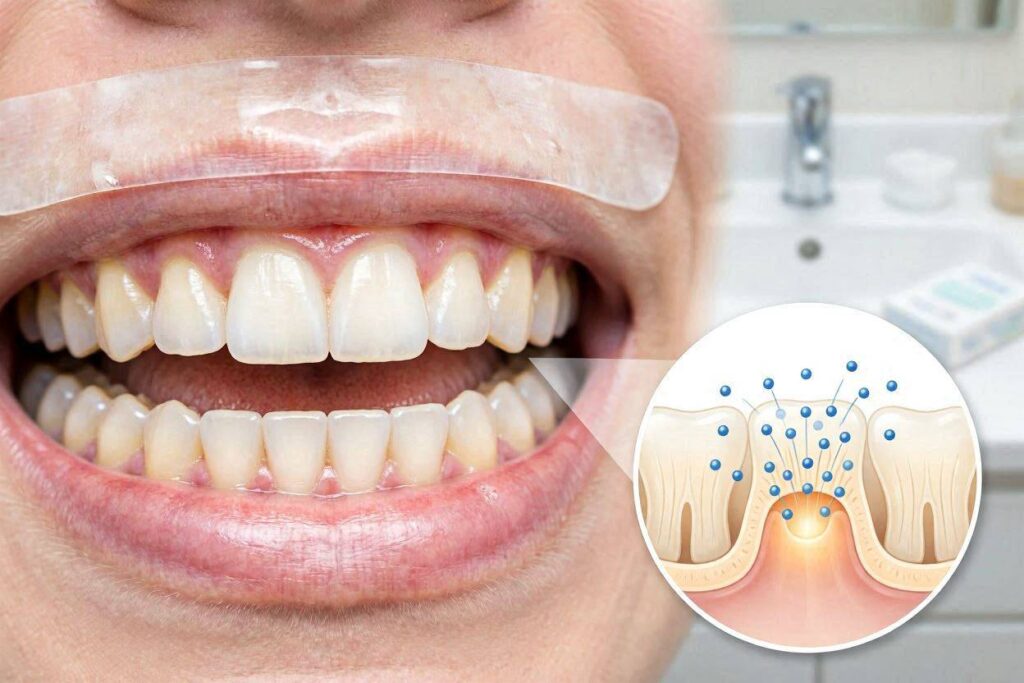
To understand the burn, you first need to understand what happens the moment you place that thin, flexible strip onto your teeth. Whitening strips are not just sticky pieces of plastic. They are delivery systems for powerful bleaching agents, usually hydrogen peroxide or carbamide peroxide. The strip presses the gel against your enamel and keeps it there, preventing saliva from washing it away too quickly.
The Role of Bleaching Agents
Hydrogen peroxide is the real workhorse here. When it comes into contact with your tooth surface, it breaks down into water and highly reactive oxygen molecules. These oxygen free radicals are tiny but aggressive. They penetrate the porous outer layer of your enamel and travel into the dentin, which sits just beneath.
Once inside, these molecules attack the long chains of stained compounds that have built up over years of drinking coffee, tea, red wine, or using tobacco. They break these large, dark molecules into smaller, colorless fragments. Your tooth physically becomes lighter because the staining compounds no longer absorb light in the same way. This is true oxidation, similar to how bleach works on fabric, just on a microscopic scale inside your smile.
Why Whitening Works So Quickly
Strip manufacturers design their products to work fast because consumers demand visible results after just a few applications. To achieve this, they use higher concentrations of peroxide than what you find in whitening toothpaste or rinses. Most over-the-counter strips contain between 6% and 14% hydrogen peroxide. That is strong enough to create a noticeable shade change within three to five days. The trade-off for this speed is a higher likelihood of sensitivity and that dreaded burning feeling. The molecules move rapidly through the enamel, and the nerve inside your tooth does not always appreciate the sudden chemical visitor.
Why Teeth Burn After Whitening Strips
The burning sensation is rarely a single problem with a single cause. Most people experience it as a combination of several overlapping factors. Let us break down the five most common culprits.
1. Tooth Sensitivity
Sensitivity is the most frequent reason for pain after whitening. Your enamel contains microscopic pores that normally stay closed. The peroxide gel opens these pores, creating tiny channels that lead directly to the dentin layer. Dentin consists of thousands of microscopic tubules filled with fluid. Each tubule connects to a nerve ending deep inside the tooth pulp.
When the bleaching agent floods these tubules, it causes the fluid inside to move rapidly. This movement triggers a nerve response that your brain interprets as a sharp, burning, or tingling sensation. Think of it as your tooth’s alarm system going off because an intruder just opened a door that should have remained shut.
“The permeability of enamel increases significantly during whitening. We see a temporary change in the way the tooth responds to temperature, touch, and even air.” — A note from general dentistry research on bleaching agents.
2. Irritation of the Dental Nerve
Direct nerve irritation takes sensitivity one step further. The peroxide molecules do not just stay in the dentin tubules. In some people, they migrate all the way to the pulp chamber, which houses the tooth’s main nerve and blood supply. This triggers a sterile inflammatory response. Your body sends inflammatory mediators to the area, causing the nerve to become hyper-reactive.
When a nerve gets inflamed inside the rigid confines of a tooth, there is no room for swelling. The pressure builds, and the result is a deep, throbbing burn that can feel much worse than surface-level sensitivity. This explains why some people feel pain even when they are not eating, drinking, or breathing cold air. The nerve simply stays aggravated for hours or days.
3. Gum Irritation
Not all burning comes from your actual teeth. Whitening gel often seeps onto the gum tissue, especially if you apply the strip carelessly or trim it improperly. The soft tissue of your gingiva is not built to handle strong hydrogen peroxide. When the gel contacts your gums, it causes a chemical burn. The affected area turns white or red and stings intensely.
You can usually tell the difference between gum pain and tooth pain. Gum pain feels superficial, sore, and localized to the pink tissue around the teeth. Tooth pain comes from within and feels deeper. Many people experience both simultaneously because the gel irritates the gum margin right where it meets the tooth, triggering sensitivity in that vulnerable neck area of the tooth as well.
4. Enamel Micro-Damage
Despite what marketing claims, whitening is not entirely harmless to enamel. Research shows that peroxide bleaching agents cause superficial demineralization. They leach a small amount of calcium and phosphate ions from the enamel surface, making it temporarily softer and microscopically rougher. This erosion exposes more dentin tubules and removes the thin protective smear layer that normally covers your teeth.
The burning sensation intensifies because there is now even less protection between the outside world and your nerve endings. Your teeth become temporarily more porous and vulnerable. The good news is that your saliva naturally remineralizes your enamel within hours to days, but during that window, the burn can be remarkably uncomfortable.
5. Pre-Existing Dental Conditions
Sometimes the whitening strip is not the real villain. It simply reveals a problem that already existed. Cavities, even tiny ones, create direct pathways for peroxide to reach the dentin and pulp. Cracked teeth or leaky fillings allow the gel to seep into spaces it should never enter. If you have undiagnosed decay, a failing crown margin, or early-stage gum disease, whitening strips will make you painfully aware of it.
Using whitening products on a compromised tooth is like pouring lemon juice on a paper cut. The burning serves as a warning signal. If one specific tooth burns significantly more than the others, you should see a dentist before continuing any whitening regimen.
Who Is More Likely to Experience Burning?
Not everyone feels the burn. Your genetics, habits, and oral health history all play a role in determining whether you will sail through a whitening treatment or find yourself in agony.
People with Thin Enamel
Enamel thickness varies from person to person. Some individuals inherit naturally thinner enamel, while others wear it down over time through aggressive brushing, acid reflux, or a diet heavy in citrus. When the enamel layer becomes thin, the underlying yellow dentin shows through, and the protective barrier between the nerve and the outside world shrinks. Peroxide reaches the nerve faster and in higher concentrations, making burning almost inevitable.
People with Gum Recession
Gum recession exposes the tooth root, which lacks the hard enamel covering found on the crown. Roots are covered by cementum, a much softer and more permeable tissue. When whitening gel touches an exposed root surface, it causes immediate and severe burning. The dentin tubules on roots are wider and more numerous than on crowns, so the peroxide has a direct expressway to the pulp. If you have “long in the tooth” appearance or your dentist has mentioned recession, you must protect those root surfaces carefully.
Frequent Whitening Users
Enthusiasm for a bright smile can backfire. People who whiten too often keep their enamel pores in a near-constant state of openness. They never give their teeth a chance to fully remineralize and settle down. Over time, cumulative damage can lead to chronic sensitivity that does not fade between treatments. The burning becomes a constant companion rather than a temporary side effect.
Individuals with Sensitive Teeth
If you already wince when eating ice cream or drinking hot coffee, whitening strips will likely push you over the edge. Pre-existing dentin hypersensitivity means your nerves already sit closer to a firing threshold. The peroxide simply provides the final nudge. A survey of dental patients found that those with baseline sensitivity reported whitening pain at nearly double the rate of those without it.
| Risk Factor | Why It Increases Burning | How Common It Is |
|---|---|---|
| Thin enamel | Less protection for the nerve | Very common in adults over 30 |
| Gum recession | Exposed root surfaces absorb peroxide rapidly | Affects up to 50% of adults |
| Frequent whitening | Enamel does not get time to recover | Common in beauty enthusiasts |
| Pre-existing sensitivity | Nerves are already hyper-reactive | About 1 in 3 adults experience it |
| Undiagnosed decay | Peroxide enters the tooth directly | More common than people realize |
How Long Does the Burning Sensation Last?
The answer depends on the severity of the reaction and whether you take steps to calm it down. For most people, mild burning and sensitivity peak during the treatment and within the first two hours after removing the strips. A dull ache might linger for 24 to 48 hours. This is the typical timeline for transient whitening sensitivity.
If you experience sharp, electric-shock pain that persists beyond three days, the peroxide likely inflamed the nerve significantly. You should stop all whitening immediately and consult your dentist. In rare cases where a person has very thin enamel or exposed dentin, the discomfort can last for weeks. This is not normal, and it signals that at-home strips may not be appropriate for your dental anatomy.
Gum irritation tends to resolve faster. The soft tissue turns over quickly, and chemical burns to the gums usually heal within 24 to 72 hours, provided you keep the area clean and avoid further exposure. The white patches that sometimes appear on burned gums will slough off naturally as new tissue grows underneath.
How to Reduce Burning After Whitening
The burn does not have to be a price you pay without recourse. These strategies work before, during, and after treatment to calm the fire.
1. Use a Desensitizing Toothpaste
Desensitizing toothpaste is not a marketing gimmick. Products containing potassium nitrate or stannous fluoride genuinely work. Potassium nitrate penetrates the dentin tubules and calms the nerve, preventing it from firing pain signals. Stannous fluoride forms a protective plug over the open tubules, physically blocking stimuli.
Start using a desensitizing toothpaste at least two weeks before you begin whitening. Brush with it twice daily, and consider applying a small amount directly to sensitive areas with your finger before bed. During the active whitening phase, continue using it. Some people even squeeze a bit of desensitizing gel into their whitening trays or onto their strips to counteract the peroxide. This builds a chemical shield around the nerve before the burn can start.
2. Reduce Frequency of Use
The instructions on the box are a recommendation, not a binding contract. If you experience burning, skip a day or two between applications. Your teeth need time to recover and remineralize. Switching from a once-daily application to an every-other-day schedule can dramatically reduce sensitivity without significantly affecting your overall whitening results. The stain oxidation reaction continues even after you remove the strip, so you are not losing all your progress by resting.
3. Shorten Application Time
Leaving strips on longer than directed never produces a whiter smile. It only increases side effects. If the box says 30 minutes and you feel burning at minute 15, remove the strip. You still receive whitening benefits from shorter exposures. Some people find that 15 or 20 minutes gives them a comfortable balance between results and comfort. The concentration of peroxide in your strip determines how fast it works, not how long you suffer through the pain.
4. Avoid Contact with Gums
Take your time applying the strip. Use a mirror. Position the strip so it sits entirely on the teeth and does not overlap onto the pink gum tissue. If the strip is too wide for your teeth, trim it with clean scissors before applying it. Some people use a cotton swab to wipe away excess gel that squishes out near the gum line immediately after placing the strip. A small piece of orthodontic wax placed along the gum margin can also act as a barrier, though this takes some practice to do effectively.
5. Use Lower Concentration Products
The “maximum strength” label sounds appealing, but it often translates to maximum pain. Most people can achieve excellent whitening with a 6% or 10% hydrogen peroxide formula over a slightly longer treatment period. The lower concentration moves through the enamel more gradually, giving the nerve less of a shock. If 14% strips burn like fire, step down to a gentle formula. The final shade will still be bright; the journey will simply take a week or two longer.
6. Take Breaks Between Treatments
Do not chain one box of strips to the next without a significant rest period. After finishing a full whitening cycle, let your teeth recover for at least four to six months. During this time, use remineralizing products, fluoride rinses, and continue with your desensitizing toothpaste. Your enamel hardness rebounds, your nerves settle, and your gum tissue fully heals. When you return to whitening later, you may find you tolerate it much better because you did not start from a compromised baseline.
7. Apply Fluoride Treatment
Fluoride helps speed up enamel remineralization. After removing your strips, rinse with a fluoride mouthwash or apply a fluoride gel to your teeth. Avoid eating or drinking for 30 minutes afterward to let the fluoride absorb. Many dentists can also provide prescription-strength fluoride varnishes that offer rapid relief. A single high-concentration fluoride application can cut sensitivity by more than half for some patients.
When to Stop Using Whitening Strips
There is a line between manageable sensitivity and a red flag. You should stop using whitening strips immediately and seek professional advice if you experience any of the following:
- Pain that shoots through a single tooth when you bite down
- Swollen, bleeding gums that do not heal within three days
- A persistent white or gray patch on gum tissue that does not fade
- Sensitivity to hot temperatures, not just cold
- Pain that wakes you up at night
- Any tooth that feels loose or feels higher than others when you bite
These symptoms suggest nerve damage, a crack, or an infection that requires professional intervention. Continuing to whiten a tooth in this state can push it into irreversible pulpitis, which requires a root canal or extraction to resolve.
Professional Whitening vs. At-Home Strips
Understanding the differences between what you can buy at the pharmacy and what a dentist offers helps set realistic expectations and safety parameters.
Professional Whitening
A dentist uses a high-concentration peroxide gel, sometimes up to 40% hydrogen peroxide. They protect your gums with a rubber dam or a liquid barrier that hardens into a shield. The procedure takes about an hour, and the results appear immediately. The controlled environment and gum isolation reduce the risk of chemical burns to soft tissue. However, tooth sensitivity still occurs, and many dentists apply a desensitizing agent right after the treatment.
The main advantage is supervision. A dentist examines your mouth first, identifies any problems, and customizes the treatment. If sensitivity spikes, they can intervene immediately. The downside is cost, which runs hundreds of dollars more than strips.
At-Home Whitening Strips
Strips are affordable, convenient, and effective when used correctly. The peroxide concentration is lower, so the treatment takes more applications to reach the same shade change. The biggest weakness is the lack of a professional screening. You go in blind, sometimes whitening teeth that have hidden cavities or cracks. Gum isolation is also tricky, leading to frequent soft tissue irritation.
| Feature | Professional Whitening | At-Home Whitening Strips |
|---|---|---|
| Peroxide concentration | 25%–40% | 6%–14% |
| Gum protection | Professional barrier | User-applied, often imperfect |
| Speed of results | Immediate, 1–2 sessions | Gradual, 7–14 days |
| Cost | $300–$1,000 | $20–$80 |
| Screening for problems | Dentist performs exam | No screening |
| Sensitivity management | In-office desensitizers | Over-the-counter products |
“In-office whitening provides the best combination of safety and speed, but at-home strips can be a reasonable option for patients with healthy teeth and gums who follow the directions carefully.” — Common guidance from dental associations.
Preventing Burning Before It Starts
Proactive prevention beats reactive treatment every time. Here is how to stack the odds in your favor before you even open the box.
Have a Dental Check-Up First
The single best thing you can do is get a dental exam before starting any whitening regimen. A dentist checks for cavities, cracked fillings, gum recession, and enamel erosion. They can tell you whether you are a good candidate for whitening and which product concentration suits your tooth anatomy. If they find a problem, they fix it first. Whitening healthy teeth is safe. Whitening compromised teeth leads to burning and permanent damage.
Choose the Right Product
Not all strips are the same. Look for products that list the active ingredient concentration on the packaging. Avoid strips with ingredients you do not recognize or that promise unrealistic results like “20 shades whiter in one use.” Stick with reputable brands that have clinical research backing their safety claims. If you have sensitive teeth, seek out strips specifically labeled “gentle” or “sensitive formula.”
Follow Instructions Strictly
The instructions exist for a reason. Do not sleep in whitening strips not designed for overnight use. Do not double up on strips for faster results. Do not use a whole box in one weekend. The recommended treatment schedule accounts for enamel recovery time and minimizes nerve irritation. Deviating from it will not make your teeth any whiter, but it will almost certainly make them burn.
Hydrate Your Mouth
Dry teeth absorb peroxide faster and more deeply. Stay well hydrated before and during your whitening cycle. Saliva acts as a natural buffer and protective layer. If you suffer from dry mouth due to medications or medical conditions, address that before whitening. Drink water throughout the day, chew sugar-free gum to stimulate saliva flow, and consider using a moisturizing mouth spray.
The Science Behind the Burning Sensation
Let us zoom in even closer to understand the actual biological process at the nerve level.
Dentin contains odontoblasts, specialized cells that line the pulp chamber and extend long processes into the dentin tubules. These cells sense changes in fluid flow, pressure, and chemical composition. When peroxide enters the tubules, it creates a concentration gradient that draws fluid outward. This fluid movement bends the odontoblast processes, which triggers voltage-gated ion channels in the nerve fiber membrane.
Think of the tubule fluid like the liquid in a straw. When peroxide touches one end, the fluid shifts sharply. That shift pulls on the nerve fiber, which opens sodium and calcium channels. The nerve depolarizes and fires an action potential that races to the brainstem. Your conscious brain registers this signal as pain, specifically the burning, sharp quality that characterizes dentin sensitivity.
The chemical nature of peroxide also plays a direct role. Hydrogen peroxide generates reactive oxygen species that can briefly alter the chemistry of the nerve ending itself, lowering its firing threshold. This means that even normal stimuli, like breathing air or drinking room-temperature water, can suddenly trigger a painful response. The nerve becomes a hair trigger, ready to fire at the slightest provocation.
This dual mechanism—mechanical fluid shift and chemical nerve sensitization—explains why whitening pain can feel so different from other dental pain. It is a unique combination of physical irritation and chemical irritation happening simultaneously in a very confined space.
Is Burning a Sign of Damage?
This is the question that worries most people. The answer is nuanced.
In the vast majority of cases, transient burning and sensitivity do not indicate permanent damage. The changes to the enamel are reversible. Your saliva contains calcium and phosphate, and it actively repairs the demineralized surface over the next 24 to 48 hours. The nerve inflammation subsides as the peroxide dissipates and the tubule fluid stabilizes. Most people recover completely with no lasting consequences.
However, ignoring severe or prolonged pain and continuing to whiten can cause damage. If you force peroxide into an already inflamed pulp, you can push it past the point of no return. Irreversible pulpitis means the nerve tissue dies. The tooth then requires root canal treatment or extraction. This outcome is rare, but it happens more often than dentists would like to see, usually because someone ignored clear warning signs.
Gum tissue also heals well when the chemical irritant is removed. But repeated chemical burns can cause gum recession over time. Once gums recede, they do not grow back. The lost tissue exposes the root permanently, setting up a lifelong cycle of sensitivity.
The takeaway is this: listen to your body. Mild, manageable discomfort that fades within a day or two is normal and not dangerous. Severe, sharp, or persistent pain is a signal to stop and seek help.
Conclusion
The burning sensation after using whitening strips results from peroxide penetrating your enamel and irritating the nerve inside your teeth, often compounded by gum contact and microscopic enamel changes. You can manage and even prevent this pain by using desensitizing toothpaste beforehand, choosing lower concentration strips, reducing application time, and taking breaks to let your enamel recover. Whitening remains safe for most people when done correctly, but listening to your body and consulting a dentist before starting will protect your smile from unnecessary damage and ensure you get the bright results you want without the fire.
Frequently Asked Questions
Can I use whitening strips if my teeth already hurt from cold drinks?
You can, but you should treat the baseline sensitivity first. Use a desensitizing toothpaste containing potassium nitrate for at least two weeks before starting. If your teeth still hurt with cold, choose the lowest peroxide concentration available and limit application time. Skip whitening entirely if the pain is sharp or lingering.
Why do my gums turn white and burn after using strips?
The peroxide gel has caused a chemical burn on your gingival tissue. The white color results from the outer layer of gum cells dehydrating and dying. This heals within a day or two. Apply the strip more carefully next time, trim it to fit your teeth, and wipe away excess gel that squishes onto the gums.
Does the burning mean the whitening is working?
Not necessarily. Burning indicates peroxide penetration and nerve irritation, but you can achieve excellent whitening without pain. The absence of sensitivity does not mean the treatment failed. It simply means your enamel is thick enough, your nerves are calm enough, or you are using a properly formulated product.
How many days in a row can I safely whiten?
Most manufacturers recommend 7 to 14 consecutive days, but you can extend the intervals if sensitivity develops. Whitening every other day still produces results. Listen to your teeth. If they start burning, rest for 48 hours before the next application.
Should I brush my teeth right after removing whitening strips?
Wait at least 30 minutes. Your enamel is temporarily softened and more porous right after treatment. Brushing immediately can cause abrasive wear. Rinse with water, apply a fluoride mouthwash or desensitizing gel, and brush gently later.
Additional Resources
For a deeper understanding of whitening safety and sensitivity management, visit the American Dental Association’s resource page on tooth whitening:
ADA MouthHealthy: Whitening
This page provides evidence-based guidance on whitening options, safety considerations, and what to discuss with your dentist before starting treatment.
Disclaimer
This article is for informational and educational purposes only. It does not constitute medical or dental advice. The content is not intended to diagnose, treat, cure, or prevent any dental condition. Always consult a licensed dentist or healthcare provider before beginning any tooth whitening regimen, especially if you experience severe pain, have pre-existing dental conditions, or suspect underlying oral health issues. Individual results and reactions vary. Use whitening products only as directed by the manufacturer and in accordance with professional recommendations.