Can You Vape With Dental Implants?
The relationship between vaping and dental implants is a topic of growing concern as electronic cigarette use continues to rise. Many patients who vape assume that because e-cigarettes lack the tar and many carcinogens found in traditional cigarettes, they are safe for dental implant treatment. The reality is more complicated and less reassuring than patients might hope. Understanding how vaping affects implant healing and long-term success is essential for anyone considering or already having dental implants.
You should not vape during the dental implant healing period, and long-term vaping may increase your risk of implant complications. While research on vaping and dental implants is still limited compared to traditional smoking, the nicotine in e-cigarettes causes vasoconstriction that reduces blood flow to healing tissues, impairs wound healing, and may compromise osseointegration. Most implant surgeons recommend complete nicotine cessation, including vaping, for at least 2-4 weeks before surgery and throughout the entire 3-6 month healing period.
How Vaping Affects Oral Tissues
Understanding the biological effects of vaping on the mouth explains why it threatens implant success.
Nicotine and Blood Flow
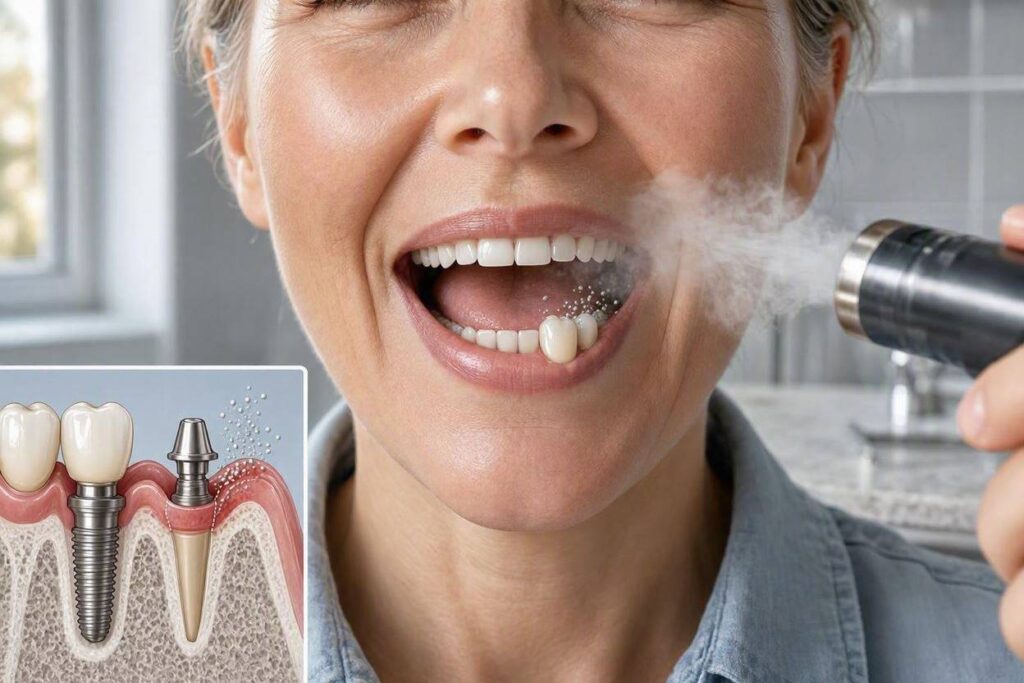
The primary concern with vaping and implants is nicotine, not the delivery method. Nicotine is a potent vasoconstrictor that narrows blood vessels and reduces blood flow to tissues. In the oral cavity, this vasoconstriction can reduce blood flow by up to 70%.
Healing after implant surgery depends on robust blood supply delivering oxygen, nutrients, and immune cells to the surgical site. Vasoconstriction starves healing tissues of these essential elements. The bone cells responsible for osseointegration require high oxygen levels to function properly. Carbon monoxide from combustion is not present in vapor, but nicotine alone impairs oxygen delivery through its effects on circulation.
Nicotine Levels in Vaping:
The nicotine concentration in e-cigarette liquids varies widely, from 0 milligrams per milliliter (nicotine-free) to over 50 milligrams per milliliter in high-strength products. Many popular products deliver nicotine levels comparable to or exceeding traditional cigarettes. The assumption that vaping delivers less nicotine than smoking is not always correct. Some users actually consume more nicotine through vaping because they use the device more frequently throughout the day.
Heat and Chemical Irritation
The vapor inhaled from e-cigarettes is not harmless water vapor. It contains propylene glycol, vegetable glycerin, flavoring compounds, and when heated, can produce potentially harmful byproducts including formaldehyde, acetaldehyde, and acrolein.
The heat of the vapor and the chemicals it contains can irritate oral tissues. In the immediate post-operative period, irritated tissues heal more slowly and are more susceptible to infection. The dry mouth that many vapers experience reduces salivary flow, which normally provides antimicrobial protection and tissue lubrication.
Effects on Oral Bacteria and the Immune System
Emerging research suggests that vaping alters the oral microbiome, the community of bacteria living in the mouth. Changes in the bacterial population may favor pathogenic species associated with peri-implantitis and gum disease.
Nicotine suppresses multiple components of the immune system, including neutrophil function and antibody production. Impaired immune function increases the risk of post-operative infection and reduces the body’s ability to maintain healthy tissues around implants long-term. This immunosuppressive effect occurs regardless of whether nicotine is delivered through smoking or vaping.
“Patients often tell me they switched from smoking to vaping to be healthier, and they assume this means vaping is safe for implants. I explain that while vaping eliminates some harmful combustion products, the nicotine remains a significant threat to healing. From an implant surgery perspective, we want the patient nicotine-free, not just smoke-free.” — Oral and Maxillofacial Surgeon
Vaping During the Implant Healing Period
The healing period after implant placement is when vaping poses the greatest threat.
The Osseointegration Phase
Osseointegration is the biological process where bone cells attach to the titanium implant surface, creating a structural connection capable of bearing chewing forces. This process requires:
Adequate blood supply delivering oxygen and nutrients. Bone-forming cells (osteoblasts) functioning at full capacity. Absence of excessive inflammation. Mechanical stability without micromotion. A clean surgical environment free from infection.
Nicotine from vaping compromises the first three requirements. Reduced blood flow limits oxygen delivery. Osteoblast activity is directly suppressed by nicotine. The inflammatory environment is altered in ways that may impair bone healing.
Clinical Research on Vaping and Implant Success
Research specifically examining vaping and dental implant outcomes is limited because e-cigarettes are relatively new. However, the existing evidence on nicotine and wound healing is extensive and damning.
Studies on nicotine replacement therapy (patches, gum) demonstrate that nicotine alone, without the thousands of other chemicals in cigarette smoke, impairs wound healing and bone formation. Animal studies show reduced bone-to-implant contact and lower implant success rates in subjects exposed to nicotine regardless of delivery method.
While long-term studies comparing implant success rates in vapers versus non-nicotine users are not yet available, the biological plausibility of harm is strong enough that implant surgeons universally recommend nicotine cessation during the healing period.
Dry Socket Risk With Extractions
If your implant treatment involves tooth extractions, whether simultaneous with implant placement or as a preparatory procedure, vaping creates additional risk. The sucking action of drawing on a vaping device creates negative pressure in the mouth that can dislodge the protective blood clot from an extraction socket. This leads to dry socket, an exquisitely painful condition that delays healing and complicates implant treatment.
The recommendation to avoid straws, smoking, and vaping after extractions exists specifically because the sucking motion can dislodge clots. This restriction applies regardless of what substance is being inhaled.
Long-Term Vaping and Peri-Implant Health
Even after successful osseointegration and restoration, vaping may threaten long-term implant survival.
Peri-Implantitis Risk
Peri-Implantitis is the leading cause of late implant failure. The condition involves bacterial infection and inflammation that destroys the bone supporting implants. Smoking is the strongest known risk factor for peri-implantitis, increasing risk two to three times compared to non-smokers.
Whether vaping carries the same peri-implantitis risk as smoking is not yet definitively established. However, the mechanisms that make smoking dangerous for implants are largely nicotine-driven. Vasoconstriction reduces the tissue’s ability to fight bacterial invasion. Immune suppression impairs the host response to peri-implant pathogens. Altered oral microbiome may favor disease-causing bacteria.
It is biologically plausible that long-term vaping will be shown to increase peri-implantitis risk, though perhaps not to the same degree as traditional smoking. Patients who vape should consider this unknown risk when making decisions about nicotine use.
Soft Tissue Health Around Implants
The gum tissue surrounding implants requires adequate blood supply to remain healthy. Nicotine-induced vasoconstriction chronically reduces blood flow to these tissues, potentially leading to:
Thinner, more fragile gum tissue. Reduced ability to resist bacterial invasion. Slower healing of minor injuries or inflammation. Increased susceptibility to recession exposing implant components. Poorer aesthetic outcomes in visible areas.
Nicotine-Free Vaping and Implants
Some patients ask whether nicotine-free vaping is safe for implants. The answer is more nuanced.
Potential Concerns With Nicotine-Free Products
Nicotine-free e-liquids eliminate the vasoconstrictive effects of nicotine but still contain propylene glycol, vegetable glycerin, and flavoring compounds. The heat and chemicals in vapor may still irritate oral tissues, particularly during the immediate post-operative period when tissues are most vulnerable.
The long-term effects of inhaling these substances on oral and peri-implant health are unknown. Given the absence of data, most implant surgeons recommend avoiding all vaping during the healing period as a precautionary measure, even nicotine-free products.
Is Nicotine-Free Vaping Safe for Implants Long-Term?
There is no evidence that nicotine-free vaping is harmful to established, healthy implants, but there is also no evidence confirming its safety. The precautionary principle suggests minimizing exposure to unnecessary chemicals, particularly when they serve no therapeutic purpose.
The heat, dry mouth, and oral microbiome effects of vaping may still create a suboptimal environment for long-term peri-implant health. Patients committed to their implant investment should consider eliminating all vaping, not just nicotine-containing products.
Recommendations for Vapers Considering Implants
Patients who vape and want dental implants have several options for optimizing their outcomes.
Before Implant Surgery
Nicotine Cessation:
Stop all nicotine use, including vaping, at least 2-4 weeks before implant surgery. This allows blood flow to improve and the body’s healing capacity to recover. Longer cessation periods produce better results.
Discuss Honestly With Your Surgeon:
Disclose your vaping habits completely. Your surgeon needs accurate information to assess your risk and plan appropriate treatment. Withholding information about nicotine use harms you, not the provider.
Consider Nicotine Replacement Under Medical Supervision:
If quitting nicotine entirely is not feasible, discuss medically supervised nicotine replacement with your surgeon and primary care provider. While still not ideal for implant healing, transdermal patches avoid the oral effects of vaping and provide controlled, tapering nicotine doses.
During the Healing Period
Complete Nicotine Abstinence:
The 3-6 month osseointegration period is the most critical time for implant success. Complete abstinence from all nicotine products during this period provides the best chance of successful healing.
Avoid All Vaping:
Even nicotine-free vaping introduces heat, chemicals, and the physical sucking action into the healing oral environment. Avoid all vaping during the initial healing period, particularly if extractions were performed.
Focus on Nutrition and Health:
Support healing through excellent nutrition, adequate hydration, and good overall health practices. The body’s healing capacity is the foundation of implant success.
Long-Term Maintenance
Consider Permanent Cessation:
The implant treatment period presents an opportunity for permanent smoking or vaping cessation. The investment in your implants provides powerful motivation to protect that investment through healthy behaviors.
Enhanced Maintenance Protocol:
If you continue vaping after implant restoration, inform your dentist. More frequent professional maintenance visits (every 3 months rather than every 6 months) may help detect early peri-implant problems when they are most treatable.
Meticulous Oral Hygiene:
Vapers must be especially diligent about oral hygiene around implants. The dry mouth and potential microbiome alterations associated with vaping increase the importance of thorough daily cleaning.
Frequently Asked Questions
Can I vape right after dental implant surgery?
No. You should avoid all vaping for at least the first week after surgery, and preferably throughout the entire healing period. The sucking action, heat, and chemicals all threaten healing.
Is vaping worse than smoking for dental implants?
Both are harmful. Smoking delivers additional toxins from combustion that likely make it more harmful overall, but the nicotine in both products impairs healing. Neither is safe for implant patients.
Can I vape with nicotine-free e-liquid after implant surgery?
The physical action of vaping may still irritate surgical sites and dislodge blood clots after extractions. Most surgeons recommend avoiding all vaping during initial healing.
How long after implant surgery can I vape?
Minimum 1-2 weeks for initial soft tissue healing. Ideally, wait until after the implant has fully integrated (3-6 months) to maximize success chances.
Will my implant fail if I vape during healing?
Not necessarily, but your risk of failure is elevated. The degree of risk increase depends on nicotine dose, frequency of vaping, and individual healing capacity.
Can I use nicotine patches instead of vaping after implant surgery?
Nicotine patches still deliver nicotine that impairs healing. They avoid the oral effects of vaping but are not ideal. Discuss options with your surgeon.
Does vaping cause peri-implantitis?
Long-term data is lacking, but the biological mechanisms suggest vaping likely increases peri-implantitis risk compared to no nicotine use.
Should I tell my implant dentist that I vape?
Yes, absolutely. Your dentist needs accurate information to assess risk, plan treatment, and provide appropriate post-operative guidance. Honesty protects your health.
Additional Resources
For more information about vaping and dental health:
- American Academy of Implant Dentistry: www.aaid.com
- American Association of Oral and Maxillofacial Surgeons: www.aaoms.org
- American Dental Association: www.ada.org (smoking and vaping cessation resources)
- Smokefree.gov: Resources for quitting all nicotine products