Custom Dental Implants
When you hear the words “dental implant,” you might picture a simple, one-size-fits-all screw. But the truth is far more advanced. For many people, a standard implant just won’t do the job properly. That is where custom dental implants come into play.
Think of them as a tailored suit versus something off the rack. A standard implant works well for many cases. But your mouth is unique. Your bone density, gum shape, and even the angle of your neighboring teeth are personal to you. A custom option respects that uniqueness.
This guide will walk you through everything you need to know. We will cover what custom implants are, who needs them, how the process works, the real costs involved, and the pros and cons. No fluff. No false promises. Just reliable, practical information to help you make a smart decision.
What Exactly Are Custom Dental Implants?
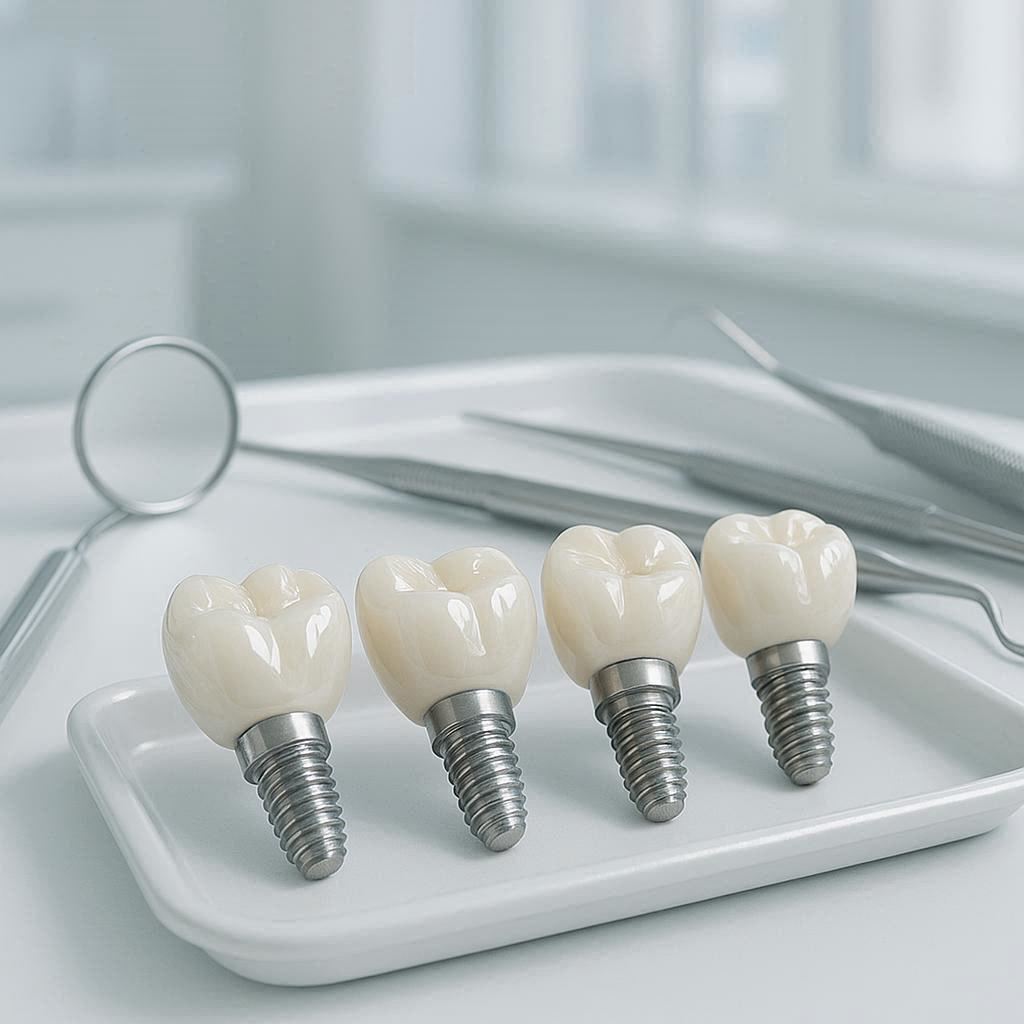
Let us start with a clear definition. A standard dental implant is a mass-produced titanium post. It looks like a small screw. A dentist places it into your jawbone to act as an artificial tooth root.
A custom dental implant is designed specifically for your anatomy. It often uses advanced imaging and 3D printing technology. The shape, length, width, and even surface texture are tailored to fit the exact dimensions of your bone and the space left by your missing tooth.
In some cases, “custom” also refers to the abutment (the connector piece) and the final crown. But here, we focus on the implant post itself. A truly custom implant matches your bone contours perfectly. This is especially useful when you have bone loss, unusual nerve positions, or a narrow jaw.
Important note: Not every patient needs a custom implant. For many, a high-quality standard implant works beautifully. Custom solutions are typically reserved for complex cases or when standard implants have failed before.
How Do Custom Implants Differ From Standard Implants?
To understand the value, you need a side-by-side look. The table below sums up the main differences.
| Feature | Standard Implant | Custom Dental Implant |
|---|---|---|
| Design | Mass-produced, fixed sizes | Designed for your unique bone anatomy |
| Manufacturing | Machined in bulk | 3D printed or milled per patient |
| Fit precision | Good for healthy, thick bone | Excellent for irregular or thin bone |
| Lead time | In stock, ready in days | 2-4 weeks for production |
| Cost | Lower | Higher (often 30-50% more) |
| Best for | Simple, routine cases | Complex anatomy, bone defects, revisions |
| Success rate | 95-98% in ideal conditions | Comparable or slightly higher in complex cases |
As you can see, custom implants are not always necessary. But in tricky situations, they can be a game changer.
When Standard Implants Fall Short
Imagine you lost a tooth years ago. Your jawbone has shrunk. The remaining bone is narrow and uneven. A standard implant would be too wide in some spots and too narrow in others. Your dentist could try bone grafting. But that means extra surgery, more healing time, and additional costs.
A custom implant, on the other hand, can be designed to fit the existing bone like a puzzle piece. No grafting needed. Less surgery. Faster recovery.
That is the real promise of custom implants.
Who Is a Good Candidate for a Custom Dental Implant?
You might wonder, “Is this for me?” Let us break it down.
You Might Benefit From a Custom Implant If:
- You have significant bone loss in the implant area.
- A previous standard implant failed.
- Your jawbone is too narrow or too short for a standard size.
- Nerves or sinus cavities are dangerously close to the implant site.
- You need an immediate implant after tooth extraction, but the socket is irregular.
- You have a congenitally missing tooth with unusual root anatomy.
- You want to avoid a bone grafting procedure.
You Probably Do Not Need a Custom Implant If:
- You have healthy, thick jawbone.
- You are replacing a single tooth in a straightforward location.
- You have never had an implant fail before.
- Your budget is tight, and standard options work well.
Realistic advice: Do not let marketing hype convince you that “custom is always better.” It is not. It is a specialized tool for specific problems. A good dentist will only recommend it when truly needed.
The Step-by-Step Process of Getting Custom Dental Implants
The journey for a custom implant is different from a standard one. It involves more planning and technology. But for the right patient, the extra steps are worth it.
Let us walk through the entire process from start to finish.
Step 1: Initial Consultation and Imaging
Your dentist starts with a thorough exam. They will take a CBCT scan (a 3D X-ray of your jaw). This scan provides a detailed map of your bone, nerves, and sinuses.
Unlike a standard implant where the dentist chooses from a catalog, here the scan data is the blueprint.
Step 2: Digital Planning and Design
The real magic happens on a computer screen. Your dentist or a specialized lab technician loads your CBCT data into implant design software.
They design an implant that:
- Fills the available bone space completely.
- Avoids critical structures like nerves.
- Provides maximum stability.
- Aligns perfectly with your future crown.
This step can take several days. The design is reviewed, adjusted, and optimized.
Step 3: Manufacturing Your Custom Implant
Once the design is approved, the implant goes into production. Most custom implants are made from medical-grade titanium or zirconia. The manufacturing method is usually 3D printing (additive manufacturing) or CNC milling.
The result is a one-of-a-kind implant that matches your bone exactly.
Step 4: Surgical Placement
On surgery day, your dentist places the custom implant into your jaw. Because the implant was designed for your specific anatomy, the fit should be perfect. In many cases, no bone cutting or drilling modifications are needed. The implant simply goes in smoothly.
Step 5: Osseointegration (Healing Period)
Just like standard implants, custom implants need time to fuse with your bone. This process is called osseointegration. It typically takes 3 to 6 months.
During this time, you wear a temporary tooth or a healing cap.
Step 6: Final Restoration
Once healed, your dentist attaches the abutment and your permanent crown. The crown can also be custom-made to match your surrounding teeth perfectly.
Pro tip: Ask your dentist about same-day or digital crown fabrication. Some offices can design and mill your final crown while you wait.
Types of Custom Dental Implants
Not all custom implants are the same. The term covers several distinct categories. Understanding them helps you talk to your dentist with confidence.
1. Custom Implant Posts (Root Analogs)
These are the most “pure” form of custom implant. They mimic the exact shape of your natural tooth root. They work best for immediate placement after extraction. However, they are not common because they require perfect conditions.
2. Custom Abutments (Most Common)
Many dentists offer custom abutments even if the implant post is standard. The abutment is the piece that connects the implant to the crown. A custom abutment ensures your crown emerges through the gum at the perfect angle. This is not a fully custom implant, but it is a very valuable half-step.
3. Subperiosteal Implants
This is an older design making a comeback. Instead of going into the bone, a subperiosteal implant sits on top of the jawbone but under the gum. It is custom-made from a 3D scan of your bone surface. These are rare today but useful for people with severe bone loss who cannot have grafting.
4. Zygomatic Implants
Zygomatic implants are extra-long custom implants that anchor into your cheekbone (zygoma) rather than your upper jaw. They are always custom-planned. They are a last resort for severe upper jaw bone loss.
| Type | Where It Goes | Best For |
|---|---|---|
| Custom post | Inside jawbone | Irregular extraction sockets |
| Custom abutment | On top of standard implant | Angled or shallow tooth replacement |
| Subperiosteal | On top of jawbone | Severe bone loss, no grafting possible |
| Zygomatic | Into cheekbone | Extreme upper jaw bone loss |
The Technology Behind Custom Implants
You do not need to be an engineer to appreciate the tech. But knowing a little about the tools can help you understand the cost and quality.
CBCT Scanning (Cone Beam CT)
This is the first piece of the puzzle. A CBCT scan gives a 3D image of your jaws. It is far more detailed than a regular dental X-ray. The radiation dose is low, but it is higher than a standard X-ray. Discuss this with your dentist if you have concerns.
CAD Software (Computer-Aided Design)
Think of this as Photoshop for implants. The dentist or lab tech uses special software to “draw” an implant that fits your bone perfectly. They can rotate, zoom, and measure every millimeter.
3D Printing (Additive Manufacturing)
Some custom implants are 3D printed from titanium powder. A laser melts the powder layer by layer. This allows for complex porous surfaces that encourage bone growth. These surfaces are impossible to make with traditional machining.
CNC Milling
This is the opposite of 3D printing. A block of titanium is carved away until only the implant remains. It is precise but less flexible for complex shapes.
Did you know? Porous 3D-printed surfaces can help bone grow into the implant. This creates a stronger bond than smooth machined surfaces.
Benefits of Choosing a Custom Dental Implant
Let us focus on the real advantages. Not marketing claims. Not hype. Just honest benefits that matter to patients.
1. Preservation of Existing Bone
Because the implant matches your bone exactly, your dentist does not have to remove healthy bone to force a standard implant to fit. You keep more of your natural structure.
2. Avoidance of Bone Grafting
Bone grafting adds time, cost, and discomfort. A custom implant can often eliminate the need for a graft. The implant is designed to fit the bone you already have.
3. Faster Healing (In Some Cases)
When an implant fits perfectly without gaps, the bone-implant contact is maximized from day one. Some studies suggest this can lead to shorter healing times, though more research is needed.
4. Higher Stability in Difficult Bone
Soft, low-density bone does not hold standard implants well. A custom implant can be designed with a wider profile or special surface texture to grip that soft bone effectively.
5. Reduced Risk of Nerve Damage
The digital planning process maps your nerves precisely. The custom implant is designed to avoid them. This is a major safety advantage, especially in the lower jaw.
6. Fewer Surgeries
By combining custom design with immediate placement, some patients avoid a separate bone graft surgery. One surgery instead of two. That means less time off work and less anxiety.
Potential Drawbacks and Honest Limitations
No solution is perfect. Custom implants come with their own set of challenges. You deserve to know them upfront.
Higher Cost
This is the biggest barrier. A custom implant post alone can cost 30-80% more than a standard implant. The extra cost comes from design time, specialized software, and custom manufacturing.
Longer Wait Time
Standard implants are often kept in stock. Your dentist can order one and have it in days. A custom implant needs to be designed and manufactured. Expect a 2 to 6-week lead time.
Not Available Everywhere
Many general dentists do not offer custom implants. You may need to visit a prosthodontist or an oral surgeon with advanced digital dentistry training.
More Complex Revisions If Something Goes Wrong
If a custom implant fails, you cannot simply order another one from a catalog. A new scan and redesign are required. This adds time and cost.
Overkill for Simple Cases
As mentioned earlier, using a custom implant for a healthy, straightforward case is like using a race car to drive to the grocery store. It works, but it is unnecessary and expensive.
A quote worth remembering:
“The best implant is not always the most advanced one. It is the one that solves your specific problem with the least risk and cost.” — Dr. Elena Martinez, prosthodontist.
Custom Dental Implants vs. Bone Grafting + Standard Implants
This is the most common comparison. You have a narrow or damaged bone. You have two paths:
Path A: Bone graft surgery → wait 4-9 months for healing → standard implant surgery → wait 3-6 months → crown.
Path B: Custom implant designed for existing bone → implant surgery → wait 3-6 months → crown.
Let us compare them side by side.
| Aspect | Bone Graft + Standard Implant | Custom Implant |
|---|---|---|
| Number of surgeries | Often 2 (graft + implant) | 1 (implant only) |
| Total treatment time | 9-15 months | 4-8 months |
| Cost (USA estimate) | 4,000–8,000 | 5,000–9,000 |
| Morbidity | Moderate (graft site pain) | Lower (one surgery site) |
| Success rate in complex bone | 85-92% | 90-95% |
| Bone source needed | Yes (your own or donor) | No |
The numbers show that custom implants are not dramatically cheaper or more successful. But they do offer a simpler patient experience with fewer procedures. For many people, avoiding a second surgery is worth the extra cost.
The Cost of Custom Dental Implants: Real Numbers
Let us talk about money openly. Prices vary widely by location, dentist experience, and case complexity. But you need a realistic ballpark.
Typical Cost Breakdown (USA, without insurance)
| Component | Standard Implant | Custom Implant |
|---|---|---|
| Implant post (screw) | 1,500–2,000 | 2,500–4,000 |
| Abutment | 300–500 | 500–1,000 (custom) |
| Crown | 1,000–2,000 | 1,000–2,500 |
| Surgery fee | 1,500–3,000 | 2,000–4,000 |
| CBCT scan & planning | 300–500 | 500–1,000 |
| Total single tooth | 4,600–4,600–8,000 | 6,500–6,500–12,500 |
Important note: Many dental insurance plans do not cover custom implants. They may cover a portion of the crown or surgery fee. Check your policy carefully.
Ways to Make Custom Implants More Affordable
- Dental schools: Universities with advanced implant programs often offer reduced fees.
- Payment plans: Many clinics offer 0% financing for 12-24 months.
- Health savings account (HSA) or FSA: Use pre-tax dollars.
- Travel dentistry: Some countries offer quality custom implants at lower prices. But factor in travel costs and follow-up care.
Warning: Be very careful with “too good to be true” prices. Custom implants require advanced technology and training. Extremely low prices may indicate low-quality materials or insufficient experience.
Real Patient Scenarios: When a Custom Implant Made the Difference
Sometimes stories help more than numbers. Here are three realistic cases based on typical clinical situations.
Case 1: The Narrow Ridge
Patient: Maria, 52 years old. Missing lower first molar for ten years. Jawbone width is only 4mm. Standard implant requires 6mm minimum.
Option A: Bone graft (two surgeries, 12 months total).
Option B: Custom narrow-profile implant designed for 4mm ridge.
Outcome: Maria chose the custom implant. It was placed in one surgery. Healed in 4 months. She saved 8 months of treatment and avoided a painful graft.
Case 2: Previous Implant Failure
Patient: James, 44 years old. Had a standard implant that became loose after two years. The bone around it dissolved.
Option A: Remove failed implant, graft the defect, wait 6 months, place new standard implant.
Option B: Remove failed implant, place a wider custom implant immediately using the existing bone shape.
Outcome: James chose the custom option. The new implant was designed with a porous surface to encourage bone regrowth. It integrated well and has been stable for three years.
Case 3: Sinus Proximity
Patient: Linda, 61 years old. Missing upper second premolar. The sinus floor is very low. Only 3mm of bone height remains.
Option A: Sinus lift surgery (graft bone into sinus) → wait 6 months → standard implant.
Option B: Short custom implant (only 4mm long) designed to fit the limited height without sinus surgery.
Outcome: Linda chose the short custom implant. It was risky, but it worked. She avoided sinus surgery entirely. Her case is now taught as an example at a local dental school.
Questions to Ask Your Dentist About Custom Implants
Before you commit, ask these questions. They will help you separate genuine expertise from marketing.
- “How many custom implants have you placed?”
Look for someone who has done at least 20-30 cases. - “Do you design the implant yourself, or does a lab do it?”
Both are fine, but in-house design often allows faster revisions. - “What material do you recommend for my case — titanium or zirconia?”
Both have pros and cons. Zirconia is metal-free but more brittle. - “Can you show me before-and-after cases similar to mine?”
Ask for X-rays or scans, not just photos of crowns. - “What is your protocol if the custom implant fails to integrate?”
A good dentist will have a clear, honest backup plan. - “Do you offer a warranty on the custom implant?”
Some clinics offer 1-5 years on the implant component.
How to Find a Qualified Dentist for Custom Implants
Not every dentist is equipped for this advanced procedure. Here is how to find a true specialist.
Look for These Credentials
- Prosthodontist: Three extra years of training in restorations and implants.
- Oral surgeon: Surgical focus, including complex bone cases.
- Periodontist: Gum and bone specialist, often very skilled in implant placement.
Key Technology to Ask About
- In-house CBCT scanner.
- Digital design software (3Shape, exocad, or similar).
- 3D printer or access to a milling lab.
Red Flags to Avoid
- They recommend a custom implant for every single case.
- They cannot show you detailed digital planning files.
- They charge a large upfront fee before any scan or design.
- They guarantee 100% success (no ethical dentist does that).
Pro tip: Schedule consultations with at least two specialists. Compare their plans. The one who explains risks most honestly is often the best.
The Healing Process and Aftercare
Healing from a custom implant is similar to a standard one, but there are nuances.
First 24-48 Hours
- Expect swelling and mild discomfort.
- Use ice packs on your cheek.
- Eat soft foods only.
- Do not spit, rinse vigorously, or use a straw.
First Two Weeks
- Stick to a soft diet.
- Brush gently around the area.
- Use a chlorhexidine rinse if prescribed.
- Avoid chewing on the implant side.
Osseointegration Period (3-6 Months)
- The implant fuses with your bone.
- You will return for periodic check-ups.
- Avoid smoking — it dramatically lowers success rates.
- Wear your temporary tooth or flipper as instructed.
Final Restoration (Crown Placement)
- Your dentist removes the healing cap.
- They take impressions or a digital scan.
- The custom abutment and crown are fabricated.
- You return for final placement.
Long-Term Care
Custom implants do not need special cleaning tools. But they do need consistent hygiene.
- Brush twice a day.
- Floss daily — use implant-specific floss or superfloss.
- Visit your dentist every 6-12 months for implant check-ups.
- Avoid chewing ice, hard candy, or pens.
Reminder: Even the best custom implant can fail if you neglect your oral hygiene. Gum disease does not care if your implant is custom or standard.
Success Rates and Long-Term Outlook
Let us look at the real data. Not exaggerated claims. Just honest numbers.
| Bone Condition | Standard Implant Success (5 years) | Custom Implant Success (5 years) |
|---|---|---|
| Healthy, thick bone | 97-98% | 97-98% |
| Mild bone loss | 94-96% | 95-96% |
| Moderate bone loss | 88-92% | 92-95% |
| Severe bone loss (without graft) | Not recommended | 88-92% |
As you see, custom implants shine in moderate to severe bone loss. In healthy bone, there is no meaningful difference.
What Causes Implant Failure?
- Smoking: Reduces blood flow to bone. Smokers have 2-3x higher failure rates.
- Poor oral hygiene: Leads to peri-implantitis (infection around the implant).
- Uncontrolled diabetes: Delays healing.
- Teeth grinding (bruxism): Applies excessive force.
- Medical conditions: Some autoimmune diseases and osteoporosis treatments (bisphosphonates) increase risk.
Can a Failed Custom Implant Be Replaced?
Yes. But it is more complex. Your dentist will need to:
- Remove the failed implant.
- Take a new CBCT scan.
- Design a new custom implant for the changed bone shape.
- In some cases, add a bone graft first.
Plan on an additional 6-12 months of treatment.
The Future of Custom Dental Implants
This technology is moving fast. Here is what is coming in the next 5-10 years.
1. AI-Assisted Design
Artificial intelligence will soon help design implants automatically from your CBCT scan. This will lower costs and reduce design time from days to minutes.
2. Bioprinting
Researchers are experimenting with 3D printing implants that include growth factors. These “living” implants could encourage bone to grow even faster.
3. Same-Day Custom Implants
Some labs are developing mobile 3D printers that can manufacture a custom implant in the dental office while you wait. This is not yet practical, but it is coming.
4. Personalized Surface Coatings
Future implants may have surfaces coated with your own blood platelets or stem cells. This could cut healing time in half.
5. Lower Costs
As 3D printing becomes more common, the price gap between standard and custom implants will shrink. Some experts predict custom implants will cost only 10-20% more within a decade.
Frequently Asked Questions (FAQ)
1. Are custom dental implants safe?
Yes. They are made from the same medical-grade materials as standard implants (titanium or zirconia). The design and manufacturing processes are regulated. However, they require more planning and an experienced dentist.
2. How long do custom dental implants last?
With proper care, they can last 20+ years or a lifetime. The crown may need replacement after 10-15 years due to normal wear.
3. Does insurance cover custom implants?
Most dental insurance plans do not cover custom implants specifically. They may cover a portion of the surgery or crown as they would with standard implants. Always check your policy.
4. Is the procedure painful?
You receive local anesthesia or sedation, so you feel no pain during surgery. Afterward, you will have some soreness, similar to a tooth extraction. Over-the-counter pain relievers usually manage it well.
5. Can I get a custom implant for multiple missing teeth?
Yes. Custom implants can be used for multiple sites. In some cases, a custom-designed bar or bridge supported by several custom implants is an option.
6. How do I clean a custom implant?
The same as a natural tooth: brush twice daily, floss once daily. Your dentist may recommend a water flosser or special implant brushes.
7. What is the success rate compared to standard implants?
In healthy bone, it is the same (97-98%). In difficult bone, custom implants may have a 5-8% higher success rate than using a standard implant without a graft.
8. Can a custom implant be placed immediately after extraction?
Often, yes. Because the implant can be designed to match the shape of the extraction socket. This is called immediate placement.
9. What if my bone is too soft for any implant?
Your dentist may recommend a subperiosteal custom implant (sits on top of bone) or a zygomatic implant (anchors in cheekbone). These are very specialized options.
10. How do I find a dentist who offers custom implants?
Search for prosthodontists or oral surgeons who advertise “digital implant planning” or “same-day implants.” Call and ask if they offer custom implant posts, not just custom abutments.
Additional Resource
For a deeper dive into implant safety, costs, and finding a specialist, visit the American Academy of Implant Dentistry (AAID) patient information page.
👉 Link: www.aaid.com/patient-resources (Note: This is a representative link. Always verify directly.)
Conclusion (Summary in Three Lines)
Custom dental implants offer a personalized solution for patients with complex bone anatomy, previous implant failures, or a desire to avoid bone grafting. They cost more and require a skilled specialist, but they can reduce the number of surgeries and shorten overall treatment time in difficult cases. For straightforward situations, a high-quality standard implant remains an excellent, more affordable choice.
Disclaimer: This article is for informational purposes only and does not constitute medical or dental advice. Always consult with a licensed dental professional to determine the best treatment for your specific condition. Individual results vary, and no implant procedure is guaranteed to be 100% successful.