Dental Code D3428: A Complete Guide to Bone Grafting for Implant Placement
Navigating the world of dental procedure codes can sometimes feel like learning a new language. If you’ve been told you need an implant, or if you’re a dental professional looking to clarify billing, you’ve likely encountered the world of “D codes.” Today, we are going to take a deep, clear, and friendly dive into one specific code: D3428.
We’ll break down what it means, how it differs from similar codes, why it’s used, and what it means for your treatment plan. Whether you are a patient preparing for surgery or a professional brushing up on the latest terminology, consider this your go-to resource.
What Exactly is Dental Code D3428?
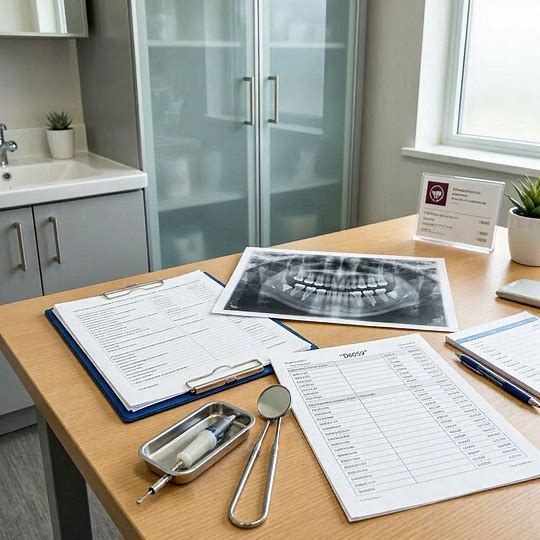
Let’s start at the very beginning. Dental Code D3428 is a specific alphanumeric code used in the Current Dental Terminology (CDT), which is published by the American Dental Association (ADA). This coding system is the standard language for communicating about dental procedures and services, primarily for insurance claims and patient records.
The official descriptor for D3428 is: “Bone graft for implant placement at time of implant placement.”
In plain English, this means the procedure involves placing bone grafting material into a patient’s jawbone at the exact same appointment where the dental implant post (the artificial tooth root) is being placed.
This is a critical distinction. It tells the insurance company and the patient that the surgeon didn’t just place an implant. They also had to add bone grafting material to ensure the implant would be stable and successful. Think of it like setting a fence post in concrete. If the hole is a little too wide, you add concrete to secure the post. D3428 is the code for that “concrete” being added at the same time the “post” goes in.
Important Note: Dental codes are updated regularly. While this guide reflects the most current and widely accepted information, always verify codes with the latest CDT manual from the ADA or your specific insurance provider’s guidelines.
The “Family” of Codes: D3425, D3426, and D3428
To truly understand D3428, it’s helpful to see it in context. It belongs to a “family” of codes that describe bone grafting in conjunction with implants. The main distinction between them is how many walls of bone are missing and where the graft is placed.
Here’s a simple breakdown:
-
D3425: Bone graft for implant placement at time of implant placement – Per implant, in the maxillary tuberosity or pterygoid region. This refers to grafting in a very specific, hard-to-reach area at the very back of the upper jaw.
-
D3426: Bone graft for implant placement at time of implant placement – Per implant, in the mandibular retromolar region. This is the lower-jaw equivalent of D3425, located behind the last molar.
-
D3428: Bone graft for implant placement at time of implant placement – Per implant, each additional 5 millimeters of bone length beyond 10mm in a contained defect.
That last part is key. Let’s unpack what a “contained defect” is.
Contained vs. Uncontained Defects
Imagine your jawbone is like a cup of soil.
-
A contained defect is like a hole in the soil where the walls of the cup are still intact. You just need to fill the hole. The bone surrounding the implant site is present, like four walls around a room.
-
An uncontained defect is like a cup that has a chunk missing from its side. The walls of the cup are gone, so you have to build a new wall before you can fill it. This often requires a special membrane to hold the graft material in place, a process known as Guided Bone Regeneration (GBR).
D3428 is specifically for contained defects. The bone has height but has a void or a gap (like a trench) that needs to be filled around the implant.
Decoding the “Additional 5mm” Language
The description for D3428 mentions “each additional 5 millimeters of bone length beyond 10mm.” This is a crucial detail for billing and understanding the extent of the procedure.
-
The Base Code: The primary placement of the graft for the first part of the defect is usually bundled into the surgical placement code itself or a different, primary graft code.
-
D3428 as an Add-On: D3428 is considered an “add-on” code. It recognizes that the defect the surgeon is grafting is larger than average. If the total length of the bony defect requiring grafting is more than 10mm, D3428 is billed for every additional 5mm increment.
Example:
If a patient has a contained bony defect that is 18mm long around the implant site.
-
The grafting for the first 10mm is covered under the primary surgical placement code (like D6010 for implant placement) or a primary graft code.
-
You then have 8mm remaining (18mm total – 10mm base = 8mm).
-
Because D3428 is billed for each additional 5mm, you would bill one unit of D3428 (covering the first 5mm beyond the base).
-
The remaining 3mm is generally considered incidental and not billed separately.
This system ensures that the dentist is fairly compensated for the extra time, skill, and material required for a larger, more complex grafting procedure.
When is D3428 Used? A Clinical Scenario
To make this real, let’s imagine a patient, Sarah. Sarah is missing her lower left first molar. She’s decided to get a dental implant. Her dentist, Dr. Lee, takes a 3D CBCT scan to plan the procedure.
The scan reveals something important: While Sarah has enough bone height, the width of her jawbone is a bit narrow at the exact spot where the implant needs to go. When Dr. Lee prepares the osteotomy (the hole for the implant), the outer wall of the bone is very thin. In fact, a small portion of the implant’s threads becomes exposed on the outside of the bone.
This is a classic contained defect. The walls of the bone are still present, but there’s a void on the outside. To ensure the implant integrates properly and looks natural, Dr. Lee decides to graft this area.
-
Dr. Lee places the implant post (Code D6010).
-
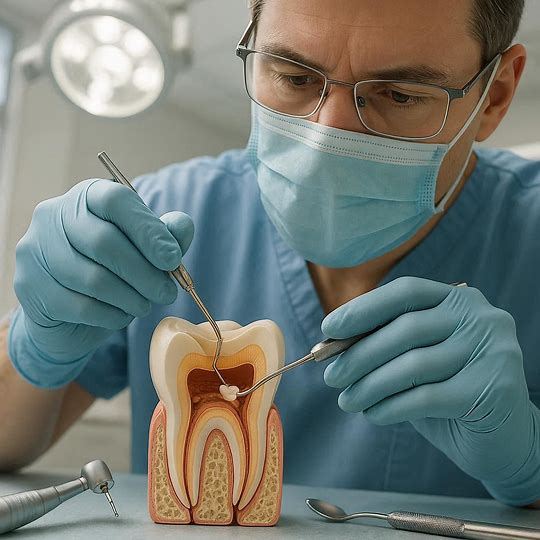
He then takes a bone grafting material (like mineralized cancellous bone chips) and gently packs it into the void around the exposed implant threads.
-
He covers the area with a protective membrane to keep the graft in place and encourage healing. (Note: The membrane placement is often billed separately with codes like D4266 or D4267).
-
He sutures the site closed.
Because the grafting was performed at the same time as the implant placement to fill a contained defect, Dr. Lee would bill D3428 alongside D6010. He would also need to measure the defect to determine if it qualified for the “additional 5mm” clause, but in many cases, a single unit of D3428 is used to cover the grafting procedure itself.
Why is This Procedure Necessary?
You might wonder, “Why can’t the dentist just place the implant and leave the gap?” The answer lies in the biology of healing and the long-term success of the implant.
-
Osseointegration: This is the magical process where the living bone fuses directly to the surface of the titanium implant. For this to happen successfully, the implant needs to be in close, stable contact with bone. Gaps can fill with soft tissue (scar tissue) instead of bone, leading to a loose implant.
-
Aesthetics: Especially in the front of the mouth, the bone supports the gum tissue. If bone is missing around an implant, the gum can recede, revealing the metal edge of the implant and creating an unnatural look. Grafting supports the gum tissue for a beautiful, natural result.
-
Long-Term Strength: An implant fully encased in bone is much stronger and better able to withstand the forces of chewing than one with a missing wall. It distributes the chewing load evenly, just like a natural tooth root.
The Procedure: What to Expect as a Patient
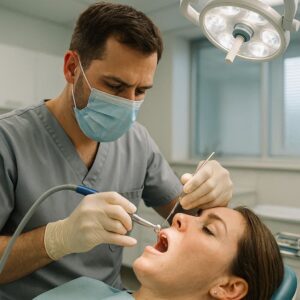
If your dentist has told you that you need code D3428, here’s a step-by-step look at what your appointment will likely entail.
Before the Appointment
-
Consultation and Imaging: Your dentist will have taken X-rays and likely a 3D CBCT scan to evaluate your bone. This is how they know a graft is needed in the first place.
-
Treatment Plan Discussion: They will explain why the graft is necessary, the type of grafting material they plan to use (your own bone, donor bone, or synthetic), and the associated costs. This is the time to ask all your questions!
The Day of Surgery
-
Anesthesia: You’ll be given local anesthetic to numb the area completely. Sedation options are also available if you feel anxious.
-
Incision: The dentist makes a small incision in your gum tissue to expose the jawbone.
-
Implant Site Preparation: Using a precise, graduated series of drills, the dentist creates the osteotomy (the hole) for the implant.
-
Implant Placement: The titanium implant post is carefully threaded into the prepared site.
-
Assessment: The dentist checks the implant’s stability and looks at the surrounding bone. This is where they identify the need for D3428.
-
The Graft (D3428): The bone graft material is mixed, often with a bit of the patient’s own blood or a sterile solution, to create a putty-like consistency. This is then gently packed into the defect around the implant.
-
Membrane Placement (Optional): If needed, a barrier membrane is placed over the graft to protect it and keep unwanted cells out. This is a separate procedure.
-
Closure: The gum tissue is carefully sutured back into place over the site.
After the Appointment: Recovery
-
Healing Time: The bone graft needs time to heal and integrate with your natural bone. This process, called maturation, typically takes 4 to 12 months before the next step (placing the abutment and crown) can begin.
-
Discomfort: You can expect some swelling and minor discomfort for a few days, which can be managed with over-the-counter or prescribed pain medication and ice packs.
-
Diet: You’ll need to stick to a soft food diet and avoid chewing on the surgical site while it heals.
-
Oral Hygiene: You’ll be given specific instructions on how to keep the area clean without disturbing the healing graft.
D3428 and Dental Insurance
This is often the most confusing part. How does insurance treat this code?
-
It’s Usually Covered (Partially): Most dental insurance plans that include major restorative services (like implants) will provide some coverage for bone grafting. It is generally recognized as a necessary part of the implant procedure.
-
Medical vs. Dental: In some complex cases involving accidents, tumors, or severe birth defects, the grafting procedure might be billed to medical insurance. This requires pre-authorization and a strong case from your surgeon.
-
The “Alternate Benefit” Clause: Be aware of this common insurance clause. If your plan has a low annual maximum (often $1,500), they may consider a less expensive treatment, like a bridge, as their “alternate benefit.” They will then only pay what they would have for the bridge, leaving you responsible for a larger portion of the implant and graft cost.
-
Pre-determination is Key: Before any major surgery, ask your dentist’s office to submit a pre-determination (or pre-authorization) to your insurance company. This will give you an estimate of what they will pay and what your out-of-pocket cost will be, preventing surprise bills.
Estimated Costs
The cost for D3428 can vary widely based on your geographic location, the complexity of your case, the type of graft material used, and the dentist’s experience.
| Procedure Component | Estimated Cost Range (per implant site) |
|---|---|
| D3428 Procedure Fee | $300 – $800 |
| Graft Material Cost | $100 – $500+ (depending on source) |
| Membrane (if used) | $200 – $400 |
| Total for Grafting Portion | $600 – $1,700+ |
| *(Implant Placement – D6010)* | *$1,500 – $3,000* |
| Total for Surgical Appointment | $2,100 – $4,700+ |
Note: These are estimates. Always get a detailed, written treatment plan with all costs outlined from your provider.
A Quick Comparison: D3428 vs. Other Common Graft Codes
To help visualize the differences, here’s a table comparing D3428 to other common bone graft codes you might encounter.
| Code | Descriptor | Key Difference from D3428 |
|---|---|---|
| D3428 | Bone graft for implant placement at time of implant placement – Per implant, each additional 5mm in a contained defect. | The graft is done simultaneously with the implant placement to fill a hole with existing bony walls. |
| D4263 | Bone replacement graft for ridge preservation – per site. | This is done after a tooth is extracted, to preserve the socket for a future implant, not at the time of implant placement. |
| D7951 | Sinus augmentation with bone or bone substitutes – lateral approach. | A graft specifically placed in the floor of the maxillary sinus to create bone height in the upper jaw. A completely different anatomical location. |
| D7953 | Bone graft for repair of peri-implant defect. Not in conjunction with implant placement. | This is a corrective procedure done after an implant has already failed or is failing, to try and save it. |
| D6010 | Surgical placement of implant body: endosteal implant. | This is the code for placing the implant post itself. Grafting is not included. |
Frequently Asked Questions (FAQ)
Q: Is D3428 considered major or minor surgery?
A: It is considered a major surgical procedure, as it involves cutting the gum tissue and manipulating the bone. It’s a standard part of complex implant dentistry.
Q: How painful is the recovery for a bone graft?
A: Most patients report that the discomfort is manageable and less than they anticipated. It is similar to the discomfort after a tooth extraction. Following your dentist’s post-op instructions is the best way to minimize pain and ensure smooth healing.
Q: What happens if I don’t get the bone graft (D3428) when the doctor recommends it?
A: Skipping a recommended graft significantly increases the risk of implant failure. The implant may not integrate with the bone, could remain loose, or could lead to aesthetic problems like gum recession around the crown. It’s a decision that could compromise the long-term success of your implant.
Q: Can D3428 be billed with other codes on the same day?
A: Yes, absolutely. It is almost always billed alongside the implant placement code (D6010). It can also be billed with other adjunctive procedures like membrane placement (D4266/D4267) or bone harvesting codes (D7950), if applicable.
Q: How long after the D3428 procedure can I get my new tooth (crown)?
A: Patience is key. You must wait for the bone graft to heal and integrate, and for the implant to osseointegrate. This healing period is typically 4 to 9 months, depending on the size of the graft and your body’s healing rate. Your dentist will take X-rays to confirm the site is ready before proceeding.
Conclusion
Understanding Dental Code D3428 demystifies an important step in the implant process. It represents a proactive measure taken by your dentist to ensure your new tooth has the strongest possible foundation. While it adds time and cost to your treatment, it is an investment in the long-term health, function, and beauty of your smile. By knowing what this code means, you can have more informed conversations with your dental team and feel confident in the care you are receiving.
Additional Resource:
For the most authoritative and up-to-date information on all dental codes, we always recommend referring directly to the source. You can purchase the latest Current Dental Terminology (CDT) manual from the American Dental Association’s website: Explore the ADA CDT Coding Resource