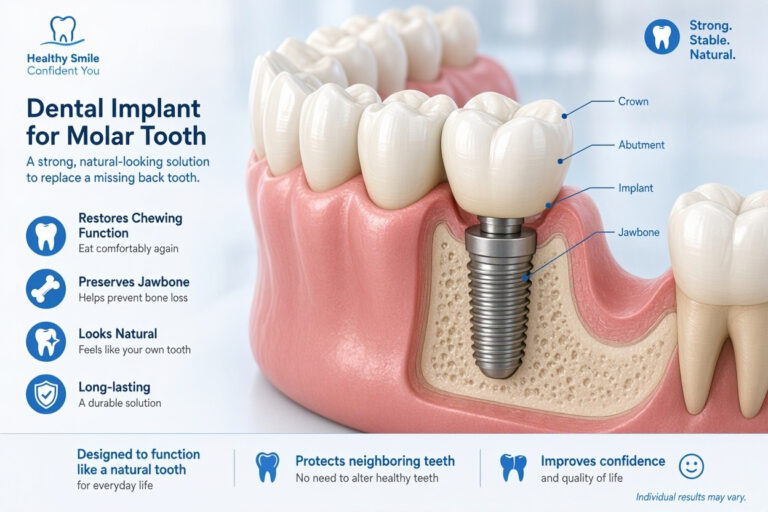
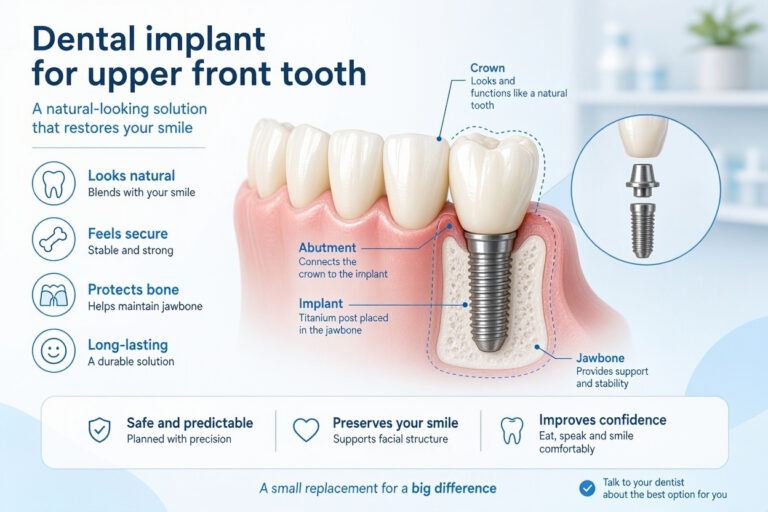
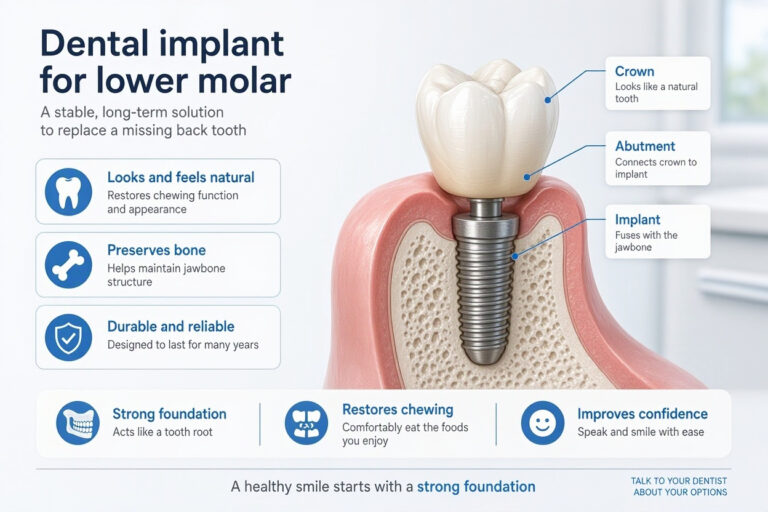
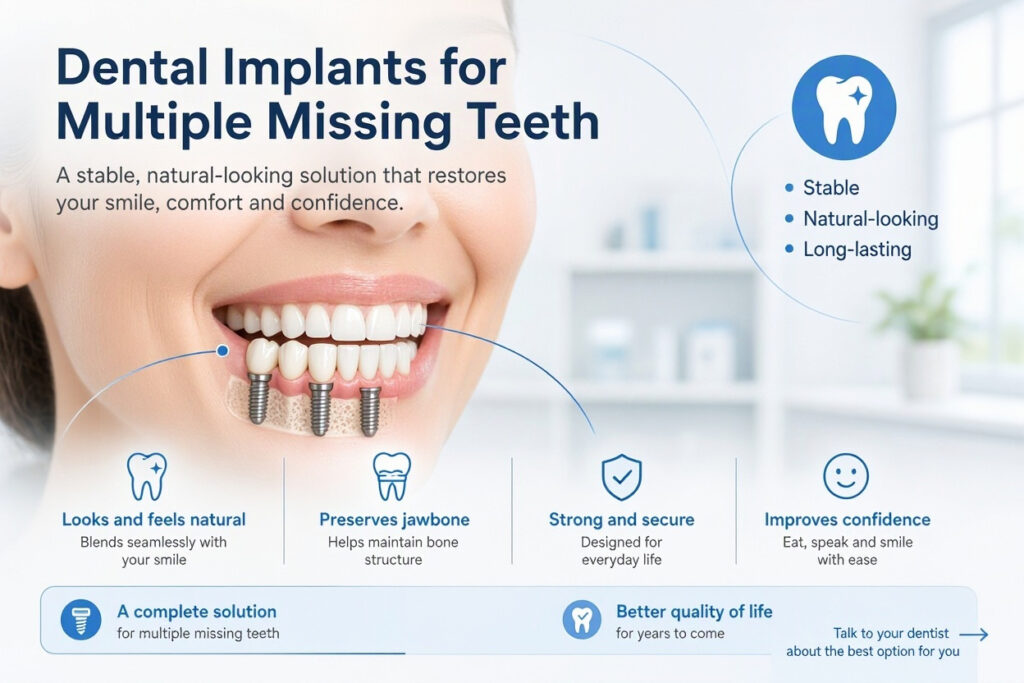
Dental Implant for Multiple Missing Teeth
When You’re Missing More Than One Tooth
Losing a single tooth is challenging. Losing multiple teeth can feel overwhelming. Maybe you’ve struggled with extensive decay, advanced gum disease, or a traumatic injury. Perhaps you’ve already lost several teeth and are now facing the reality that more may follow. Whatever the reason, you’re dealing with gaps in your smile, difficulty eating, speech changes, and the emotional toll of an incomplete smile.
You might be wondering: can dental implants still work for me when I’m missing so many teeth? The answer is a resounding yes. In fact, dental implants have revolutionized the treatment of multiple missing teeth. Gone are the days when a full denture was the only option. Today, implant-supported solutions can restore your smile, your chewing function, and your confidence—often with fewer implants than you might think.
This comprehensive guide will walk you through everything you need to know about dental implants for multiple missing teeth. We’ll cover the different treatment options, how many implants you might need, the surgical procedures involved, the costs, the recovery process, and the long-term care required to keep your new smile healthy for years to come. By the end, you’ll have a clear understanding of what’s possible and how to make informed decisions about your dental health.
Understanding Multiple Missing Teeth
What Counts as Multiple Missing Teeth?
Multiple missing teeth can range from two adjacent teeth to a full arch of missing teeth. The treatment approach depends on several factors, including:
- How many teeth are missing
- Which teeth are missing (front vs. back)
- The health of your remaining teeth
- The quantity and quality of your jawbone
- Your overall health and budget
Common categories:
Partial edentulism
You’re missing some teeth but have remaining natural teeth. This can range from a few missing teeth to most of your teeth.
Complete edentulism
You’re missing all your teeth in one or both arches. This is also called being “edentulous.”
Consequences of Multiple Missing Teeth
Losing multiple teeth sets off a cascade of problems that go far beyond cosmetics:
Bone loss
Without tooth roots to stimulate the jawbone, bone begins to shrink. This bone loss accelerates when multiple teeth are missing and can change your facial structure over time.
Facial collapse
Missing teeth and bone loss can cause your lips to sink inward, your chin to protrude, and your face to look older than it is.
Bite collapse
When teeth are missing, the remaining teeth may shift, tilt, and over-erupt. Your bite changes, which can lead to jaw pain, TMJ disorders, and excessive wear on remaining teeth.
Nutritional deficiencies
Difficulty chewing can lead you to avoid healthy foods like fruits, vegetables, and lean meats. This can lead to nutritional deficiencies and related health problems.
Speech problems
Multiple missing teeth can affect your ability to pronounce words clearly, especially sounds like “s,” “f,” and “th.”
Social and psychological impact
Missing multiple teeth can cause embarrassment, social withdrawal, and reduced self-esteem.
Increased risk of further tooth loss
The same factors that caused your initial tooth loss—gum disease, decay, and bone loss—can continue to threaten your remaining teeth.
“Multiple missing teeth is not just a dental problem. It’s a quality-of-life problem. Patients tell me they stop going out to dinner, they stop smiling in photos, they feel old before their time. Restoring their smile changes their life.” – Dr. Michael Torres, Oral Surgeon
Treatment Options for Multiple Missing Teeth
Overview of Your Choices
When you’re missing multiple teeth, you have several treatment options. Each has advantages and disadvantages, and the best choice depends on your specific situation.
1. Removable partial denture
A removable appliance that replaces missing teeth and rests on your gums and remaining teeth. It’s held in place with clasps or precision attachments.
2. Complete denture
A removable appliance that replaces all teeth in an arch. It rests on your gums and is held in place with suction or adhesive.
3. Implant-supported bridge
A fixed bridge that’s supported by dental implants rather than natural teeth. This can replace multiple adjacent missing teeth.
4. Implant-supported overdenture
A removable denture that’s anchored by dental implants. It snaps into place and can be removed for cleaning.
5. Full-arch fixed implant restoration
A fixed (non-removable) restoration that replaces all teeth in an arch. It’s supported by multiple implants. This is often called “All-on-4” or “All-on-6” depending on the number of implants used.
Comparison Table: Options for Multiple Missing Teeth
| Feature | Removable Partial Denture | Complete Denture | Implant Bridge | Implant Overdenture | Full-Arch Fixed |
|---|---|---|---|---|---|
| Stability | Fair | Poor | Excellent | Good | Excellent |
| Chewing efficiency | Fair | Poor | Excellent | Good | Excellent |
| Bone preservation | No | No | Yes | Some | Yes |
| Comfort | Fair | Poor | Excellent | Good | Excellent |
| Appearance | Fair | Fair | Excellent | Good | Excellent |
| Removal for cleaning | Yes | Yes | No | Yes | No |
| Surgery required | No | No | Yes | Yes | Yes |
| Treatment time | 2-4 weeks | 2-4 weeks | 4-9 months | 4-6 months | 4-6 months |
| Initial cost | Low | Low | Medium-High | Medium | High |
| Long-term value | Poor | Poor | Excellent | Good | Excellent |
“For most patients with multiple missing teeth, an implant-supported solution is the best investment. It preserves bone, restores function, and gives them a smile they can be proud of. The upfront cost is higher, but the long-term value is far superior.” – Dr. James Liu, Prosthodontist
When to Choose Each Option
Removable partial denture
- You have limited budget
- You have medical conditions that make surgery risky
- You need a temporary solution while planning implants
- You have adequate remaining teeth to support the denture
Complete denture
- You’re missing all teeth in an arch
- You have limited budget
- You have severe bone loss
- You prefer a non-surgical option
Implant-supported bridge
- You’re missing multiple adjacent teeth
- You have adequate bone in the missing area
- You want a fixed solution
- Your remaining teeth are healthy
Implant-supported overdenture
- You’re missing all teeth in an arch
- You want a removable option but need better stability than a traditional denture
- You have limited bone (fewer implants needed)
- You want a cost-effective implant solution
Full-arch fixed implant restoration
- You’re missing all teeth in an arch
- You want a fixed, non-removable solution
- You have adequate bone or are willing to have grafting
- You want the most natural-looking and functional result
How Many Implants Do You Need?
The Short Answer: It Depends
One of the most common questions patients ask is: how many implants will I need? The answer varies based on your specific situation. You might be surprised to learn that you don’t necessarily need one implant per missing tooth.
For a partial missing teeth situation:
- One implant can support a single crown
- Two implants can support a three-unit bridge (replacing three teeth)
- Three implants can support a four-unit bridge
For a full arch:
- All-on-4 uses four implants per arch
- All-on-6 uses six implants per arch
- Some cases may use more implants for additional support
Factors That Influence the Number of Implants
Bone quantity and quality
If you have good bone density, fewer implants may be needed. If bone is compromised, more implants or grafting may be necessary.
Bite forces
Patients with heavy bite forces may need more implants to distribute the load.
Location of missing teeth
Front teeth need fewer implants for support than back teeth, which bear heavier chewing forces.
Type of restoration
A fixed bridge may require more implants than an overdenture.
Your surgeon’s protocol
Different surgeons have different philosophies about the optimal number of implants.
The All-on-4 Concept Explained
The All-on-4 concept is a revolutionary approach to full-arch restoration. It uses just four implants to support a full arch of fixed teeth. Here’s how it works:
Two straight implants are placed in the front of the jaw, where bone is typically denser.
Two tilted implants are placed in the back of the jaw, angled to avoid the sinus cavity (upper jaw) or inferior alveolar nerve (lower jaw) and to maximize bone contact.
A temporary prosthesis is often attached the same day, so you leave with teeth.
A final prosthesis is placed after healing is complete (usually 4-6 months).
Advantages of All-on-4:
- Fewer implants means lower cost
- Avoids bone grafting in many cases
- Same-day teeth (temporary)
- High success rate
Disadvantages:
- Not suitable for everyone
- Requires careful planning
- May not be as strong as All-on-6 in some cases
The All-on-6 Concept Explained
All-on-6 uses six implants per arch instead of four. This approach offers:
Advantages:
- More support and stability
- Better distribution of bite forces
- Suitable for patients with heavier bite forces or less bone density
Disadvantages:
- Higher cost
- May require more bone grafting
- Longer surgery time
Comparison Table: All-on-4 vs. All-on-6
| Feature | All-on-4 | All-on-6 |
|---|---|---|
| Number of implants | 4 per arch | 6 per arch |
| Bone grafting needed | Less often | More often |
| Same-day temporary teeth | Usually | Usually |
| Cost | Lower | Higher |
| Stability | Excellent | Superior |
| Best for | Most patients | Patients with heavy bite forces or poor bone quality |
| Surgery time | Shorter | Longer |
“The choice between All-on-4 and All-on-6 depends on the patient’s anatomy and bite forces. For many patients, All-on-4 is perfectly adequate. For others, the extra implants of All-on-6 provide peace of mind and long-term durability.” – Dr. Robert Chen, Implant Dentist
Assessing Your Candidacy for Multiple Implants
What Your Dentist Will Evaluate
Not everyone is an ideal candidate for multiple implants. Your dentist will conduct a thorough assessment:
Bone quantity and quality
You’ll need a CT scan to measure bone volume and density. If bone is inadequate, grafting may be needed.
Gum health
Your gums must be healthy and free of active periodontal disease before implant placement.
Remaining teeth
Your dentist will evaluate the health of your remaining teeth. Some may need to be extracted if they’re not salvageable.
Overall health
Conditions like diabetes, autoimmune disorders, and smoking can affect implant success.
Oral hygiene habits
Implants require excellent oral care. Your dentist will assess your commitment to maintaining good hygiene.
Bite and jaw function
Your dentist will evaluate your bite and jaw joint health to ensure they can support the implant restoration.
Your goals and expectations
A clear discussion of what you want to achieve and what’s realistic will help guide the treatment plan.
The Importance of Bone Volume
Bone volume is critical for multiple implants. The more implants you need, the more bone you’ll need to support them.
Challenges with bone loss:
- Multiple missing teeth often lead to significant bone loss
- The sinus cavity and inferior alveolar nerve limit available bone
- Bone grafting may be necessary to rebuild adequate volume
Solutions for inadequate bone:
- Bone grafting (autograft, allograft, xenograft, or synthetic)
- Sinus lift (for upper jaw)
- Ridge augmentation to widen the bone
- Nerve lateralization (rare, for lower jaw)
- Zygomatic implants (for severe upper jaw bone loss)
“Bone grafting has revolutionized what we can offer patients with multiple missing teeth. Even patients with severe bone loss can often be treated with implants after grafting. The key is a thorough evaluation and a well-designed treatment plan.” – Dr. Patricia Gomez, Oral Surgeon
When Bone Grafting Is Needed
Bone grafting may be necessary if:
- You’ve been missing teeth for an extended period
- You have advanced gum disease
- You’ve had previous extractions that caused bone loss
- The implant sites need additional width or height
- The sinus cavity is close to the implant sites
Types of bone grafts:
Autograft – Bone taken from another part of your body. This is the gold standard because it contains living bone cells.
Allograft – Bone from a human donor (processed and sterilized).
Xenograft – Bone from an animal source, usually bovine (cow).
Synthetic graft – Man-made materials that mimic natural bone.
The grafting procedure is typically straightforward. Your dentist places the graft material into the deficient area and covers it with a membrane if needed. Healing takes several months as your body replaces the graft with new bone.
The Multiple Implant Procedure: Step by Step
Phase 1: Consultation and Planning
Your implant journey begins with a comprehensive consultation:
- Review of your medical and dental history
- Clinical examination
- X-rays and CT scan to assess bone and plan the implants
- Discussion of your goals and expectations
- Explanation of the procedure and timeline
- Cost estimate and payment options
Your dentist will use digital planning tools to determine the ideal position, angle, and depth for each implant. This precision planning is crucial for success.
Phase 2: Tooth Extractions (If Needed)
If you have remaining teeth that cannot be saved, they’ll be extracted before or during the implant procedure. Your dentist will remove the teeth carefully, preserving as much bone as possible.
Phase 3: Implant Placement Surgery
The implant placement procedure typically takes 1-3 hours for multiple implants, depending on the number placed.
Anesthesia
Local anesthesia numbs the area. Sedation options are available for anxious patients or longer procedures.
Incision
Small incisions expose the bone at each implant site.
Drilling
A series of drills creates precise holes in the bone at each site.
Implant insertion
The titanium implants are carefully threaded into the prepared sites.
Closure
The gums are sutured closed over the implants, or healing abutments are attached if a one-stage approach is used.
Temporary restoration
For full-arch cases, a temporary prosthesis is often attached the same day, so you leave with teeth.
Phase 4: Osseointegration (Healing)
Over the next 3-6 months, the implants fuse with your bone through a process called osseointegration. During this time:
- Follow a soft diet initially
- Avoid putting pressure on the implant sites
- Maintain excellent oral hygiene
- Attend follow-up appointments
- Report any unusual symptoms
Phase 5: Abutment Placement
Once osseointegration is complete, your dentist exposes the implants and attaches abutments. These small connector pieces will hold your final restoration.
Phase 6: Final Restoration
After your gums have healed around the abutments (typically 2-4 weeks), impressions are taken for your final restoration. The restoration is custom-made to match your natural teeth and bite.
When ready, your dentist attaches the final restoration. You now have a fully functional, natural-looking smile.
Timeline Overview
| Phase | Duration |
|---|---|
| Consultation and planning | 1-2 visits |
| Tooth extractions (if needed) | 1 visit |
| Healing after extractions | 3-6 months (if delayed implant) |
| Bone grafting (if needed) | 1 visit + 4-6 months healing |
| Implant placement | 1 visit (1-3 hours) |
| Osseointegration | 3-6 months |
| Abutment placement | 1 visit |
| Gum healing | 2-4 weeks |
| Final restoration | 1-2 visits |
| Total | 6-12 months (depending on grafting needs) |
Risks and Complications
What Can Go Wrong?
While implant success rates are high, multiple implants come with specific risks:
Infection
Bacteria around the implants can cause peri-implantitis, leading to bone loss and implant failure.
Implant failure (osseointegration failure)
One or more implants may not fuse with the bone. This is more common in smokers and patients with uncontrolled health conditions.
Nerve damage
Rare, but possible if an implant is placed near a nerve. This can cause numbness or tingling.
Sinus problems
In the upper jaw, implants can intrude into the sinus cavity. Sinus lift procedures can prevent this.
Bone loss
Without proper maintenance, bone can recede around the implants.
Restoration complications
The prosthesis may chip, loosen, or need repair over time.
Excessive bleeding
Rare, but possible, especially if you have bleeding disorders or take blood thinners.
Delayed healing
If healing is slower than expected, the timeline for final restoration may be extended.
How to Minimize Risks
- Choose an experienced implant dentist or oral surgeon
- Ensure careful planning with CT scans
- Follow all pre- and post-surgical instructions
- Quit smoking
- Control systemic conditions like diabetes
- Maintain excellent oral hygiene
- Attend regular check-ups
- Report any unusual symptoms immediately
“The most successful implant patients are those who treat their implants like a valuable investment. They brush, floss, attend check-ups, and address problems early. That’s the formula for long-term success.” – Dr. Susan Bradley, Periodontist
Cost of Multiple Implants
What Factors Affect the Cost?
The cost of your multiple implant treatment depends on several factors:
- Number of implants needed
- Need for bone grafting or sinus lift
- Complexity of the case
- Geographic location
- Dentist’s experience and credentials
- Type of final restoration (overdenture vs. fixed)
- Materials used
Typical Cost Breakdown
| Procedure | Cost Range |
|---|---|
| Tooth extraction (per tooth) | $150 – $500 |
| Bone grafting (per site) | $600 – $3,000 |
| Sinus lift (per side) | $1,500 – $3,000 |
| Implant placement (per implant) | $1,500 – $3,000 |
| Abutment (per implant) | $300 – $800 |
| All-on-4 (per arch) | $20,000 – $30,000 |
| All-on-6 (per arch) | $25,000 – $40,000 |
| Implant overdenture (per arch) | $10,000 – $20,000 |
| Implant bridge (3-4 teeth) | $6,000 – $15,000 |
Is a Multiple Implant Worth the Cost?
While multiple implants cost more upfront than dentures, they offer superior long-term value:
- Dentures typically need replacement every 5-10 years
- Implants can last decades with proper care
- Implants preserve bone and facial structure
- Implants restore chewing function and quality of life
When you calculate the cost per year of use, implants are often the most economical choice. They also preserve your oral health, which can save you money on future dental treatments.
Insurance Coverage
- Dental insurance may cover a portion of the implant treatment
- Medical insurance may cover implants if the tooth loss resulted from an accident or medical condition
- Check with your provider to understand your benefits
- Some plans have waiting periods for major services
Financial Options
- Payment plans through your dentist
- Dental financing companies (CareCredit, etc.)
- Health savings accounts (HSAs)
- Flexible spending accounts (FSAs)
- Third-party lenders
- Some dental schools offer reduced-cost treatment
Recovering from Multiple Implant Surgery
What to Expect After Surgery
Day 1-3:
- Swelling and discomfort (more pronounced than single implants)
- Some bleeding (manageable with gauze)
- Soft diet recommended
- Avoid strenuous activity
- Ice packs to reduce swelling
- Temporary prosthesis may be in place
Week 1:
- Swelling subsides
- Sutures may be removed
- Return to normal activities (with precautions)
- Continue soft diet
Week 2-4:
- Soft tissue healing
- Gradual return to normal diet
- Follow-up appointment
Month 3-6:
- Osseointegration continues
- Bone fuses with implants
- Avoid chewing hard foods on the implant sites
Tips for a Smooth Recovery
- Take prescribed medications as directed
- Use ice packs for swelling
- Eat soft, nutritious foods
- Avoid smoking and alcohol
- Keep the surgical sites clean
- Attend all follow-up appointments
- Report any unusual symptoms immediately
- Avoid chewing on the implant sites until cleared by your dentist
- Be gentle when brushing around the surgical areas
Dietary Recommendations During Healing
| Phase | Foods to Eat | Foods to Avoid |
|---|---|---|
| Days 1-3 | Smoothies, yogurt, soup, mashed potatoes, scrambled eggs | Hot, spicy, crunchy, or hard foods |
| Week 1 | Soft cooked vegetables, pasta, soft fruits, fish | Nuts, chips, raw vegetables, tough meats |
| Weeks 2-4 | Gradually introduce more solid foods | Very hard or sticky foods |
| Months 2-6 | Normal diet with caution around implant sites | Hard candies, ice, bones, tough crusts |
Long-Term Care for Your Multiple Implants
Daily Maintenance
Brushing
Brush twice daily with a soft-bristled toothbrush. Pay special attention to the gumline around your implants.
Flossing
Use floss or interdental brushes daily to clean between the implants and any remaining natural teeth. If you have a fixed prosthesis, your dentist will show you how to clean underneath it.
Mouthwash
An antimicrobial mouthwash can help control bacteria.
Water flosser
A water flosser can be especially helpful for cleaning around implants and underneath fixed prostheses.
Professional Maintenance
- Dental cleanings every 3-6 months (more frequent than standard)
- Regular probing around the implants to check for pocket formation
- X-rays to monitor bone levels
- Professional assessment of gum health
- Removal and cleaning of removable prostheses (overdentures)
Warning Signs to Watch For
Contact your dentist if you notice:
- Bleeding when brushing
- Swelling or redness
- Pain or discomfort
- Implant mobility
- Pus or discharge
- Bad breath that doesn’t improve
- Numbness or tingling in the lip or chin
- Sinus pain or congestion
- The prosthesis feeling loose or broken
Lifestyle Factors
Quit smoking
Smoking is the biggest preventable risk factor for implant failure.
Control systemic conditions
Keep diabetes well-managed. Work with your doctor to control any conditions that affect healing.
Maintain a healthy diet
Good nutrition supports tissue health and immune function.
Manage stress
Chronic stress impairs healing and immune function.
Avoid harmful habits
Don’t chew on ice, pens, or other hard objects that could damage your implants or prosthesis.
Protect your smile
If you grind your teeth (bruxism), talk to your dentist about a nightguard to protect your implants and restoration.
Real Patient Stories
Margaret’s Story: A Full Smile Restored
Margaret, a 62-year-old retired teacher, had lost most of her teeth to gum disease over several years. She was wearing a removable partial denture but hated the way it felt and looked.
“I was self-conscious about my smile. The denture was uncomfortable, and I was always worried it would slip. My dentist recommended All-on-4 implants. The surgery took a few hours, and I left with temporary teeth. Six months later, I got my permanent smile. It’s been three years, and I can eat anything I want. I wish I’d done it sooner.”
Robert’s Story: The Importance of Planning
Robert, 55, had multiple missing teeth and significant bone loss. His dentist recommended bone grafting followed by implants.
“I was frustrated by how long the process took. The grafting added six months to my treatment. But my dentist explained that rushing would risk failure. I’m glad I listened. My implants are solid, and I’ve had no problems. The wait was worth it.”
Linda’s Story: A Second Chance
Linda, 48, lost several front teeth in a car accident. She was devastated and didn’t want to smile.
“I thought my life was over. But my dentist explained that implants could restore my smile. The process took about eight months, but the result is amazing. My new teeth look completely natural. I can smile again without feeling embarrassed.”
Frequently Asked Questions
How many implants do I need for multiple missing teeth?
The number depends on your specific situation. For a partial missing teeth situation, two implants can support a three-unit bridge. For a full arch, All-on-4 uses four implants, while All-on-6 uses six. Your dentist will determine the optimal number based on your bone quality, bite forces, and restoration type.
Can I get multiple implants if I have significant bone loss?
Yes, but you may need bone grafting first. Your dentist will assess your bone volume and recommend grafting if necessary. In severe cases, zygomatic implants or other advanced techniques may be options.
How long does multiple implant treatment take?
The complete process typically takes 6-12 months, depending on whether bone grafting is needed. This includes extraction, healing, implant placement, osseointegration (3-6 months), and final restoration.
Is multiple implant surgery painful?
Most patients report minimal discomfort during the procedure thanks to local anesthesia. Post-operative discomfort is typically manageable with over-the-counter pain relievers and usually subsides within a few days to a week.
What is the success rate of multiple implants?
Success rates for multiple implants are high, typically exceeding 95% at 10 years for healthy patients with good bone quality and oral hygiene.
Can I get temporary teeth during the healing process?
Yes. For full-arch cases, a temporary prosthesis is often attached the same day as implant placement. For partial cases, temporary restorations can be worn during healing.
How much does multiple implant treatment cost?
Costs vary widely. All-on-4 typically ranges from $20,000 to $30,000 per arch. All-on-6 ranges from $25,000 to $40,000. Implant overdentures range from $10,000 to $20,000. Bone grafting and sinus lifts add to the cost.
Will my multiple implants look natural?
Yes. Modern implant restorations are custom-made to match your natural teeth in color, shape, and size. With proper planning and high-quality laboratory work, most restorations are indistinguishable from natural teeth.
Can I eat normally after multiple implants?
Yes, once the implants have fully healed and the final restoration is in place, you can eat normally. Implants restore nearly full chewing efficiency.
How long do multiple implants last?
With proper care, multiple implants can last decades—often a lifetime. Success rates exceed 95% at 10 years.
What should I eat after multiple implant surgery?
Stick to soft foods for the first week, then gradually introduce more solid foods. Avoid hard, crunchy, or sticky foods that could damage the implant sites.
Can I smoke after getting multiple implants?
Smoking significantly increases the risk of implant failure. If you smoke, you should quit before surgery and remain smoke-free throughout the healing process.
How do I clean around multiple implants?
Brush twice daily with a soft-bristled toothbrush, floss daily, and consider using a water flosser. If you have a fixed prosthesis, your dentist will show you how to clean underneath it.
What if one of my implants fails?
If an implant fails, it can often be replaced after the site heals. Your dentist will evaluate the cause of failure and recommend the best approach.
Is age a factor in getting multiple implants?
Age itself is not a barrier to implants. What matters more is your overall health, bone quality, and healing capacity. Older adults can successfully receive implants.
Can I get multiple implants if I have gum disease?
Gum disease must be treated before implant placement. Active gum disease increases the risk of implant failure. Your dentist will recommend a treatment plan that addresses both the gum disease and the missing teeth.
How do I choose the right dentist for multiple implants?
Look for a dentist with experience in implant dentistry, preferably one who has completed advanced training and has experience with full-arch restorations. Ask about their success rates, view before-and-after photos, and read patient reviews.
What is the difference between All-on-4 and All-on-6?
All-on-4 uses four implants per arch, while All-on-6 uses six. All-on-6 provides more support and stability, making it suitable for patients with heavier bite forces or less bone density. All-on-4 is often more cost-effective and may avoid bone grafting.
Can I get multiple implants if I have diabetes?
Yes, but your diabetes must be well-controlled. Uncontrolled diabetes increases the risk of implant failure. Work with your doctor to stabilize your blood sugar levels before surgery.
Will I need to take time off work after multiple implant surgery?
Most patients take 1-3 days off work after surgery, depending on the extent of the procedure and their recovery. Your dentist will provide specific recommendations.
Can I get multiple implants in both jaws at the same time?
Yes, some patients receive implants in both jaws during the same surgery. However, this is a longer procedure and may require more recovery time. Your dentist will determine the best approach for your situation.
Additional Resource
For more information about dental implants and full-arch restoration, visit the American Academy of Implant Dentistry website: www.aaid.com