Dental Implant for Molar Tooth
When a Molar Goes Missing
Molars are the backbone of your chewing system. They’re the large, flat teeth at the back of your mouth that grind and crush your food, making it possible to eat everything from a crisp apple to a hearty steak. When you lose a molar—whether from decay, gum disease, trauma, or a failed root canal—the impact is immediate. You feel it every time you sit down to eat.
Maybe you’ve started avoiding certain foods. Maybe you’re chewing only on one side. Maybe you’ve noticed that your other teeth are shifting or that your bite feels off. Whatever the reason, you’re now faced with an important decision: how do you replace that missing molar?
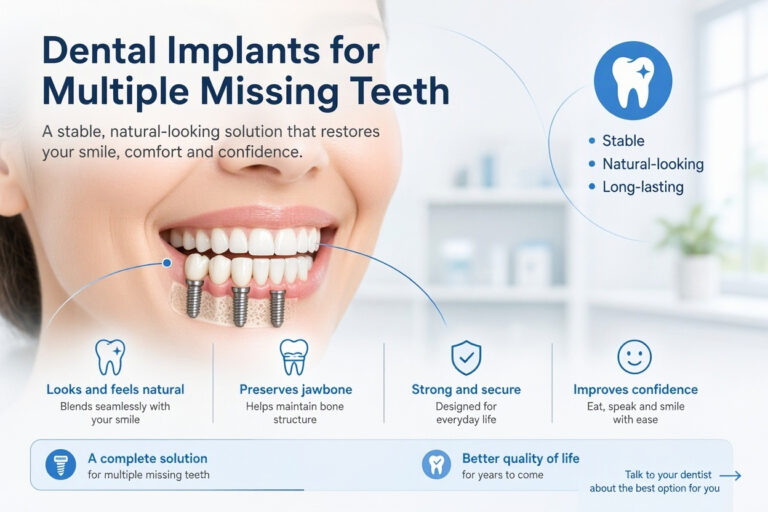
Dental implants have become the gold standard for replacing missing teeth, and they’re particularly well-suited for molars. But molar implants come with their own unique considerations—from bone density and bite forces to the proximity of the sinus cavity and the inferior alveolar nerve.
This comprehensive guide will walk you through everything you need to know about dental implants for molars. We’ll cover the anatomy, the procedure, the risks, the costs, and the long-term care required to keep your implant healthy for years to come. By the end, you’ll have a clear understanding of what to expect and how to make informed decisions about your dental health.
Understanding Your Molars
What Makes Molars Special?
Molars are the large, flat teeth at the back of your mouth. Most adults have twelve molars—three on each side of the upper jaw and three on each side of the lower jaw (first, second, and third molars, with the third molars being wisdom teeth). These teeth are designed for grinding and crushing food, and they play a critical role in your digestive process.
Here’s what makes molars unique:
Size and structure
Molars have two or three roots, making them the largest and strongest teeth in your mouth. Their broad, flat surfaces are designed to withstand heavy chewing forces.
Bite force
Your molars generate the highest bite forces of any teeth. When you chew, the forces on your molars can reach 200 pounds or more.
Location
Molars sit at the back of your mouth, making them harder to clean and more susceptible to decay and gum disease.
Bone density
The bone around molars is generally dense, providing good support for implants. However, bone loss after extraction can be significant.
Nerve and sinus proximity
Upper molars are close to the sinus cavity, while lower molars are close to the inferior alveolar nerve. Implant placement must avoid damaging these structures.
Varied anatomy
Molars have complex root systems and varying canal configurations, which can make treatment more challenging.
“Molars are the workhorses of your mouth. They take a beating every day, and when one is missing, you lose a significant amount of function. An implant is the best way to restore that function and protect the remaining teeth.” – Dr. Michael Torres, Oral Surgeon
The Role of Molars in Your Mouth
Molars serve several critical functions:
- Grinding and crushing – They break down food into small, digestible pieces.
- Maintaining bite alignment – They keep your upper teeth from shifting downward and your adjacent teeth from tilting.
- Supporting your facial structure – They help maintain the height of your face and the contour of your jawline.
- Preserving bone – The roots of your molars stimulate the jawbone, preventing bone loss.
- Protecting your digestive system – Properly chewed food is easier to digest and helps prevent digestive issues.
When you lose a molar, all of these functions are compromised.
Consequences of Missing Molars
Losing a molar isn’t just about a gap in your mouth. It sets off a chain reaction of problems:
Bone loss
Without the tooth root to stimulate the bone, the jawbone in that area begins to shrink. This bone loss can progress over time and affect adjacent teeth.
Tooth shifting
Neighboring teeth may tilt into the empty space. Your upper opposing tooth may drift downward because it no longer has a counterpart to bite against.
Bite changes
Your bite may become uneven, leading to jaw pain, TMJ disorders, and excessive wear on other teeth.
Decreased chewing efficiency
You may avoid certain foods, leading to nutritional deficiencies or digestive problems.
Aesthetic concerns
While molars aren’t visible when you smile, missing back teeth can affect your facial profile and make you look older.
Speech changes
In some cases, missing molars can affect your speech clarity.
Increased risk of gum disease
The gap left by a missing molar can trap food and bacteria, increasing the risk of gum disease around adjacent teeth.
Why Choose a Dental Implant for Your Molar?
The Benefits of Molar Implants
Dental implants offer several advantages for replacing molars:
Superior chewing function
Implants restore nearly full chewing efficiency. You can eat the foods you love without worry.
Bone preservation
Implants stimulate the jawbone just like natural tooth roots, preventing bone loss.
No damage to adjacent teeth
Unlike a dental bridge, which requires cutting down healthy neighboring teeth, an implant stands alone.
Long-term durability
With proper care, implants can last decades—often a lifetime.
Natural feel and function
Implants feel and function like natural teeth. You can chew, speak, and smile with confidence.
Protection for remaining teeth
By filling the gap, implants prevent adjacent teeth from shifting and protect your bite.
Implants vs. Other Options for Molars
| Feature | Dental Implant | Dental Bridge | Removable Partial Denture |
|---|---|---|---|
| Chewing efficiency | Excellent | Good | Fair |
| Bone preservation | Yes | No | No |
| Adjacent tooth impact | None | Damages enamel | Minimal |
| Surgery required | Yes | No | No |
| Treatment time | 4-9 months | 2-4 weeks | 2-4 weeks |
| Initial cost | High | Medium | Low |
| Long-term value | Excellent | Fair | Poor |
| Success rate (10 years) | 95%+ | 70-80% | Variable |
For most patients with a missing molar, an implant is the best choice. It offers the most predictable long-term outcome and preserves both bone and adjacent teeth.
“When a patient comes to me with a missing molar, I almost always recommend an implant. It’s the most conservative option in the long run because it doesn’t affect the healthy teeth next to it.” – Dr. James Liu, Prosthodontist
Assessing Your Candidacy for a Molar Implant
What Your Dentist Will Evaluate
Not everyone is an ideal candidate for a molar implant. Your dentist will conduct a thorough assessment:
Bone quantity and quality
The bone around molars can be compromised by extraction, gum disease, or infection. Your dentist will use X-rays and possibly a CT scan to measure bone volume.
Nerve and sinus position
Upper molars are close to the sinus cavity, while lower molars are close to the inferior alveolar nerve. Your dentist will use imaging to plan the implant safely.
Gum health
Your gums must be healthy and free of active periodontal disease before implant placement.
Opposing teeth
Your dentist will check the teeth that bite against the molar to ensure they haven’t shifted and that the bite can be properly restored.
Overall health
Conditions like diabetes, autoimmune disorders, and smoking can affect implant success.
Oral hygiene habits
Implants require excellent oral care. Your dentist will assess your commitment to maintaining good hygiene.
The Importance of Bone Density Around Molars
Bone density is critical for molar implants. The bone must be wide enough and tall enough to support the implant without encroaching on nearby structures.
Challenges of molar bone:
- Bone loss after extraction can be significant
- The sinus cavity limits available bone height in the upper jaw
- The inferior alveolar nerve limits available bone height in the lower jaw
- The bone may be narrower in the posterior region
Solutions for inadequate bone:
- Bone grafting (autograft, allograft, xenograft, or synthetic)
- Sinus lift (for upper molars)
- Ridge augmentation to widen the bone
- Nerve lateralization (rare, for lower molars)
“The key to successful molar implants is careful planning. With CT scans and digital planning tools, we can assess bone volume, map the nerves and sinuses, and place implants safely and predictably.” – Dr. Amanda Reeves, General Dentist
The Sinus Cavity: What You Need to Know for Upper Molars
The maxillary sinus is a hollow space in your upper jaw, located just above your upper molars. When you lose an upper molar, the bone between the sinus and your mouth may thin over time. This can make implant placement challenging.
How your dentist protects the sinus:
- Uses CT scans to map the sinus floor
- Plans the implant to maintain a safe distance from the sinus
- May recommend a sinus lift procedure if bone height is inadequate
Sinus lift procedure:
A sinus lift (also called sinus augmentation) adds bone to the floor of the sinus, creating more height for implant placement. There are two approaches:
Lateral window approach – A small window is created in the side of the sinus, and bone graft material is placed. This is used when more bone height is needed.
Crestal approach – Bone graft material is placed through the implant site. This is used when less bone height is needed.
Recovery from sinus lift:
Healing typically takes 4-9 months before implant placement. You may experience mild swelling and discomfort, but most patients recover quickly.
The Inferior Alveolar Nerve: What You Need to Know for Lower Molars
The inferior alveolar nerve runs through the lower jaw, supplying sensation to your lower teeth, lower lip, and chin. Damage to this nerve can cause numbness, tingling, or altered sensation in these areas.
How your dentist protects the nerve:
- Uses CT scans to map the nerve’s exact position
- Plans the implant to maintain a safe distance from the nerve
- Uses a surgical guide for precision placement
- May recommend a nerve lateralization procedure in rare cases
Signs of nerve involvement:
- Numbness or tingling in the lower lip or chin
- Altered sensation when touching the area
- Pain that radiates along the jaw
If you experience any of these symptoms after implant surgery, contact your dentist immediately. Most nerve issues resolve on their own, but early intervention can help.
The Molar Implant Procedure: Step by Step
Phase 1: Consultation and Planning
Your implant journey begins with a comprehensive consultation:
- Review of your medical and dental history
- Clinical examination
- X-rays and CT scan to assess bone and plan the implant
- Discussion of your goals and expectations
- Explanation of the procedure and timeline
- Cost estimate and payment options
Your dentist will use digital planning tools to determine the ideal position, angle, and depth for your implant. This precision planning is crucial for avoiding the sinus cavity and inferior alveolar nerve.
Phase 2: Tooth Extraction (If Needed)
If your molar hasn’t been extracted yet, this is done first. Your dentist removes the tooth carefully, preserving as much bone as possible. The socket is cleaned thoroughly to remove any infection.
Immediate implant placement
In some cases, the implant can be placed immediately after extraction. This works best when:
- The extraction site is free of infection
- There’s enough bone to stabilize the implant
- The socket walls are intact
- You’re in good general health
Delayed implant placement
In other cases, a waiting period of 3-6 months allows for:
- Soft tissue healing
- Bone healing and remodeling
- Confirmation that no infection is present
- Time for any necessary grafting
Phase 3: Implant Placement Surgery
The implant placement procedure typically takes 30-60 minutes for a single molar. Here’s what to expect:
Anesthesia
Local anesthesia numbs the area. Sedation options are available for anxious patients.
Incision
A small incision exposes the bone if the gum has healed over the extraction site.
Drilling
A series of drills creates a precise hole in the bone, gradually widening it to the exact size needed for your implant. Your dentist will carefully monitor the depth to avoid the sinus cavity or nerve.
Implant insertion
The titanium implant is carefully threaded into the prepared site. The implant is chosen based on the width and depth of available bone.
Closure
The gum is sutured closed over the implant, or a healing abutment is attached if a one-stage approach is used.
Phase 4: Osseointegration (Healing)
Over the next 3-6 months, the implant fuses with your bone through a process called osseointegration. During this time:
- Follow a soft diet initially
- Avoid putting pressure on the implant site
- Maintain excellent oral hygiene
- Attend follow-up appointments
- Report any unusual symptoms
Phase 5: Abutment Placement
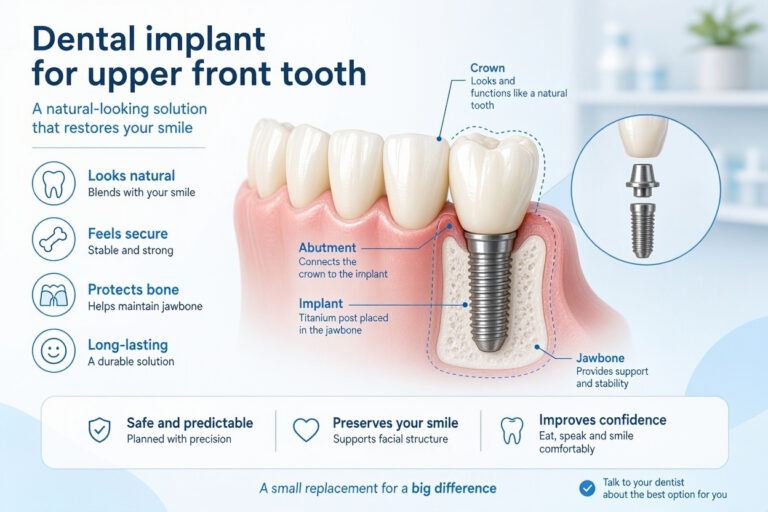
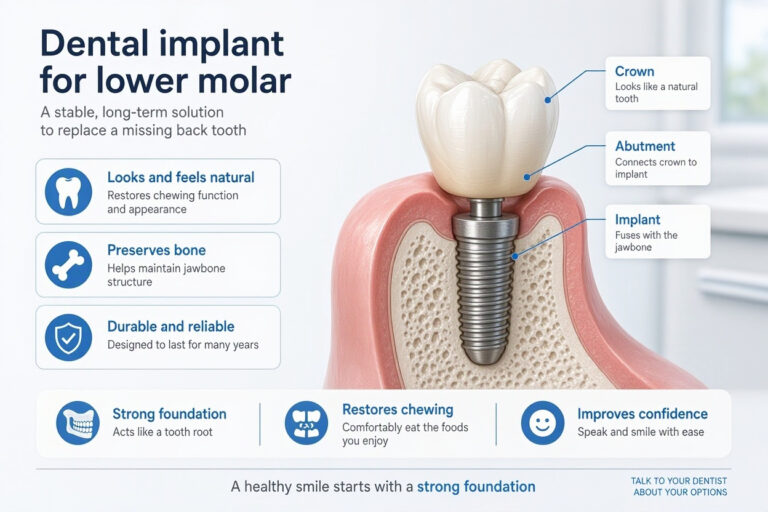
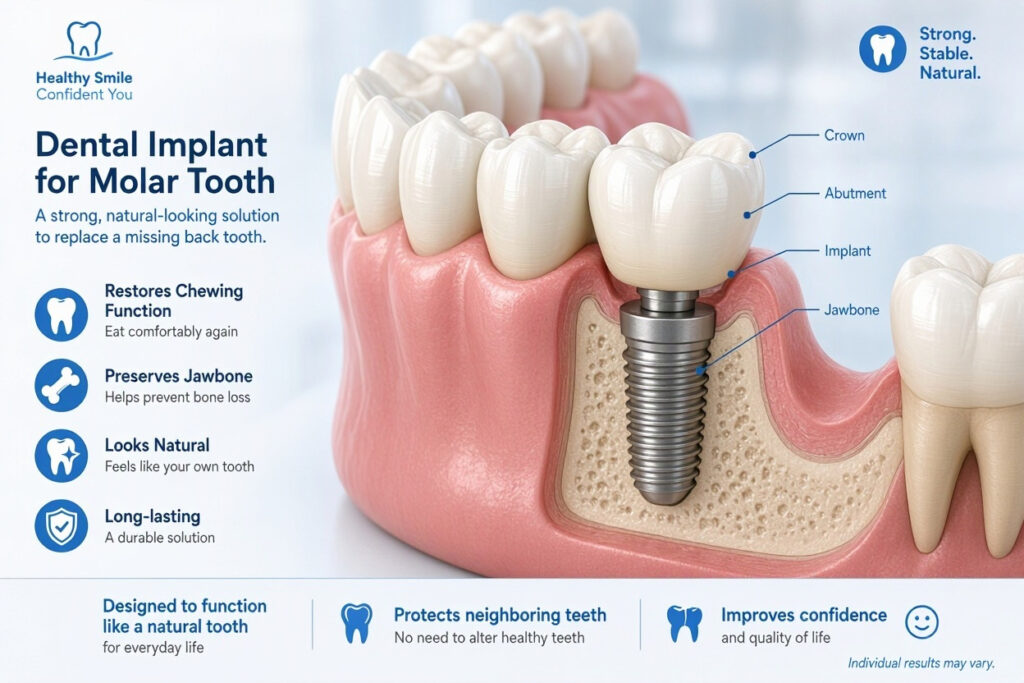
Once osseointegration is complete, your dentist exposes the implant and attaches an abutment. This small connector piece will hold your final restoration.
Phase 6: Final Restoration
After your gums have healed around the abutment (typically 2-4 weeks), impressions are taken for your final crown. The crown is custom-made to match your natural teeth and bite.
Types of molar crowns:
Porcelain-fused-to-metal (PFM) – A metal core with porcelain fused to the outside. Strong and durable, but the metal can show through at the gumline.
All-ceramic – Made entirely of ceramic. Excellent aesthetics, but may be more prone to chipping in the back of the mouth.
Zirconia – A strong, tooth-colored material. Excellent durability and aesthetics. Often recommended for molars.
Metal – Gold or other metals. Extremely durable, but not tooth-colored.
When ready, your dentist attaches the final crown to the abutment. You now have a fully functional, natural-looking replacement tooth.
Timeline Overview
| Phase | Duration |
|---|---|
| Consultation and planning | 1-2 visits |
| Tooth extraction (if needed) | 1 visit |
| Healing after extraction | 3-6 months (if delayed implant) |
| Sinus lift (if needed for upper molar) | 1 visit + 4-9 months healing |
| Implant placement | 1 visit (30-60 minutes) |
| Osseointegration | 3-6 months |
| Abutment placement | 1 visit |
| Gum healing | 2-4 weeks |
| Final restoration | 1-2 visits |
| Total | 4-12 months (depending on grafting needs) |
Risks and Complications Specific to Molar Implants
What Can Go Wrong?
While implant success rates are high, molar implants come with specific risks:
Sinus problems (upper molars)
The maxillary sinus is close to the upper molars. Implants can intrude into the sinus cavity if not carefully planned, causing sinusitis or other complications.
Nerve damage (lower molars)
The inferior alveolar nerve is close to the lower molars. Damage can cause temporary or permanent numbness in the lower lip, chin, or teeth.
Bone loss
Without proper maintenance, bone can recede around the implant.
Implant failure (osseointegration failure)
The implant may not fuse with the bone. This is more common in smokers and patients with uncontrolled health conditions.
Infection
Bacteria around the implant can cause peri-implantitis, leading to bone loss and implant failure.
Bite problems
Molars bear heavy chewing forces. If the implant crown isn’t properly adjusted, it can cause uneven bite forces, discomfort, or damage to the implant.
Restoration complications
The crown may chip, loosen, or need replacement over time. Molar crowns are subject to high forces, so material choice matters.
Excessive bleeding
Rare, but possible, especially if you have bleeding disorders or take blood thinners.
How to Minimize Risks
- Choose an experienced implant dentist
- Ensure careful planning with CT scans
- Follow all pre- and post-surgical instructions
- Quit smoking
- Control systemic conditions like diabetes
- Maintain excellent oral hygiene
- Attend regular check-ups
- Report any unusual symptoms immediately
- Avoid chewing hard foods on the implant site during healing
“The key to successful molar implants is respect for the anatomy. The sinus and the nerve are unforgiving. With proper planning and imaging, we can place implants safely and predictably. The days of guessing are over.” – Dr. Robert Chen, Implant Dentist
Cost of Molar Implants
What Factors Affect the Cost?
The cost of your molar implant depends on several factors:
- Number of implants needed
- Need for bone grafting or sinus lift
- Complexity of the case (nerve proximity, sinus proximity, bone quality)
- Geographic location
- Dentist’s experience and credentials
- Type of final restoration
Typical Cost Breakdown
| Procedure | Cost Range |
|---|---|
| Tooth extraction | $150 – $500 |
| Bone grafting | $600 – $3,000 |
| Sinus lift | $1,500 – $3,000 |
| Implant placement (single molar) | $1,500 – $3,000 |
| Abutment and crown | $1,500 – $3,000 |
| Total for single molar implant | $3,000 – $6,500 |
| Total with sinus lift | $4,500 – $9,500 |
Is an Implant Worth the Cost?
While implants cost more upfront than a bridge or denture, they offer superior long-term value:
- A bridge typically needs replacement every 10-15 years
- A denture may need replacement every 5-10 years
- An implant can last decades with proper care
When you calculate the cost per year of use, implants are often the most economical choice. They also preserve bone and protect adjacent teeth, which can save you money on future dental treatments.
Insurance Coverage
- Dental insurance may cover a portion of the implant and crown
- Medical insurance may cover implants if the tooth loss resulted from an accident or medical condition
- Check with your provider to understand your benefits
- Some plans have waiting periods for major services
Financial Options
- Payment plans through your dentist
- Dental financing companies (CareCredit, etc.)
- Health savings accounts (HSAs)
- Flexible spending accounts (FSAs)
- Third-party lenders
Recovering from Molar Implant Surgery
What to Expect After Surgery
Day 1-3:
- Mild swelling and discomfort
- Some bleeding (manageable with gauze)
- Soft diet recommended
- Avoid strenuous activity
- Ice packs to reduce swelling
Week 1:
- Swelling subsides
- Sutures may be removed
- Return to normal activities (with precautions)
- Continue soft diet
Week 2-4:
- Soft tissue healing
- Gradual return to normal diet
- Follow-up appointment
Month 3-6:
- Osseointegration continues
- Bone fuses with implant
- Avoid chewing hard foods on the implant site
Tips for a Smooth Recovery
- Take prescribed medications as directed
- Use ice packs for swelling
- Eat soft, nutritious foods
- Avoid smoking and alcohol
- Keep the surgical site clean
- Attend all follow-up appointments
- Report any unusual symptoms immediately
- Avoid chewing on the implant side until cleared by your dentist
- Don’t poke or prod the surgical site with your tongue or fingers
Dietary Recommendations During Healing
| Phase | Foods to Eat | Foods to Avoid |
|---|---|---|
| Days 1-3 | Smoothies, yogurt, soup, mashed potatoes, scrambled eggs | Hot, spicy, crunchy, or hard foods |
| Week 1 | Soft cooked vegetables, pasta, soft fruits, fish | Nuts, chips, raw vegetables, tough meats |
| Weeks 2-4 | Gradually introduce more solid foods | Very hard or sticky foods |
| Months 2-6 | Normal diet with caution around implant site | Hard candies, ice, bones, tough crusts |
Long-Term Care for Your Molar Implant
Daily Maintenance
Brushing
Brush twice daily with a soft-bristled toothbrush. Pay special attention to the gumline around your implant. Molars are at the back of your mouth, so take your time to reach them properly.
Flossing
Use floss or interdental brushes daily to clean between the implant and adjacent teeth. The back of the mouth can be hard to reach, so consider using a floss threader or water flosser.
Mouthwash
An antimicrobial mouthwash can help control bacteria.
Water flosser
A water flosser can be especially helpful for cleaning around molars, which are difficult to reach with regular floss.
Professional Maintenance
- Dental cleanings every 6 months (or more frequently if recommended)
- Regular probing around the implant to check for pocket formation
- X-rays to monitor bone levels
- Professional assessment of gum health
Warning Signs to Watch For
Contact your dentist if you notice:
- Bleeding when brushing
- Swelling or redness
- Pain or discomfort
- Implant mobility
- Pus or discharge
- Bad breath that doesn’t improve
- Numbness or tingling in the lip or chin (for lower molars)
- Sinus pain or congestion (for upper molars)
Lifestyle Factors
Quit smoking
Smoking is the biggest preventable risk factor for implant failure.
Control systemic conditions
Keep diabetes well-managed. Work with your doctor to control any conditions that affect healing.
Maintain a healthy diet
Good nutrition supports tissue health and immune function.
Manage stress
Chronic stress impairs healing and immune function.
Avoid harmful habits
Don’t chew on ice, pens, or other hard objects that could damage your implant crown. Molars bear heavy forces, so protect them.
Protect your smile
If you grind your teeth (bruxism), talk to your dentist about a nightguard to protect your implant and natural teeth.
Real Patient Stories
Karen’s Story: A Second Chance at Eating
Karen, a 58-year-old retired nurse, lost a lower molar to decay. She opted for an implant after researching her options.
“I was worried about the surgery, especially because of the nerve. But my dentist did a CT scan and showed me exactly where the nerve was. The surgery was quick, and I had minimal discomfort. Now I can eat steak again without worrying. It’s been five years, and the implant feels just like my other teeth.”
Mark’s Story: The Sinus Lift Experience
Mark, 52, needed an upper molar implant but didn’t have enough bone height due to sinus proximity. His dentist recommended a sinus lift.
“I was nervous about the extra procedure. But my dentist explained that without the sinus lift, the implant might not be stable. The sinus lift added about six months to my treatment, but it was worth it. The implant is solid, and I’ve had no problems.”
Lisa’s Story: The Importance of Planning
Lisa, 45, had a molar extracted after a failed root canal. She was eager to get an implant immediately, but her dentist recommended waiting.
“I was impatient at first. I wanted to get it done right away. But my dentist explained that the bone needed time to heal and that rushing could risk failure. I waited four months, and the surgery was smooth. Now, two years later, I’m glad I listened.”
Frequently Asked Questions
What is a molar implant?
A molar implant is a titanium screw placed in the jawbone to replace a missing molar. It serves as an artificial tooth root, supporting a crown that looks and functions like a natural tooth.
Why are molars good candidates for implants?
Molars are excellent candidates for implants because they’re subject to heavy chewing forces and are essential for proper digestion. The bone around molars is generally dense, providing good support for implants. The main challenges are the sinus cavity (upper molars) and the inferior alveolar nerve (lower molars), which require careful planning.
How long does a molar implant take?
The complete process typically takes 4-9 months. This includes extraction (if needed), healing time, implant placement, osseointegration (3-6 months), and final restoration. If a sinus lift or bone grafting is needed, the process may take 6-12 months.
Is molar implant surgery painful?
Most patients report minimal discomfort during the procedure thanks to local anesthesia. Post-operative discomfort is typically manageable with over-the-counter pain relievers and usually subsides within a few days.
What are the risks of molar implants?
The main risks include sinus problems (upper molars), nerve damage (lower molars), infection, implant failure, and bone loss. Careful planning with CT scans minimizes these risks.
How do I know if I’m a candidate for a molar implant?
Your dentist will evaluate your bone quality, gum health, nerve and sinus position, and overall health. If you have adequate bone and are in good general health, you’re likely a good candidate.
Can I get a molar implant if I have bone loss?
Yes, but you may need bone grafting or a sinus lift first. Your dentist will assess your bone volume and recommend grafting if necessary.
What is a sinus lift, and do I need one?
A sinus lift is a procedure that adds bone to the floor of the maxillary sinus to create more height for an upper molar implant. You may need one if the bone between your sinus and your mouth is too thin to support an implant.
How much does a molar implant cost?
A single molar implant with a crown typically costs between $3,000 and $6,500. If a sinus lift is needed, the total cost may range from $4,500 to $9,500.
Will my molar implant look natural?
Yes. Modern implant crowns are custom-made to match your natural teeth in color, shape, and size. While molars aren’t as visible as front teeth, a well-made crown will blend seamlessly with your other teeth.
Can I chew normally after a molar implant?
Yes, once the implant has fully healed and the final crown is in place, you can chew normally. Implants restore nearly full chewing efficiency.
How long do molar implants last?
With proper care, molar implants can last decades—often a lifetime. Success rates exceed 95% at 10 years.
What should I eat after molar implant surgery?
Stick to soft foods for the first week, then gradually introduce more solid foods. Avoid hard, crunchy, or sticky foods that could damage the implant site.
Can I smoke after getting a molar implant?
Smoking significantly increases the risk of implant failure. If you smoke, you should quit before surgery and remain smoke-free throughout the healing process.
How do I clean around a molar implant?
Brush twice daily with a soft-bristled toothbrush, floss daily, and consider using a water flosser. The back of the mouth can be hard to reach, so take your time.
What if my molar implant fails?
If an implant fails, it can often be replaced after the site heals. Your dentist will evaluate the cause of failure and recommend the best approach.
Is age a factor in getting a molar implant?
Age itself is not a barrier to implants. What matters more is your overall health, bone quality, and healing capacity. Older adults can successfully receive implants.
Can I get multiple molar implants?
Yes, many patients receive multiple implants. Your dentist will evaluate each site individually and create a comprehensive treatment plan.
What if I have gum disease and need a molar implant?
Gum disease must be treated before implant placement. Active gum disease increases the risk of implant failure. Your dentist will recommend a treatment plan that addresses both the gum disease and the missing tooth.
How do I choose the right dentist for a molar implant?
Look for a dentist with experience in implant dentistry, preferably one who has completed advanced training. Ask about their success rates, view before-and-after photos, and read patient reviews.
Can I get a molar implant if I have sinus problems?
If you have chronic sinus problems, your dentist will evaluate whether they’re related to your dental health. In some cases, sinus problems may need to be treated before implant placement.
What type of crown is best for a molar implant?
Zirconia crowns are often recommended for molars because they’re strong, durable, and tooth-colored. Porcelain-fused-to-metal crowns are also a good option. Your dentist will recommend the best material based on your specific needs.
Can I grind my teeth with a molar implant?
If you grind your teeth (bruxism), talk to your dentist about a nightguard. Grinding can damage your implant crown and put excessive stress on the implant.
Additional Resource
For more information about dental implants and molar replacement, visit the American Academy of Implant Dentistry website: www.aaid.com