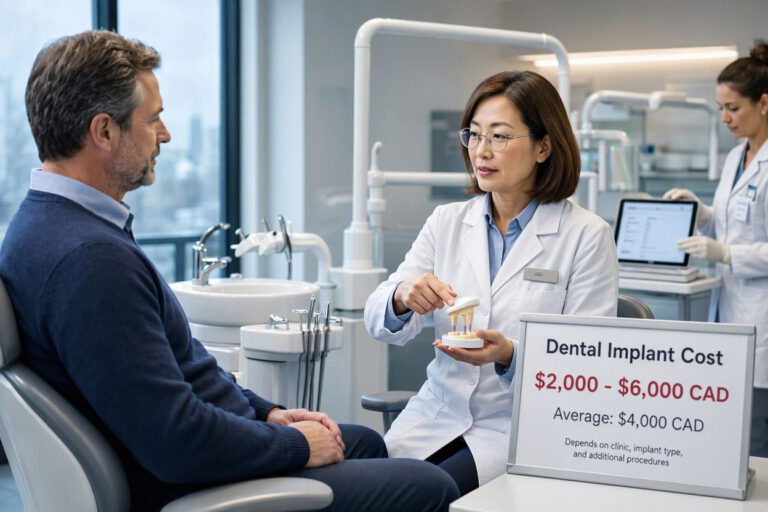
Dental Implants Augusta Ga: A Realistic Guide to Restoring Your Smile
Losing a tooth can feel frustrating. You might worry about your appearance. You might also find it hard to chew your favorite foods. The good news is that modern dentistry offers a long-term solution. If you live in the Garden City, you have access to excellent care. This guide walks you through everything you need to know about dental implants in Augusta Ga.
We will keep things simple and honest. There is no fluff here, just useful facts. You will learn how implants work, what they cost, and how to find a trustworthy dentist in the CSRA (Central Savannah River Area).

Why Choose Dental Implants Over Other Options?
When you have a missing tooth, you usually have three choices: a bridge, dentures, or an implant. Each has its place. But implants offer unique benefits that the other options cannot match.
Let’s look at a quick comparison.
| Feature | Dental Implant | Traditional Bridge | Removable Denture |
|---|---|---|---|
| Bone Health | Preserves jawbone | Does not preserve bone | Accelerates bone loss |
| Longevity | 20+ years (often lifetime) | 5 to 15 years | 5 to 8 years |
| Stability | Fixed like natural teeth | Fixed but relies on adjacent teeth | Moves or slips |
| Impact on Neighbors | None | Requires shaving down healthy teeth | Can cause sore spots |
| Eating Comfort | Chew with full force | Good, but limited for hard foods | Reduced biting power |
Note for readers: Unlike a bridge, a dental implant replaces the root of the tooth, not just the crown. This stimulates your jawbone. It prevents the “sunken face” look that often follows long-term denture use.
Understanding the Basics: What Is a Dental Implant?
A dental implant is a small, screw-like post made of titanium. A dentist places this post into your jawbone. Over a few months, the bone grows around the post. This process is called osseointegration. Once the implant is secure, the dentist attaches a custom-made crown on top.
Think of it as building a house. The implant is the concrete foundation. The abutment is the base floor. The crown is the roof.
The Three Main Parts
- The Implant Fixture: The titanium screw inserted into the bone.
- The Abutment: A small connector piece that sits above the gum line.
- The Prosthesis: The visible tooth (crown), multiple teeth (bridge), or full set (implant-retained denture).
The Step-by-Step Process for Dental Implants in Augusta Ga
Everyone’s journey is slightly different. Some people need extra prep work, like a bone graft. Others can get same-day implants. However, a standard case usually follows these steps.
Step 1: The Initial Consultation (60 to 90 minutes)
Your first visit is about planning. The dentist will examine your mouth. You will likely get a 3D CBCT scan. This scan shows the dentist exactly where your nerves and sinuses are. It also measures your bone density.
What to bring:
- Your insurance card.
- A list of current medications.
- Any recent dental X-rays (if available).
Step 2: Preparatory Procedures (If Necessary)
Not everyone needs this step. But if you have been missing teeth for years, your jawbone may have shrunk.
- Bone Grafting: The dentist adds bone material to a weak area. Healing takes 4 to 9 months.
- Sinus Lift: For upper back molars, the dentist lifts the sinus floor to make room for the implant.
- Tooth Extraction: If a damaged tooth is still present, the dentist removes it. Sometimes they place the implant immediately after extraction.
Step 3: Implant Placement Surgery (1 to 2 hours per implant)
This is the main event. The dentist numbs the area completely. You will feel pressure, but not pain. They make a small incision in your gum. Then, they drill a precise hole and insert the titanium post. Finally, they place a healing cap or a temporary tooth over the site.
Most dentists in Augusta use guided surgery. This means they follow a 3D-printed surgical guide for perfect accuracy.
Step 4: Osseointegration and Healing (3 to 6 months)
You go home and let your body do the work. During this time, avoid chewing on that side. You will eat soft foods. The bone bonds with the implant surface. Do not skip your follow-up appointments. The dentist needs to check that healing stays on track.
Step 5: Abutment Placement (30 minutes)
Once the implant fuses with the bone, you return to the office. The dentist re-opens the gum to expose the implant. They attach the abutment. This step is minor. You will need another 2 weeks for the gum to heal around the abutment.
Step 6: Crown Delivery (1 hour)
The final step is the best one. The dentist removes the healing cap. They screw or cement your permanent crown onto the abutment. They check your bite to ensure it feels natural. You walk out with a tooth that looks, feels, and functions like a real one.
Types of Implant Treatments Available Locally
Augusta dentists offer solutions for every situation. You do not need to replace every missing tooth with a separate implant.
Single Tooth Implant
Best for one missing tooth. It does not touch the neighboring teeth. This is the most common procedure.
Implant-Supported Bridge
For two or more missing teeth in a row. The dentist places two implants (one on each end) and suspends the bridge between them. This is cheaper than placing three individual implants.
All-on-4 or All-on-6
This is for people who are missing all their teeth. The dentist places four or six implants in strategic locations. They attach a full arch of fixed teeth. You never remove this appliance. It stays in your mouth like natural teeth.
Overdentures (Snap-On Dentures)
You still have a full denture, but it snaps onto two or four implants. This stops the denture from sliding. It is a middle ground between traditional dentures and fixed bridges.
How Much Do Dental Implants Cost in Augusta, GA?
Let’s talk about money. This is usually the biggest concern for patients. Dental implants require an upfront investment. However, because they last decades, they often save you money in the long run.
Here are realistic price ranges in the Augusta area. These figures include the surgery, the abutment, and the crown.
| Treatment Type | Typical Cost Range (Per Tooth / Arch) | Notes |
|---|---|---|
| Single Implant | 3,000–5,000 | Does not include bone graft or extraction |
| Implant Bridge (3 teeth) | 6,000–10,000 | Uses 2 implants |
| All-on-4 (One arch) | 15,000–25,000 | Fixed teeth; titanium frame |
| Snap-On Denture (One arch) | 7,000–12,000 | Removable by patient |
| Bone Graft | 300–800 per site | Often required for back teeth |
Note for readers: Beware of “cheap implants” advertised for $1,500 or less. That price usually only covers the titanium post. It rarely includes the crown or the abutment. Always ask for a “turnkey price” – the total cost from start to finish.
Does Insurance Cover Implants in Augusta?
Traditionally, dental insurance did not cover implants. They called them “cosmetic.” That has changed recently.
- Medical insurance: May cover the bone graft if bone loss is due to a tumor, injury, or congenital defect.
- Dental insurance: Many PPO plans now cover 30% to 50% of the crown portion. Some cover the abutment. Few cover the implant fixture itself.
- Discount plans: Some local plans offer 20% off implant services at participating Augusta dentists.
Pro tip: Contact your HR department. Some employers offer a separate “implant rider” you can add to your policy.
How to Choose the Right Dentist for Dental Implants Augusta Ga
You have many choices in the CSRA. From Surrey Center to Evans to the medical district near AU Health. How do you pick?
Look for three things: training, technology, and transparency.
Training and Credentials
General dentists can place implants. But specialists have more training. Look for:
- Oral Surgeon: Handles complex bone cases and sedation.
- Periodontist: Specializes in gums and bone. Best for aesthetic cases (front teeth).
- Prosthodontist: Focuses on the restoration (the crown). Best for full-mouth reconstruction.
Technology on Site
You want a dentist who uses a CBCT scanner. This 3D machine is non-negotiable for safety. Also, ask if they use intraoral scanners (digital impressions). No one likes goopy impression material.
Patient Reviews and Before/After Photos
Ask to see photos of actual cases done in Augusta. Look for patients with similar tooth shapes and bone levels to yours.
Financing Options
Quality care is expensive. Good offices offer payment plans. Look for:
- CareCredit: A healthcare credit card.
- LendingClub or Proceed Finance: Medical loans with fixed rates.
- In-house membership plans: Some local offices offer a monthly plan that reduces implant fees by 15%.
Realistic Recovery: What to Expect After Surgery
Healing takes time. Social media makes implant surgery look like a 20-minute coffee break. The reality is that you need to rest.
The First 24 Hours
- Bleeding: Light oozing is normal. Bite on a gauze pad.
- Swelling: Apply ice packs for 20 minutes on, 20 minutes off.
- Diet: Only cold soft foods. Yogurt, smoothies (no straw!), and pudding.
- Pain: Most patients need over-the-counter ibuprofen. Some get a prescription for stronger medication.
Weeks 1 to 2
- Swelling goes down.
- You can eat warm soft foods (mashed potatoes, scrambled eggs).
- Do not spit forcefully. Do not use a straw for 2 weeks. The suction can dislodge the blood clot.
- Clean the area with a special post-op mouth rinse or salt water.
Weeks 3 to 6
- Most swelling and bruising are gone.
- You can resume normal activity, including gym workouts (no heavy lifting for the first month).
- You still need to avoid chewing directly on the implant site.
The “Long Haul” (Month 3 to 6)
- This is boring, but necessary. The bone is fusing.
- You will visit the dentist every 4 to 6 weeks for a quick check.
- Do not smoke. Smoking dramatically increases implant failure rates (up to 20% failure vs. 2% for non-smokers).
Common Fears and Myths (Debunked)
Many patients avoid implants because of things they heard from friends or outdated information. Let’s clear the air.
Myth 1: “The surgery is extremely painful.”
Reality: The placement hurts less than a tooth extraction. Most patients report pressure, not pain. The recovery soreness is similar to a mild bruise.
Myth 2: “My body will reject the titanium.”
Reality: True rejection is nearly impossible. Titanium is biocompatible. If an implant fails, it is usually due to an infection (peri-implantitis) or failed osseointegration from smoking or grinding teeth.
Myth 3: “I am too old for implants.”
Reality: Age is not a factor. Dentists place implants in patients in their 80s and 90s. The only requirement is enough bone density and good overall health. Uncontrolled diabetes or severe osteoporosis are bigger concerns than age.
Myth 4: “I need to be without teeth for months.”
Reality: Not anymore. Many Augusta dentists offer “immediate loading.” They place a temporary tooth on the same day as the implant. This temporary tooth is for looks only. You cannot chew with it. But you will not have a gap.
How to Maintain Your Implants for 20+ Years
An implant cannot get a cavity. But it can get a disease called peri-implantitis. This is gum disease around the implant. It destroys the bone that holds the implant in place.
Your maintenance routine is simple.
Daily Home Care
- Brush twice a day: Use a soft-bristle brush. A manual brush works fine. An electric brush (like Oral-B or Sonicare) is better.
- Floss with implant-specific floss: Use “super floss” or “implant floss” with a stiff end to thread under the bridge.
- Water flosser: Highly recommended. A Waterpik removes food debris from under the crown where floss cannot reach.
Professional Maintenance
- Hygiene visits every 6 months: The hygienist uses plastic or graphite instruments. Metal scalers can scratch the implant surface.
- Peri-implant probing: The dentist measures the gum pockets around the implant just like they do for natural teeth. Pockets should remain at 3mm or less.
- Bite check: Your bite changes over time. If you clench or grind, you need a nightguard. Excess force can fracture the crown or the screw.
Important note: If you smoke, you must stop for implants to succeed. Smoking restricts blood flow to the gums. One study found that smokers have a 15.8% implant failure rate versus 1.4% for non-smokers. Augusta has great smoking cessation programs through AU Health. Ask your dentist for a referral.
Frequently Asked Questions (FAQ)
1. How long does the entire implant process take?
From consultation to final crown, expect 5 to 9 months. If you need a bone graft, add 4 to 6 months.
2. Can I get a dental implant if I have gum disease?
Yes, but you must treat the gum disease first. An active infection will cause the implant to fail. Your dentist will perform scaling and root planing (deep cleaning) first.
3. Are dental implants safe for diabetics?
Yes, but your blood sugar must be well-controlled. You need an HbA1c level below 7.0% for optimal healing. Tell your dentist your latest numbers.
4. What happens if my implant fails?
It is rare (2% to 5% of cases). If it fails, the dentist removes the implant. You let the bone heal for 3 months. Then, you try again, often with a wider implant. Many offices offer a warranty for the implant fixture.
5. Do I need to take time off work?
Plan for 1 to 2 days off after the surgery. If you have a desk job, you can return the next day. If you have a physical job (construction, nursing), take 3 to 4 days off to avoid raising your blood pressure.
6. Which Augusta dentist is best for nervous patients?
Look for practices offering “sedation dentistry.” Options include nitrous oxide (laughing gas) and oral conscious sedation (a pill). Popular local choices include Augusta SmileCare and Martinez Dental Associates. Always check their Google reviews for “anxiety” or “nervous.”
Additional Resources
For a deeper look into the science of bone healing and implant success rates, the American Academy of Implant Dentistry offers a free patient guide.
[Link to external resource: American Academy of Implant Dentistry – Patient Education Library]
(Note: Insert actual live link here before publishing. Example structure: https://www.aaid.com/patients/)
Conclusion
Dental implants in Augusta GA offer a permanent, reliable way to replace missing teeth. They preserve your jawbone, restore your smile, and let you eat without worry. The process takes time—usually six to nine months—and requires a financial investment of 3,000to5,000 per tooth. However, by choosing a skilled local dentist, following the healing rules, and maintaining good hygiene, your new teeth can last a lifetime.
Disclaimer: This article provides general educational information and does not constitute medical or dental advice. Every patient’s medical history and oral anatomy are unique. You should consult a licensed dental professional in Augusta, GA, for a personal examination and treatment plan. The author and publisher disclaim any liability for any adverse effects arising from the use or application of the information contained herein.