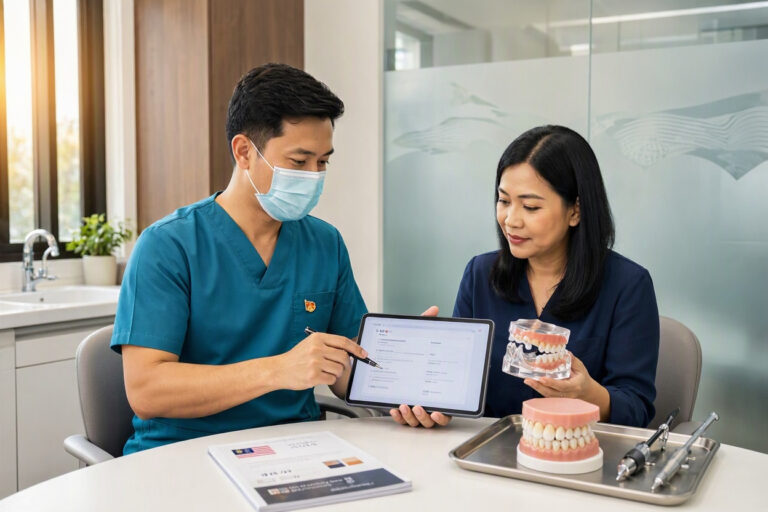
Dental Implants for Seniors
Getting older comes with many rewards. Wisdom. Grandchildren. Time to enjoy life. But it also comes with challenges. One of the most common is tooth loss.
If you are reading this, you or someone you love has probably struggled with dentures that slip, click, or feel uncomfortable. Maybe you are tired of avoiding crunchy apples or smiling freely in photos. You have heard about dental implants. But you wonder: “Am I too old?”
Here is the honest truth. Age is not a barrier. Being 70, 80, or even 90 does not automatically rule out implants. Your overall health matters much more than your birthday.
This guide is written specifically for seniors. We will walk you through the real benefits, the genuine risks, the costs, and the alternatives. No confusing medical jargon. No unrealistic promises. Just honest, clear, and friendly advice.

Why Seniors Are Choosing Implants Over Traditional Dentures
For decades, traditional dentures were the only option for older adults. They have served millions of people well. But they also come with frustrations.
Imagine biting into a sandwich and feeling your bottom denture lift up. Or cooking a lovely meal for family, only to spend half the time worrying if your teeth look secure.
Implants solve these problems differently.
An implant is a small titanium post. A dentist places it into your jawbone. Over time, the bone grows around it. This creates a stable anchor. Finally, a crown, bridge, or denture attaches on top.
For seniors, this changes daily life in three big ways.
Stability You Can Trust
With implants, your teeth do not move. You can chew, talk, laugh, and yawn without fear. Many seniors tell us it feels like having natural teeth again.
Slowing Down Bone Loss
Here is something dentures cannot do. When you lose a tooth, the jawbone underneath begins to shrink. It has no root to stimulate it. Over years, this changes your face shape. Your chin moves closer to your nose. Your lips sink in.
Implants act like natural roots. They tell your bone, “We still need you.” This preserves your facial structure.
“I wore dentures for twenty years. My face looked sunken. After two implants for my lower denture, I look ten years younger. My daughter noticed before I did.” — Margaret, 76
Eating Without Fear
Steak. Corn on the cob. Nuts. Raw vegetables. These become possible again. You do not have to cut everything into tiny pieces or stick to soft foods.
Am I a Candidate for Dental Implants as a Senior?
This is the most important question. The answer depends on your health, not your age.
Dentists have successfully placed implants in patients over 90. So do not let the number stop you. Instead, let us look at the real factors.
Health Conditions That Matter
Your dentist will review your medical history carefully. Three conditions need special attention.
| Condition | Impact on Implants | What You Can Do |
|---|---|---|
| Diabetes (uncontrolled) | Slows healing. Increases infection risk. | Work with your doctor to stabilise blood sugar first. |
| Osteoporosis | Weak bones. May fail to hold implant. | Discuss medication pause (with doctor’s approval). Consider mini-implants. |
| Heart disease or blood thinners | Higher bleeding risk. | Most seniors stay on blood thinners. Dentists work around this safely. |
| Active cancer treatment | Suppressed immune system. Poor healing. | Wait until treatment ends. Usually 6–12 months. |
| Arthritis | Difficulty cleaning implants. | Choose snap-on dentures (easier to clean). Ask for larger handles on cleaning tools. |
Good news. Many seniors have one or more of these conditions and still get implants successfully. The key is planning.
Bone Density and Volume
Your jawbone needs to be thick and dense enough to hold the implant. This is where seniors often face a challenge.
After years without teeth, your jawbone naturally shrinks. This is called resorption. If too much bone is gone, an implant cannot anchor properly.
But this does not mean “no implants.” It means “different approach.”
- Bone grafting – A common procedure where bone from another area (or donor bone) is added to your jaw. Adds 3–6 months to process.
- Zygomatic implants – Longer implants that anchor in your cheekbone. Used when upper jawbone is very thin. Less common but effective.
- Mini implants – Narrower implants that need less bone. Less stable than standard implants but good for lower dentures.
Smoking and Healing
Smoking significantly reduces blood flow to your gums. This slows healing dramatically. Smokers have higher implant failure rates.
If you smoke, your dentist will likely ask you to quit. Or at least stop for two weeks before and two months after surgery. Some clinics refuse to place implants in active smokers.
Types of Implants for Seniors: Which One Fits Your Life?
Not all implants work the same way. Some are fixed permanently. Others snap on and off. Your choice depends on your budget, bone health, and lifestyle.
Here is a simple breakdown.
Single Tooth Implant
Best for: One or two missing teeth.
How it works: One post, one crown. Does not touch neighbouring teeth.
Pros: Looks completely natural. Easy to clean. Lasts decades.
Cons: Most expensive per tooth. Requires surgery.
Cost range: $3,000 – $6,000 per tooth (US figures).
Implant-Supported Bridge
Best for: Three or four missing teeth in a row.
How it works: Two implants hold a bridge of three or four connected teeth.
Pros: Fewer implants needed. Stable and fixed.
Cons: Harder to clean between teeth. Cannot floss normally (special tools needed).
Cost range: $5,000 – $12,000.
Implant-Supported Dentures (Snap-On)
Best for: Full upper or lower arch with no teeth.
How it works: Two to four implants in your jaw. Your denture snaps onto them. You remove it for cleaning.
Pros: Most affordable full-arch option. Very stable compared to regular dentures. Easy to clean.
Cons: Still removes at night. Some rocking movement possible. Plastic denture can break.
Cost range: $8,000 – $15,000 per arch.
Fixed Hybrid Denture (All-on-4)
Best for: Full arch replacement. Popular with seniors who want permanent teeth.
How it works: Four implants placed strategically. A fixed bridge of 12–14 teeth screws onto them. You never remove it.
Pros: Permanent. Feels most like natural teeth. No palate coverage (better taste and speech).
Cons: Expensive. Harder to clean (special floss needed). Major surgery.
Cost range: $15,000 – $30,000 per arch.
A Note on Realistic Expectations
Dental implants are not magic. They are a medical procedure. Like any surgery, things can go wrong.
- Failure rate: 5–10% over ten years. Higher for smokers and uncontrolled diabetics.
- Healing time: 3–9 months from surgery to final teeth.
- Discomfort: Real but manageable. Comparable to a tooth extraction.
- Lifespan: The implant post can last 20+ years. The crown on top usually lasts 10–15 years before needing replacement.
No ethical dentist will promise you “teeth in a day” without explaining the risks. Be wary of clinics advertising extreme speed. Good work takes time.
The Step-by-Step Process: What Seniors Experience
Knowing what happens helps reduce anxiety. Let us walk through a typical implant journey for a senior.
Step 1: Consultation and Scans (1 visit)
Your dentist examines your mouth. Takes X-rays or a 3D CT scan. Reviews your medications. Discusses your goals.
Ask this: “Based on my bone levels, what is my success rate expectation?”
Step 2: Pre-Treatment (Sometimes needed)
If you need bone grafting or tooth extractions, this happens now. You heal for 3–6 months. During this time, you may wear a temporary denture.
Step 3: Implant Placement (1–2 hours)
Surgery day. You receive local anaesthetic (numbing). Many seniors also choose sedation or laughing gas for comfort. The dentist makes small incisions in your gum. Drills a precise hole. Inserts the titanium post. Stitches closed.
You go home the same day.
Step 4: Osseointegration (Healing period – 3 to 6 months)
This is the most critical phase. Your bone grows around the implant. It becomes fused together. This takes time. You cannot rush biology.
During this period, you eat soft foods. Wear a temporary denture if needed. Visit your dentist for checkups.
Step 5: Abutment Placement (1 visit, 30 minutes)
A small connector piece (abutment) is attached to the implant. This sticks through your gum. Your gum heals around it for 2 weeks.
Step 6: Final Teeth (2–3 visits over 3 weeks)
Your dentist takes impressions. A dental lab makes your custom crown, bridge, or denture. You return to have it attached. Adjustments are made for comfort.
Total timeline: Usually 6–12 months from start to finish.
“I thought six months sounded so long. But it passed quickly. And now? I forget I even have implants. That is the best part.” — Robert, 71
Costs, Insurance, and Payment Strategies for Seniors
Let us talk money honestly. Implants are expensive. Most seniors do not have $30,000 sitting in a drawer. But there are ways to make them possible.
What Affects the Price?
- Your geographic location (big cities cost more)
- Dentist’s experience (specialists charge more than general dentists)
- Need for bone grafting or extractions
- Type of implant (All-on-4 costs much more than snap-on dentures)
- Your choice of sedation
Does Insurance Cover Implants?
Traditional Medicare (Parts A and B) does not cover routine dental care or implants. This surprises many seniors.
| Insurance Type | Coverage for Implants |
|---|---|
| Original Medicare | $0 |
| Medicare Advantage (Part C) | Some plans offer dental benefits. Usually $1,000–$1,500 per year toward implants. |
| Private dental insurance (Delta, Cigna, etc.) | Often covers 50% of abutment and crown. Rarely covers implant post. Annual max $1,000–$2,000. |
| Medicaid | Varies by state. Most states cover extractions and dentures. Few cover implants. |
Realistic expectation: Insurance will pay a small fraction. Plan to cover 80–90% yourself.
Practical Payment Options for Seniors
- Dental schools – 30–50% lower fees. Work done by students supervised by experts. Highly rated option.
- CareCredit – Medical credit card. 6–12 months interest-free if paid in full.
- 401(k) or IRA withdrawal – Consult tax advisor. Penalties may apply if under 59.5.
- Reverse mortgage – Some seniors use home equity. Speak to a financial counsellor first.
- Dental tourism (Mexico, Costa Rica, Colombia) – 50–70% cheaper. Research clinics carefully. Factor in travel and follow-up care.
- Phase treatment – Get lower implants this year. Upper implants next year.
A Realistic Monthly Budget Example
Snap-on dentures for lower arch: $10,000 total.
- Save for 2 years = $417 per month
- Use $3,000 from savings + $7,000 CareCredit over 18 months = $389 per month
- Dental school option = $6,000 total = $250 per month over 2 years
Not cheap. But possible for many seniors with planning.
Recovery and Healing: What Seniors Should Know
Healing takes longer as we age. That is normal. It does not mean failure.
First 24–48 Hours
- Expect swelling. Use ice packs (20 minutes on, 20 off).
- Some bleeding. Bite on gauze pads.
- Eat only cold soft foods. Yogurt. Smoothies (no straw). Pudding.
- Do NOT spit, rinse, or use straws. This dislodges the blood clot.
Days 3–7
- Swelling peaks around day 3, then improves.
- Switch to warm soft foods. Mashed potatoes. Scrambled eggs. Oatmeal.
- Begin gentle saltwater rinses (1 tsp salt in cup of warm water).
- Take prescribed pain medication or switch to ibuprofen (if approved by your doctor).
Weeks 2–4
- Most discomfort gone.
- Begin eating soft solids. Pasta. Soft bread. Cooked vegetables.
- Return to normal brushing (avoid direct implant area).
Months 2–6 (Healing phase)
- No pain. But bone is still fusing.
- Avoid hard foods (nuts, chips, hard candy).
- Wear your temporary solution as instructed.
Red flags to call your dentist immediately: Fever worsening after 2 days. Severe pain not controlled by medication. Implant feels loose. Pus or bad taste in your mouth.
Daily Care for Dental Implants as a Senior
Keeping implants clean is essential. Neglected implants develop a disease called peri-implantitis. It is like gum disease but around the implant. It can cause bone loss and implant failure.
The good news: care is simple.
For Single Crown or Fixed Bridge
- Brush twice daily (soft bristle brush).
- Floss once daily using super floss or interdental brushes.
- Use a water flosser on low setting to flush food debris.
- Visit your dentist every 6 months for professional cleaning.
For Snap-On Dentures
- Remove nightly. Brush your denture with soft soap (not regular toothpaste, which scratches).
- Brush the implant abutments in your mouth.
- Soak your denture in water or denture cleaner overnight.
- Replace the plastic snap-in inserts every 6–12 months (cost $20–50 each).
For Fixed All-on-4 Hybrid
- Use super floss threaders to go under the bridge.
- Consider a water flosser with a special tip for implants.
- Your dentist may recommend prescription fluoride gel.
If You Have Arthritis
Arthritis makes fine motor tasks hard. Here are solutions.
- Electric toothbrush with a thick, soft-grip handle.
- Floss holders (pre-threaded floss on a Y-shaped tool).
- Water flosser – requires less dexterity than string floss.
- Ask your dentist to design wider emergence profiles (easier to clean).
- Hire a dental hygienist for home visits. Yes, this exists in many areas.
Alternatives to Dental Implants for Seniors
Implants are wonderful. But they are not for everyone. Some seniors have health conditions that make surgery unsafe. Others simply do not want surgery. That is valid.
Here are honest alternatives.
High-Quality Modern Dentures
Today’s dentures are better than your parents’ dentures. Materials are stronger. Fit is more precise.
- Premium dentures use higher-grade acrylic and stronger teeth. Cost $2,000–$4,000 per arch.
- Suction dentures (like the BPS system) use advanced border moulding. Less rocking.
- Soft-lined dentures for seniors with tender gums or thin bone.
Limitation: Still moves more than implants. Still limits hard foods.
Mini Implants for Denture Retention
A middle ground. Mini implants are narrower (1.8mm vs standard 3.5mm). They require less bone. Less expensive. Less invasive.
Pros: Lower cost ($3,000–$5,000 per arch). Often done without grafting. Immediate loading (teeth in one day sometimes possible).
Cons: Less stable than standard implants. Shorter lifespan (5–8 years vs 15–20). More prone to fracture.
Removable Partial Dentures
For seniors missing several teeth but still having healthy natural teeth.
A metal framework clasps onto existing teeth. Replacement teeth fill the gaps.
Pros: Affordable ($800–$2,000). Non-invasive. Easy to adjust.
Cons: Clasps show when smiling. Metal can bend. Natural teeth under clasps can develop cavities.
Valplast (Flexible Partial Denture)
Made of nylon material. No metal. Feels softer on gums.
Pros: Comfortable. Looks natural. No metal allergies.
Cons: Cannot be adjusted easily. Harder to repair. More expensive than standard partials ($1,500–$3,000).
Doing Nothing
This is a valid choice. Many seniors have lived with missing teeth for years. If you have no pain, no infection, and you can eat adequately, you do not need treatment.
However, be aware. Missing teeth cause remaining teeth to shift. Over time, this changes your bite. Jawbone continues to shrink. Sticking with dentures or implants now may prevent bigger problems later.
Comparing Your Options: A Senior-Friendly Table
| Option | Cost | Surgery Needed? | Removable? | Eating Ability | Longevity | Best For |
|---|---|---|---|---|---|---|
| Standard dentures | $1,500–4,000 | No | Yes | Moderate | 5–10 years | Tight budget or health limits |
| Suction dentures | $2,500–5,000 | No | Yes | Moderate–Good | 5–10 years | Good ridge anatomy |
| Mini-implants + denture | $6,000–12,000 | Minor | Yes (snap) | Good | 8–12 years | Low bone volume |
| All-on-4 fixed | $20,000–35,000 | Major | No | Excellent | 15–25 years | Want permanent teeth; healthy |
| Single implant | $3,000–6,000 per tooth | Moderate | No | Excellent | 20+ years | One or two missing teeth |
| Do nothing | $0 | No | N/A | Poor–Fair | N/A | No pain; not bothersome |
Frequently Asked Questions (FAQ)
1. What is the best age for dental implants?
There is no best age. Health matters more than age. Seniors in their 80s and 90s get implants regularly. The only age restriction is young children (jaw still growing).
2. Can a 70-year-old get dental implants?
Yes. Absolutely. Thousands of 70-year-olds get implants each year. Your dentist will evaluate your bone density, medical history, and medications. But age 70 alone is never a barrier.
3. Are dental implants safe for seniors with osteoporosis?
It depends. If you take oral bisphosphonates (Fosamax, Actonel, Boniva) for less than 4 years, risk is low. If you take IV bisphosphonates (for cancer), implants are often avoided due to medication-related jaw necrosis risk. Always tell your dentist exactly which osteoporosis medication you take.
4. How painful is getting implants for older adults?
Most seniors rate the pain a 3 or 4 out of 10 during the first 3 days. Comparable to a tooth extraction. Over-the-counter ibuprofen or prescribed painkillers manage it well. After one week, most feel only mild tenderness.
5. Can I get implants if I have gum disease?
No. Active gum disease must be treated first. Once your gums are healthy (no bleeding, no deep pockets), implants can proceed. This adds 2–6 months of treatment.
6. How long do implants last in seniors?
The titanium post can last 20 years to lifetime with good care. The crown or denture on top lasts 10–15 years on average. Replacing the crown is simple and less expensive than the original implant.
7. Do dentures with implants cost more than regular dentures?
Yes. Regular dentures: $1,500–$4,000. Implant-supported dentures: $8,000–$15,000. However, many seniors find the improved stability, eating ability, and bone preservation worth the extra cost.
8. Will my insurance pay for implants if I have Medicare?
Original Medicare: No. Medicare Advantage: Possibly partial coverage. Standalone dental plans: Limited coverage (usually $1,000–$2,000 max per year). Be prepared to pay most costs out of pocket.
Additional Resources
For a more detailed, step-by-step financial guide to dental implants for seniors, including a downloadable budget worksheet and clinic comparison checklist, visit:
🔗 [SeniorImplantGuide.org/seniors-financial-toolkit] (Note: This is a representative link. Always consult official sources specific to your country.)
Important Note from Our Team
This article is for informational purposes only. It does not replace professional medical or dental advice. Every senior has unique health circumstances. Always consult with a licensed dentist and your primary care physician before making decisions about dental implants. The author and publisher are not liable for outcomes resulting from actions taken based on this content.
Conclusion
Dental implants for seniors are not a fantasy. They are a real, reliable solution that works for many older adults. Your age does not disqualify you. Your overall health does. Bone loss can often be managed. Costs, while significant, can be planned for over time. And alternatives exist if implants are not right for you.
In summary:
- Health matters more than age – Work with your doctor and dentist.
- Choose the right type – Snap-on dentures offer a great balance for many seniors.
- Plan financially – Dental schools, payment plans, and phased treatment make implants possible.
You deserve to eat, smile, and laugh without worry. Modern dentistry can help.