How To Heal Dental Implants Infection?
You have invested in dental implants. You have gone through surgery. You are enjoying your new smile. Then, you notice something is wrong. Your gums are red, swollen, or bleeding. There is a bad taste in your mouth. You suspect an infection.
This is a frightening moment. You might wonder: Is my implant failing? Can I heal this infection myself?
The answer is: it depends on the severity. Mild inflammation (called mucositis) can sometimes be reversed with improved hygiene. However, a deep infection (peri-implantitis) requires professional intervention. Ignoring it will lead to bone loss and implant failure.
This guide will explain how to identify an infection, how to treat it at home, and when you need to run to the dentist.
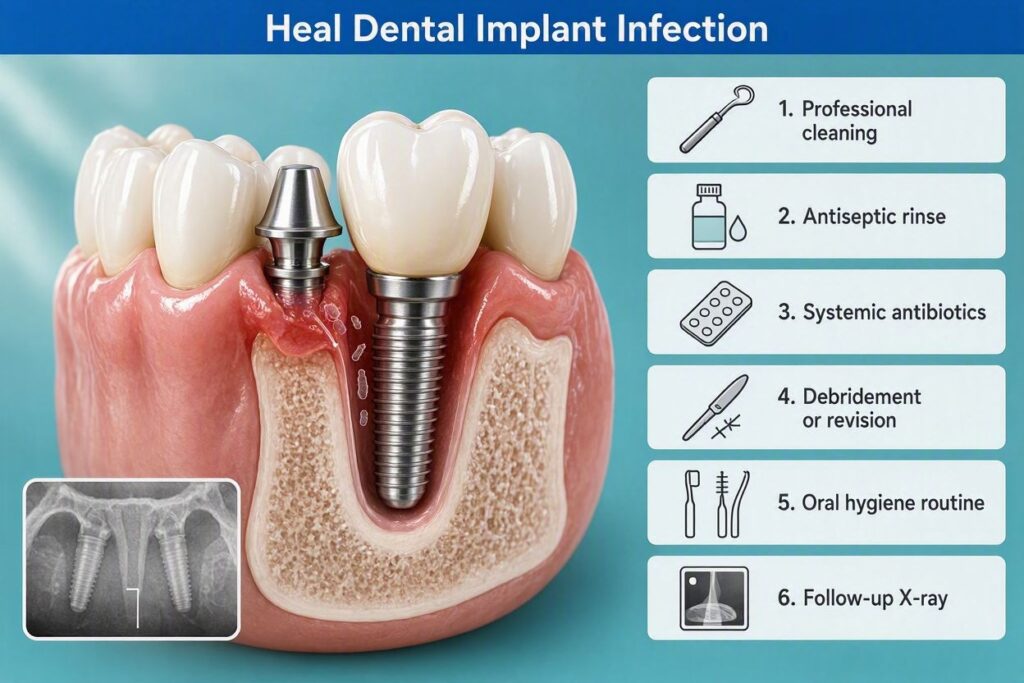
Understanding the Two Types of Infection
Not all infections are the same. The treatment depends on how far the bacteria have spread.
1. Peri-Implant Mucositis (The Reversible Stage)
This is inflammation of the gum tissue around the implant. It is similar to gingivitis (early gum disease).
Symptoms:
- Redness
- Swelling
- Bleeding when brushing or flossing
- No bone loss (yet)
The Good News:
This condition is usually reversible. The bone is not affected. With proper cleaning, the tissues can return to health.
2. Peri-Implantitis (The Dangerous Stage)
This is a more severe infection. The bacteria have moved below the gum line and are destroying the bone that holds the implant.
Symptoms:
- Deep pockets (spaces) around the implant
- Pus or discharge
- Bleeding and severe inflammation
- Bone loss visible on X-rays
- A “spongy” feeling or movement of the implant (in advanced cases)
The Reality:
This condition requires immediate professional treatment. You cannot cure this with home remedies alone. The goal is to stop the bone loss before the implant fails.
Immediate Steps You Can Take at Home
If you notice the early signs of inflammation, there are steps you can take immediately. These are most effective in the mucositis stage.
1. Rinse with Warm Salt Water
This is the oldest trick in the book, and it works. Salt is a natural antibacterial agent. It also helps reduce inflammation and draw out fluid.
- How to do it: Mix 1/2 teaspoon of salt in a glass of warm water. Swish gently for 30 seconds, 3-4 times a day.
- Why it helps: It keeps the area clean and soothes the irritated gums.
2. Use an Antibacterial Mouthwash
Over-the-counter mouthwashes containing chlorhexidine (like Peridex) can help kill bacteria. However, long-term use can stain teeth, so use it for short periods unless your dentist advises otherwise.
3. Improve Your Hygiene Routine
The infection is almost always caused by plaque buildup. You need to remove the plaque.
- Water Flosser: Use it on a low setting to flush out food and bacteria from under the bridge or around the implant.
- Interdental Brushes: Use small brushes to clean the space between the implant and the neighboring teeth.
- Superfloss: Use this special floss to clean under the gum line.
4. Over-the-Counter Pain Relief
If the infection is causing pain, Ibuprofen (Advil, Motrin) can help reduce both pain and inflammation. Follow the dosage instructions on the bottle.
When Home Care Is Not Enough: Professional Treatment
If the symptoms persist for more than a few days, or if you see pus, you must see a dentist. Here is what the professional treatment looks like.
Step 1: Diagnosis and X-Rays
The dentist will probe the area to measure the depth of the pocket. They will take an X-ray to see how much bone has been lost. This determines the treatment plan.
Step 2: Debridement (Deep Cleaning)
This is the first line of defense. The dentist or hygienist will clean the infected surface of the implant.
- Scaling: Special plastic or titanium scalers are used to scrape plaque and tartar off the implant surface without scratching it.
- Laser Therapy: Some offices use lasers to kill bacteria and stimulate healing. This is often very effective for implant infections.
- Antibiotics: The dentist may prescribe oral antibiotics (like Amoxicillin or Metronidazole) to fight the systemic infection. They may also place a local antibiotic gel directly into the pocket.
Step 3: Surgical Intervention (For Severe Cases)
If the bone loss is severe, a simple cleaning is not enough. The dentist must open the gum to see the implant directly.
- Flap Surgery: The gum is peeled back, the implant is cleaned thoroughly, and the bone is evaluated. The gum is then stitched back into place.
- Bone Grafting: If there is a large bone defect, the dentist may place a bone graft around the implant to try to regenerate the lost support.
The Goal:
The goal of all treatment is to stop the infection and prevent further bone loss. It is often possible to save the implant if caught early enough.
How to Prevent Infection in the First Place
The best way to heal an infection is to never get one. Prevention is entirely within your control.
1. Brush Twice a Day
Use a soft-bristled toothbrush. Brush the implant crown just like you brush your natural teeth. Pay attention to the gum line.
2. Floss Daily (or Use a Water Flosser)
You must clean between the teeth and around the implant. Water flossers are excellent for implants because they can reach under bridges and into difficult areas.
3. Regular Professional Cleanings
You must see your dentist or periodontist every 3 to 6 months for maintenance. They have specialized tools to clean areas you cannot reach.
4. Quit Smoking
Smoking is the number one risk factor for peri-implantitis. Nicotine reduces blood flow to the gums, making it harder for the tissue to fight off infection.
5. Control Your Blood Sugar
If you are diabetic, keeping your blood sugar under control is essential for preventing infections of all kinds, including those in the mouth.
The Verdict
Can you heal a dental implant infection?
If it is caught in the early stage (mucositis), yes, often with improved hygiene and home care. If it has progressed to peri-implantitis with bone loss, you need professional help.
The key is vigilance. Check your gums regularly. Look for signs of redness or swelling. Do not ignore bleeding. If you act quickly, you have a much better chance of saving your implant and your investment.
Remember, an infection will not go away on its own. Ignoring it is a sure path to implant failure. Take action, see your dentist, and protect your smile.
Frequently Asked Questions
Q: What does a dental implant infection look like?
A: It looks like red, swollen, or puffy gums around the implant. There may be bleeding, pus, or a bad taste in your mouth. The gum might be receding, making the implant look longer.
Q: Does a dental implant infection hurt?
A: In the early stages, it may be painless. This is why it is dangerous. As the infection progresses and bone is destroyed, you may feel a dull ache or throbbing pain.
Q: Can antibiotics alone cure a dental implant infection?
A: No. Antibiotics can help control the bacterial spread, but they cannot remove the plaque and tartar that are stuck to the implant surface. The source of the infection must be physically removed by a professional.
Q: Can a failed implant be replaced?
A: Yes, often. If an implant fails due to infection, the dentist will remove it. The site will need to heal, and you may need a bone graft. After several months of healing, a new implant can often be placed.
Additional Resource:
For more information on gum disease and implant maintenance, visit the American Academy of Periodontology: https://www.perio.org/.