Dental Implants In Chesapeake VA: Your Complete, No-Nonsense Guide
Losing a tooth can feel frustrating. You might worry about your smile, your ability to chew your favorite foods, or even your long-term oral health. If you live in Hampton Roads, you have probably heard about dental implants. But you likely have many questions.
Is the procedure painful? How long does it last? What is the real cost in Chesapeake? And most importantly, is it worth the investment?
This guide answers those questions. We will walk through everything step by step. No confusing medical jargon. No unrealistic promises. Just honest, practical information to help you decide if dental implants in Chesapeake VA are the right solution for you.
What Exactly Are Dental Implants? A Simple Explanation
Imagine replacing a missing tooth from the root up. That is the idea behind a dental implant.
A natural tooth has two main parts: the root (hidden under your gum) and the crown (the visible part you use to chew). A dental implant mimics this structure. It is a small, screw-like post made of titanium. A surgeon places that post into your jawbone. Over time, the bone fuses with the titanium. This creates a rock-solid foundation.
Once the implant heals, your dentist attaches an abutment (a small connector) and then a custom-made crown. The result looks, feels, and functions like a natural tooth.
The Three Main Components of an Implant
To understand the process better, let us break down the parts.
- The Implant Fixture (The Root): This is the titanium screw inserted into your jaw. It is never visible above the gum line.
- The Abutment (The Connector): A small metal piece screwed into the implant. It rises slightly above the gum to hold the crown.
- The Prosthesis (The Tooth): Usually a ceramic crown. It matches the color, shape, and size of your other teeth.
Important Note: Not all implants are the same. Some are made of zirconia (a metal-free option). However, titanium remains the gold standard because of its proven ability to fuse with bone.
Why Consider Dental Implants in Chesapeake VA? The Real Benefits
You have other options for replacing missing teeth. Bridges and dentures are common. But implants offer unique advantages that many people find life-changing.
1. Protect Your Jawbone and Facial Structure
When you lose a tooth, your jawbone no longer receives stimulation from chewing. Over time, that bone deteriorates. This can change your facial shape. Your cheeks may look sunken. Your smile might age prematurely.
Implants stimulate the bone just like natural roots. This prevents bone loss. It keeps your jaw strong and your face looking natural.
2. Eat What You Love Without Worry
Dentures can slip. Bridges can trap food. With implants, you do not have to think about it. You can bite into an apple, enjoy a steak, or chew gum with confidence. The implant is part of you.
3. No Damage to Healthy Teeth
A traditional bridge requires shaving down the two neighboring teeth. Those healthy teeth lose their natural structure forever. An implant stands alone. It does not touch or harm your adjacent teeth.
4. Long-Term Value (Lower Cost Over Time)
Here is a truth most short articles will not tell you. Implants have a higher upfront cost than bridges or dentures. But a bridge may need replacement every 7 to 10 years. Dentures need adjustments and relining.
A well-maintained implant can last 25 years, 30 years, or even a lifetime. When you calculate the cost per year, implants are often cheaper.
5. Comfort and Confidence
No clicking sounds. No adhesives. No embarrassing slips. Implants feel like your own teeth. Many patients in Chesapeake report forgetting they ever lost a tooth in the first place.
Who Is a Good Candidate for Implants? (Honest Assessment)
Not everyone is a candidate for dental implants on their first visit. But that does not mean you will never be a candidate. Many people can qualify after some preliminary treatments.
Ideal Candidates Typically Have:
- One or more missing teeth
- A fully grown jawbone (usually age 18 or older)
- Sufficient bone density to support the implant
- Healthy gum tissue (no active gum disease)
- A commitment to good oral hygiene
- No uncontrolled chronic conditions (like diabetes or heart disease)
Can You Still Get Implants If You Have Bone Loss?
Yes. This is a common concern. If you have been missing a tooth for years, you likely have some bone loss. That does not rule out implants. Your dentist may recommend a bone graft.
A bone graft adds synthetic or natural bone material to your jaw. It sounds intimidating, but it is a routine procedure. After several months of healing, you will have a strong foundation for your implant.
Note for Smokers: Smoking significantly slows healing and increases implant failure rates. If you smoke, talk to your Chesapeake dentist honestly. Many will still place implants but will strongly encourage you to quit or reduce smoking during the healing period.
Types of Dental Implants Available in Chesapeake VA
Not every implant case is the same. Depending on your situation, your dentist may recommend one of these options.
| Type of Implant | Best For | Procedure Time | Cost Range (Per Tooth) |
|---|---|---|---|
| Single Tooth Implant | One missing tooth | 3–6 months | $3,000 – $5,500 |
| Implant-Supported Bridge | 2–3 missing teeth in a row | 3–6 months | $5,000 – $8,000 |
| All-on-4 (Full Arch) | All teeth missing in upper or lower jaw | 1 day for temporary teeth; 4–6 months for final | $15,000 – $30,000 per arch |
| Implant-Supported Denture | Multiple missing teeth with bone loss | 4–8 months | $7,000 – $15,000 per arch |
Single Tooth Implants
This is the most common type. You replace one missing tooth with one implant and one crown. Simple, effective, and highly predictable.
Implant-Supported Bridges
If you have two or three missing teeth in a row, you do not need an implant for each gap. Two implants can support a three-unit bridge. This saves money and reduces surgery time.
All-on-4 Implants
This technique is revolutionary for people missing all their teeth. Your dentist places four titanium posts strategically in your jaw. Those four posts support a full set of fixed teeth. You walk out of the office with a temporary set of teeth on the same day. After healing, you receive your permanent, non-removable teeth.
Implant-Supported Dentures
Traditional dentures rest on your gums. Implant-supported dentures snap onto two to four implants. They are removable (you take them out to clean) but do not slip or move while eating or talking.
The Step-by-Step Process: What to Expect Locally
Understanding the timeline reduces anxiety. Here is exactly what happens from your first phone call to your final smile.
Step 1: Initial Consultation and Imaging (1–2 Hours)
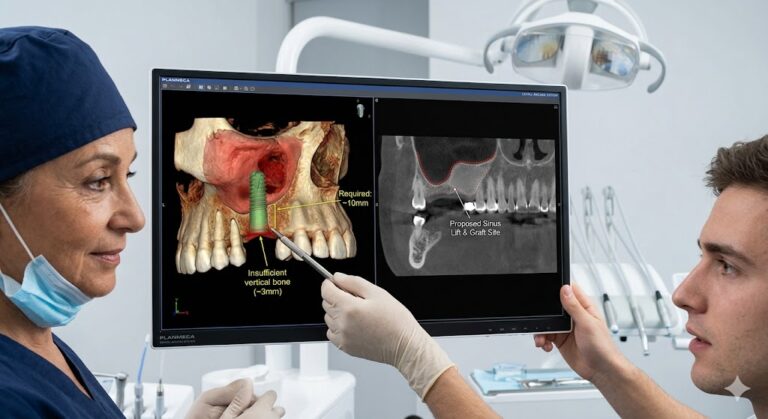
Your Chesapeake dentist will examine your mouth. They will take X-rays or a 3D CBCT scan. This scan shows your bone density, nerve locations, and sinus position. The doctor will discuss your goals, medical history, and budget.
You will receive a treatment plan. This plan outlines every step, the total timeline, and the final cost.
Step 2: Preparatory Procedures (If Needed)
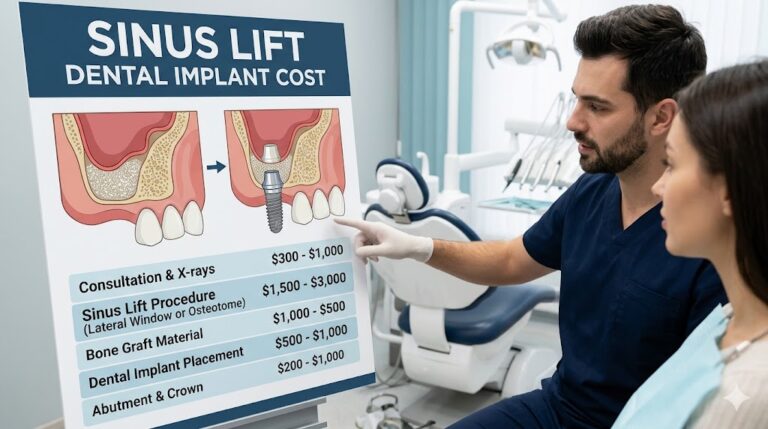
Some patients need bone grafts, sinus lifts, or gum disease treatment before implant placement. These procedures add 3 to 9 months to your overall timeline. Do not skip this step. A weak foundation leads to implant failure.
Step 3: Implant Placement Surgery (1–2 Hours)
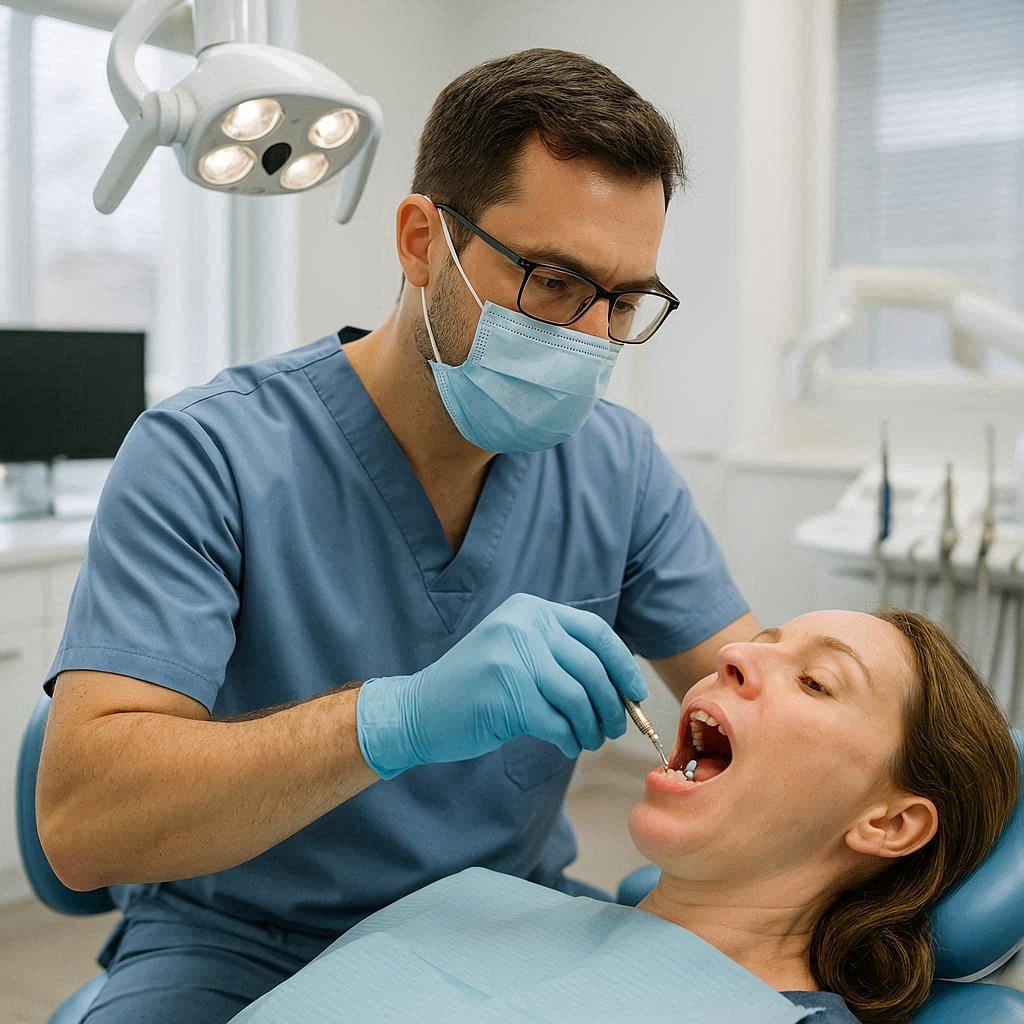
This is outpatient surgery. Most dentists use local anesthesia (numbing shots). You remain awake but feel no pain. For anxious patients, sedation dentistry (laughing gas or oral medication) is available.
The dentist makes a small cut in your gum. They drill a precise hole into the jawbone. They insert the titanium implant. Then they stitch the gum closed over or around the implant.
What does it feel like? Pressure. Vibration. No sharp pain. Most patients compare it to a routine filling.
Step 4: Osseointegration – The Healing Phase (3–6 Months)
This is the most critical period. Your jawbone grows into the microscopic pores of the titanium surface. This process is called osseointegration. It is what makes implants so strong.
During this time, you wear a temporary partial denture or a flipper. You eat soft foods and avoid chewing on the implant site.
Step 5: Abutment Placement (One Visit)
Once the implant is fused to your bone, the dentist uncovers it. They attach a small metal abutment. This protrudes through your gum. It acts as the base for your new tooth.
Healing from this minor procedure takes about two weeks.
Step 6: Crown Fabrication and Placement (2–4 Weeks)
Your dentist takes impressions of your mouth. A dental lab crafts your permanent crown. They match the shade, shape, and translucency to your natural teeth.
At your final visit, the dentist screws or cements the crown onto the abutment. You are done.
Total Timeline Summary
- Simple case (no bone graft): 4–5 months from surgery to final crown.
- Complex case (with bone graft): 8–12 months from start to finish.
Realistic expectation: Do not rush the healing. Implants that are loaded with a crown too early have higher failure rates. Trust the process.
The True Cost of Dental Implants in Chesapeake VA (Breakdown)
Let us talk numbers. This is the most common question, and the answer varies widely. Below is a realistic breakdown based on 2024–2025 pricing in the Chesapeake, Norfolk, and Virginia Beach area.
Average Cost Components
| Service | Typical Cost Range |
|---|---|
| Consultation and 3D CBCT scan | $150 – $350 |
| Single implant placement (surgery only) | $1,500 – $2,500 |
| Abutment | $300 – $600 |
| Porcelain crown | $1,200 – $2,200 |
| Bone graft (if needed) | $300 – $1,200 per site |
| Sinus lift (if needed) | $1,500 – $3,000 |
Total Out-of-Pocket Estimates
- Single tooth implant (no graft): $3,000 – $5,500
- Single tooth implant (with bone graft): $3,800 – $6,500
- Implant-supported bridge (3 teeth, 2 implants): $6,000 – $10,000
- All-on-4 (one arch): $15,000 – $30,000
Does Insurance Cover Implants?
This is where you need to read your policy carefully.
- Medical insurance: Usually no. Implants are considered dental.
- Dental insurance: Some plans cover a portion (often 30% to 50% of the crown or abutment). Few cover the implant surgery itself. Many have a yearly maximum of $1,000 to $1,500, which barely touches the cost.
- Flexible Spending Accounts (FSA) or Health Savings Accounts (HSA): Yes. You can use these pre-tax dollars to pay for implants.
Financing Options in Chesapeake
Most dental offices offer payment plans. Look for:
- CareCredit: A healthcare credit card with promotional financing (6–24 months interest-free).
- In-house membership plans: Some Chesapeake dentists offer annual plans with discounted implant rates.
- Third-party lenders: Alphaeon, LendingClub, or Proceed Finance.
Important note: Be very skeptical of “cheap implants” advertised for $1,500 total. That price almost never includes the crown. Always ask for a complete, written estimate.
Risks, Complications, and Failure Rates (Being Honest)
Dental implants have a success rate of over 95% in healthy patients. But 5% fail. Knowing the risks helps you avoid them.
Common but Manageable Issues
- Swelling and bruising: Normal for 3–7 days after surgery.
- Minor bleeding: Expected for the first 24 hours.
- Soreness at the abutment site: Resolves within a week.
Less Common but Serious Complications
- Infection (peri-implantitis): This is gum disease around the implant. It can destroy bone and cause implant loss. Prevention is excellent oral hygiene.
- Nerve damage: Rare. Can cause numbness in your lip, chin, or tongue. A good surgeon uses 3D imaging to avoid nerves.
- Implant rejection (failed osseointegration): The bone never fuses to the implant. This usually happens within the first 3–4 months. Causes include smoking, uncontrolled diabetes, or overloading the implant too soon.
Signs Your Implant May Be Failing
- The implant feels loose
- Pain when chewing (not just soreness)
- Red or bleeding gums around the implant
- Visible pus or a bad taste
What happens if an implant fails? Your dentist can usually remove it, let the bone heal, and try again. Sometimes a larger implant or a bone graft is needed.
How to Choose the Right Implant Dentist in Chesapeake VA
Not all dentists place implants. Some general dentists do. Others refer you to a specialist. Here is how to decide.
Types of Implant Providers
| Provider Type | Training | Best For |
|---|---|---|
| Oral Surgeon | 4–6 years of surgical residency | Complex cases, bone grafts, All-on-4 |
| Periodontist | 3 years specializing in gums and bone | Patients with gum disease or thin gums |
| Prosthodontist | 3 years specializing in restoration | Full mouth reconstruction, aesthetics |
| General Dentist | Continuing education courses | Simple single-tooth implants |
10 Questions to Ask Before Choosing a Dentist
- How many implants have you placed in the last year?
- Do you use 3D CBCT imaging in-house?
- What is your success rate for single implants?
- Who handles the restoration (the crown)? You or a separate dentist?
- What sedation options do you offer?
- Do you have a financial coordinator who can verify my insurance benefits?
- What happens if my implant fails? Is there a warranty?
- Can you provide patient references or before-and-after photos?
- Do you treat implant complications from other offices?
- Are you available for emergencies after hours?
Red Flags to Avoid
- A dentist who guarantees 100% success (no one can).
- Prices that seem too good to be true (they are).
- No written treatment plan before you pay.
- Rushing you into surgery without a bone density scan.
Local tip: Look for Chesapeake providers who are members of the American Academy of Implant Dentistry (AAID) or the International Congress of Oral Implantologists (ICOI).
Caring for Your Dental Implants: Long-Term Maintenance
Implants cannot get cavities. But they can fail due to gum disease. Your home care routine is the single most important factor in implant longevity.
Daily Hygiene Routine
- Brush twice a day: Use a soft-bristled brush. Pay special attention to the gumline around the implant.
- Floss daily: Use unwaxed tape or super floss designed for implants.
- Water flosser: Highly recommended. It cleans hard-to-reach areas around the abutment.
- Avoid metal tools: Do not use metal scrapers. Use plastic or implant-safe instruments.
Professional Maintenance
- Regular checkups every 6 months: Your dentist will check for mobility and take X-rays to monitor bone levels.
- Professional cleaning: Your hygienist will use special implant-safe scalers.
- Night guard (if you grind teeth): Bruxism (teeth grinding) can fracture crowns or implant screws. A night guard protects your investment.
Lifestyle Factors
- Quit smoking: Smokers have a 15–20% higher implant failure rate.
- Control diabetes: High blood sugar impairs healing. Well-controlled diabetics have normal success rates.
- Limit hard foods: Do not chew ice, hard candy, or bones on your implant crown.
Dental Implants vs. Alternatives: A Side-by-Side Comparison
If you are unsure which option is right for you, this table clarifies the trade-offs.
| Feature | Dental Implant | Traditional Bridge | Removable Denture |
|---|---|---|---|
| Preserves jawbone | Yes | No | No |
| Requires altering healthy teeth | No | Yes (shaving down neighbors) | No |
| Feels like natural teeth | Yes | Mostly | No (can slip) |
| Lifespan | 25+ years | 7–15 years | 5–10 years |
| Upfront cost | Higher | Moderate | Lower |
| Long-term cost | Lower | Higher | Higher (relines, adhesives) |
| Eating restrictions | None | Avoid sticky foods | Many soft foods only |
| Cleaning difficulty | Same as natural teeth | Harder (floss threaders) | Requires soaking |
When a Bridge Might Be Better
- You have multiple adjacent missing teeth and limited budget.
- You have medical conditions that make surgery risky.
- You only need a temporary solution for 5–7 years.
When a Denture Might Be Better
- You have severe bone loss and cannot afford bone grafting.
- You prefer a removable option.
- You are a heavy smoker unwilling to quit.
Frequently Asked Questions (FAQ)
1. Is the dental implant procedure painful?
Most patients say the procedure itself is not painful due to numbing. The days after surgery involve soreness similar to a tooth extraction. Over-the-counter pain relievers usually suffice.
2. How long do dental implants last?
With proper care, 25 years to a lifetime. The crown may need replacement after 10–15 years due to wear, but the titanium implant itself can last forever.
3. Can I get a dental implant years after losing a tooth?
Yes. You may need a bone graft if significant bone loss occurred. But it is rarely too late.
4. Are dental implants covered by Medicare or Medicaid?
Original Medicare does not cover dental implants. Some Medicare Advantage plans (Part C) offer limited dental benefits. Virginia Medicaid covers implants only for specific medically necessary cases (rare).
5. How soon can I return to work after implant surgery?
Most people take 1–2 days off. If you have a physically demanding job or received sedation, take 3–4 days.
6. Can implants be done in one day?
Same-day implants (immediate loading) exist but are not for everyone. They require excellent bone quality. Most Chesapeake dentists prefer the traditional staged approach for higher success rates.
7. What is the success rate for dental implants?
Approximately 95% to 98% for lower jaw implants and 90% to 95% for upper jaw implants. Upper molars have slightly lower success due to sinus proximity.
8. Do implants look natural?
Yes. A skilled restorative dentist matches the crown’s color, translucency, and shape to your adjacent teeth. No one will know it is an implant unless you tell them.
9. Can I have an MRI if I have dental implants?
Yes. Titanium is non-ferromagnetic (not magnetic). It is safe for MRI. However, tell the MRI technician you have implants. Some older implants may cause minor image distortion.
10. What if my body rejects the implant?
True allergic reactions to titanium are extremely rare (less than 0.1%). Most failures are due to infection, overloading, or poor bone fusion, not rejection.
Additional Resource
For more information on implant safety, research, and finding accredited providers, visit the American Academy of Implant Dentistry patient education page.
👉 AAID Patient Resources – Dental Implants
Important Notes for Readers
- Do not choose based on price alone. The cheapest implant is often the most expensive in the long run if it fails.
- Get two opinions. Implant treatment plans vary. One dentist may say you need a bone graft. Another may have a different technique.
- Ask about warranties. Some Chesapeake offices offer a 1–5 year warranty on the crown and a lifetime warranty on the implant if you follow maintenance schedules.
- Healing takes patience. Your grandmother’s neighbor who had “teeth in a day” may have a different case. Your body heals at its own pace.
Conclusion
Dental implants in Chesapeake VA offer a permanent, natural-feeling solution for missing teeth. They protect your jawbone, restore your ability to eat comfortably, and last decades longer than bridges or dentures. The process requires time, patience, and a significant upfront investment. But for most people, the improvement in quality of life is worth every dollar and every month of healing. Choose an experienced provider, commit to excellent home care, and you can expect to enjoy your new smile for a lifetime.
Disclaimer: This article provides general information and does not constitute medical advice. Always consult with a licensed dentist in Chesapeake VA to evaluate your specific oral health condition.