Dental Implants in RI: Your Complete Guide to a Restored Smile
Losing a tooth can feel frustrating. Maybe you hide your smile in photos. Perhaps chewing has become a chore. If you live in the Ocean State, you have excellent options. Dental implants in RI offer a permanent, natural-looking solution.
But let’s be real. The world of implants comes with confusing terms, high costs, and big decisions. You need clear, honest facts. No fluff. No sales pitch.
This guide walks you through everything. You will learn how implants work, what they cost in Rhode Island, and how to choose the right specialist. We also cover recovery, risks, and smart ways to pay.
By the end, you will feel confident making a choice for your oral health.
What Exactly Are Dental Implants? A Simple Breakdown
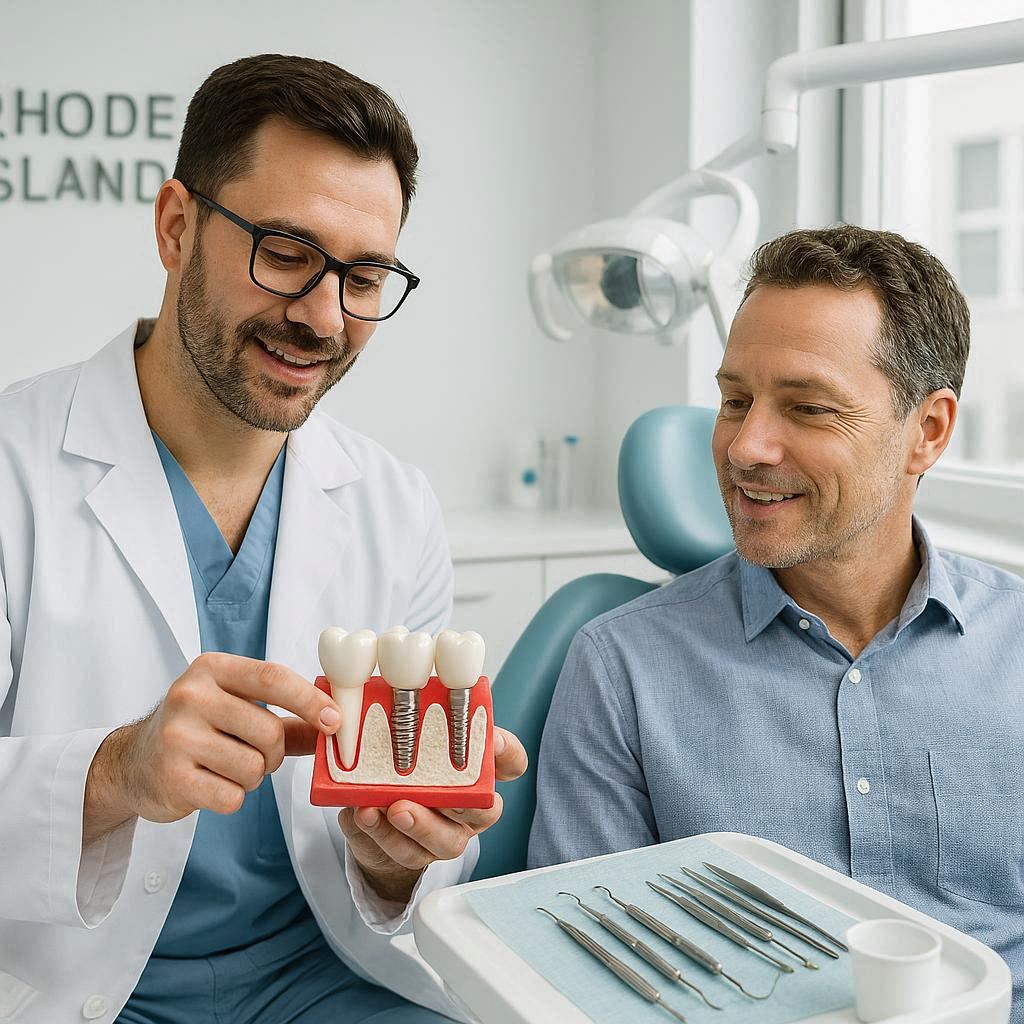
Think of a dental implant as an artificial tooth root. A surgeon places a small titanium post into your jawbone. Over time, the bone grows around it. This creates a rock-solid foundation.
Once the post heals, the dentist attaches an abutment. Then, a custom-made crown goes on top.
Three main parts make up the implant:
- The Implant Post: The titanium screw in the bone.
- The Abutment: The connector piece.
- The Crown: The visible, tooth-colored cap.
Unlike dentures, implants do not slip or click. Unlike bridges, they do not harm healthy teeth. You care for them just like real teeth—brushing and flossing.
Note: Implants have a success rate of over 95% in healthy individuals. That is higher than any other tooth replacement option.
Why Rhode Island Residents Choose Implants Over Other Options
You have other ways to replace missing teeth. Dentures and bridges are cheaper upfront. But they come with long-term headaches.
Dental Implants vs. Dentures vs. Bridges
| Feature | Dental Implants | Dentures | Dental Bridges |
|---|---|---|---|
| Stability | Fixed in jawbone | Can slip or click | Fixed, but relies on adjacent teeth |
| Bone Preservation | Prevents bone loss | Accelerates bone loss | Does not prevent bone loss |
| Impact on Neighbors | None | None | Requires filing down healthy teeth |
| Comfort | Feels like natural teeth | Can cause sore spots | Usually comfortable |
| Lifespan | 20+ years with care | 5-7 years | 7-10 years |
| Cost (Initial) | Higher | Lower | Moderate |
Real Benefits You Will Notice
- Eat freely. Bite into an apple or steak without fear.
- Smile naturally. No one will know you have an implant.
- Speak clearly. No clicking or mumbling.
- Protect your face shape. Implants stimulate the jawbone. This stops the sunken look that dentures cause over time.
- Save healthy teeth. A bridge requires grinding down two good teeth. Implants leave them alone.
The Step-by-Step Process for Dental Implants in RI
Every patient’s journey looks slightly different. But most follow these four phases.
Step 1: Initial Consultation (1–2 hours)
You meet with an implant dentist or oral surgeon. They will:
- Take 3D x-rays (CBCT scan)
- Review your medical history
- Discuss your goals
- Give you a detailed quote
Ask these questions at your consultation:
- How many implants have you placed?
- What is your success rate?
- Do I need a bone graft?
- What happens if the implant fails?
Step 2: Preparatory Procedures (If Needed)
Not everyone has enough bone density. If your jaw is too thin or soft, you need a bone graft. This adds healing time—usually 4 to 9 months.
Other possible prep work:
- Sinus lift (for upper back molars)
- Tooth extraction (if the damaged tooth is still there)
- Gum disease treatment
Important: Do not skip the bone graft if your dentist recommends it. Placing an implant in weak bone guarantees failure.
Step 3: Implant Placement Surgery (1–2 hours per implant)
This happens in a dental chair. You receive local anesthesia. Some patients also choose sedation (nitrous oxide or oral pills).
The surgeon:
- Cuts a small flap in your gum.
- Drills a precise hole in the bone.
- Inserts the titanium post.
- Stitches the gum closed.
You go home the same day. Most people describe the pain as mild—like a tooth extraction.
Step 4: Osseointegration (Healing Period)
This is the most critical phase. Your bone fuses to the titanium post. This takes 3 to 6 months.
During this time, you wear a temporary partial denture or flipper. Avoid chewing on that side.
Step 5: Abutment and Crown Placement
Once healed, the dentist uncovers the implant. They attach a small metal piece (abutment). Then, they take impressions for your permanent crown.
Two weeks later, you return. The dentist screws or cements your custom crown. That is it. You have a new tooth.
What Do Dental Implants in RI Actually Cost? (Real Numbers)
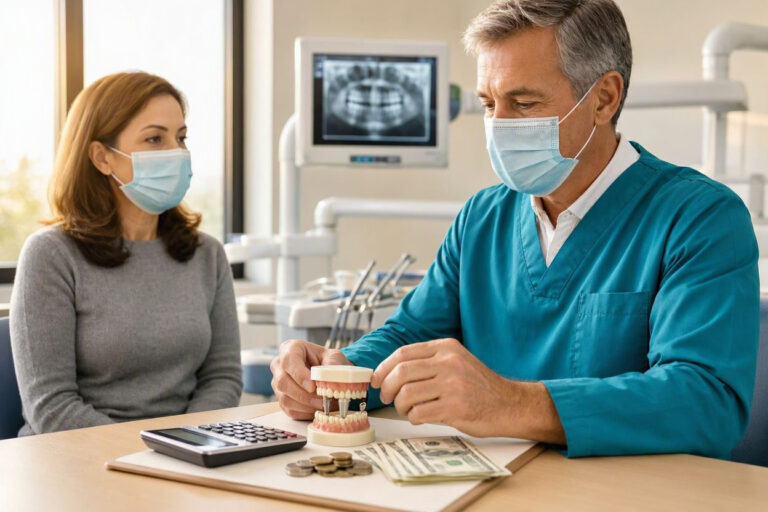
Let’s talk money. This is the number one concern for most patients.
Prices in Rhode Island are slightly higher than the national average. Providence and Newport specialists charge more than rural areas like South Kingstown or Coventry.
Average Cost Breakdown in RI (Per Implant)
| Item | Average Cost in RI |
|---|---|
| Initial exam & CBCT scan | 300–600 |
| Implant post placement | 1,800–2,500 |
| Abutment | 400–800 |
| Custom crown | 1,500–2,200 |
| Total Single Implant | 4,000–4,000–6,100 |
Additional Costs to Consider
- Bone graft: 500–1,500 per site
- Sinus lift: 1,500–3,000
- Extraction: 200–500
- Sedation: 300–700
Full Arch Implants (All-on-4 or All-on-6)
Replacing all teeth on one arch costs more. But it transforms your life.
- All-on-4 (upper or lower jaw): 15,000–25,000 per arch
- All-on-6: 20,000–35,000 per arch
- Full mouth (both arches): 30,000–60,000
Note: These prices are out-of-pocket estimates. Insurance and discount plans lower your costs. Keep reading for payment strategies.
Does Insurance Cover Dental Implants in RI?
Traditional dental insurance usually does not cover implants. They call them “cosmetic” or “elective.” That is unfair, but it is the reality.
However, you have options.
What Insurance Might Pay For
- Extractions: Most plans cover 50–80%
- Bone grafts: Sometimes covered if medically necessary
- Crowns: Some plans cover the crown portion if you buy a “major services” rider
The Best Workaround: Medical Insurance
Here is a secret many dentists do not advertise. If you lost teeth due to an accident, injury, or congenital condition, medical insurance may help.
Ask your dentist to code the procedure as “reconstructive” rather than “cosmetic.” Examples:
- Car accident
- Sports injury
- Ectodermal dysplasia (born without teeth)
Dental Discount Plans
These are not insurance. But they work well. You pay a yearly fee (100–150). Then you get 15–25% off implant services.
Popular plans accepted in RI:
- Careington
- Aetna Dental Access
- Cigna Plus
6 Smart Ways to Afford Dental Implants in RI
Do not let the price scare you. Rhode Island patients have creative ways to pay.
1. In-House Membership Plans
Many RI dentists offer their own discount plans. For 30–50 per month, you get:
- Free exams
- Discounted x-rays
- 20% off implants
Examples: Aspen Dental (multiple RI locations), Gentle Dental (Providence).
2. CareCredit (Medical Credit Card)
This is the most popular option. CareCredit offers:
- 6, 12, or 18 months no interest (if paid in full)
- Longer terms with lower interest (24–60 months)
Apply online. Approval takes 2 minutes.
3. Dental Schools (Big Savings)
Want to save 40–50%? Go to a teaching clinic. Supervised students do the work. The quality is excellent—they are meticulous.
RI’s best option:
- Tufts University School of Dental Medicine (Boston – 45 minutes from Providence). They have a dedicated implant clinic.
4. HSA or FSA Accounts
If your employer offers a Health Savings Account (HSA) or Flexible Spending Account (FSA), use it. These are pre-tax dollars. A 5,000implanteffectivelycostsyou3,500 after tax savings.
5. Travel Dentistry (Caution)
Some RI residents travel to Colombia, Costa Rica, or Mexico. Implants cost 1,000–1,500 there. But consider:
- No recourse if something fails
- Difficulty with follow-up care
- Different sterilization standards
If you travel, choose a clinic certified by the International Congress of Oral Implantologists (ICOI).
6. Negotiate
Yes, you can negotiate. Call 3–4 implant dentists in RI. Ask:
- “Do you offer a cash discount?”
- “Can you waive the consultation fee?”
- “Will you match a competitor’s price?”
Many will lower their fee by 10–15% for upfront payment.
Finding the Best Implant Dentist in Rhode Island
Not all dentists are equal. Implant placement requires surgical skill. Do not choose based on price alone.
Credentials to Look For
- DDS or DMD: Standard dental degree.
- AAID or ABOI certification: The American Academy of Implant Dentistry offers a rigorous exam. Only 10% of dentists have it.
- Years of experience: Ask for 50+ placed implants.
Red Flags to Avoid
- “Same-day implants” without a healing period (rarely works long-term)
- Prices lower than $3,000 per implant in RI (likely means low-quality materials)
- No CBCT machine in-office (3D x-ray is mandatory)
- Cannot show before-and-after photos
Top RI Cities for Implant Specialists
| City | Number of Implant Providers | Average Cost (Single) |
|---|---|---|
| Providence | 12+ | $5,200 |
| Warwick | 8 | $4,800 |
| Cranston | 6 | $5,000 |
| Newport | 5 | $5,500 |
| Pawtucket | 4 | $4,700 |
Recommended RI Implant Providers (Examples)
Always verify credentials yourself.
- RI Implant & Cosmetic Dentistry (Providence): Focuses exclusively on implants. Offers in-house financing.
- Atlantic Dentistry (Warwick): Known for sedation options. Friendly for anxious patients.
- Coastal Dental Arts (South Kingstown): Great for bone grafting and complex cases.
Recovery and Aftercare: What to Expect
Healing happens in stages. Most patients return to work the next day.
The First 24 Hours
- Bleeding: Expect slight oozing. Bite on gauze for 30 minutes.
- Swelling: Apply ice packs (20 minutes on, 20 off).
- Food: Only cold, soft items (yogurt, smoothies, pudding).
- Pain: Take ibuprofen or prescribed medication.
Week 1
- No spitting or using straws (this dislodges the clot).
- Rinse gently with warm salt water after 24 hours.
- Stick to soft foods: mashed potatoes, scrambled eggs, soup.
- Brush your other teeth carefully. Avoid the surgical site.
Weeks 2–6
- Swelling and bruising disappear.
- You can eat most foods, but avoid hard/sticky items.
- Return for suture removal (if non-dissolving stitches were used).
Months 3–6 (Osseointegration)
- You barely notice the implant.
- Avoid chewing ice or hard candies on that side.
- Keep your follow-up appointments.
After Permanent Crown
- Brush twice daily with a soft brush.
- Floss carefully around the crown (use superfloss or interdental brushes).
- See your hygienist every 6 months.
Quote from a real RI patient: “I was terrified of the surgery. But honestly, it hurt less than a root canal. Two years later, I forget it’s even there.” — Mark, Cranston
Risks and Complications (Honest Talk)
Implants are safe. But nothing in medicine is 100% risk-free.
Common (But Manageable)
- Swelling & bruising: Normal. Peaks at 48 hours.
- Minor bleeding: Normal for 1–2 days.
- Soreness: Controlled with over-the-counter painkillers.
Rare (But Serious)
- Implant failure (5%): The bone rejects the post. This usually happens in smokers or uncontrolled diabetics.
- Infection (2%): Treated with antibiotics. Severe cases require implant removal.
- Nerve damage (1%): Causes numbness in lower lip or chin. Usually temporary.
- Sinus problems (upper implants only): The implant can poke into the sinus cavity.
Who Has Higher Risk?
- Smokers: Failure rate doubles. Quit for 2 weeks before and 8 weeks after.
- Diabetics (uncontrolled): High blood sugar slows healing.
- Osteoporosis patients: Medications like bisphosphonates (Fosamax) increase failure risk.
- Teeth grinders (bruxism): You may break the crown. A night guard helps.
7 Common Myths About Dental Implants in RI
Let’s clear up false information.
Myth 1: “Implants are painful.”
Truth: Most patients say the procedure is less painful than a tooth extraction. You are numb during surgery. Afterward, Tylenol usually suffices.
Myth 2: “My body will reject the titanium.”
Truth: Titanium is biocompatible. Allergies are incredibly rare (0.1%). Rejection is almost always due to infection or smoking, not the metal.
Myth 3: “I am too old for implants.”
Truth: Age does not matter. Healthy 90-year-olds get implants. The only requirement is adequate bone and general health.
Myth 4: “Implants look fake.”
Truth: Modern crowns are lifelike. The dentist shades them to match your adjacent teeth. No one will know.
Myth 5: “The procedure takes years.”
Truth: Most implant cases are done in 6–9 months. Traditional bridges or dentures also require multiple visits over weeks.
Myth 6: “I cannot get implants if I have gum disease.”
Truth: You must treat the gum disease first. After it is stable, you can proceed. Many RI periodontists specialize in this.
Myth 7: “Dental implants are not worth the cost.”
Truth: Over 20 years, implants are cheaper than dentures. Dentures need relining, adhesives, and replacements. Implants are a one-time investment.
Special Cases: When Implants Are More Complex
Some patients need extra steps. Do not worry—modern dentistry handles these situations well.
Heavy Smokers
Smoking reduces blood flow to the gums. Your bone heals 50% slower.
Solution: Use nicotine patches. Or commit to quitting for 4 months. Many RI dentists refuse to treat active smokers due to high failure rates.
People with Bone Loss
If you have worn dentures for years, your jawbone has melted away. You cannot place an implant directly.
Solution: A bone graft from your chin, shin, or a cadaver donor. Yes, cadaver bone is safe and common. Your body remodels it into living bone over 6–9 months.
Full Mouth Reconstruction
Replacing all teeth requires careful planning. The All-on-4 technique uses four implants to support a fixed bridge.
Advantages:
- Same-day teeth (temporary bridge placed immediately)
- No bone grafting needed (implants are angled to use existing bone)
- Lower cost (15kvs60k for individual implants)
Disadvantages:
- You cannot remove the bridge yourself (only the dentist can)
- Cleaning requires special floss threaders
How to Prepare for Your Implant Consultation
You will get better results if you come prepared.
Bring This Checklist
- List of all medications (including vitamins and herbs)
- Recent blood work (if diabetic or on blood thinners)
- Insurance card(s)
- Previous dental x-rays (if switching dentists)
- Written questions (see below)
Questions to Ask the Surgeon
- “How many implants have you placed in the last year?”
- “What is your personal success rate?”
- “Do you use a CBCT scanner in this office?”
- “What sedation options do you offer?”
- “Who makes your crowns (in-house or outside lab)?”
- “Do you provide a written warranty?”
- “What happens if the implant fails? Do you replace it for free?”
Red Flag Answers
- “We do not need a CT scan.” (Run away. This is dangerous.)
- “You do not need a healing period.” (Possible if you have dense bone, but rare.)
- “I have placed 20 implants.” (That is too few. Look for 100+.)
Dental Implants in RI vs. Nearby States
Should you drive to Massachusetts or Connecticut for cheaper implants? Let us compare.
| Location | Average Single Implant | Travel Time from Providence |
|---|---|---|
| Rhode Island (Providence) | $5,200 | 0 min |
| Massachusetts (Boston) | $5,500 | 50 min |
| Massachusetts (Fall River) | $4,500 | 25 min |
| Connecticut (Hartford) | $4,800 | 1 hr 15 min |
| New Hampshire (Manchester) | $4,200 | 1 hr 40 min |
Verdict: Fall River, MA offers slightly lower prices and is a short drive. But you lose convenience for follow-up visits. Most RI residents prefer staying local.
Patient Story: One RI Woman’s Journey
Name changed for privacy.
Lisa, 58, from East Greenwich. She lost her upper first molar 12 years ago. She ignored it. Over time, adjacent teeth shifted. Her bite changed. She developed jaw pain.
Lisa’s timeline:
- Month 1: Consultation and CBCT scan. $450.
- Month 2: Bone graft (she had significant loss). $1,200.
- Month 5: Implant post placement. $2,200.
- Month 8: Healing confirmed. Abutment placed. $600.
- Month 9: Permanent crown. $1,800.
Total cost: $6,250.
Lisa’s words: “It felt like a lot of money. But then I calculated what I spent on dental adhesives, soft foods, and painkillers over a decade. The implant paid for itself in two years.”
Financing and Payment Plans Deep Dive
You have more options than you think.
CareCredit
- Pros: Widely accepted. No interest if paid in 6–18 months.
- Cons: High interest (27%) if you miss a payment.
- Best for: Patients who can pay within one year.
LendingClub (Patient Solutions)
- Pros: Fixed monthly payments. Loans up to $50,000.
- Cons: Interest rates from 5–25% depending on credit.
- Best for: Full mouth reconstruction ($30k+).
Proceed Finance
- Pros: Specializes in dental implants. Considers applicants with fair credit (600+).
- Cons: Origination fee (3–5%).
- Best for: Patients denied by CareCredit.
RI-Specific Grants and Nonprofits
Rare, but they exist:
- Donated Dental Services (DDS RI): Free dental care for disabled, elderly, or medically compromised. Waitlist is 1–2 years.
- Rhode Island Mission of Mercy (RI MOM): Annual 2-day clinic offering free extractions and limited implants. Happens every October.
Note: Do not fall for “cheap implants” on Groupon. They usually exclude the crown, abutment, or sedation. The final bill ends up higher.
Maintaining Your Dental Implants for Life
Implants do not get cavities. But they can get peri-implantitis—gum disease around the implant. This causes bone loss and failure.
Daily Home Care
- Brush: Use a soft toothbrush. Pay attention to where the gum meets the crown.
- Floss: Use “superfloss” (thicker for implants) or interdental brushes.
- Water flosser: Highly recommended. Waterpik devices flush bacteria from under the crown.
Professional Maintenance
- Hygiene visits: Every 6 months. Your hygienist uses special plastic scalers (metal ones scratch the implant surface).
- X-rays: Once per year to check bone levels.
Lifestyle Changes
- Stop smoking: The single best thing you can do.
- Wear a night guard: If you grind your teeth.
- Avoid ice chewing: This can crack the crown.
Frequently Asked Questions (FAQ)
How long do dental implants last?
With proper care, 20 years to lifetime. The crown may need replacement after 10–15 years due to normal wear.
Can I get dental implants if I have osteoporosis?
Yes. But if you take bisphosphonates (Fosamax, Actonel, Boniva), your risk of osteonecrosis (jaw death) increases. Your dentist will consult your doctor before proceeding.
Are dental implants covered by Medicare?
Original Medicare does not cover dental implants. Some Medicare Advantage plans (Part C) offer limited dental benefits. Check your specific plan.
Can I get a full set of implants in one day?
Yes, through All-on-4 or Teeth-in-a-Day. You leave with a temporary fixed bridge. But the permanent bridge comes 4–6 months later after healing.
What is the failure rate for dental implants?
95–98% success rate in healthy non-smokers. Failure is usually early (first 3 months) and due to infection or poor bone quality.
Do implants hurt more than extractions?
No. Extractions involve pulling ligaments. Implants involve placing a screw into bone. Most patients rate implant pain lower.
How soon can I eat after implant surgery?
Soft foods immediately. Avoid chewing on the implant side for 3–6 months. After the permanent crown, you can eat normally.
Can I have an MRI with dental implants?
Yes. Titanium is non-magnetic. MRIs are safe. But inform the technician beforehand.
Additional Resource
For the most current list of AAID-certified implant dentists in Rhode Island, visit the official database:
🔗 American Academy of Implant Dentistry – Find a Fellow
https://www.aaid.com/find-a-dentist/
This link leads to a trusted professional organization. They require rigorous testing for certification. Not all dentists listed are implants specialists—filter by state (RI) and credential (Fellow or Associate Fellow).
Conclusion
Dental implants in RI give you back your smile, your diet, and your confidence. The upfront cost is real—typically 4,000to6,000 per tooth. But over a lifetime, implants cost less than dentures or bridges. They also protect your jawbone and facial structure.
Start with a consultation from a certified implant dentist. Bring your questions. Ask about the CBCT scan, success rates, and warranties. Use CareCredit, dental schools, or HSAs to manage the price.
Your new tooth is possible. Rhode Island has skilled providers. Take the first step today.
Disclaimer: This article is for informational purposes only. It does not constitute medical advice. Always consult with a licensed dentist or oral surgeon in Rhode Island for a personal evaluation. Prices and provider information may change. Verify all details directly with the dental office.