Dental Implants in Roanoke: Your Complete Guide to a Confident Smile
Losing a tooth can feel like a big deal. You might hide your smile when you laugh, or you might struggle to chew your favorite foods. But here is some good news: you have options. And one of the best options available today is the dental implant.
If you live in the Star City of the South, you are in luck. Roanoke has a growing number of skilled dental professionals who specialize in implant dentistry.
This guide is for you. We will walk through everything you need to know about dental implants in Roanoke. No confusing jargon. No sales pitches. Just honest, practical information to help you decide if implants are right for you.
What Exactly Is a Dental Implant?
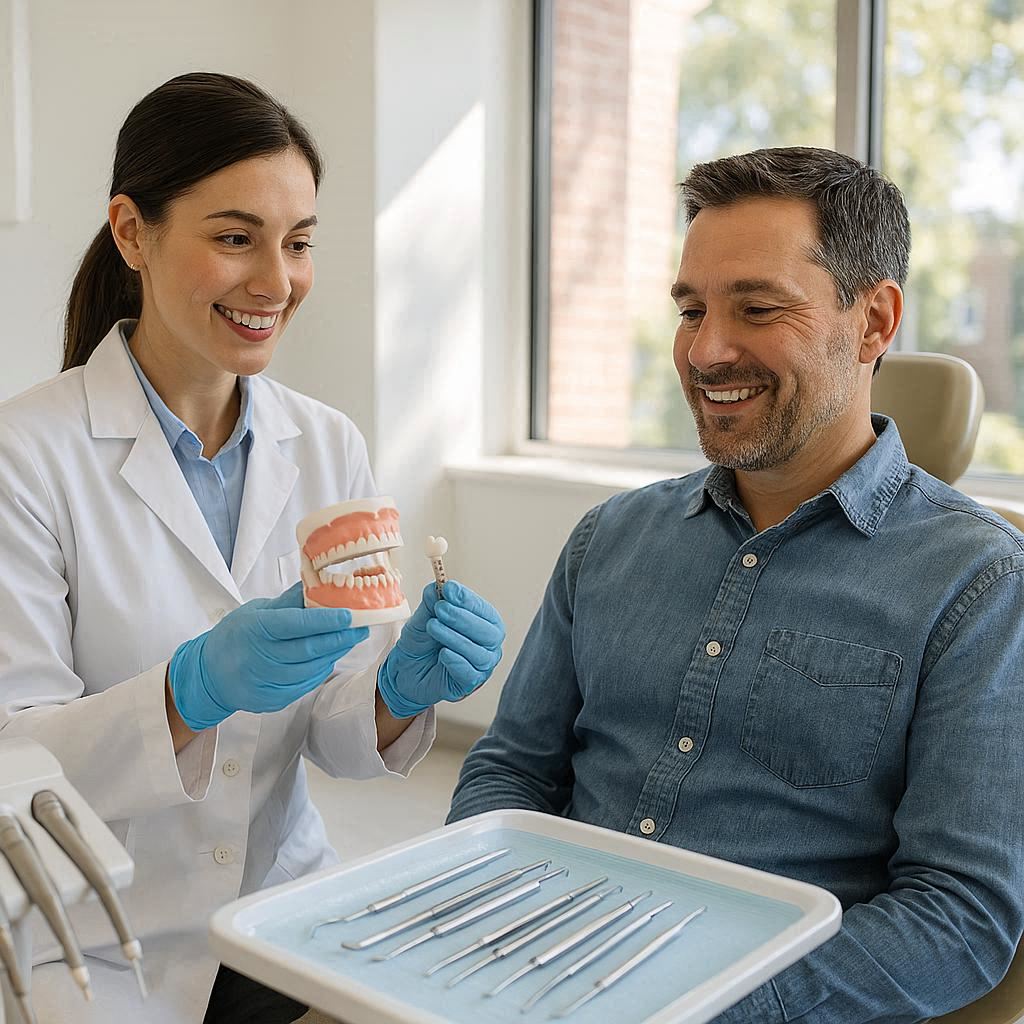
Think of a dental implant as an artificial tooth root. It is a small, screw-shaped post made of titanium. A dentist surgically places this post into your jawbone, right where your missing tooth used to be.
But why titanium? Because your body likes it. Titanium naturally fuses with living bone. This process is called osseointegration. It sounds complicated, but it is simply your bone growing tightly around the implant. The result? A foundation as strong as a natural tooth root.
Once the implant heals and integrates with your bone, your dentist attaches a custom-made crown on top. That crown looks, feels, and functions like a real tooth.
The Three Main Parts of a Dental Implant
To understand the process, you need to know the three components:
- The Implant Fixture: The titanium screw placed into your jawbone.
- The Abutment: A small connector piece that screws into the implant. It rises above the gum line.
- The Prosthesis: The visible part of the tooth. This is usually a crown, bridge, or denture.
Why Choose Dental Implants Over Other Options?
You might be thinking, “Why not just get a bridge or dentures?” That is a fair question. Traditional options are often cheaper upfront. But implants offer unique advantages that many Roanoke residents find worth the investment.
Preserving Your Jawbone
When you lose a tooth, your jawbone loses stimulation. Over time, the bone starts to melt away. It is called resorption. A dental implant provides the necessary stimulation to keep your bone healthy and strong.
Protecting Healthy Teeth
A traditional bridge requires shaving down the two neighboring teeth. Those healthy teeth get permanently altered to support the bridge. With an implant, you leave your natural teeth untouched.
Long-Term Reliability
Dentures last about five to seven years. Bridges might last ten. But with good care, a dental implant can last a lifetime. The crown on top may need replacement after 10-15 years, but the implant itself is built to stay.
Reader Note: Many patients tell us the best part of implants is the confidence. You never worry about a denture slipping when you talk or eat. The implant feels like your own tooth.
The Cost of Dental Implants in Roanoke: What to Expect
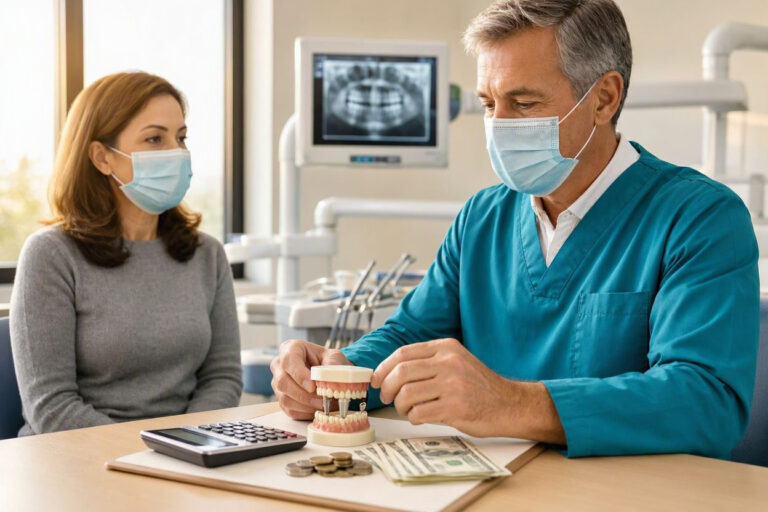
Let us talk numbers. Transparency is important. The cost of dental implants in Roanoke varies based on your specific needs. Here is a realistic breakdown.
| Procedure Component | Estimated Cost Range (Roanoke, VA) |
|---|---|
| Single Implant (implant + abutment + crown) | 3,500–6,000 |
| Implant-Supported Bridge (3-4 units) | 6,000–12,000 |
| Implant-Supported Denture (per arch) | 12,000–25,000 |
| Bone Grafting (if needed) | 500–3,000 |
| Sinus Lift (upper back jaw) | 1,500–3,500 |
| CT Scan (planning) | 250–500 |
These are average prices for the Roanoke Valley. Costs may be lower at dental schools or with certain insurance plans. They may be higher for premium materials like zirconia crowns.
Why the Wide Range in Price?
Several factors influence your final bill:
- Number of implants: One tooth costs less than multiple teeth.
- Material choice: Zirconia implants often cost more than titanium.
- Provider experience: A board-certified periodontist or oral surgeon may charge more than a general dentist.
- Additional procedures: You may need extractions, bone grafts, or gum treatments first.
Does Insurance Cover Dental Implants in Roanoke?
This is tricky. Most traditional dental insurance plans do not cover implants. They classify them as “cosmetic” or “major restorative” with low yearly maximums (often 1,000−1,500).
However, some plans now offer implant coverage. You may find that your insurance covers:
- The crown portion (50% after deductible)
- Extractions needed before the implant
- Bone grafting materials
Pro Tip: Call your insurance provider and ask specifically for “implant procedure codes.” Some Roanoke dentists also offer in-house membership plans. These work like a subscription. You pay a yearly fee and get discounted rates on implants and other services.
Financing Options in Roanoke
You do not need to pay everything at once. Many local offices work with financing companies like:
- CareCredit: A healthcare credit card with promotional financing.
- LendingClub: Patient solutions with fixed monthly payments.
- Proceed Finance: Specifically for dental implants and larger cases.
Always ask the front desk about payment plans. Many Roanoke dental practices want to work with your budget.
The Step-by-Step Process: Getting Dental Implants in Roanoke
Knowing what happens can reduce anxiety. Here is the typical journey from start to finish.
Step 1: Initial Consultation (Day 1)
You meet with a dentist or specialist. They will:
- Examine your mouth and review your medical history
- Take digital X-rays or a 3D CT scan
- Discuss your goals and answer your questions
- Provide a written treatment plan with costs
Step 2: Pre-Treatment Preparation (1-3 months before surgery)
Not everyone needs this step. But if you have gum disease or low bone density, you need treatment first.
- Gum disease treatment: Deep cleaning or laser therapy.
- Tooth extraction: Removing a damaged tooth.
- Bone graft: Adding bone material to strengthen your jaw.
- Sinus lift: Raising the sinus floor to make room for an implant in the upper back jaw.
Healing from a bone graft takes about 4 to 9 months. Be patient. Good bone equals a strong implant.
Step 3: Implant Placement Surgery (Day of surgery)
The surgery itself is usually done with local anesthesia. You stay awake but feel nothing. Some patients choose sedation dentistry for comfort.
The procedure takes about 60 to 90 minutes for a single implant. Your surgeon will:
- Make a small incision in your gum.
- Drill a precise hole in your jawbone.
- Insert the titanium implant.
- Suture (stitch) the gum closed over or around the implant.
You go home the same day. You will receive post-op instructions and pain medication if needed.
Step 4: Osseointegration (Healing Period)
This is the waiting game. Your bone needs time to grow around the implant. This takes 3 to 6 months.
During this time, you may wear a temporary partial denture or flipper. This fills the gap for cosmetic reasons. Avoid putting pressure on the implant site.
Step 5: Abutment Placement (Minor procedure)
Once your implant is fully fused to the bone, you return for a second small procedure. The dentist reopens the gum to expose the implant. They attach the abutment. This piece will hold your final crown.
Healing from abutment placement takes about 2 weeks. Your gum tissue needs time to form a nice collar around the abutment.
Step 6: Crown Fabrication (2-3 weeks)
Your dentist takes impressions of your mouth. These go to a dental lab. A skilled technician crafts your custom crown. They match the color, shape, and size to your natural teeth.
You may try in a temporary crown while the permanent one is being made.
Step 7: Final Placement (Last appointment)
You return to the office. Your dentist checks the fit and appearance of your new crown. They screw or cement it onto the abutment. You bite down. It feels natural. And just like that, you have a new tooth.
Types of Dental Implants Available in Roanoke
Not all implants are the same. Different situations call for different designs.
Endosteal Implants (Most Common)
These are the standard. The implant goes directly into the jawbone. They look like small screws. Over 95% of dental implants placed in Roanoke are endosteal.
Subperiosteal Implants (For Low Bone Height)
If you do not have enough bone height and cannot or will not get a bone graft, this is an option. The implant rests on top of your bone but under your gum. A metal framework holds the prosthetic teeth. These are less common today but still available.
Zygomatic Implants (Complex Cases)
These are very long implants that anchor into your cheekbone (zygoma). They are for patients with severe bone loss in the upper jaw. Only a few specialists in Virginia place these. You may need to travel to Richmond or Charlotte, but some Roanoke oral surgeons can refer you.
Immediate Load Implants (Teeth in a Day)
Traditional implants take months to load with a crown. Immediate load allows your dentist to place a temporary crown on the same day as surgery. This is not for everyone. You need excellent bone quality and no signs of infection.
Choosing the Right Provider for Dental Implants in Roanoke
This is your most important decision. You want someone skilled, experienced, and honest.
Who Can Place Dental Implants?
Three types of dental professionals place implants:
- Oral Surgeons: Specialists in surgical procedures. They handle complex cases, extractions, and bone grafts.
- Periodontists: Gum specialists. They are experts in the soft and hard tissues around teeth.
- General Dentists: Many general dentists complete advanced training in implant placement. Some are excellent. Others refer complex cases.
What to ask during your consultation:
- “How many implant surgeries do you perform each year?” (Look for 50+ cases.)
- “What happens if my implant fails? Do you offer a warranty?”
- “Can I see before-and-after photos of your work?”
- “Do you use 3D CT scanning for planning?”
- “Who will place my crown? You or another dentist?”
Red Flags to Avoid
Be cautious if a provider:
- Promises implants without any imaging or bone evaluation
- Quotes a price significantly lower than the averages above
- Rushes you into a decision
- Cannot show you verified patient reviews
Pros and Cons: A Realistic Look at Dental Implants
No treatment is perfect. Let us be honest about both sides.
The Pros (Why patients love implants)
- Natural look and feel: No one can tell you have an implant.
- Speech improvement: No clicking dentures or lisping.
- Eating freedom: Bite into an apple. Eat steak. No restrictions.
- Bone preservation: Your jaw stays strong for years.
- Convenience: No adhesives, no soaking, no removal at night.
- High success rate: Over 95% after 10 years.
The Cons (Be aware of these)
- Higher upfront cost: Implants cost more than bridges or dentures.
- Long treatment time: Plan for 4 to 9 months from start to finish.
- Surgery required: You need to undergo an invasive procedure.
- Not for everyone: Uncontrolled diabetes, heavy smoking, or radiation therapy to the jaw can cause failure.
- Possible complications: Infection, nerve injury, or implant rejection (rare).
Reader Note: If you smoke, your implant success rate drops significantly. Many Roanoke dentists will require you to quit before placing implants. The nicotine restricts blood flow to your bone. Healing becomes very difficult.
Top Local Resources for Dental Implants in Roanoke
You are not alone on this journey. Here are trusted local resources.
Professional Organizations to Verify Credentials
- Virginia Dental Association (VDA): Find member dentists in Roanoke.
- American Academy of Implant Dentistry (AAID): Search for accredited implant dentists.
- American Board of Oral and Maxillofacial Surgery: Verify an oral surgeon’s certification.
Local Hospitals with Dental Surgery Departments
- Carilion Roanoke Memorial Hospital: Offers hospital-based oral surgery for medically complex patients.
- LewisGale Medical Center: Provides outpatient dental implant surgery under general anesthesia.
Financial Assistance Programs
- Roanoke Valley Health Alliance: Check if you qualify for sliding-scale dental care.
- Bradley Free Clinic: Offers some restorative dental services for uninsured residents. Wait times can be long.
How to Care for Your Dental Implants
You want your investment to last. Good home care makes all the difference.
Daily Maintenance Routine
- Brush twice a day: Use a soft-bristle toothbrush. Pay attention to the gum line around your implant.
- Floss daily: Use unwaxed tape or implant-specific floss. Thread it carefully under the crown.
- Water flosser: A Waterpik is excellent for cleaning around implants. It removes debris without damaging gum tissue.
- Avoid metal tools: Do not use metal scrapers on your crown. They can scratch the ceramic surface.
Professional Maintenance (Dental Visits)
Plan to see your dentist every 6 months. During these visits, your hygienist will:
- Check the gum tissue around your implant
- Measure pocket depths with a special plastic probe
- Remove calculus with implant-safe instruments
- Take X-rays every 12-24 months to check the bone level
Common Questions About Dental Implants in Roanoke
Let us answer the questions we hear most often.
Is the implant surgery painful?
Most patients report less pain than expected. You receive local anesthesia for the procedure. Afterward, you may feel sore for 3-5 days. Over-the-counter pain relievers usually manage this well. The recovery is often easier than a tooth extraction.
How long do dental implants last?
The implant itself can last 30+ years or a lifetime. The crown on top lasts 10-15 years with normal wear. Grinding your teeth (bruxism) may shorten the crown’s life.
Can I get implants if I have dentures?
Absolutely. Many people transition from dentures to implant-supported dentures. The implants snap into place. You can have 2 to 6 implants per arch to hold the denture securely.
What is the age limit for implants?
There is no upper age limit. Healthy 80 and 90-year-olds get implants. The only requirement is adequate bone and overall health. The lower age limit is around 17-18 for females and 18-19 for males, when the jaw stops growing.
Do implants fail? What happens then?
Yes, failure occurs in about 2-5% of cases. Early failure (within 3 months) is usually due to infection or poor bone quality. Late failure (years later) often comes from gum disease or clenching. If an implant fails, your dentist can often remove it, let the bone heal, and place a new one.
Alternatives to Dental Implants
Maybe implants are not right for you right now. Here are other options available in Roanoke.
| Alternative | Pros | Cons |
|---|---|---|
| Traditional Fixed Bridge | Faster (3 weeks). Lower upfront cost (2,000−4,000). | Shaves down healthy teeth. Lasts 7-10 years. No bone preservation. |
| Removable Partial Denture | Low cost (700−1,500). No surgery. | Uncomfortable. Affects taste and speech. Can damage adjacent teeth. |
| Complete Denture | Affordable (1,200−3,000 per arch). No surgery. | Poor stability. Bone loss continues. Requires adhesives. |
| Resin-Bonded Bridge (Maryland Bridge) | Minimal tooth alteration. Lower cost. | Only for front teeth. Less durable. Can debond easily. |
Preparing for Your First Consultation
You want to make the most of your time and money. Here is a checklist of what to bring and what to ask.
Bring to your appointment:
- Your dental insurance card
- A list of current medications (including over-the-counter and supplements)
- Any recent X-rays (you can request them from your previous dentist)
- Your preferred method of payment or financing application
Questions to ask the dentist:
- “Based on my CT scan, do I need a bone graft or sinus lift?”
- “What type of sedation do you offer? Is it included in the quoted price?”
- “Who makes my crown? Your in-house lab or an external lab?”
- “What is your protocol for managing implant complications?”
- “Can you provide a written treatment plan with all fees listed?”
Dental Implants and Overall Health: Important Connections
Your mouth is connected to your body. Several medical conditions affect implant success.
Conditions That Require Special Consideration
- Diabetes: Controlled diabetes is fine. Uncontrolled diabetes (A1c over 7.0) dramatically increases failure risk.
- Osteoporosis: Medications like bisphosphonates (Fosamax, Actonel) can interfere with bone healing. Tell your dentist about these drugs.
- Autoimmune diseases: Lupus, rheumatoid arthritis, and Sjogren’s syndrome may affect healing.
- Blood thinners: You may need to coordinate with your prescribing doctor.
Medications That Affect Implants
- Bisphosphonates (oral or IV): Risk of osteonecrosis of the jaw.
- Immunosuppressants: Slower healing.
- SSRI antidepressants: Some studies show higher implant failure rates.
Always provide a complete medication list. Your dentist will consult with your physician if needed.
Seasonal Considerations for Dental Implants in Roanoke
The time of year can affect your treatment experience.
Best Times for Surgery
- Spring (April-May): Moderate weather. Low risk of seasonal illness.
- Fall (September-October): Also mild. Before the holiday season.
Times to Consider Carefully
- Winter: Cold and flu season. Coughing and sneezing after jaw surgery are uncomfortable.
- Summer: Many people travel. You need to stay local for follow-up appointments.
Plan your implant timeline around your work and family schedule. The healing period requires commitment.
Technological Advances in Implant Dentistry
Roanoke dentists use modern technology to improve outcomes.
3D CBCT Scanning
Instead of flat X-rays, CBCT creates a 3D model of your jaw. Your dentist can see nerves, sinuses, and bone density before making a single incision. This reduces surprises and improves safety.
Guided Implant Surgery
Using the CBCT scan, dentists create a surgical guide. This is a 3D-printed template that fits over your teeth. It tells the surgeon exactly where to place the implant. The result? Faster surgery and more predictable placement.
Same-Day Crowns (CEREC)
Some Roanoke offices have CEREC machines. These mills a ceramic crown right in the office while you wait. No temporary crown. No second impression appointment. Not all implant cases qualify, but it is an option for some.
Finding Comfort During Your Implant Journey
We understand. Dental procedures cause anxiety for many people.
Sedation Options in Roanoke
- Nitrous oxide (laughing gas): Mild relaxation. You drive yourself home.
- Oral sedation: A pill taken one hour before surgery. You feel drowsy but awake. You need a driver.
- IV sedation: Medication goes directly into your bloodstream. You sleep through the procedure. Most patients prefer this for multiple implants.
- General anesthesia: Complete unconsciousness. Usually reserved for complex cases or hospital settings.
Talk to your provider about dental phobia. They have seen it before. They want you to be comfortable.
Realistic Expectations: What Your New Smile Will Feel Like
Right after the crown placement, your new tooth may feel slightly “tall.” This is normal. Your brain needs a few days to adjust to the new bite.
The gum tissue around the implant may feel different than natural gums. It is slightly firmer. That is because no periodontal ligament exists around an implant. You will get used to this sensation within two weeks.
You can eat normally. But you will not feel the same “give” that natural teeth have. Be careful with very hard foods like ice or hard candy. You can crack the crown.
The Emotional Impact of Replacing Missing Teeth
We should talk about the psychological side. Missing teeth affect self-esteem. You might:
- Cover your mouth when you laugh
- Decline social invitations
- Feel embarrassed about eating in public
Dental implants change that. Patients often describe a sense of relief and joy. They stop worrying about their smile. They engage more in conversations. They eat confidently at restaurants.
This is not vanity. This is quality of life. And you deserve it.
Maintaining Your Investment: Long-Term Care Plan
Think of your implant like a luxury car. It needs regular maintenance.
Yearly Checklist
- January: Schedule your hygiene appointment.
- April: Check your occlusion (bite). Adjust if needed.
- July: Take a peri-apical X-ray to check bone levels.
- October: Replace your toothbrush head and order more implant floss.
Warning Signs to Watch For
Contact your dentist if you notice:
- Bleeding or redness around the implant
- The crown feels loose or mobile
- Pain when biting
- Bad taste or odor from the area
- Gum recession around the abutment
Early intervention prevents bigger problems.
Dental Implants in Roanoke: Summary for Local Readers
You live in a city with excellent dental resources. Roanoke offers:
- Multiple board-certified oral surgeons and periodontists
- Modern facilities with 3D imaging and guided surgery
- Competitive pricing compared to Northern Virginia or Richmond
- Financing options tailored to local incomes
Do not travel to another city for implants unless you have a rare complex case. The providers here can handle the vast majority of situations.
Making Your Final Decision
You have read the facts. Now it is time to act.
Here is a simple three-step plan:
- Schedule two consultations. Do not settle for the first opinion. Compare treatment plans and personalities.
- Review financing. Get pre-approved for CareCredit or LendingClub before you commit.
- Start with one implant. If you need multiple teeth replaced, do one implant first. See how your body heals. Then proceed.
Remember: Dental implants are a marathon, not a sprint. The long-term benefits far outweigh the temporary inconvenience.
Conclusion
Dental implants in Roanoke offer a permanent, natural-looking solution for missing teeth. While the upfront cost and treatment time are higher than traditional options, the benefits—bone preservation, no damage to healthy teeth, and decades of reliable function—make them a worthwhile investment for many patients. By choosing an experienced local provider and committing to good oral hygiene, you can enjoy a confident smile for life.
Frequently Asked Questions (FAQ)
1. How long does the entire dental implant process take in Roanoke?
From initial consultation to final crown, expect 4 to 9 months. Most of that time is healing (osseointegration). Simple cases on the lower jaw may be faster.
2. Are dental implants covered by Medicaid in Virginia?
Virginia Medicaid (Smiles For Children) does not cover dental implants for adults. It may cover extractions or dentures. Some dual-eligible (Medicare/Medicaid) plans offer limited implant coverage. Check your specific plan.
3. Can I get dental implants if I have gum disease?
Not until the gum disease is treated. Active infection destroys bone and soft tissue. Your dentist will recommend scaling, root planing, or laser therapy first. Then you wait 3-6 months before implant placement.
4. What is the success rate for dental implants in Roanoke?
Success rates are consistent with national averages: 95-98% for lower jaw implants, 90-95% for upper jaw implants. Success depends on your bone quality, health habits, and surgeon skill.
5. Do dental implants hurt more than extractions?
Most patients say extractions hurt more. Implant surgery involves precise drilling into bone, but the post-operative pain is usually mild to moderate. Over-the-counter ibuprofen or acetaminophen typically controls discomfort.
6. Can I use my HSA or FSA for dental implants?
Yes. Dental implants are a qualified medical expense. Your Health Savings Account (HSA) or Flexible Spending Account (FSA) can pay for the entire procedure, including CT scans, bone grafts, and crowns. Save your receipts.
7. What happens if I wait too long to replace a missing tooth?
Your adjacent teeth will shift into the gap. Your opposing tooth may erupt (grow longer). You will lose bone volume. This makes implant placement more difficult and expensive. You may need orthodontics or bone grafting first.
8. Are mini implants the same as standard implants?
No. Mini implants are narrower (less than 3mm diameter). They are less stable and have a higher failure rate for single tooth replacement. They work best for stabilizing lower dentures. Ask your dentist why they recommend mini vs. standard.
Additional Resource
Virginia Dental Association – Find a Dentist Tool
Use this official state resource to verify credentials and find licensed implant dentists in Roanoke.
👉 https://www.vadental.org/find-a-dentist
Disclaimer
This article is for informational purposes only and does not constitute medical or dental advice. Individual results vary. Always consult with a licensed dental professional in Roanoke, Virginia, for a proper diagnosis and treatment plan. The author and publisher are not responsible for any adverse effects or consequences resulting from the use of information in this article. Prices and services mentioned are estimates based on public data and may change without notice.