Dental Implants With No Screws: A Complete Guide to Cement-Retained & Attachment Systems
When you hear the words “dental implant,” most people immediately think of a metal post screwed deep into the jawbone. That image is correct for traditional implants. But what if you could replace a missing tooth without any visible screws or screw holes inside the new tooth?
The idea of dental implants with no screws sounds futuristic, but it has been around for decades in another form. The truth is, the implant root (the part in your bone) almost always has screw threads. However, the visible tooth (the crown) does not have to show any screws at all.
In this guide, we will walk you through how screwless crowns work, the different attachment systems available, who is a good candidate, and the pros and cons compared to traditional screwed-in teeth.
Let us clear up a common confusion right away.
Understanding the Difference: Implant Body vs. Implant Crown
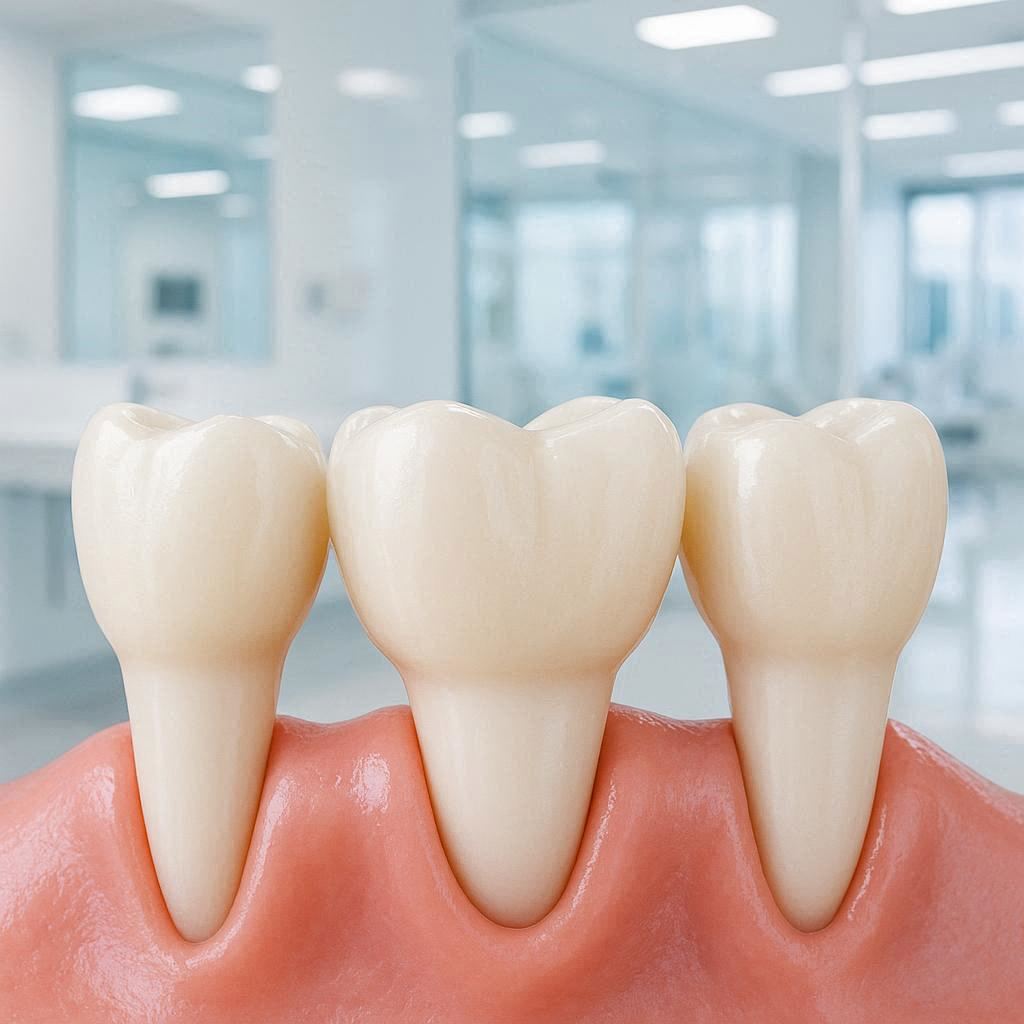
To understand “no screw” implants, you first need to separate the implant into two parts.
- The Implant Fixture (The Root): This is the screw-like post made of titanium or zirconia. It goes into your jawbone. Over 95% of all dental implants use threads (screws) to lock into the bone. Without those threads, the implant would not stay stable during healing.
- The Abutment: This is a small connector piece that sits on top of the implant fixture.
- The Crown (The Tooth): This is the visible white part. This is where the “no screw” magic happens.
So, when dentists and patients talk about dental implants with no screws, they are usually referring to the crown and abutment connection. The implant root remains screwed into the bone for safety and stability.
What Are Dental Implants With No Screws?
A screwless dental implant restoration means that the artificial tooth attaches to the implant abutment without using a small screw through the biting surface of the crown. Instead of a screw hole, you get a solid, smooth surface.
There are two main types of screwless attachments:
- Cement-Retained Implants: The crown is glued (cemented) onto the abutment.
- Attachment-Retained Implants (Overdentures): A removable denture snaps onto locators or magnets on top of the implants.
Neither of these methods requires you to have a visible screw hole in your new tooth.
Why Do People Want Screwless Implants?
Patients look for screwless options for three main reasons:
- Aesthetics: A screw hole on the chewing surface of a front tooth can look unnatural. It requires filling with a white material that may stain over time. No screw means a perfectly solid porcelain surface.
- Comfort: Some patients feel the screw hole traps food or bacteria. A smooth, solid crown feels cleaner to the tongue.
- Bite Issues: Screws on back teeth (molars) can sometimes loosen from heavy chewing forces. Cemented crowns, in theory, distribute force more evenly.
However, screwless does not automatically mean better. Each method has very specific strengths and weaknesses.
Cement-Retained Implants: The Most Common “No Screw” Option
If you get a single dental implant with no screw in the crown, you are almost certainly getting a cement-retained implant.
How It Works
The dentist places the implant fixture (with threads) into your bone. After 3 to 6 months of healing, they uncover the implant and place an abutment. This abutment has a smooth, prepared shape (like a small tooth stump). Then, the dental lab creates a hollow crown that fits perfectly over that abutment. Finally, the dentist fills the hollow crown with dental cement and slides it onto the abutment. The cement hardens, and the crown is stuck firmly in place.
The Pros of Cement-Retained (Screwless) Crowns
| Feature | Benefit |
|---|---|
| No Screw Hole | Superior aesthetics. No white filling to wear out or stain on the biting surface. |
| Simpler Lab Work | The lab does not need to create a precise screw channel, which can reduce manufacturing errors. |
| Passive Fit | Cement can fill small gaps between the crown and abutment. This makes the crown fit more passively, putting less stress on the implant screw below. |
| Better Occlusion (Bite) | You can shape the biting surface of a cemented crown naturally because there is no screw hole to work around. |
The Cons of Cement-Retained (Screwless) Crowns
| Challenge | Explanation |
|---|---|
| Residual Cement | This is the biggest problem. Excess cement can squeeze out from under the crown and get trapped in the gum tissue. This can cause peri-implantitis (gum and bone inflammation around the implant). |
| Difficult to Remove | If the crown breaks or needs repair, the dentist cannot simply unscrew it. They often have to drill or cut the crown off, which can damage the abutment underneath. |
| No Retrievability | With a screw-retained crown, a dentist can remove the crown easily for cleaning or repair. Cemented crowns are permanent until destroyed. |
Important Note for Readers: Many implant experts now prefer screw-retained crowns for back teeth (molars) because they are easier to maintain. Cement-retained crowns are still very common, but always ask your dentist how they plan to manage excess cement.
Attachment-Retained Implants: Screwless for Dentures
If you are missing all your teeth in one arch (upper or lower), you might consider implant-supported overdentures. These are often completely screwless for the patient.
Instead of screwing the denture into the implants each morning, the denture snaps onto small attachments.
Types of Screwless Attachments for Dentures
- Locator Attachments: These are the most popular today. A metal housing with a nylon insert sits inside the denture. It snaps onto a male part attached to the implant. The patient presses the denture down, hears a “click,” and it is secure. No screws involved.
- Magnetic Attachments: Small magnets are placed on top of the implants, and corresponding magnets are embedded in the denture. The denture literally sticks to the implants. This is very gentle and easy to clean, but magnets lose strength over time (usually 3 to 5 years).
- Ball Attachments (Stud Attachments): A metal ball sits on the implant, and a rubber O-ring inside the denture snaps over the ball. Very reliable but the O-rings need yearly replacement.
Comparison of Screwless Overdenture Attachments
| Attachment Type | Retention Strength | Maintenance Frequency | Best For |
|---|---|---|---|
| Locator | Moderate to High | Replace nylon insert every 6-12 months | Most patients (gold standard) |
| Magnetic | Low to Moderate | Replace magnets every 3-5 years | Elderly with low hand strength |
| Ball (O-ring) | High | Replace O-rings every 6-12 months | Patients with limited space between jaws |
These are truly dental implants with no screws for the removable part. The implants themselves still have internal screws to hold the attachments, but the patient never touches or sees them.
Is There Such a Thing as a Completely Screwless Implant?
Let us be honest. A completely screwless implant fixture (the part in the bone) exists, but it is rare and not recommended for most people.
- Press-Fit Implants: These were popular in the 1980s. They had smooth surfaces and were hammered into the bone. They failed at high rates because bone needs threads or a rough surface to grip.
- Zirconia One-Piece Implants: Some companies make one-piece zirconia implants that have no internal screws at all. The implant and abutment are one solid piece. You then cement the crown on top. While these exist, they do not allow for adjustments. If the abutment angle is wrong, you must remove the entire implant.
For the average reader, assume that the root of your implant will have screw threads. That is not a bad thing. Threads are proven technology with a 95% to 98% success rate over 10+ years.
Cement-Retained vs. Screw-Retained: Which Is Better?
This is the great debate in modern dentistry. To help you decide, here is a detailed comparison table.
| Feature | Cement-Retained (No visible screw) | Screw-Retained (Has a screw hole) |
|---|---|---|
| Aesthetics | Excellent. No hole to fill. | Good. Requires a filling over the screw hole. |
| Retrievability | Poor. Must destroy crown to remove. | Excellent. Unscrew, repair, replace. |
| Risk of Biologic Issues | Moderate (residual cement risk). | Low (no cement used). |
| Cost | Similar. Lab fees slightly lower. | Similar. Requires specialized screw channel tools. |
| Repair Ease | Difficult. Often needs new crown. | Easy. Just tighten or replace screw. |
| Biting Forces | Very good. No weak point from a screw hole. | Very good. Screw can loosen over time (rare). |
What Do Most Dentists Recommend Today?
According to recent clinical surveys, for single crowns:
- Front teeth (anterior): Many dentists still prefer cement-retained (screwless) because aesthetics are critical.
- Back teeth (posterior): The trend is shifting toward screw-retained because retrievability is more important than hiding a small screw hole on a back tooth no one sees.
Dr. Sarah Jennings, a prosthodontist with 15 years of experience, notes:
“I explain it to my patients like this: A cement-retained crown is like gluing a bookshelf to the wall. It looks perfect, but if a pipe bursts behind it, you have to destroy the shelf to fix the pipe. A screw-retained crown is like hanging that bookshelf on a cleat system. You see a small rail, but you can take the whole shelf down in 30 seconds for maintenance.”
Step-by-Step Procedure for a Screwless Cement-Retained Implant
If you decide to move forward with a screwless (cement-retained) implant, here is what your journey will look like.
Step 1: Consultation and Planning
Your dentist takes a CBCT (3D X-ray) to measure your bone density and locate nerves. They confirm you have enough bone height and width.
Step 2: Implant Placement (Surgical Phase)
The dentist numbs your jaw. They make a small incision in your gum. They drill a precise hole and screw the titanium implant fixture into your bone. The top of the implant is either at or slightly below the gum line. A healing cap is placed. You wait 3 to 6 months for osseointegration (bone growing onto the screw threads).
Step 3: Abutment Placement
After healing, the dentist removes the healing cap and places a stock or custom abutment. This is the metal or zirconia post that will hold the crown. The abutment is screwed into the implant with a small, internal screw (you never see this screw). The torque wrench tightens it to 35 Ncm.
Step 4: Impression Taking
The dentist takes a digital or physical impression of the abutment. They send this to a lab.
Step 5: Crown Fabrication
The lab makes a solid crown with a hollow inside that perfectly matches the abutment shape. No screw channel is drilled.
Step 6: Cementation (The Final “No Screw” Step)
The dentist tries the crown on your abutment. They check the bite and the gum fit. Then, they dry the abutment, fill the crown with a special implant cement (often eugenol-free or temporary cement), and slide it into place. Excess cement is carefully scraped away. They use floss and X-rays to ensure no cement remains under your gums.
You now have a dental implant with no screw visible in your crown.
Cost Analysis: Are Screwless Implants More Expensive?
Pricing depends on your location and dentist, but here is a realistic breakdown for the United States (private pay, no insurance).
| Procedure | Screw-Retained Crown | Cement-Retained (Screwless) Crown |
|---|---|---|
| Implant Fixture + Abutment | $1,500 – $2,000 | $1,500 – $2,000 |
| Crown (Lab fee) | $500 – $800 | $500 – $800 |
| Clinical time (insertion) | 30 minutes | 45 minutes (cement cleanup takes longer) |
| Total per tooth | $2,500 – $3,500 | $2,500 – $3,500 |
Conclusion on cost: They cost roughly the same. The difference is not in price but in maintenance and repair philosophy. Do not let a dentist charge you a premium for “screwless technology.” It is not newer or more advanced; it is simply different.
Who Is a Good Candidate for Screwless Implants?
You are a good candidate for a cement-retained (no visible screw) implant if:
- You are replacing a front tooth (incisor or canine) where a screw hole would be visible when you smile.
- You have healthy, thick gum tissue that can resist cement leakage.
- You have excellent oral hygiene and will attend regular cleanings so the dentist can check for excess cement.
- You do not grind or clench your teeth severely (bruxism). Grinding can break cemented crowns more easily than screw-retained ones.
You should avoid screwless cemented crowns if:
- You have a history of peri-implantitis or gum disease.
- You are replacing a lower molar with very heavy bite forces.
- You want the ability to have your crown removed easily for future repairs.
- You are a smoker (smoking increases the risk of cement-related inflammation).
Maintenance and Longevity of Screwless Implant Crowns
How long will your screwless crown last? With proper care, a cemented crown on a healthy implant can last 15 to 20 years or more.
Daily Care Routine
- Brush twice a day with a soft nylon brush. Pay special attention to the gum line where the crown meets the gum.
- Floss daily using a super floss or a water flosser. Thread the floss under the crown’s contact point. Do not snap the floss down hard, as you could pop off a loosely cemented crown.
- Use a rubber tip stimulator to massage the gum around the implant crown.
Professional Maintenance (Every 6 Months)
Your dentist will:
- Take a periapical X-ray once per year to check the bone level around the implant threads.
- Probe gently around the crown to check for bleeding (a sign of excess cement or inflammation).
- Check the bite. If the crown is hitting too hard, they will adjust it. A heavy bite can loosen the cement bond.
Signs Your Screwless Crown Has a Problem
Watch for these red flags:
- The crown feels mobile or wiggly (the cement has failed).
- You taste metal or salt (possible cement leakage or screw loosening of the abutment underneath).
- Your gum around the crown looks red, swollen, or bleeds easily when brushing.
- Food gets stuck under the crown (not between teeth).
If you notice any of these, see your dentist immediately. Do not wait. A loose cemented crown can trap bacteria and destroy bone faster than a screw-retained crown.
Real Patient Scenarios: Which Screwless Option Fits You?
Scenario 1: Missing Upper Lateral Incisor (Front Tooth)
- Problem: High smile line. A screw hole would be visible.
- Solution: Cement-retained zirconia crown on a titanium implant. No screw hole. Beautiful, translucent result.
- Verdict: Excellent choice.
Scenario 2: Missing Lower First Molar (Back Tooth)
- Problem: Heavy chewing forces. Patient grinds teeth at night.
- Solution: Screw-retained crown (has a screw hole, but it is on the biting surface hidden by food). Reason: If the crown cracks from grinding, the dentist can unscrew it and repair it without destroying it.
- Verdict: Screwless is not recommended here.
Scenario 3: Full Upper Denture That Floats and Hurts
- Problem: Four implants placed. Patient wants to remove denture for cleaning.
- Solution: Locator attachments on the four implants. The denture snaps on and off. No screws for the patient.
- Verdict: Ideal screwless solution for full arch replacement.
Myths and Misconceptions About Screwless Implants
Let us correct some false information circulating online.
Myth 1: “Screwless implants mean no metal in my jaw.”
Truth: False. The implant fixture (root) is almost always titanium with threads. Only the crown attachment lacks a screw. If you want metal-free, ask for zirconia implants, but those still have threads (screws).
Myth 2: “Cemented crowns never come loose.”
Truth: False. Dental cement can dissolve or crack over 10 to 15 years. It is not permanent. It is just very strong.
Myth 3: “Dentists prefer screwless because they are easier.”
Truth: False. Many experienced implant dentists actually prefer screw-retained because they are easier to fix later. Cemented crowns are more stressful to repair.
Myth 4: “You can get a screwless implant in one day.”
Truth: Partially true. You can get an immediate temporary crown cemented on the same day as implant surgery. But the final, permanent screwless crown still requires a 3 to 6 month healing period.
The Future of Screwless Implant Technology
Researchers are actively working on new attachment systems that combine the best of both worlds: the aesthetics of screwless with the retrievability of screw-retained.
- Cementless, Screwless Locking Tapers: Some implant systems (like Ankylos or Bicon) use a cold-welded taper. The crown is tapped onto the abutment with no cement and no screw. The friction holds it. These exist today but require very precise laboratory work.
- Magnetic Implant Crowns: Experimental magnetic crowns that can be pulled off by the patient for cleaning and then clicked back on. The challenge is creating a magnet strong enough for chewing (chewing forces can be 200+ pounds per square inch).
- Resin-Bonded Screwless: Similar to how orthodontic brackets stick to teeth, future crowns may bond directly to a special abutment coating.
For now, the cement-retained crown remains the most practical and proven “no visible screw” option for single teeth.
Summary Comparison Table: All Screwless Options
| Feature | Cement-Retained Crown | Locator Overdenture | Magnetic Overdenture |
|---|---|---|---|
| Visible Screws? | No | No | No |
| Removable by patient? | No (permanent) | Yes (snap on/off) | Yes (snap on/off) |
| Best for | Single missing tooth | Multiple missing teeth / full arch | Elderly or low dexterity |
| Repair difficulty | High (drill off crown) | Low (replace nylon insert) | Moderate (replace magnet) |
| Average lifespan | 15-20 years | Inserts last 6-12 months; implants last decades | Magnets last 3-5 years |
| Cost range (per arch) | $3,000 – $5,000 (single tooth) | $15,000 – $25,000 (full arch, 4 implants) | $12,000 – $20,000 (full arch) |
Frequently Asked Questions (FAQ)
1. Can I ask my dentist for a dental implant with no screws at all, even in the bone?
No reputable dentist will place a completely screwless (smooth) implant fixture in your bone. Threads are medically necessary for initial stability and long-term success. Without threads, the implant will fail to integrate.
2. Do screwless implant crowns cost more to repair?
Yes. If a cemented screwless crown breaks, the dentist usually has to cut it off with a high-speed drill. This costs $200 to $400 in additional chair time, plus the cost of a new crown ($1,500+). A screw-retained crown repair often just requires a new screw ($50) and 15 minutes.
3. How do you clean under a screwless implant crown?
You cannot remove it. You clean the gum line around it. If food gets trapped under the crown, that means the cement has failed, and you need to see a dentist to recement or replace the crown.
4. Are there any “no screw” implants for same-day teeth (Teeth-in-a-Day)?
Yes. The temporary bridge placed on the same day as surgery is often cemented or temporarily screwed. But the final bridge, after healing, can be either screw-retained or cement-retained. Discuss your preference with your surgeon.
5. What happens if the abutment screw (hidden inside) loosens on my screwless crown?
This is a hidden problem. You might feel the crown wiggle slightly, or you might taste metal. Since the crown is cemented on top, the dentist must cut the crown off to access and retighten the abutment screw. This is the single biggest disadvantage of screwless cemented crowns.
6. Can I switch from a screw-retained crown to a screwless crown later?
Yes, but you need a new crown and a new abutment. The implant fixture stays the same. Your dentist can remove the screw-retained crown, unscrew the old abutment, place a cementable abutment, and make a new cemented crown.
Additional Resource
For a deeper understanding of implant complications and how to avoid them, we recommend visiting the American Academy of Implant Dentistry (AAID) patient education library.
👉 Click here to access the AAID’s official guide to implant maintenance and materials
This resource provides unbiased, research-backed answers and helps you find a qualified implant dentist in your area.
Final Conclusion
Dental implants with no visible screws are real, effective, and primarily achieved through cement-retained crowns for single teeth or locator attachments for dentures. While they offer superior aesthetics and a smooth biting surface, they come with the trade-off of difficult repairs and the risk of residual cement inflammation. Always discuss retrievability with your dentist, because the best implant crown is one that looks good and can be maintained over a lifetime.