Dental Office Storage Ideas: Smart Solutions to Maximize Space and Efficiency
Every dental practice runs out of storage eventually. Supplies pile up in hallways. Cabinets overflow. Staff waste time searching for items that should be easy to find. The problem is rarely a lack of space. It is usually a lack of smart storage systems. This guide shares practical dental office storage ideas that help you organize supplies, protect equipment, and keep your workspace calm and efficient.
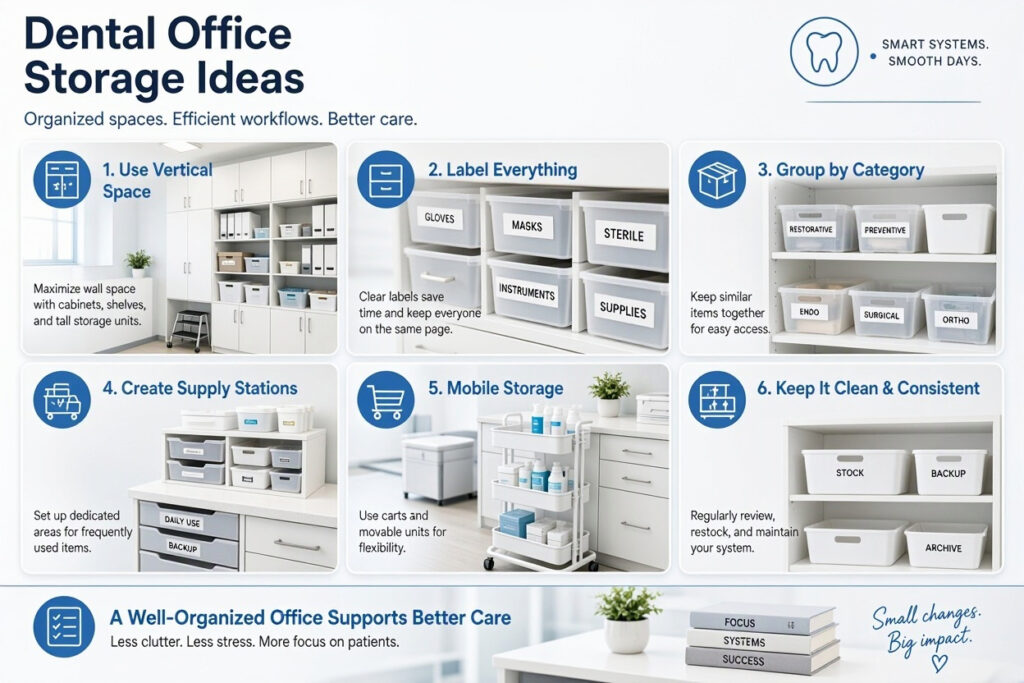
Why Storage Deserves Serious Attention
Storage affects every part of your practice. When supplies are organized, staff move faster. When cabinets are labeled, new hires learn quickly. When inventory is visible, you avoid overordering and expired products.
Storage also affects patient perception. A cluttered hallway or overflowing supply closet signals disorganization. Patients notice. Clean, organized storage tells them your practice is well managed.
“Storage is not glamorous, but it is the backbone of a well-run practice. Get it right, and everything else gets easier.” — Dental Office Efficiency Consultant
Key Benefits of Smart Storage
- Time savings: Staff find supplies in seconds, not minutes.
- Cost control: Less overordering and fewer expired items.
- Cleaner spaces: Clutter disappears from patient areas.
- Better compliance: Organized records and supplies support inspections.
- Team satisfaction: A tidy workplace reduces daily frustration.
Assess Before You Buy
Do not buy a single bin until you know what you have. A quick assessment prevents wasted money and duplicate purchases.
The Assessment Process
- Empty one area at a time. Start with a supply closet or a single cabinet.
- Group similar items together. Gloves, masks, disposables, instruments.
- Count what you have. Note quantities and expiration dates.
- Discard expired or damaged items. Follow proper disposal rules.
- Identify duplicates. Consolidate open boxes and partial packs.
- Measure your space. Note shelf heights, depths, and door widths.
Important Note: Follow your practice’s infection control policy when handling expired clinical supplies. Some items require special disposal.
Storage Solutions by Area
Different areas need different approaches. Use this room-by-room guide to plan your storage.
Front Office and Reception
The front desk collects paper, forms, and office supplies. Without a system, it becomes a pile zone.
Storage Ideas:
- Desktop organizers: Small trays for pens, clips, and sticky notes.
- Under-desk drawers: For personal items and frequently used supplies.
- Locking cabinets: For patient records and sensitive documents.
- File organizers: Vertical holders for forms and brochures.
- Cable trays: Hide wires and keep the desk clean.
Treatment Rooms
Treatment rooms need supplies within arm’s reach. Storage should support speed and infection control.
Storage Ideas:
- Drawer dividers: Keep small items separated and visible.
- Wall-mounted racks: For frequently used instruments.
- Labeled bins: For disposables and barriers.
- Rolling carts: For mobile supply stations in shared rooms.
- Cabinet organizers: For backup supplies stored out of sight.
Sterilization Area
The sterilization area needs clear separation between dirty and clean items.
Storage Ideas:
- Color-coded trays: One color per operatory or procedure type.
- Labeled shelves: Separate zones for clean and dirty instruments.
- Pouch organizers: Store sterilization pouches by size.
- Log clipboards: Mount on the wall for easy access.
- Closed cabinets: Keep clean supplies protected from contamination.
Supply Room and Closet
The supply room is where bulk items live. It needs a system that anyone can follow.
Storage Ideas:
- Shelving units: Adjustable shelves to fit different item sizes.
- Clear bins: See contents without opening.
- Shelf labels: Category names in large, readable text.
- FIFO rotation: New supplies go behind old ones.
- Par level signs: Note minimum stock levels on each shelf.
Break Room and Staff Areas
Staff areas need storage too, but the focus is comfort and personal space.
Storage Ideas:
- Lockers: For personal belongings and uniforms.
- Labeled fridge shelves: One shelf per staff member or team.
- Cabinet organizers: For shared snacks and supplies.
- Wall hooks: For coats and bags.
- Storage ottomans: Seating plus hidden storage.
Comparison Table: Storage Products at a Glance
| Product | Best For | Cost | Notes |
|---|---|---|---|
| Drawer dividers | Small supplies | Low | Adjustable options work best |
| Clear storage bins | Bulk items | Low | Visible contents save time |
| Label maker | All areas | Low | Essential for consistency |
| Wall-mounted racks | Instruments, tools | Medium | Saves counter space |
| Rolling carts | Mobile supply stations | Medium | Good for shared rooms |
| Adjustable shelving | Supply rooms | Medium | Flexible as needs change |
| Locking cabinets | Records, controlled items | Medium to High | Required for some supplies |
| Vertical file organizers | Paper and forms | Low | Keeps desks clear |
Tip: Buy bins after you assess your space, not before. Measuring first prevents returns and wasted money.
Labeling Systems That Work
Labels are the difference between an organized closet and a mystery box. A consistent labeling system makes storage usable for everyone.
Labeling Best Practices
- Use large, clear text: Readable from a few feet away.
- Include category and item name: “Gloves—Nitrile, Medium.”
- Use color coding: Match label colors to categories or rooms.
- Label shelves, not just bins: Shows where items belong.
- Include par levels: “Reorder at 2 boxes.”
- Update labels when contents change: Outdated labels cause confusion.
Color-Coding Ideas
| Color | Category |
|---|---|
| Blue | Gloves and PPE |
| Green | Disposables and barriers |
| Yellow | Sterilization supplies |
| Red | Biohazard and sharps |
| White | Paper and office supplies |
| Gray | Equipment and tools |
Tip: Keep a label maker in the office and assign one person to manage labels. Consistency matters more than perfection.
Inventory Management Systems
Storage and inventory go hand in hand. You cannot store what you do not track.
Inventory Methods Compared
| Method | Effort | Best For | Notes |
|---|---|---|---|
| Paper checklist | Low | Small practices | Simple but easy to forget |
| Spreadsheet | Medium | Growing practices | Good for tracking par levels |
| Inventory software | Medium to High | Larger practices | Automates reordering |
| Kanban cards | Low | Visual teams | Cards move as stock depletes |
| Barcode scanning | High | High-volume practices | Fast and accurate |
Setting Par Levels
Par level is the minimum quantity you should always have on hand. When stock hits par, reorder immediately.
How to set par levels:
- Track usage for one month.
- Note the highest weekly usage.
- Set par at two weeks of typical usage.
- Adjust seasonally if needed.
Important Note: Review par levels quarterly. Usage changes with patient volume and new services.
Maximizing Small Spaces
Not every practice has a large supply room. Small spaces require creative solutions.
Small Space Storage Ideas
- Use vertical space: Shelves up to the ceiling for light items.
- Hang items on walls: Racks, hooks, and pegboards.
- Use door backs: Over-door organizers for small supplies.
- Choose stackable bins: Maximize shelf height.
- Install pull-out drawers: Access deep cabinets easily.
- Use under-shelf baskets: Add a second layer to shelves.
- Store seasonal items high: Holiday decor and occasional supplies.
Digital Storage and Paper Reduction
Paper takes up space. Going digital frees room and improves organization.
Paper Reduction Ideas
- Scan patient forms: Use electronic intake forms.
- Store records digitally: Use cloud-based practice management software.
- Keep only required paper: Follow retention rules for physical documents.
- Use digital checklists: Replace paper logs where allowed.
- Shred regularly: Prevent paper buildup.
Important Note: Follow HIPAA rules for digital storage. Use encrypted systems and secure passwords.
Maintenance and Accountability
Storage systems fail without maintenance. Build simple habits that keep things organized.
Daily Habits
- Return items to their homes after use.
- Restock treatment rooms at end of day.
- Clear the front desk before leaving.
Weekly Tasks
- Check par levels and reorder as needed.
- Wipe shelves and bins.
- Straighten supply room shelves.
Monthly Tasks
- Deep clean one storage area.
- Review expiration dates.
- Update labels as needed.
Assigning Responsibility
- Office manager: Oversees systems and orders supplies.
- Dental assistants: Maintain treatment room storage.
- Sterilization tech: Manages sterilization area storage.
- Front desk: Keeps reception storage organized.
Tip: Rotate responsibilities quarterly to prevent burnout and build cross-training.
Budgeting for Storage Improvements
Storage upgrades deliver strong returns for modest investment.
| Item | Typical Cost | Priority |
|---|---|---|
| Label maker and labels | $30 – $80 | High |
| Drawer dividers | $20 – $60 | High |
| Clear storage bins | $50 – $150 | High |
| Adjustable shelving | $100 – $500 | Medium |
| Wall-mounted racks | $50 – $200 | Medium |
| Rolling carts | $100 – $300 | Medium |
| Locking cabinets | $200 – $800 | Medium to High |
Tip: Start with labeling and dividers. They cost little and make an immediate difference across the whole office.
Common Storage Mistakes to Avoid
- Buying bins before sorting: You end up storing things you do not need.
- No labels: Unlabeled storage becomes a guessing game.
- Ignoring par levels: You run out of critical supplies at the worst time.
- Storing clean and dirty items together: A serious infection control risk.
- Overfilling shelves: Items fall, break, or get lost.
- No maintenance routine: Systems collapse without daily habits.
Frequently Asked Questions
How do I organize supplies in a small dental office?
Use vertical space, wall-mounted racks, stackable bins, and over-door organizers. Label everything and set par levels to avoid overstocking.
What is the best way to store dental instruments?
Use color-coded trays and labeled shelves. Keep clean and dirty instruments physically separated. Follow your sterilization protocol for all storage.
How often should I review my storage system?
Do daily resets, weekly par level checks, and monthly deep cleans of one area. Review the full system quarterly.
Should I use a paper or digital inventory system?
Digital systems are better for growing practices. Spreadsheets work well for small offices. Choose a method your team will actually use.
How do I keep staff from cluttering storage areas?
Label everything, assign clear responsibilities, and build daily habits. Recognize good organization publicly.
Additional Resource
For storage and organization products for healthcare settings, visit the National Association of Professional Organizers (NAPO) for professional organizing resources.
Conclusion
Dental office storage ideas work best when they become systems. Assess your space first, then choose the right bins, shelves, and labels. Set par levels, assign responsibilities, and maintain daily habits. With smart storage, your practice becomes faster, cleaner, and more professional.