Dental Schools That Do Free Dental Implants: The Realistic Guide for 2026
Let’s be honest for a moment. Dental implants are expensive. If you have lost a tooth or need a full-mouth reconstruction, the price tag can feel like a punch in the gut. It is natural to start searching for “dental schools that do free dental implants.”
You want a solution. You want your smile back. But you also need to keep your bank account safe.
Here is the hard truth you need to hear right away: Truly free dental implants are extremely rare. Most dental schools cannot afford to give away expensive materials (like titanium posts and porcelain crowns) for free. However, do not close this page yet.
Why? Because dental schools offer the next best thing: high-quality implants at 50% to 70% less than private clinics. In some very specific cases, you might find clinical trials or grants that cover the full cost.
This guide will walk you through everything. We will look at the reality of free care, the best low-cost schools, waiting lists, grants, and how to protect yourself from scams.
The Honest Reality: Why “Free” is Difficult to Find
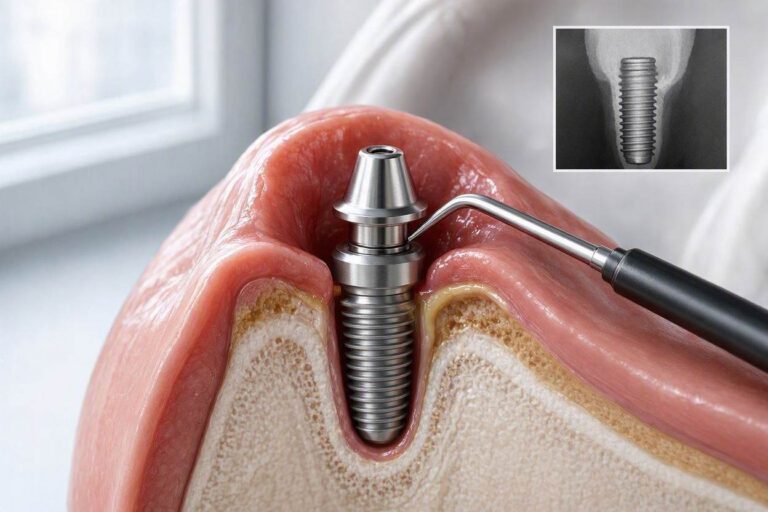
Before we list any schools, we need to understand the economics of a dental implant. An implant is not just one item. It is three parts:
- The implant post (screw that goes into the jawbone – made of titanium).
- The abutment (connector piece).
- The crown (the fake tooth on top).
The materials alone cost the school money. Additionally, you need X-rays, CT scans (3D imaging), and sometimes bone grafts.
Why don’t schools do it for free?
Dental schools are teaching hospitals. They charge reduced fees to cover the cost of materials, sterilization, and specialized faculty supervision. If they gave everything away for free, they would close.
However, there are two specific scenarios where “free” might happen:
- Clinical Trials: A university researching a new type of implant material or technique needs volunteers. The company pays for the implant.
- Philanthropic Grants: Very rare, local non-profits sometimes partner with a school to cover costs for low-income veterans or cancer survivors.
Important Note: If you find a website promising “guaranteed free dental implants at all dental schools,” it is likely a scam. Legitimate schools are transparent about their fees.
What Dental Schools Actually Offer (Low-Cost vs. Free)
Let us clarify the terminology. When you search for “dental schools that do free dental implants,” search engines actually want to show you “low-cost implant programs.”
Here is the difference in a simple table.
| Service Type | Cost to You | Waiting List | Who Qualifies |
|---|---|---|---|
| Philanthropic Free Care | $0 | 1–3+ years | Extreme low-income, disabled, veterans, specific cancer patients |
| Clinical Trials | $0 (often paid) | Seasonal | Healthy adults with specific missing teeth patterns |
| University Implant Clinic | 40-60% less than private | 6–12 months | General public |
| Post-Graduate Program | 50-70% less than private | 3–6 months | General public |
As you can see, your best bet is usually the Post-Graduate Program (where dentists who already graduated are learning to be specialists). These are safer and faster than student clinics.
List of Top Dental Schools with Implant Programs (Low-Cost)
While none advertise “free” for everyone, these institutions have the most aggressive low-cost and occasional grant-based programs in the United States.
1. Loma Linda University School of Dentistry (California)
Loma Linda is famous for its charitable mission. They have a dedicated “Dental Implant Program” for patients willing to be treated by residents (experienced dentists training to be implant surgeons).
- Cost: Approximately 50% less than private practice.
- Free possibility: They partner with local charities for veterans. You need to ask the admissions office about the “Veterans Dental Implant Grant.”
- Wait time: 4 to 8 months.
2. University of Texas Health Science Center at San Antonio (UT Health)
This school has one of the oldest implant dentistry programs in the world.
- Cost: Screening is cheap (50).Fullimplantplacementcostsaround1,500 (post + crown), compared to $5,000+ privately.
- Free possibility: They run occasional clinical trials for new implant coatings. Check their “Clinical Trials” webpage every month.
- Best for: Single missing tooth.
3. University of Michigan School of Dentistry (Ann Arbor)
A top-tier research facility.
- Cost: They offer a “Patient Care” clinic where graduate prosthodontists (crown and bridge experts) place implants.
- Free possibility: They participate in the “Dental Implant Clinical Research Group.” If you qualify for a study comparing two types of implants, placement is free. You pay only for the crown.
- Tip: Apply for their “Patient Financial Assistance Program” separately to reduce the crown cost.
4. New York University (NYU) College of Dentistry
NYU sees thousands of patients. Their private implant cost is high, but their Post-Graduate Prosthodontics clinic is very affordable.
- Cost: Full mouth implants (All-on-4) can cost 15,000herevs.40,000 privately.
- Free possibility: Very rare. Only for specific research studies on “immediate load implants.”
- Wait time: 1 year for a free screening appointment.
5. University of Florida College of Dentistry (Gainesville)
UF has a massive patient pool. They are known for transparency.
- Cost: They publish their fee schedule online. A single implant with crown is roughly $2,800.
- Free possibility: They have a “Faculty Practice” that sometimes offers pro-bono work for domestic abuse survivors (facial trauma).
- Reality check: You will likely pay for the implant, but you save on the X-rays and cleanings.
6. University of Colorado School of Dental Medicine (Aurora)
This school operates the “Oral Radiology and Implant Clinic.”
- Cost: They charge only for materials + 20% supervision fee.
- Free possibility: They occasionally offer “Implant Day” events where students need specific bone density cases. Call in March and September.
7. University of Washington School of Dentistry (Seattle)
- Cost: The Graduate Prosthodontics clinic is very affordable.
- Free possibility: If you are a Native American or Alaska Native, contact their “Tribal Dental Care” liaison. Federal grants sometimes cover implants fully for tribal members.
How to Find “Free” Through Clinical Trials (The Best Secret)
If you are fixated on the word free, you need to become a volunteer for a research study.
Universities are constantly testing:
- New implant designs (shorter, wider, different threads).
- New bone grafting materials (synthetic vs. natural).
- Faster healing techniques.
How to find these trials:
- Go to ClinicalTrials.gov (a US government database).
- In the search bar, type: “Dental Implant” AND “Recruiting.”
- Filter by your state.
- Look for studies that say “Device: Dental Implant” and “Intervention Model: Single Group Assignment.”
What to expect:
- You will be screened heavily (blood tests, CT scans).
- You may need to be “systemically healthy” (no diabetes, no smoking).
- You cannot choose the tooth position (they need tooth #19, for example).
- The benefit: The implant and surgery are 100% free. Sometimes they pay you $200 for your time.
“I received two free implants through a clinical trial at Ohio State University in 2024. I had to go for 8 check-ups in one year, but I saved $12,000. It was worth every minute.” – Former trial participant (Reddit r/dentistry).
Realistic Alternatives: Grants and Non-Profits
You are not a candidate for a clinical trial? You do not live near a big university? Look for these specific organizations.
Dental Lifeline Network
This organization connects disabled, elderly, or medically fragile individuals with volunteer dentists.
- Does it cover implants? Rarely. Usually dentures. But for some facial trauma cases, yes.
- Application: You need a social worker or doctor to fill out the forms.
Donated Dental Services (DDS)
A program within each state. They handle complex cases.
- The catch: Many states do not cover implants because they are “cosmetic” (even though they are functional). You must prove you cannot wear dentures.
Veterans Affairs (VA) – The Caregiver Program
The VA generally does not pay for implants for standard tooth loss. However, if your tooth loss is service-connected (injury during active duty), the VA will pay 100% at a VA hospital dental clinic. Many VA hospitals have implant specialists.
State Grant Programs (Medicaid Waivers)
Medicaid (state insurance for low income) does not cover implants in 49 states. However, some states have “Waiver Programs” for adults with intellectual disabilities or severe mental illness. If eating with dentures is impossible, a waiver might pay for 2 implants to stabilize a lower denture. This is not a full smile makeover, but it works.
The Application Process: Step-by-Step
You have found a school. You want to get on the list. Here is exactly what to do to avoid getting lost in the system.
Step 1: The Initial Phone Call
Do not call and say “Do you do free implants?” They will say no and hang up. Instead, say:
“Hello, I am interested in being a patient for your Graduate Implant Residency program. I understand I will pay reduced fees. Can you tell me how to schedule a screening appointment?”
Step 2: The Screening Appointment (50–50–200)
You will pay for this. They will take a panoramic X-ray. The lead resident will look in your mouth. They will tell you:
- If you need bone grafts (extra cost).
- How many appointments (usually 6 to 12).
- The total estimated cost (written quote).
Step 3: The Waiting List
If you accept the quote, you go on a list. Schools work slowly. A student needs to be at the right skill level to place your implant.
- Fast track: If you need a “single anterior tooth” (front tooth), you get in faster. These are easier cases.
- Slow track: Full mouth reconstruction (all teeth missing). This takes 18 months of waiting.
Step 4: The Work Begins
Once you start, you are a “teaching patient.” Do not expect private practice speed. An implant that takes a private dentist 1 hour will take a student 3 hours (because the professor checks every step).
Important Warning: Scams to Avoid
Because “dental schools that do free dental implants” is a popular search term, scammers pay Google ads to pretend to be schools.
Red Flag #1: Upfront Payment for “Processing”
A real school will never ask you to pay a $500 “registration fee” by Western Union or Bitcoin. Real schools have a .edu website and a physical clinic address.
Red Flag #2: “Free Implants if you bring 5 friends”
This is a pyramid scheme. Dental treatment does not work like a referral club.
Red Flag #3: Mobile Clinics in Parking Lots
Real implant surgery requires a sterile operating room. You cannot get an implant in a van.
Red Flag #4: Promises of “Same Day Free Full Mouth”
Even the best surgeons in the world take 2–3 appointments for full-mouth implants. If it sounds too good to be true, it is a lie.
Always verify the school on the American Dental Association (ADA) website. Go to “Find a Dental School.”
The Hidden Costs Nobody Talks About
You might get the implant post for free, but you will almost certainly pay for these four things:
| Hidden Cost | Average Price (at a school) | Can it be waived? |
|---|---|---|
| CBCT Scan (3D X-ray) | 300−600 | No. They cannot do surgery without it. |
| Bone Graft (if you lack bone) | 400−1,200 per site | Rarely. Only if a student needs the practice. |
| Temporary Tooth (while healing) | 150−300 | Yes. You can go without it (gap). |
| Final Crown (the white part) | 800−1,500 | No. This is ceramic. It is expensive to make. |
Advice: Save up for the crown. Even if you find a “free post,” the tooth on top costs money.
Comparison: Dental School vs. Private Clinic vs. Dental Tourism
To help you make the best decision, look at this realistic price comparison for one single dental implant (post, abutment, and crown).
| Option | Average Price | Time to Completion | Risk Level | Best For |
|---|---|---|---|---|
| Private Clinic (USA) | 4,500−6,000 | 3-4 months | Low | People with insurance or savings. |
| Dental School (USA) | 1,800−3,000 | 6-12 months | Low to Medium | Patients on a budget who are flexible. |
| Dental Tourism (Mexico/Turkey) | 800−1,500 | 2 weeks (compressed) | High (no follow-up) | People who can take a month off work. |
| Clinical Trial (USA) | $0 | 1-2 years | Very Low | Healthy people with missing front teeth. |
Our take: Dental schools offer the best balance of safety and savings. Dental tourism is cheaper, but if the implant fails, no US dentist wants to fix another dentist’s work. With a school, you are in the same city if something breaks.
State-by-State Quick Reference
You do not need to read a novel. Here are the best regional schools known for implant affordability.
- Northeast: University of Connecticut, Tufts (Boston), University of Pittsburgh.
- Southeast: University of Alabama at Birmingham, University of North Carolina, Nova Southeastern (Florida).
- Midwest: University of Illinois Chicago (UIC), University of Detroit Mercy, Indiana University.
- Southwest: Arizona School of Dentistry & Oral Health (Mesa), UNLV (Nevada).
- West: UCLA (Los Angeles – long wait list but cheap), University of the Pacific (San Francisco), OHSU (Oregon).
How to use this list: Google the school name + “Implant Patient Coordinator.” Email the coordinator directly. Do not use the general clinic number.
How to Get Free Dental Implants for Veterans
If you are a US military veteran, you have more options than the average person.
Option A: VA Dental Insurance Program (VADIP)
This is discounted insurance. It reduces private implant costs by 20-30%. Not free, but helpful.
Option B: The VA Hines Study (Illinois)
The VA works with Loyola University dental school. They run a continuous study on implants in veterans with PTSD (bruxism/teeth grinding). If you have PTSD and missing teeth, apply. The study covers everything.
Option C: Project Smile (Various Schools)
Schools like Loma Linda, University of Maryland, and VCU (Virginia) host “Veterans Implant Days” every November (around Veterans Day). They place 10-20 free implants for qualifying vets. You must bring your DD214 form and proof of income.
Action step: Call your local VA hospital. Ask for the Chief of Dental Service. Say: “Do you have a memorandum of understanding with any local dental school for implant training?” If yes, the VA pays the school directly.
What About Dentures? (The “Implant-Supported” Loophole)
Many people search for “free implants” when they actually need “implant-supported dentures.” This is a different procedure. It uses 2 or 4 implants to click a denture into place.
Why this matters for free care: Non-profits are much more likely to pay for 2 implants than for 6 or 8 implants.
- Two implants + lower denture: Cost at a school: ~$2,500. This stops the denture from moving when you eat.
- Four implants + fixed bridge: Cost at a school: ~$8,000. This looks and feels like real teeth.
Realistic free scenario: The Henry Schein Cares Foundation sometimes partners with schools to provide “implant overdenture” kits for free. The schools apply for the grant, then select patients. You do not apply directly. You ask the school: “Are you a recipient of the Henry Schein implant grant this year?”
Frequently Asked Questions (FAQ)
Q1: Can I get free dental implants from a dental school if I have no income?
A: Possibly, but only through a specific grant or clinical trial. Most schools operate on a “sliding scale” based on income, but the scale usually goes down to 20% of the cost, not zero. You will need to prove your income with tax returns or pay stubs.
Q2: How long do I have to wait for an appointment?
A: For a low-cost implant, expect a 6 to 18 month waiting period. For a truly free clinical trial, you might wait 2 years for a specific case to open up. Do not go to a school if you need a tooth replaced urgently (e.g., next month).
Q3: Are dental school implants safe?
A: Yes, they are very safe. Every step is checked by a licensed dentist who specializes in implants. However, the procedure takes 2 to 3 times longer than private practice because the student moves slowly. Failure rates are slightly higher than a specialist (5-8% vs 2-3%) because students are learning.
Q4: What is the cheapest dental school for implants in the USA?
A: Based on 2025-2026 fees, University of Texas (San Antonio) and University of Mississippi tend to have the lowest published fees. However, Loma Linda offers the most charity care programs.
Q5: Do dental schools do All-on-4 (full mouth) implants for free?
A: Almost never. All-on-4 requires 4 to 6 implants and a specialized milled bar. The materials cost over 3,000alone.Schoolswilldothisprocedureatadiscount(roughly12k-$15k), but you will not find it for free unless you are a famous case study.
Q6: Can I use my state insurance (Medicaid) at a dental school for implants?
A: No. Medicaid does not cover implants for adults in almost every state. The only exception is if the tooth loss is due to a congenital deformity (born missing the tooth) or cancer surgery. Routine tooth decay is not covered.
Q7: I am a smoker. Can I get free implants?
A: Unlikely. Clinical trials and grant programs strictly exclude smokers. Smoking reduces blood flow to the bone, which makes the implant fail 40% of the time. If you smoke, your priority should be quitting before applying.
Additional Resources
To help you continue your research without getting lost in bad information, here are three reliable links.
- American Dental Education Association (ADEA): “Find a Dental School”
- Use this to get the official .edu website and phone number for every accredited school in North America.
- Link: adea.org (Search “Dental Schools”)
- National Institute of Dental and Craniofacial Research (NIDCR): “Clinical Trials Search”
- The government’s official portal for free research studies, including implants.
- Link: nidcr.nih.gov (Search “Clinical Trials”)
- Dental Lifeline Network: “Apply for Care”
- The only national non-profit that occasionally funds implant components.
- Link: dentallifeline.org
Conclusion
Finding dental schools that do free dental implants is like finding a needle in a haystack—most require payment, but at 50-70% less than private clinics. Your real path to zero-cost treatment lies in clinical trials (search ClinicalTrials.gov) or specific veteran grants offered by schools like Loma Linda. Always prioritize safety over “free,” be prepared to wait, and avoid any website that asks for upfront fees to “process” your free implant application.