Do Dental Implant O Rings Size By Color?
Patients with implant-retained overdentures encounter various maintenance needs, including replacement of the small O-rings or locator inserts that provide retention. A common question among denture wearers with implant attachments is whether these components use a color-coding system to indicate size. Understanding how implant attachment systems work helps patients communicate effectively with their dental providers and manage their prostheses appropriately.
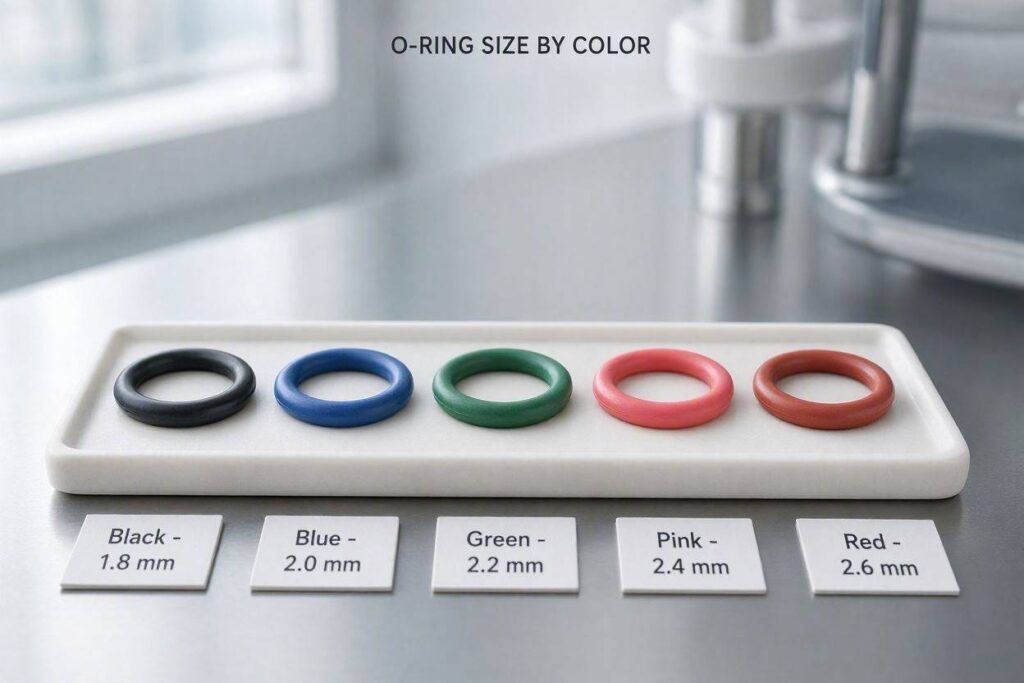
Dental implant O-rings and locator inserts do use color coding, but the colors primarily indicate retention strength (how firmly the denture snaps onto the implants) rather than physical size. Different manufacturers use different color systems, and the components are specific to each implant system. Patients should never attempt to select or replace O-rings themselves based on color alone. The appropriate component must be selected by a dental professional based on the specific implant system, attachment type, and the patient’s clinical needs.
Understanding Implant Attachment Systems
Implant-retained overdentures connect to implants through precision attachments. Understanding how these systems work clarifies the role of O-rings and locator inserts.
How Implant Overdenture Attachments Work
The attachment system consists of two parts. The male component attaches to the implant and protrudes from the gum tissue. The female component (containing the O-ring or locator insert) is embedded in the denture base.
When the patient seats the denture, the female component snaps over the male component. The elastic O-ring or locator insert grips the male abutment, providing retention that holds the denture securely in place during function. The patient can overcome this retention with deliberate force to remove the denture for cleaning.
Types of Attachment Systems
Several attachment systems are used in implant dentistry, each with its own color-coding convention.
Locator Attachments (Zest Anchors):
The most widely used attachment system for implant overdentures. Locator inserts fit into a metal housing in the denture. Color-coded inserts offer different retention strengths. The male abutment on the implant has a specific height corresponding to the tissue depth.
Ball Attachments (O-Rings):
A spherical ball-shaped abutment on the implant. A rubber O-ring in the denture housing grips the ball. O-rings are available in different materials and durometers (hardness) that affect retention and wear characteristics.
Bar Attachments:
A bar connects multiple implants. Clips or attachments in the denture grip the bar. Some bar systems incorporate locator-style inserts for additional retention.
ERA Attachments:
A different design using a flexible insert that grips a spherical abutment. Color coding indicates retention strength similar to locator systems.
Color Coding Systems by Manufacturer
The specific colors and what they indicate vary between manufacturers. Never assume that colors mean the same thing across different systems.
Zest Locator System
The Zest Locator system is the market leader, and its color coding is the most commonly encountered.
Locator Inserts (Standard Retention Range):
| Color | Retention Strength | Recommended For |
|---|---|---|
| Blue | Extra Light (1.5 lbs) | First-time users, very delicate tissue |
| Pink | Light (3 lbs) | Routine use, moderate retention needs |
| Clear | Medium (5 lbs) | Standard retention for most patients |
| Green | Strong (8+ lbs) | Experienced wearers, high retention demand |
Within each color, inserts are available in different angulation corrections and processing options. The color indicates the retention range, while other markings indicate additional features.
Replacement Interval:
Locator inserts wear over time and lose retention. Replacement is typically recommended every 6-12 months, though this varies based on patient factors including the number of insertion and removal cycles, oral habits, and cleaning methods. Patients notice when retention decreases and should schedule professional replacement.
Ball Attachment O-Rings
Ball attachment O-rings are simpler components but still use some color differentiation.
Common materials include black nitrile O-rings (standard), clear silicone O-rings (for patients with latex sensitivity), and various colored O-rings from different manufacturers indicating material composition or hardness.
The physical size of the O-ring (inner diameter, outer diameter, and thickness) is critical and measured in millimeters, not indicated by color. O-rings that appear similar may have different dimensions that affect fit and function.
Other Manufacturer Systems
Different implant companies have proprietary attachment systems with their own color conventions. Straumann, Nobel Biocare, Zimmer Biomet, and other manufacturers each have specific color coding for their attachment components.
A green insert from one manufacturer may indicate completely different retention strength than a green insert from another manufacturer. Cross-compatibility between systems should never be assumed.
Why Professional Selection Matters
Patients often ask whether they can purchase replacement O-rings or locator inserts online and replace them themselves. Several critical factors make professional selection and replacement essential.
Matching Components to the Specific Implant System
The male abutment on the implant is specific to the manufacturer and often to the particular implant system within that manufacturer’s product line. The female insert or O-ring must be precisely matched to that specific abutment.
Using an incorrect component may result in:
No retention (the denture will not stay in place). Excessive retention (the denture cannot be inserted or removed). Damage to the abutment or implant. Accelerated wear of components. Discomfort or tissue trauma. Compromised implant health from ill-fitting prosthesis.
Clinical Assessment of Retention Needs
The appropriate retention strength depends on several factors that require professional evaluation.
Number and Distribution of Implants:
More implants provide more total retention, so individual attachment strength can be lower. Fewer implants require higher individual retention.
Tissue Health and Comfort:
Delicate gum tissue benefits from lighter retention to minimize trauma during insertion and removal. Robust, healthy tissue can tolerate stronger retention.
Patient Dexterity:
Patients with limited hand strength or dexterity need lower retention to manage denture removal. Patients with good dexterity who desire maximum stability may choose stronger retention.
Prosthesis Design:
The fit, extension, and weight of the overdenture affect retention requirements. Heavier prostheses need more retention to resist dislodging forces.
Wear Assessment and Replacement Timing
The dental professional evaluates attachment components at maintenance visits. Worn inserts that have lost retention are replaced before they fail completely. The professional verifies that replacement components are properly seated in the denture housing. The fit and function of the prosthesis are evaluated after component replacement.
“Attachment components are precision medical devices, not generic hardware. Attempting to save money by purchasing components online and replacing them yourself risks damaging your implants, compromising your prosthesis, and creating problems that cost far more to correct than the professional replacement would have cost.” — American College of Prosthodontists
When to See Your Dentist About O-Rings or Locator Inserts
Recognizing when retention components need attention prevents problems.
Signs That O-Rings or Inserts Need Replacement
The denture feels looser than usual. The denture dislodges during eating or speaking when it previously stayed in place. You can remove the denture with significantly less force than before. The denture rocks or moves on the implants. You notice visible wear, cracking, or flattening of the O-rings. One side feels tighter than the other (asymmetric retention loss).
Maintenance Schedule
Most implant overdenture patients should see their dentist every 6-12 months for professional evaluation of attachment components. Even if the denture feels secure, components may be wearing and approaching the end of their functional life. Proactive replacement prevents the frustration and embarrassment of sudden retention loss.
Professional Replacement Procedure
Replacing O-rings or locator inserts is typically a quick, non-invasive procedure. The dentist removes the worn insert from the denture housing. The housing is cleaned and inspected. A new insert of the appropriate type and retention strength is seated. The denture is tried in to verify proper fit and retention. The patient confirms comfort and adequate stability.
The procedure usually takes 15-30 minutes and is performed without anesthesia.
Frequently Asked Questions
Do the colors on locator inserts mean different sizes?
The colors primarily indicate retention strength (how firmly the denture snaps on), not physical size. The inserts within a system are the same size but made of materials with different elastic properties.
Can I buy replacement O-rings online?
While components are available online, patients should not purchase or replace them without professional guidance. Incorrect components can damage implants and prostheses.
How often do O-rings or locator inserts need replacement?
Typically every 6-12 months, though this varies with use, oral habits, and cleaning methods. Your dentist evaluates wear at maintenance visits and replaces as needed.
What happens if I use the wrong color insert?
Insufficient retention causes instability and embarrassment. Excessive retention makes the denture difficult to insert or remove and may cause tissue trauma.
Are all locator inserts interchangeable between implant brands?
No. Inserts are specific to the implant system and attachment type. Using components from a different system risks poor fit, damage, and implant complications.
How much does it cost to replace O-rings or locator inserts?
Professional replacement typically costs $50-$150 per insert depending on the system and practice fees. This is a routine maintenance expense for implant overdenture patients.
Can I superglue a loose O-ring back in place?
Absolutely not. Household adhesives are toxic, damage prostheses, and compromise the precision fit essential for proper function. Always seek professional replacement.
How do I clean my implant attachments?
Remove the overdenture and brush the abutments gently with a soft toothbrush. Avoid abrasive toothpaste. Clean the denture and inserts according to your dentist’s instructions. Do not use harsh chemicals that may degrade the insert material.
Additional Resources
For more information about implant overdenture attachments:
- American College of Prosthodontists: www.gotoapro.org
- American Academy of Implant Dentistry: www.aaid.com
- Zest Dental Solutions (Locator system manufacturer information)