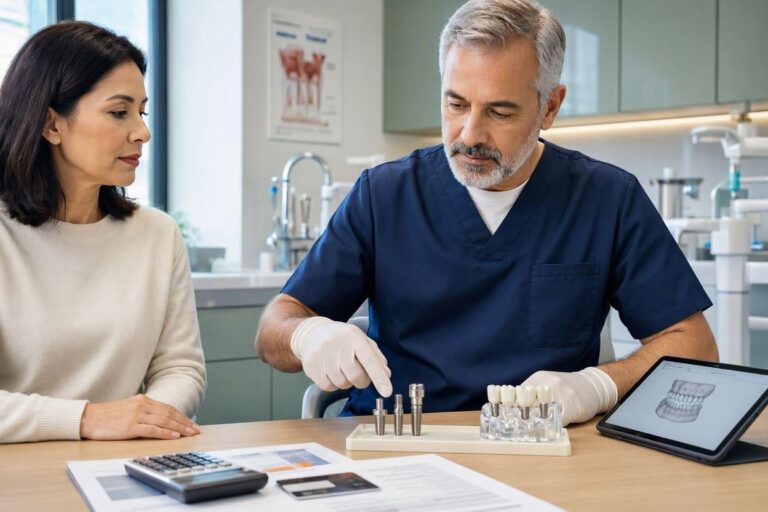
Does MassHealth Cover Dental Implants?
Navigating the world of public health insurance can be a deeply frustrating experience, especially when you are facing the physical and emotional toll of missing teeth. MassHealth, the Massachusetts Medicaid and Children’s Health Insurance Program (CHIP), provides comprehensive health coverage to low-income individuals and families across the Commonwealth. But when it comes to the question, “Does MassHealth cover dental implants?” the answer is nuanced, often disappointing, and requires a thorough understanding of the program’s rigid, medically-oriented framework. For the vast majority of adult MassHealth members, routine dental implants are not a covered benefit. However, there are critical exceptions where MassHealth will pay for implant-related services, and understanding the dividing line between a denied claim and an approved authorization is the key to navigating this system.
The fundamental principle governing MassHealth dental coverage is medical necessity, but with a strict definition that distinguishes between routine dental care and medically necessary oral surgery. MassHealth covers a broad range of dental services for children and a more limited, yet still substantial, set of services for adults, including cleanings, fillings, extractions, and dentures. Dental implants, however, are classified as a major, elective restorative procedure. The program’s regulations explicitly state that implant services are generally not covered. The pathway to coverage involves demonstrating that the implant is not a choice but a reconstructive necessity required to treat a traumatic injury, a congenital defect, or a surgical resection for cancer. This guide will walk you through the specific MassHealth regulations, the clinical documentation required for a medical necessity appeal, the alternative tooth replacement options that are covered, and the rare, life-changing scenarios where the state will fund your implant treatment.
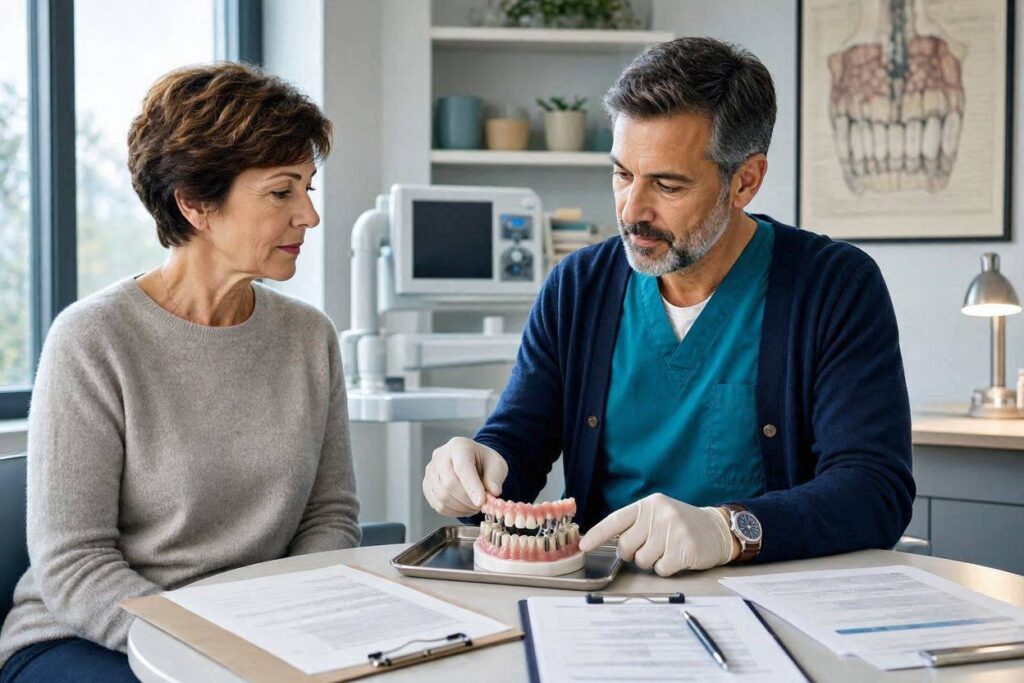
The Core Policy: Exclusion with a Narrow Exception
You must begin with the baseline truth. The MassHealth Dental Manual, under Subchapter 5, which governs adult dental benefits, does not include a specific billing code for endosteal dental implants as a standard covered service. The ADA code D6010 (surgical placement of implant body) is not on the list of approved procedure codes for routine adult restorative care. MassHealth covers a full denture or a partial denture for tooth replacement because these are considered the basic, essential standard of care. The program’s philosophy is to restore function to a level that allows the member to eat and speak, not necessarily to provide the most technologically advanced, aesthetically ideal, or bone-preserving option.
The exception lies in the realm of “oral surgical services” rather than “dental services.” MassHealth does cover certain oral surgical procedures when they are deemed medically necessary and are performed in a hospital or an ambulatory surgical center. This coverage is rooted in the medical side of MassHealth, not the standalone dental plan. The medical necessity criteria are based on the presence of a specific, severe underlying condition. If you have lost your jawbone and teeth due to a malignant tumor requiring surgical removal, you are not simply a patient with missing teeth; you are a cancer survivor with a surgically created anatomical defect. The reconstructive surgery to rebuild your jaw with bone grafts and implants can be argued as a medical reconstruction of a body part, not a cosmetic dental repair. This is the door through which a limited number of patients pass.
Another potential exception is coverage for children under the age of 21. The Early and Periodic Screening, Diagnostic and Treatment (EPSDT) mandate requires states to provide all medically necessary services to correct or ameliorate conditions for children enrolled in Medicaid. If a child has anodontia (a congenital absence of teeth) or loses permanent teeth due to trauma, and a pediatric oral surgeon documents that an implant is medically necessary for proper jaw development, speech, and nutrition, MassHealth may cover the implant. This is a highly specialized and thoroughly documented process, typically managed by the craniofacial teams at academic medical centers like Boston Children’s Hospital or Massachusetts General Hospital.
Covered Alternatives to Implants Under MassHealth
Before you invest emotional energy in fighting for an implant, you should understand exactly what MassHealth will provide. The covered prosthetic options for adult tooth replacement are clinically effective and have restored the smiles of millions.
MassHealth covers complete and partial dentures. A full denture replaces all the teeth in an arch, and a partial denture replaces one or more missing teeth and is supported by the remaining natural teeth with metal or flexible clasps. These are covered services, including the necessary adjustments and relines. MassHealth also covers the repair of dentures. For a member with a broken denture, the program will pay to have it fixed or replaced at a specified frequency, typically every five years or longer, unless a documented change in the oral anatomy requires an earlier replacement.
MassHealth also covers crowns, bridges, and root canals on certain teeth, but the coverage is limited to specific teeth and specific materials. A bridge, which uses the adjacent teeth for support and can replace a missing tooth, is a covered service for adults in certain circumstances, particularly for the front teeth. If you have a single missing tooth in the aesthetic zone, a fixed bridge may be a fully covered, functional, and aesthetically acceptable alternative to an implant. You should discuss with your MassHealth dentist which specific teeth and which bridge materials are approved.
The program also covers extractions and the surgical removal of impacted teeth, as well as certain surgical procedures like alveoloplasty (smoothing of the jawbone) and biopsy of oral lesions. These are critical because they can lay the surgical groundwork for a future implant, even if the implant itself is not funded by MassHealth. A patient can have their diseased teeth removed, their bone smoothed, and their gums healed under MassHealth, and then, if their financial situation improves, pursue a private-pay implant at a later date.
The Medical Necessity Appeal Process
If you and your surgeon believe your case meets the stringent criteria for a medically necessary implant, you do not simply submit a claim. You must go through the prior authorization process and, almost inevitably, an appeal. This is a battle of documentation.
The process begins with a letter of medical necessity from your oral and maxillofacial surgeon or your prosthodontist. This letter must not be a generic request. It must be a highly specific, evidence-based clinical argument. It must state the diagnosis, such as “acquired absence of the mandible due to squamous cell carcinoma resection and radiation therapy.” It must describe the functional deficit: “Patient is unable to retain a conventional lower denture due to the complete absence of alveolar ridge and the xerostomia resulting from radiation therapy. Without implant-supported retention, the patient cannot masticate solid food and is suffering from malnutrition.” It must reference the literature that supports implants as the standard of care for this specific post-cancer reconstruction.
Supporting documents must include a copy of the operative report from the cancer surgery, a copy of the pathology report confirming the malignancy, and a copy of the radiation oncology treatment summary. A current, high-resolution 3D Cone Beam CT scan of the jaw must be submitted, with the surgeon annotating the images to show the bony defect and the virtual implant positions. A letter from the patient’s oncologist, stating that the patient is cancer-free and cleared for reconstructive surgery, is mandatory. Photographs of the patient’s face and mouth, showing the extent of the defect and the inability to wear a conventional prosthesis, are powerfully persuasive.
The package is submitted to MassHealth’s dental program administrator, currently DentaQuest, with the prior authorization request. It will almost certainly be denied on the first pass by the automated system or the dental consultant. You must then file a formal appeal. The appeal is heard by the MassHealth Board of Hearings. This is a quasi-judicial process. Your surgeon may need to testify telephonically, explaining the medical necessity in direct, layperson’s terms to the hearing officer. The legal standard is not what the surgeon wants; it is what the medical evidence demands as essential to treat the disease and restore a basic level of human function. A hearing officer who is presented with a compelling case of a cancer survivor who cannot eat without a mandibular implant-retained overdenture will often rule in the patient’s favor.
The Role of the MassHealth Managed Care Organizations
Many MassHealth members are enrolled not in the Fee-for-Service program but in a Managed Care Organization (MCO) or an Accountable Care Partnership Plan. These are private insurance companies, such as Tufts Health Together, Boston Medical Center HealthNet Plan, or Fallon Health, that contract with the state to manage the care of MassHealth members. Each of these plans has its own utilization management department and its own slightly varied interpretation of “medical necessity.”
A dental implant authorization request must be directed to the specific MCO’s dental benefit manager, which may be a subcontractor. The clinical documentation requirements are the same, but the appeal process is different. You must exhaust the MCO’s internal appeal process, which has specific deadlines, before you can appeal to the MassHealth Board of Hearings. Failure to meet an internal deadline can terminate your appeal rights. It is highly advisable to work with a patient advocate or a social worker who is familiar with your specific MCO’s policies.
Special Scenarios: Trauma, Congenital Defects, and Cleft Palate
There are specific clinical scenarios where the case for MassHealth coverage is stronger from the outset.
A young, healthy adult who is involved in a major motor vehicle accident, sustaining a panfacial fracture and the traumatic avulsion of multiple teeth, requires extensive maxillofacial reconstruction. The standard of care for an avulsed, unrecoverable anterior maxillary segment is an immediate bone graft and delayed implant placement to restore the facial skeleton and the dental arch. The surgeon will often perform this reconstruction in the hospital setting, and the hospital will bill the medical side of MassHealth for the facility and surgical services. The implants, in this context, are part of the craniofacial reconstruction.
Congenital anodontia, particularly in conditions like ectodermal dysplasia, is a compelling case. A child born with a complete or near-complete absence of teeth cannot wear a conventional denture. The alveolar bone does not develop without tooth buds. The face collapses without dental support. The reconstructive protocol, widely accepted in the medical literature, is the placement of implants in the anterior mandible to support an overdenture. The medical necessity is the prevention of severe facial deformity, malnutrition, and psychosocial developmental delay.
Patients born with cleft lip and palate often have a missing lateral incisor at the cleft site. The alveolar cleft is bone grafted in childhood. When the patient reaches skeletal maturity, a single dental implant is the standard of care to restore the dental arch and to support the nasal base and lip. This implant is an integral part of the cleft rehabilitation, not an isolated dental cosmetic choice. Coverage is often obtainable through the craniofacial team’s coordinated medical billing.
Conclusion
MassHealth generally does not cover routine dental implants for adults, limiting its coverage to basic restorative options like dentures and bridges, unless the implant is proven to be a medically necessary reconstruction following cancer surgery, severe trauma, or a congenital anomaly. The pathway to approval involves a rigorous prior authorization and appeal process, requiring a multidisciplinary medical team to document that the implant is essential for basic nutrition, speech, or skeletal integrity, not cosmetic preference. For the vast majority, MassHealth will fund a conventional denture, but for the rare, catastrophic case, the system has a mechanism to rebuild what disease or injury has destroyed.
FAQ
Does MassHealth cover All-on-4 dental implants?
Almost never for standard tooth loss. An All-on-4 full-arch implant bridge is considered an elective, premium procedure. It would only be potentially covered in the context of a massive jaw reconstruction for a cancer or trauma survivor.
Can I get a single tooth implant on MassHealth if I have a missing front tooth?
No. A single missing tooth, even in the front, is generally considered a cosmetic and restorative issue. MassHealth will cover a partial denture or a bridge.
Does MassHealth cover the extraction that must be done before an implant?
Yes. MassHealth covers medically necessary tooth extractions, including surgical removal of impacted teeth.
How do I start the appeal if my MassHealth dentist says I need an implant?
You need your oral surgeon to write a detailed letter of medical necessity with supporting radiographic and medical records. This is submitted as a prior authorization to MassHealth’s dental administrator, DentaQuest, and denied claims are then appealed.
Are dental implants covered for children on MassHealth?
Potentially, yes, under the EPSDT mandate if the implant is medically necessary to treat a congenital defect, severe trauma, or a condition that impairs jaw development. This requires a craniofacial specialist’s documentation.
Additional Resources
For official provider bulletins and the MassHealth Dental Manual, visit the MassHealth website: https://www.mass.gov/orgs/masshealth