Full Mouth Dental Implants in Concord NC: Your Complete, No-Nonsense Guide
Losing most or all of your natural teeth changes more than your smile. It affects how you eat, speak, and feel about yourself. You may have avoided social situations or settled for soft foods that lack nutrition. If you live in or near Concord, North Carolina, you have likely heard about full mouth dental implants. But you probably have questions. Real ones.
What do they actually cost? Does it hurt? How long does the process take? Will my insurance help? And most importantly, is this the right choice for me?
This guide answers those questions honestly. No fluff. No unrealistic promises. Just clear, useful information to help you make a confident decision. Let’s walk through this together.
What Are Full Mouth Dental Implants? A Simple Explanation
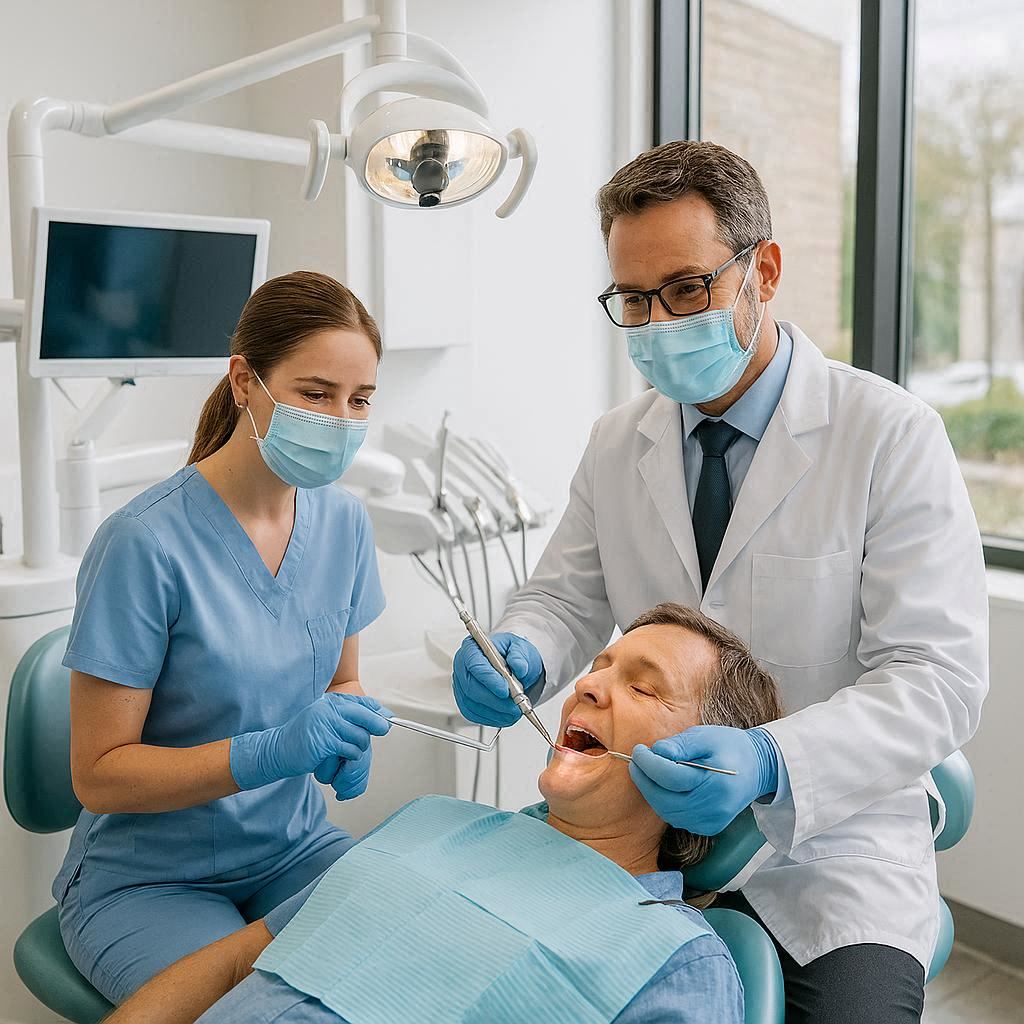
Let us start with the basics. A full mouth dental implant is exactly what it sounds like. It is a complete set of artificial teeth anchored directly into your jawbone using small titanium posts called implants.
Unlike traditional dentures, which sit on top of your gums, implants become part of your body. Your bone grows around them through a process called osseointegration. That fancy word simply means your jawbone locks the implants in place.
You can think of implants as artificial tooth roots. Once those roots heal and fuse with your bone, your dentist attaches a full arch of permanent or removable prosthetic teeth.
How It Differs From Traditional Dentures
Traditional dentures rest on your gums. They rely on suction, adhesive creams, or metal clasps. Many people find them uncomfortable, unstable, or embarrassing.
Here is a quick comparison.
| Feature | Full Mouth Implants | Traditional Dentures |
|---|---|---|
| Stability | Fixed in jawbone | Sits on gums, may slip |
| Chewing power | Near-natural (80–90%) | 20–30% of natural |
| Bone preservation | Prevents bone loss | Accelerates bone loss |
| Speech | Clear and natural | Can click or slip |
| Maintenance | Brush and floss like natural teeth | Remove nightly for soaking |
| Lifespan | 20+ years with care | 5–8 years typically |
Note from the author: Implants are a bigger upfront investment. But many patients in Concord tell me they regret waiting so long to switch from dentures. The quality of life improvement is often dramatic.
Why Concord Residents Choose Full Mouth Implants
Concord is a growing city. It has excellent healthcare and dental options. Local dentists see many patients who have struggled with failing teeth, loose dentures, or painful gum disease.
Here are the most common reasons people in Concord seek full mouth implants:
- Long-term savings. Dentures need frequent relines, repairs, and replacements. Implants, once done, typically last decades.
- Comfort and confidence. No more worrying about dentures slipping during a meal at The Speedway Club or while laughing with friends.
- Better nutrition. You can eat crunchy vegetables, nuts, and steak again. That matters for overall health.
- Facial support. Implants preserve your jawbone. Your face retains its natural shape. Denture wearers often develop a sunken, aged appearance over time.
One Concord resident shared this with me:
“I wore dentures for twelve years. They never felt right. After getting implant-supported arches, I forgot I even had fake teeth. I eat apples now. Apples! That sounds small, but it changed my life.” — Margaret, Concord NC
Types of Full Mouth Dental Implants
Not all implant solutions are the same. Your dentist will recommend one of two main approaches. The choice depends on your bone density, budget, and personal preferences.
Fixed (Non-Removable) Implant Bridges
This is the gold standard. Four to six implants are placed in each arch (upper and lower). A custom bridge or full-arch prosthesis is screwed onto those implants. Only your dentist can remove it.
Pros:
- Most stable and natural feeling
- No plastic covering the roof of your mouth
- Excellent chewing power
Cons:
- Higher cost
- Requires enough bone (or bone grafting)
- Longer healing time
Implant-Retained Overdentures
Here, two to four implants hold a special denture. The denture snaps onto the implants but can be removed for cleaning.
Pros:
- More affordable than fixed bridges
- Easier to clean
- Good stability compared to regular dentures
Cons:
- Less stable than fixed bridges
- The denture still covers your palate (upper arch)
- May need periodic replacement of clips or attachments
All-on-4 vs. All-on-6
You may hear these terms in Concord dental offices. They refer to the number of implants per arch.
- All-on-4: Four implants per arch. Two straight in the front, two tilted in the back. This often avoids bone grafting.
- All-on-6: Six implants per arch. More support, but requires more bone.
Many Concord dentists prefer All-on-4 for suitable candidates. It reduces surgery time and cost while still providing excellent results.
| Type | Implants per Arch | Bone Graft Often Needed? | Average Healing | Best For |
|---|---|---|---|---|
| All-on-4 | 4 | Rarely | 4–6 months | Most patients with moderate bone loss |
| All-on-6 | 6 | Possibly | 6–8 months | Patients with good bone density |
| Implant overdenture | 2–4 | Sometimes | 3–5 months | Budget-conscious patients |
The Step-by-Step Process: What to Expect in Concord
The journey from consultation to chewing normally again takes several months. That is normal. Do not trust any dentist who promises a full mouth of implants in one day without explaining the risks. Same-day implants exist, but they are not right for everyone.
Here is the realistic timeline for most patients.
Step 1: Initial Consultation and Imaging
Your Concord implant dentist will take 3D CBCT scans. These images show your bone volume, nerve locations, and sinus positions. The dentist will also review your medical history.
Step 2: Treatment Plan and Cost Estimate
You receive a written plan. It includes the number of implants, type of prosthesis, and any extra procedures like extractions or bone grafts. Ask questions. Get a second opinion if something feels rushed.
Step 3: Preparatory Work (If Needed)
Some patients need:
- Tooth extractions
- Bone grafting
- Sinus lifts
- Gum disease treatment
This step adds weeks or months to the timeline. But skipping it leads to implant failure. Do not skip it.
Step 4: Implant Placement Surgery
This outpatient procedure takes 2–4 hours per arch. You will receive local anesthesia and sedation or general anesthesia. Most patients tell me they remember nothing.
Temporary teeth may be placed the same day. These are not your final teeth. They are for appearance and basic function while you heal.
Step 5: Osseointegration Healing Period
This is critical. Your jawbone grows around the implants. It takes 4 to 6 months. During this time:
- Eat soft foods
- Do not smoke (seriously)
- Keep implants clean
- Visit your dentist for checkups
Step 6: Final Prosthesis Placement
Once your dentist confirms the implants are fully integrated, they take new impressions. Your permanent teeth — made of high-quality acrylic or zirconia — are fabricated. Then they are screwed or snapped into place.
You walk out with a full, beautiful smile.
Important note: Do not rush healing. Patients who follow post-op instructions have success rates above 95%. Those who ignore them risk failure and wasted money.
Cost of Full Mouth Dental Implants in Concord NC
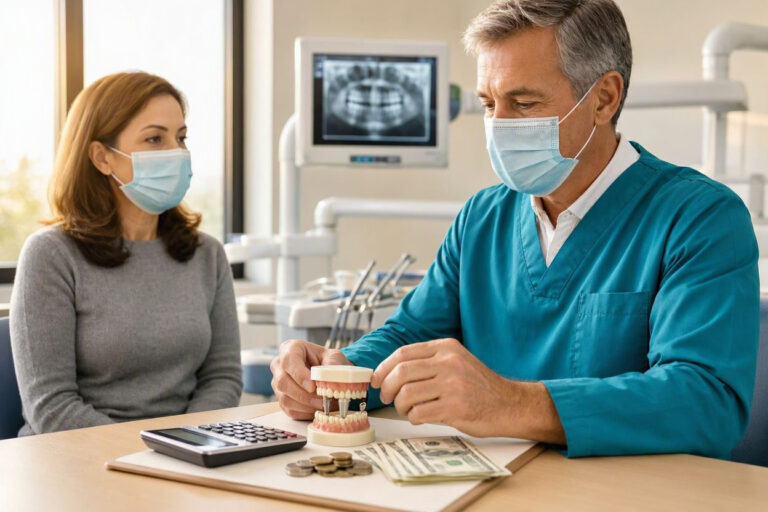
Let us talk about the number everyone wants to know. Cost varies widely. But you deserve realistic numbers — not the suspiciously low ads you see online.
Average Price Ranges
- Implant-retained overdentures (per arch): 7,000–15,000
- All-on-4 fixed bridge (per arch): 15,000–25,000
- All-on-6 fixed bridge (per arch): 20,000–30,000
- Full mouth (both arches) All-on-4: 30,000–50,000
- Premium zirconia full mouth: 45,000–70,000+
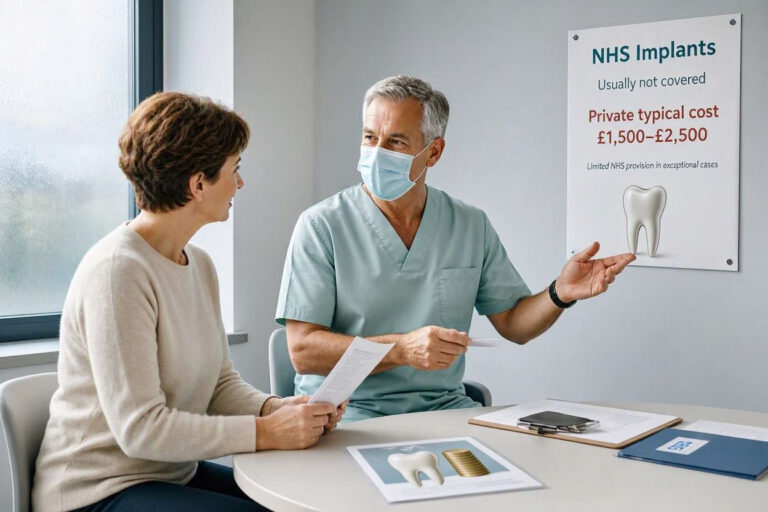
These are out-of-pocket estimates before insurance or financing.
What Influences the Cost in Concord?
Several factors drive the final price.
- Number of implants: More implants cost more.
- Material: Acrylic is cheaper than zirconia. Zirconia is stronger and more natural-looking.
- Bone grafting: Added 500–3,000 per site.
- Sedation type: IV sedation adds 500–1,000.
- Dentist’s experience: High-end implant specialists charge more — for good reason.
- Temporary prosthetics: Some fees include temps; others charge extra.
Does Insurance Cover Implants?
Most dental insurance plans exclude implants. However, some plans cover:
- Extractions
- Bone grafting
- The crown portion (rarely)
Medical insurance may help if tooth loss results from an accident, tumor removal, or congenital condition. Check with your provider.
Financing options commonly used in Concord:
- CareCredit (medical credit card)
- LendingClub
- Prosper Healthcare Lending
- In-house payment plans (ask your dentist)
- Health Savings Account (HSA) or Flexible Spending Account (FSA)
Author’s advice: Do not choose a dentist based solely on the lowest price. Implant failures are expensive and painful to fix. Pay for skill and experience.
Finding the Best Implant Dentist in Concord NC
Not all general dentists place implants. You want someone with advanced training. Here is what to look for.
Credentials to Seek
- Diplomate, American Board of Oral Implantology (ABOI) — Top credential
- Fellowship or Mastership in the International Congress of Oral Implantologists (ICOI)
- Oral surgeon or periodontist — Specialists in bone and gum surgery
- Prosthodontist — Specialist in replacing teeth
Questions to Ask Before You Commit
Ask these during your consultation:
- How many full mouth implant cases have you completed?
- Can I see before-and-after photos of your Concord patients?
- What is your success rate?
- Do you handle complications if they arise?
- Will I have a temporary prosthesis during healing?
- What is the warranty on the implants and the teeth?
- Who performs the sedation? Are they licensed?
Red Flags to Avoid
- Promising same-day permanent teeth without discussing risks
- No 3D CBCT scan on-site
- Unusually low price (under $10,000 per arch for fixed)
- Pressure to decide immediately
- No written treatment plan
Recovery and Healing: What It Really Feels Like
Patients worry about pain. Let me be honest with you. The first few days involve discomfort. But most people manage it easily with over-the-counter or prescribed medication.
Day-by-Day First Week
- Day 1–2: Swelling, mild to moderate pain, some bleeding. Eat cold soft foods. Sleep with your head elevated.
- Day 3–5: Swelling peaks then decreases. Bruising may appear. Stick to warm soups, smoothies, mashed potatoes.
- Day 6–7: You feel much better. Still avoid chewing on implants. Return to light activities.
Weeks 2–6
You can eat soft-solid foods like scrambled eggs, pasta, and fish. No hard, crunchy, or sticky foods. No using implants to tear food. Keep the area clean with special rinses.
Months 2–6
You gradually add more foods. By month three, most implant patients eat almost normally. But remember: your permanent teeth aren’t on yet. Be patient.
Long-Term Healing
Bone integration finishes by month six. After your final teeth are placed, you have no restrictions. Enjoy that steak.
Note for smokers: Smoking dramatically increases implant failure rates. Some Concord dentists refuse to place implants in active smokers. Consider a cessation program before surgery. Your health — and your investment — will thank you.
Risks and Complications: Honest Information
No surgery is risk-free. A reliable guide must include the downsides.
Common (But Usually Manageable) Issues
- Swelling, bruising, and pain (temporary)
- Minor bleeding
- Sinus issues with upper implants (usually resolves)
- Temporary numbness in lips or chin (rarely permanent)
Serious But Rare Complications
- Implant failure (5–10% over time). More common in smokers, uncontrolled diabetics, or poor hygiene.
- Infection (peri-implantitis). Like gum disease but around implants. Preventable with cleaning.
- Nerve damage (very rare with 3D imaging). Can cause permanent lip numbness.
- Prosthetic fracture (acrylic breaks more easily than zirconia).
Who Is NOT a Good Candidate?
Some people are not ideal candidates. Be honest with yourself and your dentist.
- Active uncontrolled diabetes
- Heavy smoker or tobacco user
- Severe untreated gum disease
- Radiotherapy to the jaw or head
- Uncontrolled autoimmune disorders
- Bisphosphonate medication use (certain osteoporosis drugs)
- Insufficient bone (though grafting can help)
If you have any of these conditions, talk to a specialist. Some can still receive implants with modified plans.
Alternatives to Full Mouth Implants
Implants are not the only solution. Consider these alternatives if your budget, health, or preferences lead elsewhere.
High-Quality Traditional Dentures
Modern dentures are better than they used to be. Premium materials and precision fitting make them more comfortable. But they still move, reduce chewing power, and fail to preserve bone.
Good for: Those who cannot afford implants or have health conditions preventing surgery.
Mini Implants
These are narrower than standard implants. They require less bone and cost less. However, they are less durable and not recommended for full mouth fixed bridges. Some patients get mini implants for denture retention.
Good for: Overdentures on a tight budget.
Removable Partial Dentures
If you have some healthy teeth remaining, partial dentures fill gaps. Cheaper but can damage adjacent teeth over time.
No Treatment
Some people simply adapt to tooth loss. They eat soft foods and manage with social adjustments. This is a valid choice. But be aware of long-term consequences: bone loss, facial collapse, nutritional deficiencies, and increased risk of other health problems.
Daily Life and Maintenance After Full Mouth Implants
Once healed, caring for implant teeth is similar to natural teeth. That is one of their greatest advantages.
Cleaning Routine
- Brush twice daily with a soft brush and non-abrasive toothpaste.
- Floss daily using superfloss or implant-specific floss.
- Water flosser (highly recommended) — cleans under the bridge where floss can’t reach.
- Regular dental visits every 6 months for professional cleaning.
- Nightly remove and clean overdentures if you have that type.
Foods to Avoid (Even with Implants)
You can eat almost anything. But smart patients avoid certain risks.
- Ice (can crack porcelain)
- Hard candy
- Popcorn kernels
- Bones in meat (accidents happen)
- Chewing pens or fingernails
Expected Lifespan
| Component | Typical Lifespan |
|---|---|
| Titanium implants | 20+ years to lifetime |
| Fixed acrylic bridge | 8–15 years |
| Fixed zirconia bridge | 15–25+ years |
| Overdenture attachments | 2–5 years (replaceable) |
Frequently Asked Questions (FAQ)
1. How painful is full mouth implant surgery?
Most patients report less pain than expected. You are sedated during surgery. The following days involve soreness similar to a tooth extraction. Pain medication controls it well.
2. Can I get full mouth implants if I have bone loss?
Yes, but you may need bone grafting. Many Concord dentists offer grafting procedures. In severe cases, zygomatic implants (anchored in cheekbones) are an option.
3. How long do full mouth implants last?
The implants themselves can last 20 years to a lifetime with good care. The prosthetic teeth may need replacement after 10–20 years depending on material.
4. Does insurance cover full mouth implants in NC?
Rarely. Most dental insurance excludes implants. Medical insurance may cover some costs if tooth loss results from injury or disease. Always check your policy.
5. Can I get dentures instead of implants?
Absolutely. Dentures are a valid, lower-cost option. However, they do not prevent bone loss and may become loose over time. Discuss pros and cons with your dentist.
6. How soon can I return to work?
Most people take 3–5 days off for physical rest. If you have a desk job, you may return sooner. Physically demanding jobs may require two weeks.
7. Will my speech change with implants?
Initially, yes. You may have a slight lisp while adjusting. Within two weeks, most patients speak normally. Implants typically improve speech compared to loose dentures.
8. Are same-day implants real?
Yes, but with important caveats. Same-day teeth are temporary. They allow you to leave with teeth after surgery. Final permanent teeth come months later. Be wary of claims of permanent same-day teeth.
9. What is the failure rate for full mouth implants?
About 5–10% over 10–20 years. Failure is higher in smokers (up to 20%) and uncontrolled diabetics. Success rates exceed 95% in healthy, non-smoking patients.
10. Do full mouth implants look natural?
Yes — when done by an expert. Modern materials mimic natural translucency and color. Most people cannot tell you have implants unless you tell them.
Additional Resources
For more information on implant dentistry and finding qualified providers in North Carolina, visit the American Academy of Implant Dentistry patient resource page.
🔗 Resource link: https://www.aaid.com/patients/index.html — This official source offers a search tool for AAID-credentialed implant dentists and detailed patient education guides.
Conclusion
Full mouth dental implants in Concord NC can restore your smile, your diet, and your confidence. They cost more upfront than dentures, but they offer stability, bone preservation, and a lifespan measured in decades. The process takes time — often four to six months — and requires a skilled implant dentist. Do your research, ask hard questions, and choose a provider with proven experience. Your future self will thank you.
Disclaimer: This article is for informational purposes only and does not constitute medical or dental advice. Always consult with a licensed dental professional in Concord, NC, to evaluate your specific situation. Individual results vary. The author does not endorse any specific dental provider mentioned or implied.