Full Mouth Dental Reconstruction Surgery
Deciding to restore your entire smile is a big step. You might feel nervous, excited, or even a little overwhelmed. That is completely normal.
Full Mouth Dental Reconstruction Surgery is not a single procedure. Instead, it is a personalized plan. This plan rebuilds or replaces all the teeth in your upper jaw, lower jaw, or both.
This guide walks you through everything. You will learn what to expect, how to prepare, and how to make the best choice for your health and budget. Let us start this journey together.
What Exactly is Full Mouth Dental Reconstruction?
Many people confuse reconstruction with a simple set of dentures or a few crowns. But reconstruction goes much deeper.
Full mouth reconstruction treats the entire chewing system. This includes your teeth, gums, and the jaw muscles that help you bite and chew. A dentist does not simply “fix” cavities. They rebuild the foundation.
Think of your mouth like a house. You can repaint a room (a filling). You can replace a window (a crown). But full reconstruction means you rebuild the walls, the floor, and the roof so the whole structure works again.
Who Actually Needs This Surgery?
You might be a good candidate if you experience:
- Severe tooth wear: Grinding (bruxism) or acid erosion has shortened your teeth.
- Multiple missing teeth: You have gaps that make eating difficult.
- Chronic pain: Your jaw joints (TMJ) hurt because your bite is uneven.
- Broken down teeth: Old fillings have cracked, or teeth are fractured.
- Genetic conditions: Some people are born with weak enamel or missing teeth.
- Advanced gum disease: Your gums have receded, causing teeth to loosen.
Important Note: Full reconstruction is elective surgery for most people. It is rarely an emergency. Take your time to research and choose a specialist.
Full Mouth Reconstruction vs. Smile Makeover: What is the Difference?
This is a very common point of confusion. The table below makes it clear.
| Feature | Full Mouth Reconstruction | Smile Makeover |
|---|---|---|
| Primary Goal | Restore function (chewing, speaking, jaw health) | Improve appearance (color, shape, symmetry) |
| Focus Area | Entire mouth, jaw joints, and bite alignment | Mostly front teeth (the “social six”) |
| Common Procedures | Crowns, bridges, implants, root canals, orthodontics | Veneers, teeth whitening, gum contouring |
| Timeline | 6 to 18 months (complex) | 2 to 6 months (simpler) |
| Cost Range | Very high (20,000−80,000+) | Moderate to high (5,000−30,000) |
The simple truth: A smile makeover is cosmetic. Full reconstruction is medical and cosmetic. You get a beautiful smile, but the real victory is being able to bite into an apple again without pain.
The Step-by-Step Surgical Journey
Every patient has a unique path. However, most reconstruction surgeries follow a logical sequence. Below is a realistic timeline from your first consultation to your final smile.
Phase 1: The Discovery & Planning (Weeks 1-4)
This phase involves no surgery. It is the most important step.
Your dentist will take:
- Digital X-rays (CBCT): A 3D image of your skull, jaws, and nerves.
- Intraoral scans: A painless wand that creates a 3D model of your teeth.
- Photos and bite records: How your upper and lower teeth touch.
- Medical history review: Conditions like diabetes or heart disease affect healing.
Your dentist will then create a mock-up. This is a wax model of your future teeth. You can “test drive” the look and feel before any cutting happens.
Phase 2: Preparing the Foundation (Weeks 4-12)
This is often the longest clinical phase. The dentist must remove disease and create a healthy base.
Typical procedures here include:
- Extractions: Removing hopeless teeth.
- Bone grafting: If you have lost jawbone (common with missing teeth), the surgeon adds synthetic or natural bone.
- Gum disease treatment: Deep cleanings (scaling and root planing) or gum surgery.
- Root canals: Saving teeth that are infected but still strong enough to keep.
Realistic expectation: After bone grafting, you must wait 4 to 6 months for the graft to heal. You cannot rush biology.
Phase 3: The Reconstruction Surgery (Month 4-12)
Now comes the actual “rebuilding.” Based on your plan, this may involve:
- Dental Implant Placement: The surgeon places titanium posts into your jawbone.
- Placement of temporary teeth: You will not leave the clinic without teeth. Temps let you eat and smile during healing.
- Orthodontics (if needed): Sometimes braces or clear aligners move remaining teeth into better positions before crowns are made.
For patients getting implant-supported fixed bridges (often called “All-on-4” or “All-on-6”), the surgeon places 4 to 6 implants per arch. Then they attach a temporary bridge the same day.
A note on “Teeth in a Day”: This is real, but it requires perfect conditions. Most people need several months of healing before the final teeth are attached. Do not believe marketing that promises permanent teeth in one morning.
Phase 4: Healing & Osseointegration (Month 4-8)
After implants are placed, you wait. This is the quiet phase.
The bone grows around the titanium implant. This process is called osseointegration. It is the secret to why dental implants are so strong.
During this time:
- You eat soft foods.
- You wear temporary prosthetics.
- You clean your implants very gently with special brushes.
- You visit the dentist every 4-6 weeks for checks.
Phase 5: Final Restorations (Month 9-14)
Once your dentist confirms the implants are fully healed, they begin the final phase.
- Uncovering the implants: A small laser or scalpel exposes the top of each implant.
- Taking final impressions: Very precise molds for your permanent teeth.
- Try-in appointment: You see the final teeth in wax or acrylic before they are made in ceramic.
- Placement: Your dentist screws or cements your final bridges or crowns.
The result: Teeth that look natural, feel strong, and do not move. They are not removable like dentures.
Types of Restorations Used in Full Mouth Reconstruction
No two mouths are the same. Below is a list of the most common “building blocks” your surgeon might use.
- Dental Crowns: A cap that covers a damaged tooth. Modern crowns are made of zirconia or layered ceramic.
- Dental Bridges: Two crowns with a false tooth in between. Bridges fill a gap of one to three missing teeth.
- Dental Implants: Titanium posts that replace the root of a missing tooth.
- Implant-Supported Dentures: A removable denture that snaps onto implants. More stable than regular dentures.
- Fixed Implant Bridges (Full-Arch): A non-removable bridge on 4-6 implants. This is the gold standard for people with no teeth.
- Onlays and Inlays: Indirect fillings for teeth that are too damaged for a simple filling but not damaged enough for a crown.
- Veneers: Thin shells on the front of teeth. Used only for cosmetic changes, not for structural rebuilding.
Quote from an experienced prosthodontist:
*”Patients often ask for the least expensive option. I tell them: ‘Reconstruction is like building a boat. You can use cheap plywood, but it will leak. Use marine-grade materials once, and you sail for 30 years.'”* – Dr. Elena Voss, Prosthodontist.
Pain, Anxiety, and Anesthesia: What Does It Feel Like?
Fear of pain stops many people from seeking help. Let us be honest but reassuring.
During surgery: You will feel nothing. Your surgeon uses local anesthesia (numbing shots) combined with options like:
- Oral sedation: A pill that makes you drowsy but awake.
- IV sedation (twilight sleep): You breathe on your own but remember very little.
- General anesthesia: You are completely asleep. Usually reserved for complex jaw surgery.
After surgery: You will feel discomfort. But “discomfort” is not the same as screaming pain.
Most patients describe:
- A dull ache similar to a toothache.
- Swelling of the cheeks and lips (peaks at 48 hours).
- Bruising that fades after 7-10 days.
- Difficulty opening the mouth wide for a few days.
Your dentist prescribes pain relievers. Usually, a mix of ibuprofen (for swelling) and a mild narcotic (for break-through pain). After 3-4 days, most people switch to just over-the-counter medication.
The good news: The worst pain is usually after the first surgery (extractions and bone grafts). The later phases (implant placement and final crowns) cause much less pain.
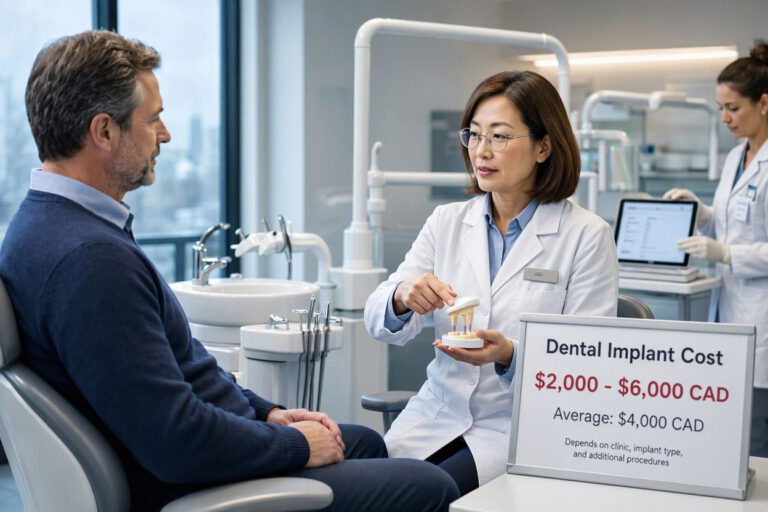
Cost Breakdown: How Much Does Full Mouth Dental Reconstruction Surgery Really Cost?
Money is often the biggest concern. Prices vary wildly depending on where you live and the complexity of your case.
Below is a realistic price table for private pay (no insurance) in the United States. Add 20-30% for major cities like New York or Los Angeles.
| Procedure (Per Arch = Upper or Lower) | Low Cost (Budget Clinic) | Average Cost (Private Practice) | High Cost (Specialist, City) |
|---|---|---|---|
| Traditional Dentures (not fixed) | $1,500 | $3,000 | $5,000 |
| Implant-Retained Denture (snap-on) | $5,000 | $9,000 | $15,000 |
| Fixed Bridge on 4 Implants (All-on-4) | $15,000 | $24,000 | $35,000 |
| Fixed Bridge on 6 Implants (All-on-6) | $20,000 | $30,000 | $45,000 |
| Individual Crowns on 14 teeth | $12,000 | $28,000 | $50,000 |
Total for Full Mouth (Both Arches):
- Budget option (implants + acrylic teeth): 30,000−30,000−40,000
- Mid-range option (standard implants + ceramic teeth): 50,000−50,000−65,000
- Premium option (premium implants + custom zirconia): 70,000−70,000−90,000+
Ways to Make It Affordable
Do not let these numbers scare you alone. Many people afford reconstruction through:
- Medical credit cards: CareCredit is the most common. Offers 6-18 months interest-free.
- Dental schools: Major universities offer 40-60% discounts. Students work under expert supervision.
- Dental tourism: Mexico, Costa Rica, Colombia, and Thailand have excellent clinics for 50-70% less. Do your research carefully.
- Health savings account (HSA) or FSA: Use pre-tax dollars.
- Phased treatment: Do one arch (upper jaw) this year. Save for 12 months. Do the lower jaw next year.
Warning: Avoid clinics promising “full mouth reconstruction for $15,000.” That is likely for poor-quality dentures or implants placed by inexperienced hands. Cheap work often fails within 2-3 years, costing you double.
Recovery Timeline: A Realistic Day-by-Day Guide
Healing is not linear. Some days you feel great. The next day, swelling returns. Here is what average patients report.
Week 1 (The Hardest Days)
- Days 1-3: Swelling is maximum. Use ice packs 20 minutes on, 20 off. Eat only cold soft foods (yogurt, smoothies, ice cream). Sleep with your head elevated.
- Days 4-7: Swelling moves down to your neck. Bruising appears (yellow/green). You switch to warm compresses. You can eat warm soup, mashed potatoes, and scrambled eggs.
Weeks 2-4 (The Turning Point)
- Stitches may dissolve or be removed.
- You return to work (if you took time off).
- You can eat pastas, soft breads, and cooked vegetables.
- You start gentle salt water rinses.
- You still avoid crunchy, sticky, or hard foods (chips, nuts, caramel).
Months 2-6 (Healing Continues)
- The bone grows around your implants. You feel almost normal.
- You can eat most foods except very hard items (ice cubes, hard candy).
- You practice excellent hygiene. This is critical to prevent peri-implantitis (infection around implants).
- You visit your dentist for check-ups every 6-8 weeks.
Risks and Complications: Being Honest
Every surgery carries risk. A responsible guide does not hide this.
Common, minor issues (affect 30-50%):
- Temporary numbness of the lip or chin (from nerve irritation).
- Small infections that clear with antibiotics.
- A screw in the implant bridge loosens (easily retightened).
Rare, serious issues (affect 1-3%):
- Implant failure: The bone rejects the implant. More common in smokers and diabetics.
- Nerve damage: Permanent numbness of the tongue, lip, or chin. This is why CBCT scans are essential.
- Sinus perforation: Upper implants can push into the sinus cavity. Usually fixable with a minor procedure.
- Broken jaw: Very rare. Happens if the jawbone is extremely weak.
How to minimize risk:
- Quit smoking for at least 2 months before and after surgery.
- Control your blood sugar (diabetes).
- Choose a surgeon who does this every day, not a general dentist.
- Follow all home care instructions strictly.
7 Questions You Must Ask Your Surgeon
Before you sign any consent form, take this list with you.
- “How many full mouth reconstructions have you personally completed?” (Look for 50+ cases).
- “Do you have before-and-after photos of patients similar to me?”
- “What is your failure rate for implants?” (Honest answer: 95-98% success is normal).
- “Who makes the final teeth? Do you have an in-house lab or an external technician?”
- “What happens if an implant fails 1 year later? Do you replace it for free?”
- “Can I speak to a previous patient who had the same surgery?”
- “What is the total cost including all contingencies (bone grafts, temporary teeth, and anesthesia)?”
If a surgeon gets annoyed by these questions, walk away. A confident specialist welcomes them.
Frequently Asked Questions (FAQ)
1. How long does full mouth dental reconstruction surgery last?
With proper care, implants and zirconia crowns can last 20 years to a lifetime. The removable prosthetics (like dentures) may need replacement every 8-10 years due to wear.
2. Can I get full mouth reconstruction if I have gum disease?
Yes, but you must treat the gum disease first. Active infection is a contraindication. Your dentist will perform scaling, root planing, or gum surgery. Once your gums are healthy (about 3 months), you can start reconstruction.
3. Will my insurance cover any of this?
Medical insurance sometimes covers the surgical parts (bone grafts, extractions, hospital fees) if you have a medical diagnosis like TMJ disorder or trauma. Dental insurance usually covers very little—often only 1,000to2,000, which is a drop in the bucket.
4. Is the surgery safe for older adults (over 70)?
Yes, age alone is not a barrier. Many 80-year-olds successfully get implants. The key is overall health. If you can tolerate a routine tooth extraction, you can tolerate reconstruction. Your surgeon will coordinate with your primary care doctor.
5. What can I eat immediately after surgery?
For the first 2 weeks: smoothies, yogurt, pudding, applesauce, protein shakes, thin soups, and scrambled eggs. Nothing hot (heat increases bleeding), spicy, or seedy (small seeds get stuck in incisions).
6. How do I clean my new teeth?
You need special tools: a water flosser (Waterpik), super-floss, small interproximal brushes, and a soft toothbrush. You must clean under the bridge every day. Failing to clean leads to “peri-implantitis,” which destroys bone and loses implants.
7. What if I don’t do the surgery?
Your dental health will likely continue to decline. More teeth may crack, break, or become infected. Over time, you may lose bone volume in your jaw, which makes future reconstruction harder (or impossible without major grafting). However, dentures remain an option.
Conclusion:
Full Mouth Dental Reconstruction Surgery is a significant commitment of time, money, and energy. But for people suffering from broken teeth, chronic pain, and embarrassment, it offers a genuine second chance. The process takes 6 to 18 months, costs between 30,000and90,000, and requires careful planning. However, the final result—a functional, beautiful, and permanent smile—transforms daily life in ways that go far beyond appearance.
Disclaimer: This article provides general educational information. It does not constitute medical advice or a doctor-patient relationship. Every surgical case is unique. Always consult a licensed dental professional and a medical doctor before making healthcare decisions. The author and publisher are not liable for any outcomes resulting from the use of this information.