How Does Teeth Whitening Toothpaste Work?
You walk down the oral care aisle and face an overwhelming selection. Dozens of toothpaste brands promise whiter teeth. Some claim to remove stains. Others promise deep whitening or instant brightness. The marketing language sounds impressive, but you wonder what actually happens when you brush with these products. Can a toothpaste really whiten teeth, or is it just clever advertising?
Teeth whitening toothpaste does work, but probably not in the way you expect. It does not bleach teeth the way peroxide gels do. It works through entirely different mechanisms that have specific capabilities and clear limitations. Understanding these mechanisms helps you choose the right product and set realistic expectations.
We will explore every aspect of how whitening toothpaste functions, from the abrasives that polish away surface stains to the chemical agents that break down discoloration. You will learn what these products can and cannot do, how they compare to professional whitening, and how to use them effectively.
The Fundamental Difference: Cleaning vs. Bleaching
The most important thing to understand about whitening toothpaste is that it cleans, not bleaches. This distinction explains everything about what the product can achieve.
What Bleaching Means
True bleaching involves a chemical reaction that changes the intrinsic color of tooth structure. Peroxide molecules penetrate enamel and dentin, breaking down chromogen molecules through oxidation. The tooth actually becomes lighter in color because the molecules that create the yellow or brown appearance are chemically altered.
This is what happens with whitening strips, tray gels, and professional treatments. The tooth color changes from the inside out.
What Whitening Toothpaste Does
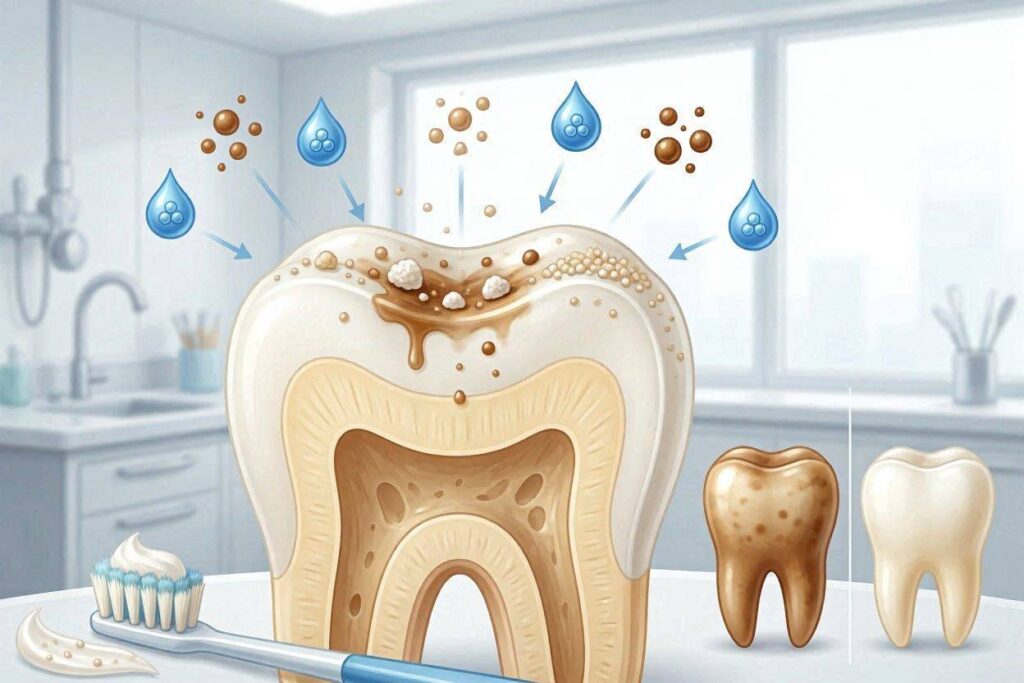
Whitening toothpaste works almost entirely on the tooth surface. It removes extrinsic stains, the discoloration that sits on or within the very outermost layer of enamel. It does not penetrate deeply into tooth structure. It does not change the natural color of dentin. It does not bleach the tooth from within.
Think of it as the difference between cleaning a stained countertop and bleaching the material the countertop is made from. Whitening toothpaste cleans the surface. Peroxide treatments change the material itself.
Why the Distinction Matters
If your teeth are naturally yellowish due to genetics or age-related dentin changes, whitening toothpaste will not make them white. No amount of surface cleaning alters the color of the dentin showing through translucent enamel.
If your teeth are discolored from coffee, tea, red wine, tobacco, or certain foods, whitening toothpaste can make a meaningful difference by removing those surface deposits.
The Abrasive Mechanism: Physical Stain Removal
The primary way whitening toothpaste works is through abrasion. This sounds harsh, but it is a carefully controlled process.
What Abrasives Are
Abrasives in toothpaste are finely ground solid particles that create friction when brushed against teeth. They function like an extremely fine sandpaper or polishing compound, mechanically scraping away surface deposits without damaging the underlying enamel when properly formulated.
Common Abrasives in Whitening Toothpaste
Whitening toothpastes often contain higher levels of abrasives or slightly more aggressive abrasive particles than regular toothpaste. Common abrasive ingredients include:
- Hydrated silica: The most common modern abrasive. It comes in various particle sizes and shapes that can be tailored for specific cleaning requirements.
- Calcium carbonate: A natural mineral abrasive derived from limestone or chalk.
- Dicalcium phosphate: A calcium-based abrasive that provides moderate cleaning action.
- Aluminum oxide: A harder abrasive used in some more aggressive whitening formulas.
- Perlite: A volcanic glass expanded into lightweight particles with mild abrasive properties.
- Baking soda (sodium bicarbonate): A mild abrasive that also provides chemical cleaning action.
How Abrasion Removes Stains
When you brush, the abrasive particles in toothpaste scrub against the enamel surface. This mechanical action physically dislodges and removes the thin layer of stained pellicle, the protein film that coats teeth and picks up pigments from food and drink.
The abrasives also polish the enamel surface, smoothing microscopic roughness where stains tend to accumulate. A smoother surface resists new stain formation because pigments have fewer places to adhere.
The Safety of Toothpaste Abrasives
Toothpaste abrasives are carefully selected and formulated to clean effectively without damaging enamel. The Relative Dentin Abrasivity scale measures how aggressive a toothpaste is. Whitening toothpastes typically have higher RDA values than regular toothpaste but remain within safety limits established by dental organizations and regulatory bodies.
RDA values below 250 are generally considered safe for daily use. Most whitening toothpastes fall in the 100-200 RDA range. Products above 250 may pose risks with long-term use and are less common.
Enamel Safety Considerations
Enamel is the hardest substance in the human body, but it is not immune to wear. Decades of aggressive brushing with highly abrasive toothpaste can thin enamel, especially at the gumline where enamel is naturally thinner.
Using whitening toothpaste as directed, with a soft or medium bristle brush and moderate pressure, poses minimal risk to healthy enamel. The problems arise when people combine whitening toothpaste with hard bristle brushes, excessive pressure, and overly frequent brushing in pursuit of faster results.
The Chemical Mechanism: Stain Dissolution
Many modern whitening toothpastes combine physical abrasion with chemical cleaning agents that dissolve or break down stains.
Surfactants and Detergents
Sodium lauryl sulfate and similar detergents help lift stain particles away from enamel and keep them suspended in the foam so they rinse away rather than re-depositing. These foaming agents are not unique to whitening toothpaste but work alongside abrasives to improve stain removal.
Polyphosphates and Pyrophosphates
These compounds act as chelating agents, binding to the minerals in stain deposits and helping dissolve them. They are particularly effective against tartar, the hardened plaque that picks up heavy staining.
Sodium hexametaphosphate, tetrasodium pyrophosphate, and similar ingredients disrupt the bonds that hold stain particles to enamel. This chemical action makes the physical abrasion more effective because stains are partially loosened before the brush even contacts them.
Enzymes
Some whitening toothpastes include enzymes such as papain from papaya or bromelain from pineapple. These enzymes break down the protein matrix of the pellicle layer, weakening the foundation that holds stains on teeth. Without their protein anchor, pigment particles wash away more easily.
Enzyme-based whitening is gentler than increased abrasion, which appeals to people with sensitivity or enamel concerns. However, the whitening effect is typically more subtle than what abrasive formulas achieve.
Sodium Bicarbonate (Baking Soda)
Baking soda provides both physical and chemical cleaning action. The particles are mildly abrasive, and the chemical nature of sodium bicarbonate helps neutralize acids and dissolve certain types of stain deposits. Many whitening toothpastes use baking soda as a primary or secondary cleaning agent.
Activated Charcoal
Charcoal has become popular in whitening toothpaste, though its effectiveness and safety are debated among dental professionals. Charcoal is highly abrasive and adsorbs some stain molecules onto its porous surface. However, its abrasiveness may exceed what is safe for long-term enamel health, and many dentists caution against daily charcoal toothpaste use.
| Whitening Mechanism | How It Works | Speed of Results | Stain Types Addressed | Enamel Impact |
|---|---|---|---|---|
| Abrasives (silica, calcium carbonate) | Physical scrubbing of surface stains | Gradual (1-4 weeks) | Extrinsic surface stains | Low when used correctly |
| Polyphosphates | Chemical dissolution of stain bonds | Gradual (1-4 weeks) | Tartar and protein-bound stains | Minimal |
| Enzymes (papain, bromelain) | Breakdown of protein pellicle | Slow (2-6 weeks) | Protein-bound surface stains | Very low |
| Baking Soda | Mild abrasion plus chemical cleaning | Gradual (1-4 weeks) | Surface stains and acids | Low to moderate |
| Activated Charcoal | High abrasion plus adsorption | Variable | Surface stains | Potentially high |
| Peroxide (in some formulas) | Oxidation of stain molecules | Gradual (2-6 weeks) | Surface and shallow intrinsic | Low at toothpaste concentrations |
| Blue Covarine | Optical effect, no stain removal | Immediate | None (optical illusion only) | None |
Important Note: Results timelines are approximate and vary based on stain severity, brushing frequency and technique, and individual enamel characteristics. Products containing multiple mechanisms may show faster or more complete results than those relying on a single approach.
The Optical Mechanism: Instant Brightness Illusion
Some whitening toothpastes create an immediate but temporary whitening effect through optical trickery rather than actual stain removal.
Blue Covarine Technology
Blue covarine is a pigment that deposits a thin, semi-transparent blue layer on teeth during brushing. Blue cancels out yellow on the color spectrum. The blue film shifts the perceived tooth color away from yellow toward white.
This effect is immediate. Teeth look whiter after the first use. However, the effect is entirely superficial and temporary. The blue pigment washes away with the next meal, drink, or brushing. Remove the blue, and the underlying tooth color remains unchanged.
The Purpose of Optical Brighteners
Optical brighteners serve a legitimate purpose. They provide immediate gratification that motivates continued use. Someone who sees whiter teeth after the first brushing is more likely to keep using the product, during which time the abrasives and chemical agents can achieve genuine stain removal.
They are also useful for special occasions. Brushing with a blue covarine toothpaste before an event provides temporary brightening when peroxide whitening is not practical.
Managing Expectations with Optical Products
If a toothpaste promises “instant whitening,” it almost certainly contains optical brighteners, not true bleaching agents. The effect is real but temporary. Do not confuse the immediate optical brightening with the gradual stain removal that occurs over weeks of consistent use.
Peroxide in Whitening Toothpaste
Some whitening toothpastes do contain peroxide, but the concentration and contact time limitations significantly constrain what it can achieve.
Concentration Differences
Whitening toothpaste containing hydrogen peroxide typically has concentrations of 1% or less. Compare this to whitening strips at 6-10% or professional gel at 25-40%. The toothpaste concentration is dramatically lower.
Contact Time Limitations
Peroxide requires sustained contact with teeth to penetrate enamel and oxidize stains. Brushing lasts two minutes. Whitening strips stay on for 30 minutes. Tray gel wears for hours. Even if the toothpaste peroxide could whiten effectively, the contact time is too short for meaningful bleaching.
What Peroxide Does in Toothpaste
At low concentrations with short contact time, peroxide in toothpaste contributes primarily to surface stain oxidation and provides some antibacterial benefit. It may slightly enhance the stain removal achieved by abrasives, but it does not produce the deeper whitening that higher-concentration, longer-contact treatments achieve.
The Value of Peroxide Toothpastes
Peroxide toothpastes occupy a middle ground between purely abrasive whitening toothpaste and true bleaching products. They may maintain whitening results between bleaching treatments better than non-peroxide toothpaste. They also provide modest whitening for people whose staining is very superficial.
The Stain Prevention Approach
Some whitening toothpastes focus less on removing existing stains and more on preventing new stains from forming.
Tartar Control and Stain Prevention
Tartar, also called calculus, is hardened plaque that readily absorbs stains. Whitening toothpastes with tartar control ingredients like pyrophosphates or zinc citrate reduce tartar formation. Less tartar means fewer surfaces for stains to adhere to.
Protective Barrier Formation
Certain formulations deposit a thin, invisible protective film on enamel that resists stain adhesion. Silicone polymers or similar ingredients create a barrier between enamel and staining compounds. Stains that cannot adhere to teeth are easily rinsed away by saliva.
The Long-Term Approach
Prevention-based whitening toothpaste requires patience. You will not see dramatic whitening in the first week. Over months of consistent use, teeth accumulate fewer new stains and existing stains are gradually removed during normal brushing. The result is a slowly brightening smile rather than a rapid transformation.
Comparing Whitening Toothpaste to Other Methods
Understanding where whitening toothpaste fits in the spectrum of whitening options helps you choose appropriately.
Whitening Toothpaste vs. Whitening Strips
Whitening strips contain peroxide at concentrations that actually bleach tooth structure. They change intrinsic color over a 10-14 day treatment course. Whitening toothpaste cleans surface stains but does not alter intrinsic color.
Strips produce more dramatic whitening, especially for teeth with deeper staining or natural yellowing. Toothpaste maintains results between treatments and addresses the daily accumulation of surface stains that strips prevent but do not clean during the treatment period.
These two methods are complementary, not competitive. Many people use strips for initial whitening and whitening toothpaste for maintenance.
Whitening Toothpaste vs. Professional Whitening
Professional whitening produces results that whitening toothpaste cannot approach. The higher peroxide concentrations, controlled application, and extended contact time achieve several shades of genuine tooth lightening.
Whitening toothpaste serves a completely different purpose. It maintains oral hygiene while providing modest cosmetic benefit. No one should expect toothpaste to replicate professional whitening results.
Whitening Toothpaste vs. Whitening Pens
Pens apply a thin film of peroxide gel that remains on teeth for an extended period, usually 20-30 minutes or overnight. This sustained contact allows meaningful, if modest, bleaching.
Whitening toothpaste provides shorter contact but is incorporated into a daily habit you already maintain. Pens require a separate step in your routine but deliver more whitening action.
Whitening Toothpaste as Part of a Complete Strategy
The most effective approach for many people combines methods: an initial bleaching course using strips or trays, maintenance sessions every few months, and daily use of whitening toothpaste to control surface stains between treatments.
Ingredients to Look For in Whitening Toothpaste
Not all whitening toothpastes are created equal. Knowing what to look for helps you choose effectively.
Effective Abrasive Systems
Look for hydrated silica as a primary abrasive. It provides good cleaning with controlled abrasivity. Products listing multiple abrasive types may offer more comprehensive cleaning through different particle sizes and shapes.
Chemical Cleaning Agents
Polyphosphates, especially sodium hexametaphosphate, provide meaningful stain dissolution beyond what abrasives alone can achieve. Toothpastes combining physical and chemical cleaning generally outperform those relying solely on abrasion.
Peroxide When Appropriate
If you want to maintain professional whitening results, a peroxide-containing toothpaste may help extend the time between touch-up treatments. Look for hydrogen peroxide or carbamide peroxide on the ingredient list, understanding that the concentration will be low.
Fluoride Content
Whitening should not come at the expense of cavity protection. Choose a whitening toothpaste that also contains fluoride. The American Dental Association recommends fluoride toothpaste for all adults. Some whitening toothpastes omit fluoride; avoid these unless specifically directed by your dentist.
Desensitizing Ingredients
If you experience sensitivity, look for whitening toothpaste with potassium nitrate or stannous fluoride. These ingredients help calm nerve endings while the abrasives clean surface stains.
Ingredients to Avoid or Approach with Caution
Some whitening toothpaste ingredients raise concerns among dental professionals.
Charcoal
Activated charcoal is highly abrasive. Long-term daily use can wear enamel significantly. Charcoal particles can also become trapped in gum pockets, restoration margins, and between teeth. Most dentists recommend against daily charcoal toothpaste use. Occasional use may be acceptable for some people, but safer alternatives exist.
Extremely High Abrasivity
Check the RDA value if available from the manufacturer. Products with RDA above 200 should be used with awareness of their abrasiveness. Above 250, consider whether the additional cleaning power justifies the increased wear on enamel over years of use.
Microbeads
Polyethylene microbeads were once common in some toothpastes but have been largely phased out due to environmental concerns and questions about whether they become trapped in gum tissue. Most major manufacturers have eliminated them. Check labels if you are using older or imported products.
Unfamiliar Imported Products
Whitening toothpastes from unregulated or poorly regulated markets may contain ingredients or abrasivity levels that would not be permitted in products sold through established regulatory frameworks. Stick with recognized brands that comply with FDA, EU, or equivalent regulatory standards.
How to Use Whitening Toothpaste Effectively
Technique matters. Even the best formulation underperforms with poor brushing habits.
Brushing Duration
Brush for a full two minutes. Most people brush for less than one minute, which is insufficient for the abrasives and chemical agents to achieve their full effect. Use a timer or an electric toothbrush with a built-in timer.
Brushing Frequency
Brush twice daily, as you would with any toothpaste. More frequent brushing does not accelerate whitening and increases the risk of enamel wear and gum recession.
Brush Selection
Use a soft-bristled brush. Medium and hard bristles combined with whitening toothpaste abrasives create excessive enamel wear. An electric toothbrush with a pressure sensor helps prevent over-brushing.
Technique
Use gentle pressure. Let the bristles and toothpaste do the work. Scrubbing aggressively does not remove more stain; it removes more enamel. Hold the brush at a 45-degree angle to the gumline and use short, gentle strokes.
Rinsing Habits
After brushing, spit out the foam but do not rinse vigorously with water. Leaving a thin film of toothpaste on teeth allows chemical cleaning agents and fluoride to continue working. This is especially important with peroxide or polyphosphate formulations.
Patience and Consistency
Whitening toothpaste requires weeks of consistent use to show results. Do not judge effectiveness after three days. Use the product for at least two weeks before evaluating. Take a before photo for objective comparison.
Limitations of Whitening Toothpaste
Knowing what whitening toothpaste cannot do prevents disappointment and guides toward appropriate solutions.
Cannot Change Natural Tooth Color
If your teeth are naturally yellow or have darkened with age due to dentin changes, whitening toothpaste cannot alter this. The color comes from deep within the tooth, and toothpaste only affects the surface.
Cannot Whiten Restorations
Crowns, veneers, fillings, and bonding material do not respond to whitening toothpaste abrasives or chemical agents. Natural teeth around restorations may brighten, making the restorations appear darker by contrast.
Cannot Remove Deep Intrinsic Stains
Tetracycline staining, fluorosis, and trauma-induced discoloration sit within the tooth structure. Surface cleaning does not affect them. These stains require peroxide bleaching or cosmetic coverage.
Cannot Achieve Bleaching-Level Results
Even the best whitening toothpaste cannot match the whitening achieved by peroxide strips, trays, or professional treatments. Set expectations accordingly. Toothpaste brightens; it does not bleach.
Takes Time
Whitening toothpaste works gradually. If you need whiter teeth for an event next week, whitening toothpaste will not get you there. Consider strips or professional treatment for faster results, then use whitening toothpaste for maintenance.
Maintaining Whitening Results with Toothpaste
Whitening toothpaste plays a valuable role in preserving results achieved through bleaching treatments.
The Maintenance Protocol
After completing a peroxide whitening course, switch to a whitening toothpaste for daily use. This removes surface stains as they accumulate, extending the time before your next bleaching touch-up is needed.
Complementary, Not Redundant
Whitening toothpaste does not replace maintenance bleaching sessions. It reduces the frequency at which those sessions are needed. Someone using whitening toothpaste might need touch-up bleaching every 3-4 months instead of every 1-2 months.
The Synergistic Approach
Use whitening toothpaste daily, floss to remove interproximal stain, and perform peroxide touch-up sessions periodically. This combination strategy addresses both surface stains and intrinsic color, providing the best long-term results.
Frequently Asked Questions
How long does it take for whitening toothpaste to work?
Most people see subtle improvement within 1-2 weeks of consistent use. More noticeable results typically require 4-6 weeks. Products with optical brighteners show immediate but temporary effects. Genuine stain removal is gradual.
Can whitening toothpaste damage enamel?
Properly formulated whitening toothpaste from reputable manufacturers is safe for enamel when used as directed with a soft brush and gentle pressure. Overly aggressive brushing with highly abrasive toothpaste can contribute to enamel wear over many years. Check product RDA values if concerned.
Does whitening toothpaste work on yellow teeth?
It depends on the cause of the yellow color. Surface stains from coffee, tea, or tobacco respond well. Natural yellow dentin showing through enamel does not respond, because toothpaste cannot change dentin color. Age-related yellowing responds minimally or not at all.
Can I use whitening toothpaste every day?
Yes. Whitening toothpaste is formulated for daily use. Most products are designed to be used twice daily as a regular toothpaste replacement, not as an occasional treatment.
Will whitening toothpaste make my teeth sensitive?
Some people experience increased sensitivity with whitening toothpaste, particularly highly abrasive formulas. If sensitivity occurs, switch to a whitening toothpaste that includes potassium nitrate or stannous fluoride, or alternate between whitening toothpaste and sensitivity toothpaste.
Does charcoal toothpaste really whiten teeth?
Charcoal toothpaste removes surface stains through aggressive abrasion. It can make teeth appear whiter in the short term. However, the high abrasivity raises concerns about long-term enamel wear. Many dental professionals recommend against daily charcoal toothpaste use.
Is whitening toothpaste enough, or do I need strips too?
If your goal is removing surface stains and maintaining your current tooth shade, whitening toothpaste alone may suffice. If you want teeth lighter than their natural color or have deeper staining, peroxide strips or gel provide results that toothpaste cannot match.
Can I use whitening toothpaste with braces?
Generally, no. Whitening toothpaste will clean the exposed portions of teeth but cannot reach under brackets. When braces are removed, the covered areas will be darker than the cleaned areas, creating a patchy appearance. Wait until orthodontic treatment is complete before whitening.
Additional Resource
For more information about whitening toothpaste safety, effectiveness, and ADA Seal of Acceptance products, visit the American Dental Association’s resource:
https://www.ada.org/resources/ada-library/oral-health-topics/whitening
Conclusion
Teeth whitening toothpaste works primarily through controlled abrasion that physically removes surface stains, often combined with chemical agents like polyphosphates that dissolve stain bonds and optical brighteners that create an immediate but temporary whitening illusion. It cleans extrinsically, not intrinsically, meaning it cannot change the natural color of teeth or bleach deep stains the way peroxide treatments can. Used correctly and consistently, whitening toothpaste provides gradual, modest brightening and plays a valuable role in maintaining results achieved through professional or over-the-counter bleaching treatments.
Frequently Asked Questions (FAQ)
Q: How does whitening toothpaste actually whiten teeth?
A: Whitening toothpaste uses mild abrasives to physically scrub away surface stains, chemical agents like polyphosphates to dissolve stain deposits, and sometimes optical brighteners that create a temporary blue-white effect. It does not bleach teeth from within like peroxide treatments do.
Q: Can whitening toothpaste replace professional whitening?
A: No. Whitening toothpaste cleans surface stains but cannot change the intrinsic color of teeth. Professional whitening uses high-concentration peroxide to bleach tooth structure from within, achieving results far beyond what any toothpaste can deliver.
Q: How long before I see results from whitening toothpaste?
A: Subtle improvement may appear within 1-2 weeks of consistent twice-daily use. More noticeable results typically require 4-6 weeks. Products with blue covarine provide an immediate optical brightening effect that is temporary.
Q: Is whitening toothpaste safe for daily use?
A: Yes, when using reputable brands with controlled abrasivity levels. Use a soft-bristled brush with gentle pressure to minimize any risk of enamel wear over time. Products with the ADA Seal of Acceptance have been evaluated for safety and effectiveness.
Q: What should I look for in a whitening toothpaste?
A: Look for hydrated silica as a primary abrasive, polyphosphates for chemical stain dissolution, fluoride for cavity protection, and potassium nitrate if you have sensitivity. Verify that the product comes from a reputable manufacturer with regulatory compliance.
Disclaimer: This article provides general information about how teeth whitening toothpaste works based on current understanding of dental science. It does not constitute dental or medical advice. Individual results vary based on stain type, oral hygiene habits, and natural tooth characteristics. Consult your dentist for personalized recommendations regarding whitening products and oral care routines.