How Much Does A Typical Dental Examination Cost?
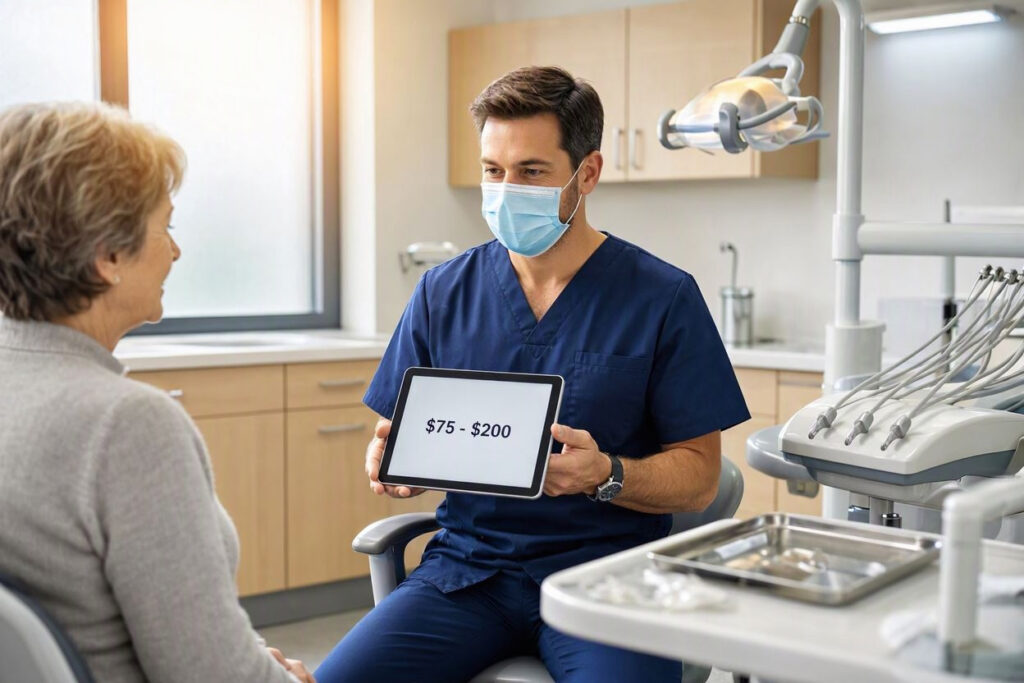
A typical dental examination in the United States costs between $50 and $200. The average price is around $100. If you have dental insurance, your out-of-pocket cost may be $0 to $40. The final price depends on your location, the dental office, whether X-rays are included, and if you are a new or returning patient. This guide explains what a typical dental examination includes, the factors that affect the price, and how to save money on your next visit.
What Is A Typical Dental Examination?
A typical dental examination is a routine checkup of your teeth, gums, and mouth. It is sometimes called a comprehensive exam or a recall exam. The goal is to detect problems early, such as cavities, gum disease, oral cancer, and bite issues. Most dentists recommend an exam every six months. Some patients need more frequent visits if they have gum disease, a history of cavities, or other risk factors.
A typical exam includes a visual check of your teeth and gums, a periodontal screening, and often X-rays. It may also include a professional cleaning. The exam is the first step in any treatment plan. It helps your dentist understand your oral health and recommend the right care.
What Does A Typical Dental Examination Include?
A typical dental examination includes several components. Not every exam includes all of these, so ask your dentist what is covered.
- Medical history review. Your dentist asks about your health, medications, and past dental work.
- Visual exam. The dentist looks at your teeth, gums, tongue, throat, and cheeks.
- Periodontal probing. The dentist measures the pockets around your teeth to check for gum disease.
- Cavity check. The dentist uses a small mirror and explorer to find soft spots or holes.
- Bite evaluation. The dentist checks how your upper and lower teeth fit together.
- Oral cancer screening. The dentist looks for lumps, sores, or discolored patches.
- X-rays. X-rays may be taken to see between teeth, under fillings, and in the jawbone.
- Cleaning. Some exams include a professional cleaning. Others charge separately.
A new patient exam is usually more comprehensive than a recall exam. It may include a full set of X-rays, a detailed medical history, and a treatment plan. A recall exam is shorter and focuses on changes since your last visit.
Types Of Dental Examinations And Their Costs
Dentists offer different types of exams. Each has a different price and purpose. Here is a comparison.
| Type of Exam | Typical Cost Range | What It Includes | Best For |
|---|---|---|---|
| New patient exam | $80–$250 | Full check, X-rays, treatment plan | First visit to a new dentist |
| Recall exam | $50–$150 | Visual check, gum measurements | Returning patients |
| Emergency exam | $50–$200 | Focused check on a specific problem | Pain, swelling, broken tooth |
| Limited exam | $40–$120 | One or two teeth | Follow-up on a specific issue |
| Comprehensive exam | $100–$300 | Full mouth, X-rays, cancer screening | Complex cases, new patients |
| Child exam | $40–$120 | Kid-friendly check, fluoride | Children and teens |
A new patient exam is the most expensive because it includes more steps. A recall exam is cheaper and faster. An emergency exam focuses only on the problem area. A limited exam is for a specific tooth. A comprehensive exam is the most thorough. Child exams are often discounted.
Typical Cost Ranges By Region
Prices vary widely by state and city. Here is a realistic breakdown for different regions in the United States.
| Region | Low Estimate | Average Estimate | High Estimate |
|---|---|---|---|
| Rural areas | $40 | $75 | $120 |
| Small cities | $50 | $90 | $150 |
| Suburban areas | $60 | $100 | $180 |
| Large cities | $70 | $120 | $200 |
| Major metros (NYC, LA, SF) | $100 | $150 | $250+ |
These prices usually include the exam and a basic set of X-rays. They may not include a cleaning, fluoride, or sealants. Always ask for a written estimate before treatment.
What Affects The Price Of A Typical Dental Examination?
Many factors change the final cost. Knowing them helps you compare quotes fairly.
Geographic Location
Dental fees are higher in big cities and lower in rural areas. A dental exam in New York City may cost 50% more than the same exam in a small town in the Midwest. Rent, salaries, and taxes all affect overhead.
Dentist’s Experience And Specialty
A general dentist may charge less than a specialist. A dentist with many years of experience and a strong reputation may also charge more. Some offices offer discounted exams for new patients to attract them.
New Patient Vs. Returning Patient
A new patient exam is more expensive because it includes more steps. The dentist needs to review your full history, take X-rays, and create a treatment plan. A recall exam for a returning patient is shorter and cheaper.
X-Rays And Imaging
Some exams include X-rays. Others charge separately. A full set of X-rays costs $100–$250. Bitewing X-rays cost $50–$100. A panoramic X-ray costs $80–$150. 3D imaging (CBCT) costs $200–$500. If you need X-rays, the total cost goes up.
Cleaning And Other Services
Many dental offices bundle the exam with a cleaning. The cleaning may be included in the exam fee or charged separately. A standard cleaning costs $75–$200. Deep cleaning (scaling and root planing) costs $200–$500 per quadrant. Fluoride treatment costs $20–$50. Sealants cost $30–$60 per tooth.
Insurance Coverage
Dental insurance often covers part of the exam. Many plans pay 100% for preventive care, including exams and cleanings. Some plans pay 80% for basic services. Annual maximums of $1,000–$2,000 apply. Medicare generally does not cover dental exams. Medicaid coverage varies by state. Always check with your insurance company before treatment.
How The Process Works
Knowing the steps helps you understand where your money goes.
- Check-in and paperwork. You fill out your medical history and insurance information. Cost: free.
- Medical history review. The dentist or hygienist asks about your health and medications. Cost: included.
- Visual exam. The dentist checks your teeth, gums, and mouth. Cost: included.
- Periodontal probing. The dentist measures the pockets around your teeth. Cost: included.
- X-rays. X-rays may be taken to see inside your teeth and bone. Cost: $50–$250.
- Cleaning. A hygienist removes plaque and tartar. Cost: $75–$200.
- Fluoride and sealants. These may be recommended for children or high-risk patients. Cost: $20–$60 each.
- Treatment plan. The dentist explains any problems and recommends treatment. Cost: included.
Some dentists offer same-day exams and cleanings. Others schedule them separately. The process affects the total price.
How To Save Money On A Typical Dental Examination
You do not have to pay the highest price. Here are practical ways to lower your costs.
- Ask for a new patient special. Many offices offer discounted exams for new patients. These can be $50 or less.
- Use a dental school. Dental schools provide low-cost exams and cleanings. Students work under supervision.
- Compare at least three offices. Call different offices and ask for a written estimate for the same service.
- Check your insurance. Even if your plan does not cover everything, it may cover the exam and X-rays.
- Use an HSA or FSA. Health savings accounts and flexible spending accounts let you pay with pre-tax dollars.
- Ask about payment plans. Many offices offer zero-interest financing for 6–12 months.
- Negotiate. Do not be afraid to ask for a lower fee or a bundled price for exam and cleaning.
- Look for community health centers. These clinics offer sliding-scale fees based on income.
- Avoid unnecessary X-rays. If you had X-rays recently, ask your new dentist if they can use them.
- Prevent problems. Brush twice a day, floss daily, and limit sugary drinks. Prevention is cheaper than treatment.
Important note: Do not skip dental exams to save money. Early detection of cavities, gum disease, and oral cancer can save you thousands of dollars and even your life. A small exam fee is a wise investment.
Real-World Examples
Example 1: New patient exam in a small town.
A patient visits a new dentist. The office offers a new patient special for $75. This includes the exam, X-rays, and a cleaning. The patient pays the full amount. Insurance does not cover it because the patient has no dental insurance.
Example 2: Recall exam in a large city.
A patient returns for a six-month checkup. The dentist charges $120 for the exam and $150 for a cleaning. Insurance pays 100% for preventive care. The patient pays $0.
Example 3: Emergency exam in a major metro.
A patient has a toothache. The dentist charges $150 for an emergency exam. Insurance pays 80% after a $50 deductible. The patient pays $70. The dentist recommends a root canal, which costs $1,200.
These examples show how much prices can vary. Your own quote will depend on your unique needs.
Quotations From Dental Professionals
“Patients often ask me why the exam costs money. I tell them that the exam is the most important part of the visit. It is how we find problems before they become painful and expensive.” — Dr. Sarah K., general dentist in Florida.
“I recommend a dental exam every six months. Some patients think they can skip it if they brush and floss. But many dental problems have no symptoms at first. Only a dentist can find them early.” — Dr. James L., dentist in Texas.
Frequently Asked Questions
How often should I get a dental examination?
Most dentists recommend an exam every six months. Some patients need more frequent visits if they have gum disease or other risk factors.
Does a dental exam include a cleaning?
Not always. Some offices include a cleaning in the exam fee. Others charge separately. Ask your dentist what is included.
Will my insurance pay for a dental exam?
Most dental plans cover exams as preventive care. They often pay 100% after a deductible. Check with your insurance company.
What if I do not have insurance?
Look for a dental school, community health center, or low-cost clinic. Many offices offer new patient specials or payment plans.
How long does a dental exam take?
A recall exam takes 15–30 minutes. A new patient exam takes 45–60 minutes. An emergency exam takes 15–20 minutes.
Does a dental exam hurt?
No. The exam is not painful. The dentist uses a small mirror and explorer to check your teeth. If you have sensitive gums, you may feel mild discomfort during probing.
What happens if the dentist finds a problem?
The dentist will explain the problem and recommend treatment. You can ask questions and decide on the next steps. You are never obligated to get treatment on the same day.
Can I get a dental exam if I am pregnant?
Yes. Dental exams are safe during pregnancy. In fact, good oral health is important for both mother and baby. Tell your dentist if you are pregnant.
How do I find a good dentist for a typical exam?
Ask for referrals from friends or family. Read online reviews. Check the dentist’s credentials. Visit the office to see if you feel comfortable.
What is the difference between a typical exam and a comprehensive exam?
A typical exam is a routine checkup. A comprehensive exam is more thorough and may include a full set of X-rays, a cancer screening, and a detailed treatment plan.
Additional Resources
For more information on dental exams and preventive care, visit the American Dental Association at ada.org. You can also check with your state dental association for a list of low-cost clinics.
Conclusion
A typical dental examination costs between $50 and $200, with an average of around $100. The price depends on your location, the type of exam, X-rays, and insurance. To save money, ask for new patient specials, use a dental school, and check your insurance. Regular exams are essential for maintaining good oral health. Do not skip them to save a few dollars.