How Much Does A UK Dentist’s X-Ray Cost?
Dental X-rays are a routine part of many dental visits. They help dentists see what is happening beneath the surface of your teeth and gums. X-rays can reveal cavities, infections, impacted teeth, bone loss, and other problems that are not visible to the naked eye.
If you live in the UK, you might wonder how much a dental X-ray costs. The answer depends on whether you see an NHS dentist or a private dentist. NHS dental charges are set by the government and are the same across England, though Scotland, Wales, and Northern Ireland have slightly different systems. Private dentists set their own fees, which can vary widely.
This guide will explain the cost of dental X-rays in the UK, both NHS and private. You will learn about the different types of X-rays, what affects the price, how to save money, and what to expect during your appointment.
What Is A Dental X-Ray?
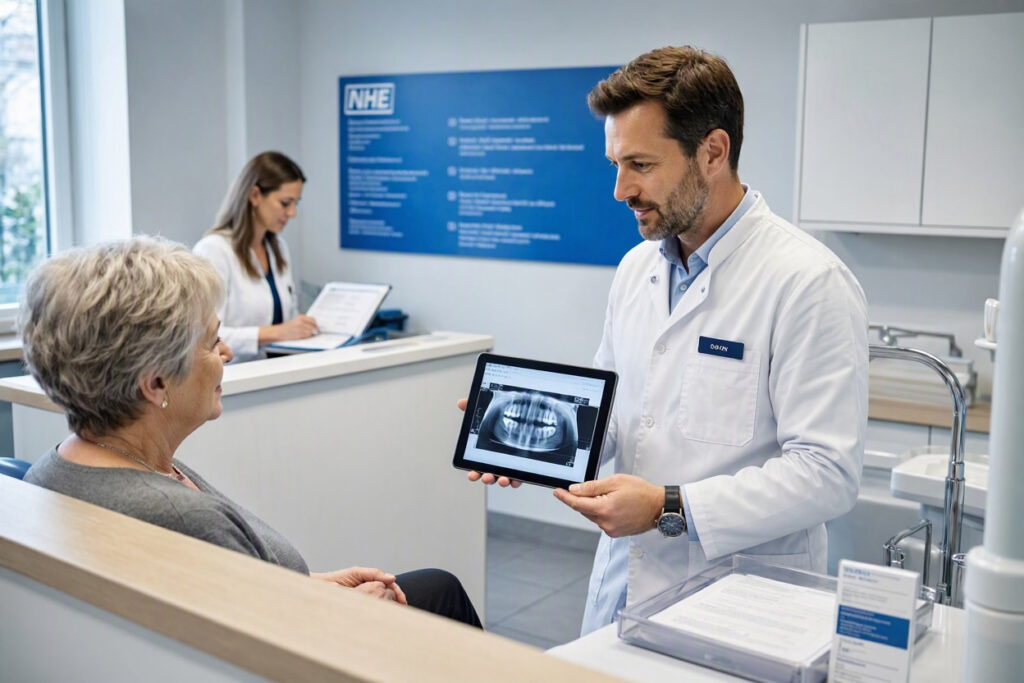
A dental X-ray is a type of radiograph that produces images of your teeth, bones, and surrounding tissues. Dentists use X-rays to:
- Detect cavities that are not yet visible
- Check for infection in the roots of teeth
- See the position of wisdom teeth
- Assess bone loss from gum disease
- Plan treatments like implants, braces, or root canals
- Check the health of a tooth after a filling or crown
There are several types of dental X-rays:
- Bitewing X-rays: Show the crowns of your back teeth and help detect cavities between teeth.
- Periapical X-rays: Show the whole tooth, from crown to root, and the surrounding bone.
- Panoramic X-rays (OPG): Show all your teeth, jaws, and sinuses in one image.
- Cephalometric X-rays: Show the side view of your head and are used in orthodontic planning.
- CBCT scans: A 3D imaging technique used for complex treatments like implants.
NHS Dental X-Ray Costs In The UK
If you are an NHS dental patient, X-rays are usually included in your treatment band. NHS dental charges in England are divided into three bands:
| Band | Treatment Included | Cost (2024) |
|---|---|---|
| Band 1 | Examination, diagnosis, X-rays, scale and polish, preventative advice | £25.80 |
| Band 2 | All Band 1 treatments plus fillings, root canals, extractions | £70.70 |
| Band 3 | All Band 2 treatments plus crowns, bridges, dentures | £306.80 |
In England, if you need an X-ray as part of your examination, it is covered by the Band 1 charge. You do not pay extra for the X-ray itself. However, if you need multiple X-rays or a specialized scan like a CBCT, your dentist may need to refer you to a hospital or a specialist clinic. Hospital X-rays are usually free on the NHS.
In Scotland, NHS dental charges are different. You pay 80% of the cost of treatment up to a maximum of £384. X-rays are included in the examination charge. In Wales, NHS dental charges were abolished in 2020, so you do not pay for NHS dental treatment, including X-rays. In Northern Ireland, NHS dental charges are similar to England but with slightly different bands.
Important: Not everyone pays NHS dental charges. You are exempt if you are under 18, under 19 in full-time education, pregnant or have given birth in the last 12 months, or receiving certain benefits. If you are exempt, your X-rays are free.
Private Dental X-Ray Costs In The UK
Private dentists set their own fees for X-rays. The cost depends on the type of X-ray and the practice. Here are typical private X-ray prices in the UK:
| Type of X-Ray | Private Cost (GBP) |
|---|---|
| Small X-ray (bitewing or periapical) | £10 – £40 |
| Panoramic X-ray (OPG) | £50 – £150 |
| Cephalometric X-ray | £60 – £150 |
| CBCT scan (3D) | £100 – £300 |
| Full mouth series | £80 – £200 |
Some private dentists include X-rays in the cost of a consultation or treatment. Others charge separately. Always ask for a written estimate before your appointment.
Factors That Influence Private X-Ray Costs
Several things affect how much you pay for a private dental X-ray.
Geographic Location
Private dental fees are higher in London and the South East of England. A panoramic X-ray in central London may cost £150, while the same X-ray in a small town in the North might cost £60.
Type Of X-Ray
Small bitewing X-rays are cheap. Panoramic and CBCT scans are more expensive because they require specialized equipment and training.
Dentist’s Fees
Each private practice sets its own prices. Some dentists charge a premium for their time and expertise. Others keep X-ray prices low to attract patients.
Complexity Of The Case
If you need multiple X-rays or a combination of types, the total cost adds up. A full mouth series costs more than a single bitewing.
Additional Procedures
Sometimes X-rays are part of a larger treatment plan. If you are getting implants or braces, the X-ray cost may be bundled into the overall fee.
NHS Vs Private X-Rays: What Is The Difference?
| Feature | NHS X-Ray | Private X-Ray |
|---|---|---|
| Cost | Included in Band 1 (£25.80) or free if exempt | £10 – £300 depending on type |
| Waiting time | May be longer | Usually quicker |
| Equipment | Standard | Often newer |
| Choice of dentist | Limited | Wide |
| Referral for specialized scans | Usually to hospital | Often in-house or quick referral |
| Follow-up | Standard | Often more personalized |
NHS X-rays are cheaper but may involve waiting. Private X-rays offer speed and convenience but cost more.
Does Insurance Cover Dental X-Rays In The UK?
Dental insurance in the UK is less common than in the US, but some people have it through work or buy it privately. Most dental insurance plans cover X-rays as part of routine care. Coverage varies:
- Coverage percentage: Often 100% for diagnostic X-rays.
- Annual maximum: Usually £500 to £2,000.
- Exclusions: Some plans exclude cosmetic treatments.
If you have no insurance, you pay out of pocket. NHS patients pay the Band 1 charge unless exempt. Private patients pay the practice fee.
Payment Options And Financing
If you are a private patient, you can pay for X-rays in several ways:
- Pay at the appointment: Most practices accept cash, card, or bank transfer.
- Payment plans: Some practices offer monthly plans that include X-rays.
- Dental savings plans: Plans like Denplan or Practice Plan can spread the cost.
- Credit: Some practices offer finance options for larger treatment plans.
Ask your dentist about payment options before your appointment.
How To Save Money On Dental X-Rays In The UK
- Use an NHS dentist: If you can find one, NHS X-rays are much cheaper.
- Check for exemption: You may not have to pay if you fall into an exempt category.
- Ask about bundled fees: Some private dentists include X-rays in the consultation fee.
- Get multiple quotes: Private prices vary. Compare practices.
- Visit a dental school: Dental schools often provide X-rays at reduced cost.
- Join a dental plan: Monthly plans can spread the cost and include X-rays.
- Avoid unnecessary X-rays: If you have recent X-rays from another dentist, ask if they can be shared.
The Dental X-Ray Procedure
1. Preparation
You will be asked to remove any metal objects from your head and neck, such as earrings, glasses, or hair clips. You may wear a lead apron to protect your body from radiation.
2. Positioning
For a bitewing or periapical X-ray, you will bite down on a small plastic holder. The X-ray machine is positioned next to your cheek. For a panoramic X-ray, you will stand or sit while the machine rotates around your head.
3. Taking the Image
The dentist or radiographer steps behind a protective screen and activates the machine. The exposure takes a fraction of a second. You may hear a slight beep or buzz.
4. Reviewing the Image
The image appears on a computer screen within seconds. Your dentist will review it with you and discuss any findings.
The whole process usually takes 5 to 15 minutes, depending on the type of X-ray.
Are Dental X-Rays Safe?
Dental X-rays use very low levels of radiation. The risk is extremely small. Modern equipment and lead aprons minimize exposure. Dentists only take X-rays when necessary. If you are pregnant, tell your dentist. They may postpone non-urgent X-rays.
Expert Opinions
“NHS dental X-rays are excellent value. For £25.80, you get a full examination and any X-rays you need. Private X-rays cost more, but you often get faster service and newer equipment.”
— Dr. James Whitfield, NHS Dentist, Manchester
“I always tell my private patients that X-rays are a small part of the overall cost of dental care. Do not skip them to save money. They can catch problems early, which saves you money in the long run.”
— Dr. Sophie Turner, Private Dentist, London
Important Notes For Readers
Note 1: NHS dental charges change every April. Check the current fees before your appointment.
Note 2: Private X-ray prices vary widely. Always ask for a written quote.
Note 3: X-rays are not a substitute for a clinical examination. Your dentist will use both to make a diagnosis.
Note 4: If you are pregnant, inform your dentist before X-rays are taken.
Note 5: You can request a copy of your X-rays. Some practices charge a small fee for this.
Frequently Asked Questions
How much does an NHS dental X-ray cost?
In England, NHS X-rays are included in the Band 1 charge of £25.80. If you are exempt from NHS charges, they are free. In Wales, NHS dental treatment is free. In Scotland and Northern Ireland, X-rays are included in the examination charge.
How much does a private dental X-ray cost?
Private X-ray costs range from £10 for a small bitewing to £300 for a CBCT scan. Panoramic X-rays typically cost £50 to £150.
Can I get a dental X-ray without seeing a dentist?
No. Dental X-rays must be prescribed by a dentist or a doctor. You cannot walk into a clinic and request one without a clinical reason.
How often should I have dental X-rays?
Your dentist will decide based on your oral health. Most adults have bitewing X-rays every 1 to 2 years. Children may need them more or less often.
Are dental X-rays free for children?
Yes, children under 18 are exempt from NHS dental charges in the UK. Their X-rays are free on the NHS.
Can I refuse a dental X-ray?
Yes, you can refuse. However, your dentist may not be able to diagnose certain problems without one. Discuss your concerns with your dentist.
How long do dental X-rays take?
The X-ray itself takes a fraction of a second. The whole appointment, including positioning and review, takes 5 to 15 minutes.
Additional Resources
For more information about NHS dental charges, visit the NHS website. For private dental care, the British Dental Association offers useful resources. You can also check the General Dental Council to find a registered dentist.
Conclusion
A UK dentist’s X-ray costs £25.80 on the NHS in England (or is free if you are exempt) and £10 to £300 privately, depending on the type. NHS X-rays are cheaper but may involve waiting, while private X-rays offer speed and convenience. By understanding your options and checking for exemptions, you can keep your dental care affordable.