How Much Does Brace Headgear Cost?
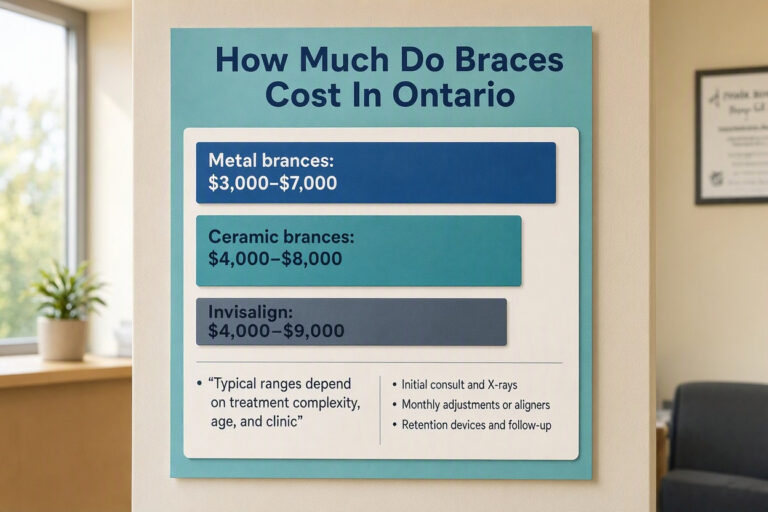
Brace headgear typically costs between $200 and $800 if purchased separately. The average price is around $400. However, in most cases, headgear is included in the overall cost of braces treatment. The total braces fee ranges from $3,000 to $8,000, and headgear is often part of that package. If you need headgear as a standalone appliance, you may pay $300 to $600 for the device plus $100 to $200 for fitting appointments. Insurance may cover part of the cost if the treatment is medically necessary. This guide explains the real costs, the factors that change them, and how to save money on headgear and braces.
What Is Brace Headgear?
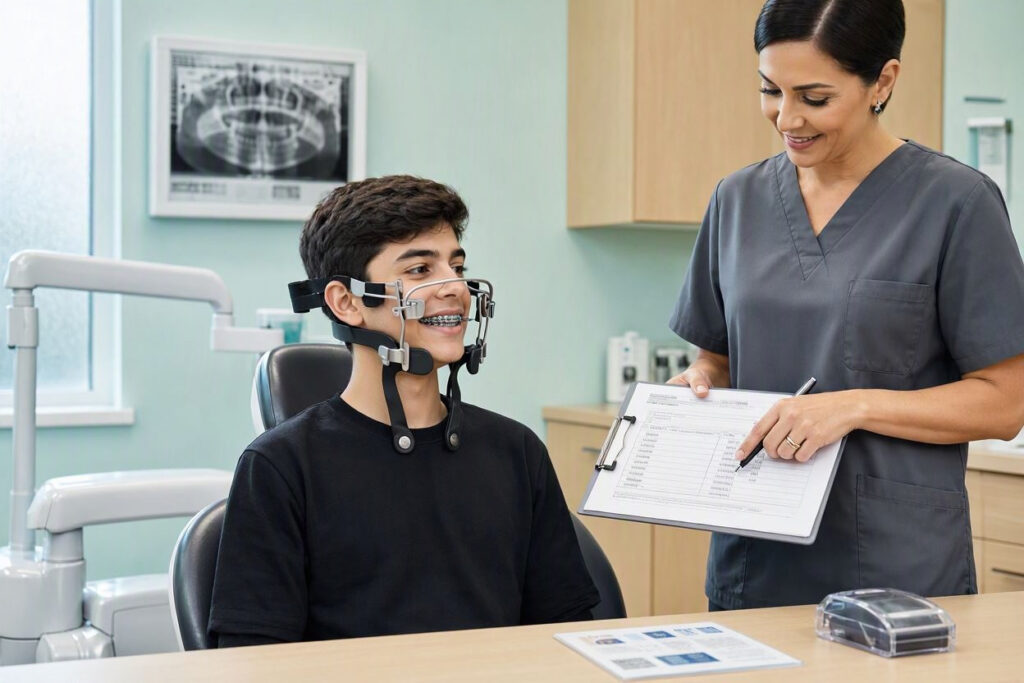
Brace headgear is an orthodontic appliance that attaches to your braces. It uses gentle pressure to guide the growth of the jaw and move teeth into a better position. It consists of a metal facebow that fits into tubes on the back teeth, a strap that goes around the back of your head or neck, and sometimes a chin cup. The headgear is worn outside the mouth, usually at night or for a set number of hours each day.
Headgear is different from a retainer or aligners. It is not removable for eating or speaking, but it is not worn all day. Most patients wear it for 12 to 16 hours per day, often while sleeping. The treatment usually lasts 12 to 18 months, depending on the severity of the bite problem.
Why Is Headgear Used?
Orthodontists use headgear to correct several issues.
- Overjet. When the upper front teeth stick out too far over the lower teeth.
- Overbite. When the upper teeth cover the lower teeth too much.
- Underbite. When the lower teeth stick out past the upper teeth.
- Crowding. When there is not enough space for all the teeth.
- Jaw growth guidance. In growing children, headgear can guide the upper jaw forward or backward.
- Anchoring. Headgear can hold back the back teeth while the front teeth move.
Headgear is most effective in children and teenagers whose jaws are still growing. It can also be used in adults, but the results may be limited because the jawbones have stopped growing. Your orthodontist will recommend headgear if it is the best option for your case.
Types Of Headgear And Their Costs
There are several types of headgear. Each has a different design, purpose, and price. Here is a comparison.
| Type of Headgear | Typical Cost (Standalone) | How It Works | Best For |
|---|---|---|---|
| Cervical headgear | $250–$500 | Straps around the neck | Overjet, upper jaw growth |
| High-pull headgear | $300–$600 | Straps over the top of the head | Overbite, vertical control |
| Combination headgear | $350–$700 | Straps on neck and head | Complex bite problems |
| Reverse-pull facemask | $400–$800 | Straps on forehead and chin | Underbite, upper jaw deficiency |
| Chin cup | $150–$400 | Straps around the chin and head | Underbite, jaw growth |
| J-hook headgear | $200–$450 | Hooks onto braces | Minor tooth movement |
Cervical headgear is the most common. It pulls the upper teeth back and down. High-pull headgear pulls the upper teeth back and up. Combination headgear does both. Reverse-pull facemask is used for underbites. Chin cup guides the lower jaw. J-hook headgear is used for minor corrections.
Typical Cost Ranges By Region
Prices vary by state and city. Here is a realistic breakdown for headgear as a standalone appliance in the United States.
| Region | Low Estimate | Average Estimate | High Estimate |
|---|---|---|---|
| Rural areas | $200 | $350 | $550 |
| Small cities | $250 | $400 | $600 |
| Suburban areas | $300 | $450 | $700 |
| Large cities | $350 | $500 | $800 |
| Major metros (NYC, LA, SF) | $400 | $600 | $1,000+ |
These prices usually include the headgear device and the facebow. They may not include the braces themselves, the fitting appointments, or the adjustment visits. Always ask for a written estimate before treatment.
Is Headgear Included In The Braces Fee?
In most cases, yes. Orthodontists usually include headgear in the comprehensive braces fee. The total braces cost ranges from $3,000 to $8,000. This fee covers the braces, the headgear, all adjustment visits, and retainers. If headgear is part of your treatment plan, you may not pay extra for it.
However, some orthodontists charge separately for headgear. This is more common if you need a replacement or if you are receiving treatment from a general dentist rather than an orthodontist. Always ask whether headgear is included in your treatment fee.
What Affects The Cost Of Headgear?
Many factors change the final price. Knowing them helps you compare quotes fairly.
Geographic Location
Orthodontic fees are higher in big cities and lower in rural areas. A headgear appliance in New York City may cost 50% more than the same appliance in a small town in the Midwest. Rent, salaries, and taxes all affect overhead.
Orthodontist’s Experience
A board-certified orthodontist may charge more than a general dentist. A specialist with many years of experience may also charge more. Some offices offer discounts for siblings or multiple family members.
Type Of Headgear
Cervical headgear is cheaper than combination headgear or reverse-pull facemask. The more complex the appliance, the higher the price. Custom-made headgear costs more than standard models.
Complexity Of The Case
A simple overjet correction may need only cervical headgear. A complex bite problem may need combination headgear or a facemask. The severity of your case affects the price.
Age Of The Patient
Headgear is most effective in growing children. Treatment may be shorter and simpler in younger patients. Adults may need longer treatment or additional appliances, which can increase the cost.
Insurance Coverage
Some dental insurance plans cover part of the cost of headgear and braces. Coverage is usually limited to children under 18 and medically necessary cases. Annual maximums of $1,000–$2,000 apply. Some plans have a lifetime orthodontic maximum of $1,500–$2,500. Always check with your insurance company before treatment.
Replacement And Repair
If you lose or break your headgear, you may need a replacement. A new headgear costs $200–$600. A new facebow costs $50–$150. A new strap costs $20–$50. Some offices include one replacement in the total fee. Others charge for each replacement.
How The Process Works
Knowing the steps helps you understand where your money goes.
- Consultation and exam. The orthodontist checks your teeth and bite. X-rays and scans may be taken. Cost: free or $50–$200.
- Treatment planning. The orthodontist designs your treatment plan. This may include headgear. Cost: included in the global fee.
- Braces placement. The orthodontist attaches brackets and wires to your teeth. Cost: part of the global fee.
- Headgear fitting. The orthodontist fits the headgear and shows you how to wear it. Cost: included or $100–$200.
- Adjustment visits. You visit every 4–8 weeks for adjustments. Cost: included in the global fee.
- Headgear adjustments. The orthodontist may adjust the straps or facebow. Cost: included.
- Braces removal. The orthodontist removes the braces. Cost: included in the global fee.
- Retainers. You receive retainers to keep your teeth straight. Cost: usually included.
Some orthodontists offer same-day braces and headgear fitting. Others schedule them separately. The process affects the total price.
How To Save Money On Headgear And Braces
You do not have to pay the highest price. Here are practical ways to lower your costs.
- Ask if headgear is included. Many orthodontists include it in the braces fee. Ask before you start treatment.
- Ask for a cash discount. Many orthodontists offer 5–10% off if you pay in full upfront.
- Use a dental school. Dental schools offer orthodontic treatment at lower rates. Students work under supervision.
- Compare at least three orthodontists. Call different offices and ask for a written estimate for the same treatment.
- Choose metal braces. They are cheaper than ceramic or lingual braces and just as effective.
- Check your insurance. Some plans cover part of the cost, especially for children.
- Use an HSA or FSA. Health savings accounts and flexible spending accounts let you pay with pre-tax dollars.
- Ask about payment plans. Many offices offer zero-interest financing for 12–24 months.
- Negotiate. Do not be afraid to ask for a lower fee or a sibling discount.
- Look for seasonal promotions. Some offices offer discounts during holidays or back-to-school season.
- Take care of your headgear. Avoid losing or breaking it. Replacement costs add up.
Important note: Do not choose an orthodontist based only on price. Poorly done orthodontic treatment can damage your teeth, gums, and bite. Always choose a licensed orthodontist or a dentist with advanced training in orthodontics.
Real-World Examples
Example 1: Child with overjet in a small town.
A 10-year-old needs cervical headgear with braces. The orthodontist charges a global fee of $4,500. Headgear is included. Insurance covers $1,500. The family pays $3,000 over 18 months.
Example 2: Teen with underbite in a large city.
A 14-year-old needs a reverse-pull facemask with braces. The orthodontist charges $6,500. Headgear is included. Insurance covers $1,000. The family pays $5,500 over 24 months.
Example 3: Adult needing headgear replacement.
An adult patient loses her headgear. The orthodontist charges $350 for a replacement. Insurance does not cover it. The patient pays $350.
Quotations From Orthodontic Professionals
“Headgear is a powerful tool for guiding jaw growth. I always explain to parents that it is most effective when worn as directed. The cost is usually included in the braces fee, so there is no extra charge.” — Orthodontist in California.
“I see many patients who want to skip headgear because it is uncomfortable. But skipping it can lengthen treatment or lead to poor results. It is worth the effort.” — Orthodontist in Texas.
Frequently Asked Questions
How much does headgear cost?
Headgear costs $200–$800 if purchased separately. In most cases, it is included in the total braces fee of $3,000–$8,000.
Is headgear included in the braces fee?
Most orthodontists include headgear in the comprehensive braces fee. Some charge separately. Ask before you start treatment.
Does insurance cover headgear?
Some dental plans cover part of the cost if treatment is medically necessary. Coverage is usually limited to children under 18. Check with your insurance company.
How long do you wear headgear?
Most patients wear headgear 12–16 hours per day, usually at night. Treatment lasts 12–18 months.
Does headgear hurt?
You may feel mild discomfort when you first start wearing it. This usually goes away after a few days. Your orthodontist can adjust the straps to improve comfort.
Can adults wear headgear?
Yes, but the results may be limited because the jawbones have stopped growing. Headgear is most effective in children and teenagers.
What happens if I do not wear my headgear?
Treatment may take longer, and the results may not be as good. In some cases, the bite problem may not be corrected.
How do I care for my headgear?
Clean the facebow and straps with mild soap and water. Avoid bending the facebow. Store it in a safe place when not in use.
Can I play sports with headgear?
You should remove headgear before playing sports. Wear a mouthguard to protect your braces.
What if my headgear breaks?
Call your orthodontist. A replacement may cost $200–$600. Some offices include one replacement in the total fee.
Additional Resources
For more information on headgear and orthodontic treatment, visit the American Association of Orthodontists at aaoinfo.org. You can also check with the American Dental Association at ada.org for a list of qualified orthodontists.
Conclusion
Brace headgear costs between $200 and $800 if purchased separately, but it is usually included in the total braces fee of $3,000 to $8,000. The price depends on your location, orthodontist, type of headgear, and insurance. To save money, ask if headgear is included, compare orthodontists, use a dental school, and check your insurance. Headgear is an effective tool for correcting bite problems, especially in growing children. Always follow your orthodontist’s instructions for the best results.