How To Repair Dental Implants?
Dental implants enjoy remarkable success rates, but like any medical device, they can develop problems requiring repair. Understanding what can go wrong, how repairs are performed, and what patients should do when problems arise is essential for anyone with dental implants. This article provides a comprehensive guide to dental implant repair, covering the common complications, repair procedures for each implant component, and the critical distinction between problems that can be repaired and those that require more extensive intervention.
Understanding What Can Fail
Dental implant restorations consist of multiple components, each of which can develop specific problems. Identifying which component has failed is the first step in repair.
The Three-Component System
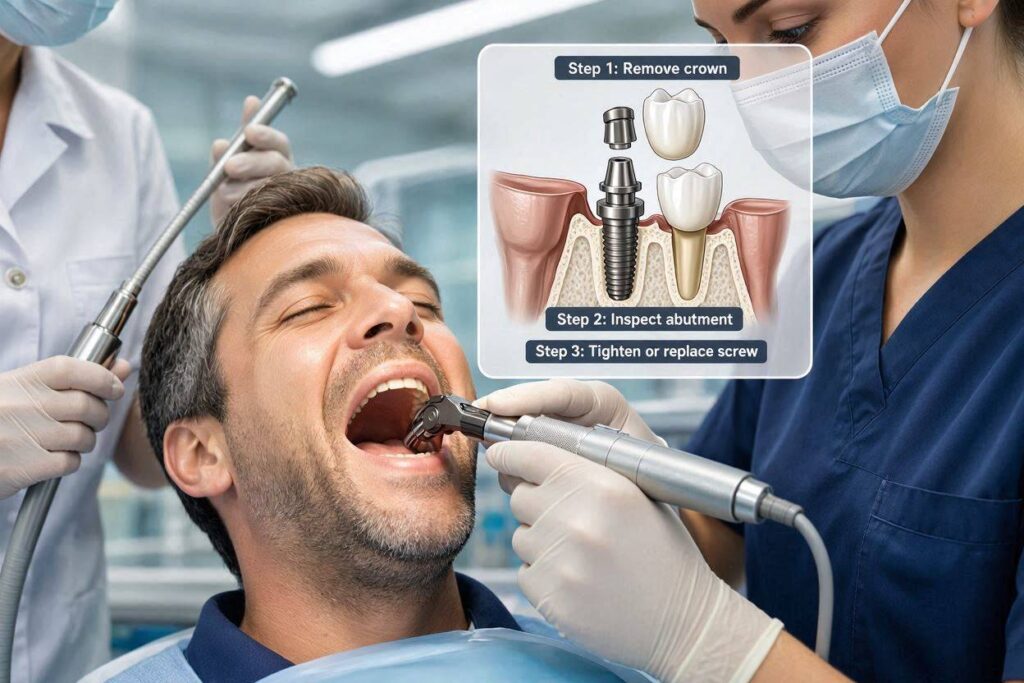
A typical single-tooth implant restoration has three parts: the implant fixture in the bone, the abutment connected to the fixture, and the crown attached to the abutment. Problems can occur at any level, and the repair approach differs for each.
Common Problems by Component
The implant fixture itself rarely fails once successfully integrated, but it can develop peri-implantitis, a destructive inflammatory condition causing bone loss. Mechanical failure of the implant fixture, such as fracture, is rare but catastrophic when it occurs.
The abutment or its retaining screw can loosen or fracture. This is one of the most common implant complications. The connection between the abutment and implant is subject to functional forces, and screws can loosen over time.
The crown can chip, fracture, debond from the abutment, or wear through over years of function. These are restorative complications that generally require crown repair or replacement.
Repairing Crown Problems
The crown is the most visible component and the one most commonly requiring attention.
Chipped Porcelain
Small chips in porcelain crowns can sometimes be repaired without crown replacement. The dentist uses a composite resin bonding system to rebuild the chipped area. The repair material is shaped, polished, and matched to the surrounding crown color.
Important note: Porcelain repairs are less durable than the original crown. They serve as an interim solution, often lasting several years, but eventual crown replacement should be anticipated. The bond between composite repair material and the original ceramic is weaker than the monolithic ceramic structure.
Crown Debonding
When a cement-retained crown debonds from the abutment, it may be recemented if the crown and abutment are intact and undamaged. The dentist cleans the internal surface of the crown and the abutment surface thoroughly. Any residual cement is removed. The crown is then rebonded with new resin cement.
A debonded crown should be addressed promptly. Leaving the abutment exposed allows plaque accumulation, tissue overgrowth, and potential damage to the abutment surface.
Screw-Retained Crown Access Hole Restoration
Screw-retained crowns have an access hole on the occlusal or lingual surface that is filled with composite after screw tightening. Over time, this filling material may wear, discolor, or debond. Repair involves removing the old filling, verifying screw tightness, and placing new composite. This is a simple, quick procedure.
Crown Fracture
A crown that has fractured through its body generally requires replacement. The dentist removes the damaged crown, takes an impression or digital scan, and fabricates a new crown. The abutment and implant are evaluated for damage. If the abutment is intact, only the crown is replaced.
Crown Wear
After many years of function, particularly in patients with parafunctional habits, implant crowns can wear through the ceramic to the underlying metal or abutment. Worn crowns are replaced, not repaired. The dentist evaluates the occlusion and may recommend a night guard to protect the new restoration.
Repairing Abutment and Screw Problems
Complications at the abutment level are common and generally manageable.
Loose Abutment Screw
A loose abutment screw produces symptoms including a sensation of movement in the crown, a clicking feeling when chewing, or a change in the bite. The crown may feel slightly different or “off.”
Repair involves accessing the screw, which for screw-retained crowns means removing the access hole filling. For cement-retained crowns, accessing the abutment screw may require drilling through the crown, destroying it in the process. Once accessed, the screw is checked. If intact, it is retightened to the manufacturer’s specified torque using a torque wrench. The access is then resealed.
If the screw is loose because it has stripped threads, the situation is more complex. A stripped screw requires removal and replacement. The implant’s internal threads must be evaluated for damage.
Fractured Abutment Screw
A fractured screw presents a challenging repair. The portion of the screw remaining in the implant must be retrieved. This requires specialized instruments and significant skill. An ultrasonic scaler or a screw retrieval kit is used to engage the broken screw fragment and reverse it out.
If the screw fragment cannot be retrieved, the implant may be rendered non-restorable. This outcome necessitates implant removal and replacement. Prevention through proper torque application and occlusal management is far preferable to managing this complication.
Fractured Abutment
Abutment fracture is uncommon but can occur, particularly with narrow-diameter abutments or in patients with heavy occlusal forces. The abutment is replaced. The dentist removes the fractured abutment, evaluates the implant interface for damage, and fabricates a new abutment. The crown may be reusable if it is intact and fits the new abutment, but often a new crown is required as well.
Managing Implant Fixture Problems
Problems with the implant fixture itself represent the most serious complications.
Peri-Implantitis
Peri-implantitis is an inflammatory condition causing progressive bone loss around an implant. It is the leading cause of late implant failure. Early peri-implantitis can be treated, which constitutes a form of repair.
Treatment involves non-surgical debridement to remove plaque and calculus from the implant surface. Access to the affected area may require flap surgery. The implant surface is cleaned with instruments that do not damage it, such as titanium scalers, glycine powder air abrasion, or laser therapy. Antimicrobial therapy and improved oral hygiene support the debridement.
If bone loss is significant, regenerative surgical procedures attempt to rebuild lost bone. Bone graft materials and membranes are placed around the implant. Success is not guaranteed, and outcomes depend on the extent of bone loss and patient risk factors.
Implant Fixture Fracture
Fracture of the implant fixture is rare but catastrophic. It cannot be repaired. The fractured implant must be removed. Removal involves trephination or sectioning to release the osseointegrated portion without excessive bone destruction. The site heals, and a new implant may be placed after adequate healing and evaluation of the factors that led to the fracture.
Failed Osseointegration
An implant that has failed to integrate with the bone, or has lost integration, is mobile. This is diagnosed clinically and radiographically. A failed implant cannot be repaired. It is removed, typically with minimal trauma because the bone-implant interface has already failed. The site is allowed to heal, and replacement is planned after addressing the causes of failure.
The Critical Role of Professional Evaluation
Patients should never attempt to repair implant components themselves.
Why DIY Repair is Dangerous
Loose screws cannot be tightened without the correct torque wrench. Over-tightening damages threads. Under-tightening leaves the screw loose. Homemade repair attempts can convert a simple problem into a catastrophic one.
Crowns that feel loose should not be recemented with over-the-counter dental cements. These materials are not designed for implant restorations and can cause soft tissue inflammation and make professional repair more difficult.
When to Seek Immediate Care
Certain symptoms warrant urgent professional evaluation. These include implant mobility, persistent pain or swelling, purulent discharge, a crown that has come off completely, or a change in bite that feels dramatically different. Prompt care often allows simpler, less expensive repairs than delayed treatment.
Repair vs. Replacement Decision Making
Not every problem should be repaired. Some situations call for replacement.
Factors Favoring Repair
Repair is appropriate when the problem is isolated to a replaceable component, such as a loose screw or chipped crown, the implant fixture is healthy and well-integrated, the remaining components are in good condition, and the repair can restore adequate function and aesthetics.
Factors Favoring Replacement
Replacement is indicated when the implant fixture has failed or fractured, peri-implant bone loss is advanced, multiple components are compromised, or the original implant position or restoration design contributed to the problem and should be corrected.
Preventing the Need for Repair
The best repair is prevention.
Regular Professional Maintenance
Professional evaluations at three to six-month intervals detect problems early. Loose screws, worn crowns, and early peri-implant inflammation can be identified and addressed before they escalate.
Occlusal Management
A balanced bite reduces stress on implant components. Patients with bruxism should wear a custom night guard. The guard protects both natural teeth and implant restorations from excessive forces.
Excellent Home Care
Meticulous oral hygiene prevents peri-implant disease. Daily brushing, interdental cleaning, and antimicrobial rinses as recommended maintain tissue health.
Avoiding Harmful Habits
Do not use implant teeth as tools. Avoid chewing ice, hard candy, or other objects that can fracture ceramic restorations.
Conclusion
Dental implant repair ranges from simple procedures like tightening a loose screw or recementing a crown to complex interventions like peri-implantitis treatment or fractured screw retrieval. Crown problems are the most common and most easily repaired. Abutment screw loosening is frequent and manageable when addressed promptly. Implant fixture problems, including peri-implantitis and fracture, are the most serious and may require implant removal. Patients should seek professional evaluation at the first sign of trouble, never attempt self-repair, and commit to preventive maintenance to minimize the need for repair.
Frequently Asked Questions
Can a loose implant crown be glued back on?
Do not use over-the-counter adhesives. A loose crown may have a loose abutment screw underneath. Proper diagnosis and treatment require professional evaluation. Using household adhesives can cause tissue damage and complicate professional repair.
How long does an implant repair typically take?
Simple repairs like tightening a screw or repairing a small chip take 30 to 60 minutes. Crown or abutment replacement requires multiple appointments similar to the original restoration. Complex surgical repairs take longer.
Is a repaired implant as strong as the original?
A properly tightened abutment screw or a new crown restores full function. Composite repairs to chipped porcelain are less durable than the original ceramic and serve as interim solutions.
Can all implant problems be repaired?
No. Implant fixture fracture, advanced peri-implantitis with severe bone loss, and failed osseointegration typically require implant removal. The implant fixture itself cannot be repaired.
Additional Resource
For information on implant complications and management, visit the Academy of Osseointegration at www.osseo.org. The Academy provides professional and patient resources on implant dentistry and long-term maintenance.