How Uncomfortable Are Tiny Dental Implants?
When we think of dental implants, we usually imagine a standard-sized titanium screw. But sometimes, a patient has a very narrow space or thin bone. In these cases, the dentist might recommend “Mini Implants” or “Tiny Dental Implants.”
How do these smaller devices feel? Are they more or less uncomfortable than standard implants?
The general answer is: Tiny implants are significantly more comfortable during the procedure and immediately after, but they come with different long-term considerations.
This article explores the comfort levels of mini implants, how they are placed, and how they compare to standard implants.
What Are Tiny (Mini) Dental Implants?
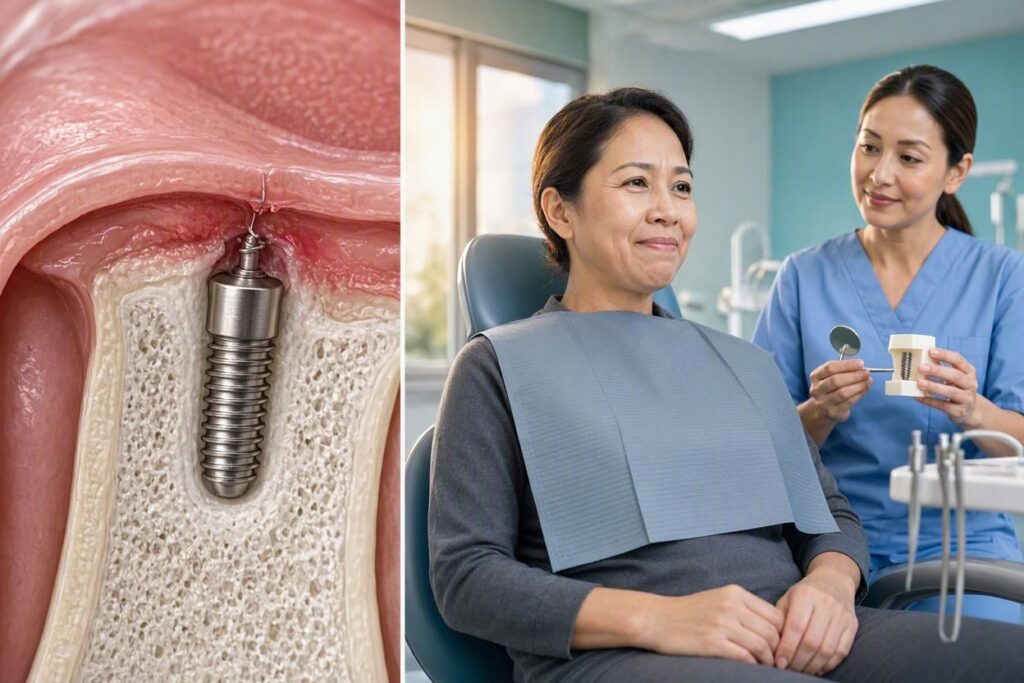
Mini implants are exactly what they sound like. They are thinner in diameter.
- Standard Implant: Usually 3.5mm to 5mm in diameter.
- Mini Implant: Usually 1.8mm to 2.5mm in diameter.
They look like small titanium screws. They are most commonly used to stabilize lower dentures.
The Placement Procedure: Why It Is Less Uncomfortable
Comfort is often defined by the invasiveness of the surgery.
Standard Implant Surgery
- Incision in the gum.
- Drilling a hole in the bone (osteotomy).
- Placing the screw.
- Stitches.
- Pain, swelling, bruising for 3-7 days.
Mini Implant Surgery
- In many cases, no incision is needed (flapless surgery).
- A very small hole is drilled through the gum directly into the bone.
- The mini screw is twisted in.
- No stitches.
- Minimal pain. Most patients report only mild soreness that resolves with Tylenol or Ibuprofen.
The Verdict: The lack of an incision and stitches makes the “tiny” implant experience much less uncomfortable. You can often eat soft foods the same day without much trouble.
The “Immediate Load” Factor
Mini implants are often loaded immediately. This means the denture is snapped onto them the same day.
- Comfort: The denture is now held firmly by the implants. This eliminates the rubbing and sore spots caused by floating dentures. In the long run, this is much more comfortable than a standard denture.
The Limitations and Long-Term Discomfort
While the surgery is easy, mini implants have drawbacks that can cause discomfort later.
1. They Are Less Durable
Because they are thin, they are not as strong as standard implants. If you bite down too hard, they can bend or break. A broken implant can cause soreness or require removal.
2. The “O-Ring” Maintenance
Mini implants often hold dentures using rubber O-rings.
- The Issue: These rubber rings wear out every 6-12 months. When they wear out, the denture becomes loose and wobbles. This can rub against your gums and cause discomfort. You must visit the dentist to have the rings replaced.
3. Bone Loss
Mini implants do not preserve bone as well as standard implants. Over time, the bone might shrink around them, causing the denture to sit lower.
Comparing Comfort Levels
| Feature | Mini Implants | Standard Implants |
|---|---|---|
| Surgery Time | 30 minutes (less) | 1-2 hours |
| Anesthesia | Local | Local or Sedation |
| Pain Level (Day 1) | Mild (2/10) | Moderate (4-6/10) |
| Swelling/Bruising | Rare | Common |
| Need for Stitches | Usually No | Usually Yes |
| Long-term Stability | Lower | High |
Who Are Tiny Implants For?
Mini implants are a great solution for specific people:
- Patients with thin bone: If you have severe bone loss in the lower jaw and cannot afford a bone graft, a mini implant might fit where a standard one cannot.
- Patients with medical issues: If you cannot undergo extensive surgery due to age or health, the flapless placement of minis is much safer.
- Denture stabilization: If you just want your bottom denture to stop floating, minis are a budget-friendly way to anchor it.
Conclusion
Tiny dental implants are generally less uncomfortable to place than standard implants. The minimally invasive procedure means less pain, swelling, and recovery time. However, they may require more maintenance (O-ring replacements) and are not as durable for heavy chewing. If you value a fast, easy solution for a loose denture, the comfort of mini implants is hard to beat.
Additional Resource
For more on implant types, visit the International Congress of Oral Implantologists at www.icoi.org