In Japan How Much Does A Dental Cleaning Cost?
A Complete Guide to Dental Cleaning Prices in Japan
Japan is known for many things: cherry blossoms, bullet trains, sushi, and a healthcare system that ranks among the best in the world. If you live in Japan or plan to visit, you might wonder about dental care costs—especially something as routine as a dental cleaning.
Maybe you’re an expat in Tokyo who needs a checkup. Perhaps you’re traveling in Osaka and want to get your teeth cleaned. You could be a student in Kyoto looking for an affordable dentist. Or you’re simply curious about how Japanese dental prices compare to your home country.
Whatever your situation, you want a clear answer: How much does a dental cleaning cost in Japan?
The honest answer is: it depends on whether you use national health insurance, what type of cleaning you need, and where you go.
In this guide, we’ll break down real prices across Japan. We’ll explain how the insurance system works, what affects costs, and how to find an affordable dentist. We’ll also cover what to expect during a cleaning and answer common questions.
What Is a Dental Cleaning?
A dental cleaning—sometimes called scaling or prophylaxis—is a procedure that removes plaque and tartar from your teeth. It’s different from brushing and flossing at home. A professional cleaning reaches areas you can’t clean on your own, especially below the gum line.
Regular cleanings help prevent:
- Cavities
- Gum disease (gingivitis and periodontitis)
- Bad breath
- Tooth loss
In Japan, dental cleanings are often part of a routine checkup. Dentists and dental hygienists perform them. The goal is to keep your mouth healthy and catch problems early.
Types of Dental Cleanings in Japan
Japanese dental offices offer several types of cleanings:
Scaling: This removes tartar above and below the gum line. It’s the most common type and is usually covered by insurance.
PMTC (Professional Mechanical Tooth Cleaning): This is a more thorough cleaning using special instruments and polishing paste. It focuses on removing stains and biofilm. It’s often not covered by insurance.
Root planing: This is a deeper cleaning for gum disease. It smooths the root surfaces to help gums reattach. It’s usually covered by insurance if medically necessary.
Whitening: This is cosmetic and not covered by insurance. It’s different from a cleaning.
For this article, we’ll focus on scaling and PMTC, since those are what most people mean by “dental cleaning.”
The Big Question: How Much Does a Dental Cleaning Cost in Japan?
Now let’s get to the numbers.
Dental cleaning costs in Japan vary depending on whether you use national health insurance, the type of cleaning, and the clinic.
Here’s a breakdown:
| Type of Cleaning | With Insurance (30% co-pay) | Without Insurance |
|---|---|---|
| Basic scaling (one visit) | ¥1,500 – ¥3,000 | ¥5,000 – ¥10,000 |
| PMTC (one visit) | ¥3,000 – ¥5,000 | ¥8,000 – ¥15,000 |
| Root planing (per quadrant) | ¥2,000 – ¥4,000 | ¥10,000 – ¥20,000 |
| Checkup + cleaning | ¥2,000 – ¥4,000 | ¥8,000 – ¥15,000 |
These prices are approximate. They vary by clinic, city, and the complexity of your case.
What’s Included?
A typical cleaning appointment in Japan includes:
- Examination
- Scaling
- Polishing
- Fluoride application (sometimes)
- Oral hygiene instructions
Some clinics charge separately for X-rays or other diagnostics. Always ask for a breakdown.
Why Prices Vary
You might pay ¥1,500 at one clinic and ¥5,000 at another for what sounds like the same cleaning. Here’s why:
Insurance coverage: If you have national health insurance, your co-pay is 30%. Without insurance, you pay the full price.
Clinic location: A clinic in central Tokyo charges more than one in rural Hokkaido.
Type of cleaning: Basic scaling costs less than PMTC.
Dentist vs. hygienist: In Japan, dental hygienists perform many cleanings. Their fees are lower than a dentist’s.
Time spent: A quick scaling takes less time than a thorough PMTC.
Additional services: X-rays, fluoride, and other add-ons increase the cost.
How Japan’s Dental Insurance System Works
Japan has universal health coverage. Everyone who lives in Japan—including foreign residents—must enroll in a public health insurance plan. There are two main types:
- Employee Health Insurance (Kenko Hoken): For employees and their dependents.
- National Health Insurance (Kokumin Kenko Hoken): For self-employed, students, retirees, and others.
Both plans cover dental treatment. You typically pay 30% of the cost. Children under 18 often pay 20% or less. Elderly people pay 10-30% depending on income.
What’s Covered?
The Japanese health insurance system covers treatments that are medically necessary. This includes:
- Examinations
- X-rays
- Scaling (for gum disease)
- Fillings
- Root canals
- Extractions
- Crowns (certain types)
What’s Not Covered?
Cosmetic procedures are not covered. This includes:
- Whitening
- Orthodontics (braces)
- Implants (usually)
- PMTC (often considered preventive, not medical)
- Ceramic crowns (unless medically necessary)
If you want a non-covered treatment, you pay the full price. Some clinics offer a mix of covered and non-covered services.
How to Use Insurance
When you visit a dentist in Japan, show your insurance card. The clinic will bill you for your co-pay. You don’t need to submit claims yourself.
If you don’t have insurance, you’ll pay the full price. Some clinics offer discounts for cash payment or for students.
Dental Cleaning Costs by City in Japan
Prices vary across Japan. Here’s what you can expect in different cities.
| City | Basic Scaling (with insurance) | PMTC (without insurance) |
|---|---|---|
| Tokyo | ¥2,000 – ¥3,500 | ¥10,000 – ¥15,000 |
| Osaka | ¥1,800 – ¥3,000 | ¥8,000 – ¥12,000 |
| Kyoto | ¥1,800 – ¥3,000 | ¥8,000 – ¥12,000 |
| Nagoya | ¥1,700 – ¥2,800 | ¥7,000 – ¥11,000 |
| Fukuoka | ¥1,500 – ¥2,500 | ¥6,000 – ¥10,000 |
| Sapporo | ¥1,500 – ¥2,500 | ¥6,000 – ¥10,000 |
| Naha (Okinawa) | ¥1,500 – ¥2,500 | ¥6,000 – ¥10,000 |
| Rural areas | ¥1,200 – ¥2,000 | ¥5,000 – ¥8,000 |
Why the Difference?
Tokyo has the highest costs. Rent, staff salaries, and demand are all higher.
Osaka, Kyoto, and Nagoya are slightly more affordable but still major cities.
Fukuoka, Sapporo, and Naha offer moderate prices.
Rural areas are the cheapest. But you may have fewer clinics to choose from.
What Affects the Cost of a Dental Cleaning in Japan?
Let’s look at the factors that determine what you’ll pay.
1. Insurance Status
This is the biggest factor. With insurance, you pay 30% of the cost. Without it, you pay 100%.
2. Type of Cleaning
Basic scaling is cheaper than PMTC. Root planing is more expensive because it’s more involved.
3. Clinic Type
A large hospital or university dental clinic may charge different rates than a small private clinic. Private clinics often charge more for non-covered services.
4. Location
As shown above, city and region matter.
5. Time and Complexity
A quick cleaning for a healthy mouth costs less than a deep cleaning for someone with gum disease.
6. Additional Services
X-rays, fluoride treatments, and other add-ons increase the cost.
7. Dentist vs. Hygienist
In Japan, dental hygienists are licensed to perform cleanings. Their fees are lower than a dentist’s. Many clinics use hygienists for routine cleanings.
8. Frequency
Some clinics offer discounts if you book multiple cleanings in advance. Others have membership plans.
Comparing Dental Cleaning Costs: Japan vs. Other Countries
How does Japan compare to other countries? Here’s a rough comparison for a basic cleaning without insurance.
| Country | Basic Cleaning Cost (USD equivalent) |
|---|---|
| Japan | $50 – $100 |
| United States | $75 – $200 |
| United Kingdom | $50 – $150 (private) |
| Canada | $100 – $200 |
| Australia | $100 – $200 |
| South Korea | $50 – $100 |
| Thailand | $30 – $60 |
| Mexico | $25 – $50 |
Japan is relatively affordable, especially with insurance. Without insurance, it’s still cheaper than the US, Canada, and Australia.
Does Insurance Cover Dental Cleanings in Japan?
Yes, but with conditions.
Basic scaling for gum disease is covered. Your co-pay is 30%. If you have no symptoms of gum disease, a routine cleaning might not be covered. In that case, you’d pay out of pocket.
PMTC is usually not covered because it’s considered preventive. Some clinics offer it as a non-covered service.
Root planing is covered if you have periodontitis. Your dentist will diagnose the condition and submit the appropriate codes.
What If You Don’t Have Insurance?
If you’re a tourist or don’t have Japanese health insurance, you’ll pay the full price. Some clinics offer discounts for cash payment. Travel insurance may cover dental emergencies, but not routine cleanings.
What About Children?
Children under 18 often pay 20% or less. Some municipalities offer free dental checkups and cleanings for children. Check with your local government.
How to Save on Dental Cleanings in Japan
You don’t have to pay full price. Here are practical ways to reduce your costs.
1. Use National Health Insurance
If you’re a resident, enroll in national health insurance. It’s mandatory, but it also saves you money.
2. Go to a Clinic That Accepts Insurance
Most clinics do, but some private clinics focus on non-covered services. Check before you book.
3. Choose Basic Scaling Over PMTC
If you just need a routine cleaning, basic scaling is cheaper. PMTC is optional.
4. Visit a Dental School
Dental schools in Japan offer discounted treatment. Students perform the work under supervision. Savings can be 30-50%.
5. Look for Coupons
Some Japanese dental clinics offer coupons through apps like Hot Pepper Beauty. You can find discounts on cleanings and checkups.
6. Ask About Membership Plans
Some clinics offer monthly or annual plans that include cleanings. If you go regularly, this can save money.
7. Go to a Clinic in a Less Expensive Area
If you live in a big city, consider a clinic in a nearby suburb. Prices are often lower.
8. Combine Services
Some clinics offer a discount if you get a checkup and cleaning together.
9. Use Student Discounts
If you’re a student, ask about discounts. Some clinics offer them.
10. Prevent Problems
The best way to save is to avoid needing expensive treatments. Brush, floss, and get regular cleanings.
The Process: What to Expect at a Japanese Dental Clinic
If you’ve never been to a dentist in Japan, here’s what to expect.
Step 1: Appointment
Most clinics require an appointment. You can book by phone or online. Some clinics accept walk-ins, but you may wait.
Step 2: Check-In
Show your insurance card. If you don’t have one, let the receptionist know.
Step 3: Examination
The dentist or hygienist examines your teeth and gums. They may take X-rays.
Step 4: Cleaning
The cleaning itself. Scaling removes tartar. Polishing smooths the teeth.
Step 5: Instructions
The dentist or hygienist gives you advice on brushing and flossing.
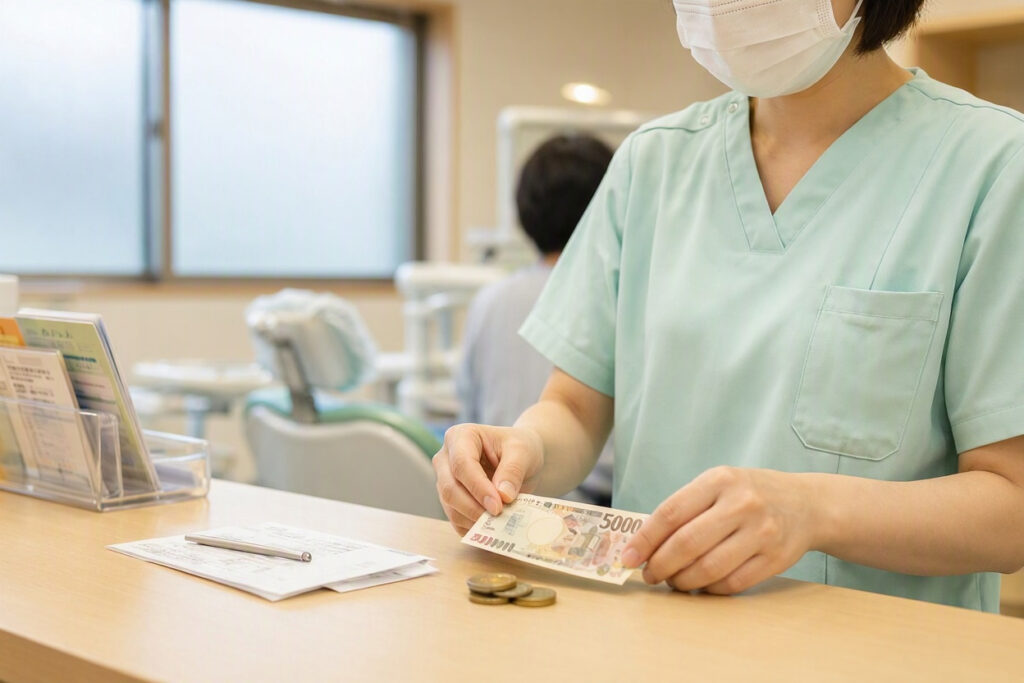
Step 6: Payment
You pay your co-pay or the full price. You may receive a receipt for insurance purposes.
Step 7: Follow-Up
If needed, you’ll schedule a follow-up appointment.
Language
Many dentists in big cities speak some English. But not all. If you don’t speak Japanese, consider bringing a translator or using a translation app. Some clinics have English-speaking staff.
Important Notes for Readers
Bring Your Insurance Card: You need it to get the reduced rate. If you forget it, you may have to pay full price and claim a refund later.
Ask About Costs Before Treatment: Don’t assume. Ask for a written estimate, especially for non-covered services.
Check If PMTC Is Covered: It usually isn’t. Ask before you agree.
Be Clear About What You Want: If you just want a cleaning, say so. Otherwise, the dentist may recommend other treatments.
Keep Your Receipts: If you have private insurance, you may need them for reimbursement.
Don’t Skip Regular Cleanings: Prevention is cheaper than treatment.
Learn Basic Dental Vocabulary: Words like “cleaning” (クリーニング), “scaling” (スケーリング), and “checkup” (検診) can help.
Frequently Asked Questions
How much does a dental cleaning cost in Japan?
A basic cleaning with insurance costs ¥1,500 to ¥3,000. Without insurance, it costs ¥5,000 to ¥10,000. PMTC costs more.
Is dental cleaning covered by Japanese health insurance?
Basic scaling for gum disease is covered. Routine cleanings may not be. PMTC is usually not covered.
Can tourists get dental cleanings in Japan?
Yes. You’ll pay the full price. Some clinics offer discounts for cash payment.
How often should I get a cleaning?
Most dentists recommend every 3-6 months. If you have gum disease, more often.
Do Japanese dentists speak English?
Some do, especially in big cities. But not all. Bring a translator or use an app if needed.
What is PMTC?
Professional Mechanical Tooth Cleaning. It’s a thorough cleaning that removes stains and biofilm. It’s often not covered by insurance.
Is scaling painful?
It can be uncomfortable, especially if you have sensitive gums. But it’s usually not painful. The dentist can use anaesthesia if needed.
How long does a cleaning take?
A basic cleaning takes 20-30 minutes. PMTC can take 45-60 minutes.
Can I get a cleaning without a checkup?
Some clinics offer cleaning-only appointments. But most require a checkup first.
What if I don’t have insurance?
You’ll pay the full price. Consider going to a dental school or looking for coupons.
Are there dental clinics for foreigners in Japan?
Yes. Some clinics cater to expats and tourists. They often have English-speaking staff.
Does Japan have free dental care for children?
Some municipalities offer free checkups and cleanings for children. Check with your local government.
Conclusion
Dental cleaning costs in Japan range from ¥1,500 to ¥3,000 with insurance, or ¥5,000 to ¥10,000 without. PMTC costs more and is usually not covered. Japan’s universal health insurance makes dental care affordable for residents. Tourists pay full price but still find it cheaper than many Western countries. With regular cleanings, you can prevent costly problems and keep your smile healthy.
Additional Resources
For more information on dental care in Japan, visit the Japan Dental Association at jda.or.jp.