
Swelling After Dental Implant: What’s Normal, What’s Not, and How to Heal Faster
So, you just got a dental implant. First, take a deep breath. You have made a solid choice for your long-term oral health.
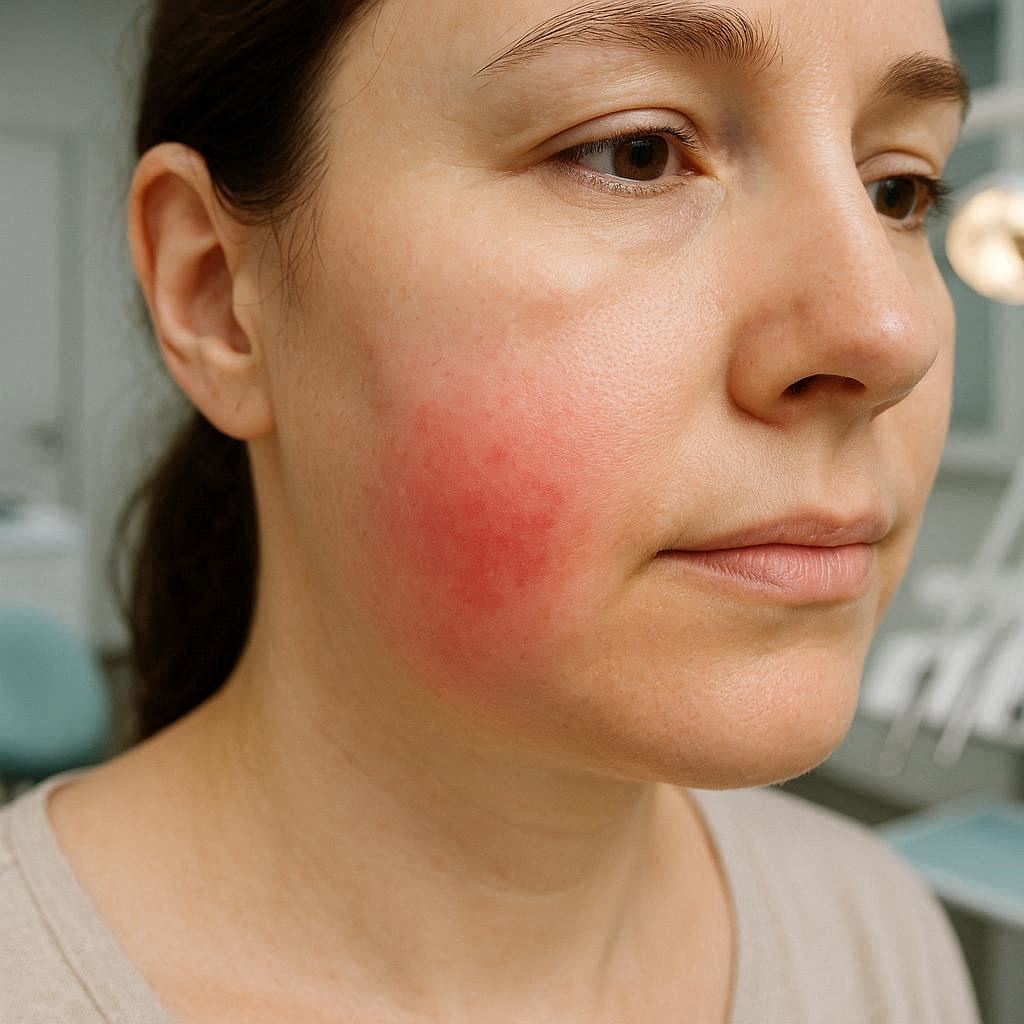
But now, you look in the mirror and notice your cheek looks a bit puffier than usual. Maybe it looks like you are storing nuts for the winter. Do not worry. You are not alone.
Swelling after a dental implant is not just common. It is expected. Think of it as your body’s natural alarm system. It sends extra fluid and healing cells to the surgical site. That puffiness means your immune system is working hard.
However, not all swelling is the same. Some puffiness is a good sign. Other types of swelling need a phone call to your dentist.
In this guide, we will walk through everything you need to know. You will learn how to tell normal swelling from a problem. You will get practical tips to reduce discomfort. And you will know exactly when to relax or when to ask for help.
Why Does Swelling Happen After a Dental Implant?
Your body does not know the difference between a cavity and a surgical drill. It only knows one thing: something changed.
When your dentist places a titanium post into your jawbone, that is a controlled injury. Please do not let the word “injury” scare you. It is a good injury. It triggers your body’s repair crew.
Here is what happens inside your mouth after the numbness wears off:
- Blood vessels expand to bring more oxygen and nutrients to the area.
- Fluid leaks into the surrounding tissues. This causes the visible puffiness.
- White blood cells rush to the site to prevent infection and start tissue repair.
That collection of fluid is what you see and feel as swelling. It usually peaks around 48 hours after surgery. Then, it slowly goes down.
Swelling is your friend. It protects the implant site and helps the bone start fusing with the titanium post. That process is called osseointegration. And you want it to happen smoothly.
Important Note for Readers: Do not try to stop all swelling with medication unless your dentist tells you to. Some inflammation is necessary for healing. Your goal is to manage discomfort, not eliminate the body’s natural response.
Normal Swelling vs. Concerning Swelling: How to Tell the Difference
This is the most important part of the article. Knowing the difference saves you from unnecessary worry and unnecessary trips to the clinic.
Let us break it down into a simple comparison.
| Feature | Normal Swelling | Concerning Swelling |
|---|---|---|
| Appearance | Soft, puffy, localized to one cheek or jaw area | Hard, tight, shiny skin, spreading to the neck or eye |
| Peak time | Day 2 or 3 after surgery | Gets worse after day 3 or appears suddenly later |
| Pain level | Mild to moderate, controlled by prescribed painkillers | Severe, throbbing, painkillers do not help |
| Skin color | Slightly pink or normal skin color | Red, purple, or hot to the touch |
| Other symptoms | None, or slight bruising (yellowish after a few days) | Fever, chills, bad taste, pus, difficulty swallowing or breathing |
| Duration | Starts to go down by day 4 or 5 | Stays the same or increases after day 4 |
A Closer Look at Normal Swelling
Normal swelling feels like a soft marshmallow under your skin. It might make you look a little lopsided. That is fine.
You may also see some bruising on your neck or under your chin a few days later. That is just gravity pulling old blood down. The bruise will turn yellow or green before it fades. This is completely normal.
A Closer Look at Concerning Swelling
You should call your dentist immediately if you notice any of these signs:
- Swelling that makes it hard to open your eye or swallow.
- A fever over 101°F (38.3°C).
- Pus oozing from the implant site.
- The swelling returns after it had already gone down.
These signs could mean an infection, an allergic reaction, or a hematoma (a collection of blood under the tissue). These are rare, but they need fast treatment.
The Day-by-Day Swelling Timeline
Let us make this very practical. Here is what you can expect each day after your dental implant surgery.
Day 0 (Surgery Day)
- Swelling level: None to very mild.
- What you feel: Numbness. You might not notice any puffiness until the anesthesia wears off completely.
- Action: Apply ice packs before the swelling even starts. Do not wait.
Day 1 (The Morning After)
- Swelling level: Mild to moderate. You will notice your cheek starting to round out.
- What you feel: Some tightness when you smile or open your mouth.
- Action: Continue ice packs (20 minutes on, 20 minutes off). Eat soft, cold foods like yogurt or smoothies.
Day 2 (Peak Swelling Begins)
- Swelling level: Moderate to significant. This is often the worst day.
- What you feel: Your face may look noticeably different. Do not panic.
- Action: Ice is still helpful. Keep your head elevated, even during sleep. Use two pillows.
Day 3 (Peak Day)
- Swelling level: Maximum. For most people, this is the puffiest day.
- What you feel: Tightness, mild discomfort, maybe a little bruising on the neck.
- Action: You can start switching to warm compresses if your dentist agrees. Warmth helps drain fluid.
Day 4 (The Turnaround)
- Swelling level: Starting to go down. You might notice it looks less “shiny” and more “wrinkly.”
- What you feel: Relief. Movement feels easier.
- Action: Gentle warm compresses. Light walking helps circulation and reduces swelling.
Day 5 to Day 7
- Swelling level: Noticeably reduced. By day 7, most swelling is gone or barely visible.
- What you feel: Almost back to normal, but the area may still feel firm to the touch.
- Action: Resume normal activities. Avoid heavy exercise for one more week.
Day 7 to Day 14
- Swelling level: Only visible to you (if you touch the area, you may feel a small bump).
- What you feel: That firmness is the bone healing around the implant. It is a good thing.
- Action: Go to your follow-up appointment so your dentist can check the healing.
How to Reduce Swelling After a Dental Implant: 10 Proven Methods
You do not have to just sit there and suffer. There are many safe, effective ways to bring the swelling down faster.
1. Ice, Ice, Baby (But Do It Right)
Ice is the number one tool for the first 48 hours. It constricts blood vessels and limits how much fluid leaks into your tissues.
The correct way:
- Use a gel pack, a bag of frozen peas, or ice cubes wrapped in a thin cloth.
- Never put ice directly on your skin. It can cause frostbite.
- Apply for 20 minutes.
- Remove for 20 minutes.
- Repeat as often as you like during the first two days.
2. Keep Your Head Elevated
Gravity is not your friend right after surgery. When you lie flat, fluid rushes to your head and face.
What to do:
- Sleep on your back with two or three pillows.
- If you have a recliner, sleep there for the first two nights.
- During the day, avoid bending over or lifting heavy objects.
3. Switch to Warm Compresses After 48 Hours
After the second day, ice stops helping. In fact, ice can delay healing if you use it too long.
When to switch: Start warm compresses on day 3 or when your dentist says so.
Why it works: Heat dilates blood vessels and helps your lymphatic system drain the stagnant fluid away.
How to do it:
- Soak a clean cloth in warm (not hot) water.
- Wring it out.
- Hold it against your cheek for 15 minutes.
- Repeat 3 to 4 times per day.
4. Eat the Right Foods
What you eat directly affects your swelling level. Some foods increase inflammation. Others reduce it.
Foods to eat (anti-inflammatory):
- Pineapple (contains bromelain, a natural enzyme that reduces swelling)
- Fatty fish (salmon, mackerel)
- Leafy greens
- Berries
- Turmeric and ginger (add to smoothies)
Foods to avoid (pro-inflammatory):
- Sugary snacks and sodas
- White bread and pasta
- Fried foods
- Alcohol (causes dehydration and increases swelling)
- Spicy foods (can irritate the surgical site)
5. Stay Hydrated, But Sip Carefully
Dehydration makes swelling worse. Your body holds onto fluid when it thinks water is scarce.
Drink: Water, herbal teas, coconut water.
Avoid: Straws (the suction can dislodge the blood clot), hot beverages (increase bleeding), and carbonated drinks (can irritate the wound).
Note for Readers: Do not use a straw for at least one week after dental implant surgery. The suction force can pull out the protective clot and lead to a painful condition called dry socket.
6. Gently Move Your Jaw
You do not want to exercise your body, but you do want to exercise your jaw. Stagnation makes swelling worse.
Gentle exercises starting on day 3:
- Open and close your mouth slowly, five times.
- Move your jaw side to side, gently.
- Smile as wide as you can, then relax.
Stop if you feel sharp pain. These movements encourage lymph fluid to drain away from your face.
7. Use Medications as Directed
Your dentist may prescribe or recommend:
- Ibuprofen (Advil, Motrin): Reduces both pain and inflammation. This is often better than acetaminophen for swelling.
- Acetaminophen (Tylenol): Good for pain, but does little for swelling.
- Antibiotics: Take the full course, even if you feel fine. This prevents infection that could cause swelling.
Do not take aspirin unless your dentist says so. Aspirin thins the blood and can make bruising and swelling worse.
8. Avoid Alcohol and Tobacco
This deserves its own section.
- Alcohol dilates blood vessels and increases fluid leakage. It also dehydrates you. Both make swelling worse.
- Nicotine constricts blood vessels so much that it starves the healing tissue of oxygen. This leads to more swelling, more pain, and a higher risk of implant failure.
If you smoke, your swelling will likely be worse and last longer. This is not a judgment. It is biology.
9. Try Natural Anti-Inflammatories (With Caution)
Some natural remedies have real science behind them.
- Arnica montana: A homeopathic remedy often used for bruising and swelling. Some studies show it helps. You can find it in gel or pill form.
- Bromelain: An enzyme from pineapple stems. Taking it between meals may reduce post-surgical swelling.
- Quercetin: A plant pigment that acts as a natural antihistamine and anti-inflammatory.
Important: Always tell your dentist about any supplements you take. Some can interfere with blood clotting or prescription medications.
10. Rest, Really Rest
Your body heals best when you are asleep or resting deeply. Stress hormones like cortisol increase inflammation.
Practical tips:
- Take three full days off work if possible.
- Avoid exercise for one week (increased blood flow can worsen swelling).
- Skip the sauna, hot tub, and intense cardio.
- Do not fly on an airplane for at least two weeks (cabin pressure changes can affect healing).
Common Mistakes That Make Swelling Worse
Even when you try your best, small mistakes can prolong your puffiness. Avoid these common traps.
Mistake #1: Using Ice for Too Long
Some people think if a little ice is good, a lot of ice is better. That is not true.
After 48 hours, ice slows down the healing process. It constricts blood vessels when you actually need increased blood flow to carry away waste products. Switch to heat on day three.
Mistake #2: Sleeping Flat
Sleeping on your side or stomach pushes fluid toward your face. Sleeping flat allows fluid to pool in your cheeks and around your eyes.
Fix: Prop yourself up. Use a travel neck pillow to keep your head from rolling to the side.
Mistake #3: Eating Hard or Crunchy Foods
Chips, nuts, crackers, and raw vegetables require chewing force. That force increases blood flow to the area and can restart bleeding, which leads to more swelling.
Stick to soft foods for at least five days: Mashed potatoes, scrambled eggs, smoothies, soup, oatmeal, and Greek yogurt.
Mistake #4: Skipping Pain Medication
Some people try to “tough it out” because they fear opioids or side effects. But pain causes your body to release stress hormones. Stress hormones increase inflammation.
Take your prescribed or recommended medication on a schedule for the first 48 hours. Do not wait for the pain to get bad.
Mistake #5: Spitting or Rinsing Forcefully
After surgery, a blood clot forms over the implant site. That clot is like a scab. If you spit, swish, or rinse hard, you can dislodge it.
What to do instead: Let saliva drip out of your mouth. If you must rinse, let the water flow gently over the area. Do not swish.
When to Call Your Dentist Immediately
Most swelling is harmless. But some situations are urgent. Do not wait for your follow-up appointment if you experience any of these.
Call right away if:
- You have trouble breathing or swallowing. This could be a severe allergic reaction or an infection spreading to your airway.
- Swelling spreads to your eye or neck. Normal swelling stays in the cheek and jaw area.
- You develop a fever over 101°F (38.3°C). A low-grade fever (99-100°F) is normal after surgery. Higher than that suggests infection.
- You see pus or oozing from the site. Clear or slightly bloody fluid is normal. Thick, yellow, or green pus is not.
- The pain suddenly gets worse after day 3. Healing pain should steadily improve. A sudden spike in pain could mean an infection or nerve issue.
- Your swelling does not go down at all after day 4. It should start visibly decreasing by day 4 or 5.
What your dentist will likely do:
- Examine the implant site.
- Take an X-ray to check the bone and implant position.
- Prescribe a stronger antibiotic if infection is present.
- In rare cases, drain the swelling with a small incision.
Quotation from an oral surgeon (paraphrased for clarity): “I tell all my patients the same thing: swelling is expected. Fever is not. If you have a fever and swelling together, do not email me. Do not text me. Call me immediately or go to urgent care.”
Swelling and Different Types of Dental Implants
Not all implant procedures are the same. The amount of swelling depends heavily on how complex your surgery was.
Let us look at different scenarios.
| Type of Implant Procedure | Expected Swelling Level | Peak Day | Notes |
|---|---|---|---|
| Single tooth implant | Mild to moderate | Day 2 | Swelling stays very localized to one tooth area |
| Multiple adjacent implants | Moderate | Day 2-3 | More tissue trauma means more swelling |
| Full arch (All-on-4 or All-on-6) | Significant | Day 3 | Your whole jaw may feel tight and puffy |
| Implant with bone graft | Moderate to significant | Day 3 | The graft adds extra tissue manipulation |
| Sinus lift + implant | Significant | Day 3 | Swelling may reach under your eye or cheekbone |
| Immediate implant (right after extraction) | Moderate | Day 2 | Similar to a single implant, but slightly more swelling |
Special Case: Sinus Lift Swelling
If you had a sinus lift along with your implant, your upper cheek and the area under your eye may swell. This can look alarming, but it is usually normal.
What helps for sinus lift swelling:
- Decongestants (ask your dentist first)
- Avoiding blowing your nose for two weeks
- Sleeping extra elevated (almost sitting up)
- Sneezing with your mouth open to reduce pressure
How Long Until Swelling Completely Disappears?
Most people look and feel normal by day 7 to day 10. However, a small amount of internal swelling can last much longer.
Here is a realistic timeline:
- Visible swelling: Gone by day 10 for most patients.
- Firmness to the touch: Can last 3 to 6 weeks. That is the bone healing.
- Complete tissue normalization: Up to 3 months. The area may feel slightly different for a while.
Do not worry if you touch your implant site a month later and it feels harder than the other side. That is the dense bone forming around the implant. It is a sign of success.
Swelling vs. Infection: A Deeper Comparison
This is where many readers get anxious. Let us make it very clear.
Signs that point to normal swelling (not infection):
- The swelling is soft and moves slightly when you press it.
- You have no fever or a very low-grade fever (under 100°F).
- The area is tender but not throbbing.
- Your pain gets better with medication and rest.
- The swelling decreases after day 3 or 4.
Signs that point to infection:
- The swelling is hard, hot, and red.
- You have a fever over 101°F.
- You see pus or smell a bad odor.
- The pain is deep and throbbing, and medication barely helps.
- The swelling gets worse after day 3 instead of better.
If you are unsure, call your dentist. A quick phone call can save you days of worry. Dentists expect these calls. You are not bothering them.
7-Day Healing Plan: A Practical Schedule
Here is a simple, day-by-day plan you can follow. Print it out or save it on your phone.
Day 0 (Surgery Day)
- Apply ice 20 minutes on, 20 off.
- Eat cold, soft food only.
- Take first dose of pain medication before numbness wears off.
- Do not rinse or spit.
Day 1
- Continue ice packs.
- Sleep with two pillows.
- Drink plenty of water (no straw).
- Rest all day.
Day 2 (Peak swelling likely)
- Ice packs in the morning.
- Switch to warm compresses in the evening if swelling looks stable.
- Eat anti-inflammatory foods (pineapple, berries).
- Avoid all exercise.
Day 3 (Still swollen, but peak should end today)
- Warm compresses only (no more ice).
- Gentle jaw movements.
- Short, slow walk around the house.
- Check for any signs of infection.
Day 4 (Swelling starts going down)
- Warm compresses 3 times per day.
- Resume light daily activities.
- Continue soft foods.
- You may see bruising on your neck. That is normal.
Day 5
- Swelling noticeably reduced.
- You can try slightly firmer foods (pasta, soft bread).
- Still no straws, spitting, or smoking.
- Call your dentist if swelling is the same as day 3.
Day 6-7
- Most swelling gone.
- You can return to work if you feel ready.
- Still avoid heavy lifting and intense sports.
- Schedule your follow-up appointment.
Frequently Asked Questions (FAQ)
Q1: Is it normal for swelling to get worse on day 2?
Yes. Day 2 and day 3 are almost always the worst days for swelling. This is normal. Do not panic. The swelling will start going down on day 4.
Q2: Can I use a cold pack from the freezer?
Yes, but wrap it in a thin, clean cloth. Never put the frozen pack directly on your skin. Your skin is numb right after surgery, and you could get frostbite without feeling it.
Q3: How long should I use ice?
Use ice for the first 48 hours only. After that, switch to warm compresses. Using ice for longer than 48 hours can slow down your healing.
Q4: My swelling went down on day 4, but came back on day 6. Is that bad?
It depends. If the swelling is mild and you have no fever or pain, it might just be normal fluctuation. But swelling that returns after going away is sometimes a sign of a late infection. Call your dentist to be safe.
Q5: Can I take ibuprofen and acetaminophen together?
Yes, but stagger them. Many dentists recommend taking ibuprofen every 6 hours and acetaminophen every 4 to 6 hours. This gives you continuous pain relief. Do not exceed the maximum daily dose of either medication. Read the labels carefully.
Q6: Does salt water rinse help swelling?
Warm salt water rinses (starting on day 2 or 3) can help keep the area clean, which prevents infection. But salt water does not directly reduce swelling. It is more for hygiene than for inflammation.
How to make it: Mix 1 teaspoon of salt in 8 ounces of warm water. Let it flow over the site. Do not swish or spit.
Q7: Will sleeping upright really make a difference?
Yes. A huge difference. Patients who sleep propped up for the first three nights have noticeably less swelling than those who sleep flat. Gravity is powerful.
Q8: I have swelling under my chin and down my neck. Should I worry?
Usually not. This is just bruising and fluid moving downward with gravity. It often looks yellow or purple. If the neck swelling is hard, hot, or makes it hard to turn your head, call your dentist.
Q9: Can I drink coffee after dental implant surgery?
It is best to avoid coffee for the first 48 hours. Caffeine can increase blood pressure and heart rate, which may worsen swelling and bleeding. After day 2, you can have it cold or lukewarm. Avoid hot coffee for one week.
Q10: How do I know if my body is rejecting the implant?
True implant rejection is extremely rare because titanium is biocompatible. What people call “rejection” is usually an infection or failed osseointegration. Signs include worsening swelling, mobility of the implant, and persistent pain after 2 weeks. See your dentist for an X-ray.
Additional Resources for Your Healing Journey
You do not have to navigate this alone. Here are trusted resources for more information.
- American Academy of Implant Dentistry (AAID):www.aaid.com
- Find patient education brochures and a dentist locator.
- American Dental Association (ADA):MouthHealthy.org
- Search for “dental implant recovery” for general guidelines.
- International Congress of Oral Implantologists (ICOI):www.icoi.org
- Offers patient-friendly guides on implant types and healing.
Note for Readers: Always verify online health information with your own dentist. Every mouth is different. What works for your friend may not work for you.
Conclusion
Swelling after a dental implant is a normal, healthy part of healing. It usually peaks on day 2 or 3 and goes away within a week. Ice, elevation, and anti-inflammatory foods are your best tools. Call your dentist if you have a fever, pus, or swelling that gets worse after day 3.
Stay patient with your body. The puffiness will fade, and you will be left with a strong, beautiful implant that lasts for decades.


