What Are the Symptoms of Sinus Perforation After Dental Implants?
You had implant surgery in your upper back jaw, and now something feels different. When you drink, liquid seems to find its way into your nose. When you blow air through your nose, you feel a strange bubbling sensation where your implant was placed. Your voice sounds slightly different, more nasal than before. These sensations are unsettling, and for good reason. Sinus perforation, an opening between the mouth and the maxillary sinus, is a recognized complication of dental implant surgery in the posterior maxilla. Understanding the symptoms, knowing when to seek help, and understanding how this complication is managed transforms fear into informed action. This guide provides a comprehensive overview of sinus perforation symptoms after dental implant surgery, from the subtle to the obvious, and explains what each symptom means for your health and your implant.
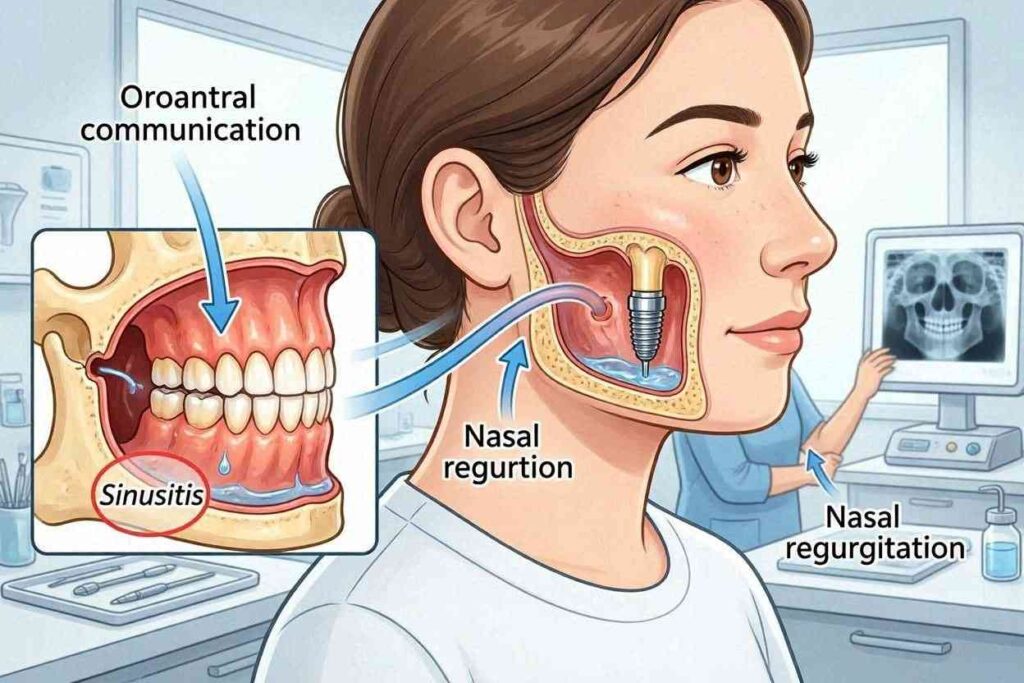
The Anatomy Behind Sinus Perforation
Understanding why sinus perforation occurs requires a basic understanding of the anatomy of the upper back jaw and its relationship to the maxillary sinus.
The Maxillary Sinus and Its Relationship to Upper Teeth
The maxillary sinuses are air-filled cavities located above the upper back teeth, on either side of the nose. They are the largest of the paranasal sinuses and extend from approximately the first premolar to the molar region. The floor of the maxillary sinus is the roof of the upper jaw in this area.
In many people, the roots of the upper molars and sometimes premolars extend into or very close to the sinus floor. The bone separating the tooth roots from the sinus cavity can be paper-thin, measuring less than 1 millimeter in some individuals. When these teeth are extracted, the sinus floor is often exposed or very close to the oral cavity.
After tooth extraction, the sinus tends to expand downward into the space previously occupied by the tooth roots. This process, called sinus pneumatization, continues over time, reducing the bone height available for implant placement. This is why sinus lift procedures are often necessary before implants can be placed in the posterior maxilla.
How Implant Surgery Can Create a Sinus Communication
During implant placement in the posterior maxilla, the implant site is prepared by drilling into the bone. If the available bone height is limited, the drill can penetrate the sinus floor, creating an opening between the oral cavity and the sinus. This opening is called a sinus communication or, if it is larger and does not heal spontaneously, an oroantral fistula.
Even when the bone height appears adequate on imaging, the sinus membrane can be perforated during drilling or implant placement. The membrane is thin and delicate, and it can tear even with careful surgical technique. The bone may be intact while the membrane above it is breached.
Sinus perforation can also occur during sinus lift surgery, when the sinus membrane is intentionally elevated from the sinus floor to create space for bone graft material. Membrane perforation is the most common complication of sinus lift procedures, occurring in 10 to 30 percent of cases depending on the technique used and the membrane thickness.
The Difference Between Perforation and Communication
A sinus perforation refers to a breach in the sinus membrane. The membrane, a thin lining that covers the inside of the sinus cavity, has a hole or tear. A sinus communication refers to an actual opening between the oral cavity and the sinus, where air and fluids can pass between the two spaces.
A small perforation may be contained within the bone, with no direct communication between the mouth and the sinus. The surgeon may detect it during the procedure and manage it immediately. A larger perforation or one that extends through the full thickness of bone and tissue creates a communication that the patient may notice through symptoms.
Not every sinus membrane perforation results in a symptomatic communication. Small perforations often heal spontaneously without the patient ever being aware they occurred. Larger communications are more likely to produce symptoms and require intervention.
Immediate Symptoms During or Shortly After Surgery
Some symptoms of sinus perforation appear during the surgical procedure or in the immediate post-operative period. These are often detected by the surgeon rather than the patient.
What the Surgeon May Detect
During implant site preparation or implant placement, the surgeon may notice a sudden change in resistance as the drill or implant enters the sinus cavity. This change in tactile sensation alerts the experienced surgeon to possible sinus involvement.
The surgeon may perform a nose-blowing test during the procedure. The patient is asked to pinch their nose and blow gently while the surgeon observes the surgical site. Bubbles appearing in the site indicate air passing from the sinus through a perforation into the oral cavity. This test confirms the presence and location of the communication.
Direct visualization of the sinus membrane perforation may be possible during the procedure. The surgeon may see the tear in the membrane or may see into the sinus cavity through the perforation.
What the Patient May Notice Immediately
During the procedure, if you are under local anesthesia only, you may be aware of the nose-blowing test being performed. You may feel air or fluid passing between your mouth and nose in a way that is not normal.
In the immediate post-operative period, you may notice that blood or fluid drains from your nose on the side of the surgery. This can occur when bleeding from the surgical site enters the sinus through the perforation and drains through the nasal passage.
You may notice that air passes from your mouth to your nose when you breathe, or that your voice sounds more nasal than usual. These changes result from the abnormal communication between the oral and nasal cavities.
Common Symptoms of Sinus Perforation
The symptoms of sinus perforation can range from subtle to obvious. Some patients experience only one or two symptoms, while others experience several.
Fluid Passage Between Mouth and Nose
The most characteristic symptom of a sinus communication is the passage of fluids between the mouth and the nose. When you drink water or other liquids, some of the liquid may come out of your nose on the side of the implant. This occurs because the liquid enters the sinus through the communication and drains through the nasal passage.
This symptom is often intermittent. It may occur only when you drink in a certain position or when you drink larger amounts. It may be more noticeable with thin liquids than with thicker ones. Any passage of liquid from mouth to nose after implant surgery warrants evaluation.
The reverse can also occur. When you blow your nose, air may bubble through the surgical site. You may feel a popping or bubbling sensation at the implant site. This indicates that air from the nose is passing through the communication into the mouth.
Air Passage and Voice Changes
A communication between the mouth and sinus allows air to escape from the mouth into the nasal cavity during speech. This can cause changes in your voice that you or others may notice.
Your voice may sound more nasal than usual, as if you have a cold or sinus congestion. Certain sounds that require air pressure in the mouth, such as plosive consonants like p and b, may sound different or be difficult to produce clearly.
You may be able to pass air intentionally through the communication. If you hold your nose and try to blow air through your mouth, you may feel air escaping through the implant site. Do not perform this test repeatedly, as it can enlarge the communication. Report the symptom to your surgeon instead.
Nasal Symptoms
Bloody nasal discharge on the side of the surgery is common in the first day or two, even without sinus perforation. Blood from the surgical site can enter the nasal passage through normal drainage pathways. However, persistent or increasing nasal discharge, particularly if it is clear and watery or foul-smelling, is more concerning.
Nasal congestion on the side of the surgery that does not resolve may indicate sinus inflammation related to the communication. The sinus membrane, irritated by the communication and possibly by oral bacteria entering the sinus, responds with inflammation and increased mucus production.
Post-nasal drip, the sensation of mucus draining down the back of the throat, can occur when the sinus produces excess mucus in response to irritation. This may cause throat clearing, coughing, or a sensation of something in the throat.
Unusual Sensations at the Surgical Site
A bubbling or popping sensation at the implant site when you breathe, swallow, or blow your nose indicates air moving through the communication. This sensation is often described as feeling like bubbles popping or a fluttering sensation under the gum.
A feeling of pressure or fullness in the sinus on the side of the surgery can indicate sinus inflammation or fluid accumulation. This may be accompanied by a dull ache in the cheek or upper teeth.
Whistling sounds when breathing or speaking, caused by air passing through a small opening, can occur with small communications. The sound may be audible to the patient and sometimes to others.
Taste and Smell Disturbances
Oral bacteria entering the sinus through a communication can cause infection and produce foul-smelling discharge. You may notice a bad taste in your mouth that localizes to the implant site and does not resolve with oral hygiene. You may notice a foul odor when you breathe through your nose.
A metallic taste, possibly from blood or from the implant itself if it is exposed to the sinus environment, has been reported by some patients with sinus communications.
Altered sense of smell on the affected side can occur with sinus inflammation or infection. Foods may taste different because smell is a major component of taste perception.
Symptoms That Indicate Complications
A sinus communication that does not heal or that becomes infected can lead to more serious complications with additional symptoms.
Acute Sinusitis
Bacteria from the mouth can enter the sinus through the communication and cause acute sinusitis. The symptoms include facial pain or pressure on the affected side, particularly over the cheek and around the eye. The pain may worsen when bending forward.
Thick, discolored nasal discharge, typically yellow or green, indicates infection. This differs from the clear or blood-tinged drainage that can be normal after surgery.
Fever, fatigue, and general malaise can accompany acute sinusitis. These systemic symptoms indicate that the infection is established and the body is mounting an immune response.
Headache localized to the frontal or maxillary area, dental pain affecting multiple upper teeth on the affected side, and ear pressure or fullness are common sinusitis symptoms.
Chronic Sinusitis
If a sinus communication persists without treatment, chronic sinusitis can develop. The symptoms are similar to acute sinusitis but persist for weeks or months and may be less intense.
Chronic post-nasal drip, persistent nasal congestion, chronic cough particularly at night, and a persistent bad taste or odor are common symptoms of chronic sinusitis related to an oroantral fistula.
Chronic sinusitis can be difficult to distinguish from other causes of these symptoms, particularly if the patient does not connect them to the implant surgery. Any persistent sinus symptoms on the side of a maxillary implant warrant investigation.
Graft Infection or Loss
If a sinus lift was performed and the sinus membrane was perforated, the bone graft material placed beneath the membrane can become infected. Symptoms include increasing pain, swelling, purulent discharge from the nose or surgical site, and possibly fever.
Graft particles may be lost through the nose if the communication is large. The patient may notice gritty material in their nasal discharge. This indicates that the graft is being lost and the sinus lift is failing.
Infection of graft material in the sinus is a serious complication that typically requires surgical removal of the infected graft and management of the sinus communication.
Distinguishing Perforation Symptoms from Normal Post-Operative Symptoms
Many normal post-operative symptoms after upper jaw implant surgery overlap with the symptoms of sinus perforation. Distinguishing between them is essential to avoid unnecessary worry while ensuring genuine problems are identified.
Normal Post-Operative Symptoms After Upper Jaw Surgery
Some nasal drainage of blood-tinged fluid is normal for the first 24 to 48 hours after upper jaw implant surgery, even without sinus perforation. Blood from the surgical site can track into the nasal passage through normal anatomical pathways.
A feeling of fullness or pressure in the sinus is common after surgery due to post-operative swelling and inflammation. This should improve over the first week, not worsen.
Minor voice changes due to swelling in the surgical area can occur without sinus communication. These changes should resolve as swelling subsides.
When Symptoms Suggest Perforation Rather Than Normal Healing
The passage of liquid from the mouth to the nose is the most specific symptom of a sinus communication. This does not occur with normal healing and should always prompt evaluation.
Bubbling or popping sensations at the surgical site when breathing or blowing the nose are not normal post-operative symptoms and suggest a communication.
Symptoms that worsen after the first few days, rather than improving, suggest a complication rather than normal healing. Normal post-operative symptoms should peak at 48 to 72 hours and then steadily improve.
Symptoms that persist beyond the first week, including nasal congestion, discharge, or altered sensation, warrant evaluation even if they seem mild.
When to Contact Your Surgeon
Certain symptoms warrant immediate communication with your surgical team, while others can be reported at the next scheduled follow-up.
Symptoms Requiring Same-Day Contact
Liquid passing from your mouth to your nose, even a small amount and even if it happens only once, should be reported immediately. This is the most definitive symptom of a sinus communication.
A bubbling or popping sensation at the implant site is similarly definitive and should be reported immediately.
Significant nasal bleeding that is not controlled with gentle pressure, or bleeding that increases rather than decreases after the first day, warrants prompt attention.
Severe pain, particularly if it is not controlled by prescribed medication, and swelling that increases after the first three days may indicate infection and require evaluation.
Symptoms to Report at Your Next Visit
Mild, intermittent nasal congestion that is improving may be normal post-operative inflammation. Mention it at your scheduled follow-up, but it does not typically require an urgent call unless it worsens.
Minor voice changes that are improving as swelling resolves can be discussed at the next scheduled visit.
Clear, minimal nasal drainage without other symptoms may be normal. Report it at your follow-up so your surgeon can assess whether it represents a concern.
How Surgeons Manage Sinus Perforation
Understanding how sinus perforations are managed helps patients know what to expect if this complication occurs.
Intraoperative Management
When the surgeon detects a sinus membrane perforation during the procedure, management begins immediately. Small perforations of less than 5 millimeters may be left to heal spontaneously, particularly if the membrane is otherwise intact around the perforation.
Larger perforations may be repaired with a collagen membrane placed over the defect. This membrane serves as a scaffold for new tissue formation and seals the communication.
If the perforation is large or cannot be adequately repaired, the surgeon may abort the implant placement and allow the site to heal before attempting the procedure again. This is disappointing but protects against more serious complications.
Post-Operative Management
If a sinus communication is present after surgery, the patient must follow specific precautions to allow healing. These include not blowing the nose, sneezing with the mouth open, not using straws, not smoking, and avoiding activities that create pressure changes in the sinus.
Antibiotics are typically prescribed when a sinus communication is present to prevent bacterial contamination of the sinus from oral flora. A decongestant may be prescribed to maintain sinus drainage and reduce congestion.
Most small communications heal spontaneously within two to four weeks with these conservative measures. The surgeon monitors healing at follow-up visits.
Surgical Repair of Persistent Communications
A communication that does not heal spontaneously, or one that is large at the time of surgery, requires surgical repair. This procedure, called oroantral fistula closure, is typically performed by an oral and maxillofacial surgeon.
The repair involves mobilizing local tissue, typically a flap of gum and cheek tissue, to cover the communication and provide a vascularized seal. The tissue is sutured in place, and the site heals over several weeks.
Bone grafting at the site may be performed simultaneously or in a staged procedure, depending on the surgeon’s assessment. The repaired site must heal completely before an implant can be placed.
Prognosis for the Implant
If the sinus communication heals without infection and the implant is stable, the implant may be retained. The surgeon monitors the implant through the healing period and proceeds with restoration when osseointegration is confirmed.
If the communication leads to infection or if the implant is involved in the communication, the implant may need to be removed. After the site heals and the sinus communication is repaired, a new implant can be planned, often with a sinus lift to create additional bone height.
Conclusion
The most characteristic symptom of sinus perforation after dental implant surgery is the passage of liquid from the mouth to the nose when drinking, which indicates a communication between the oral cavity and the maxillary sinus that should be reported to the surgeon immediately. Other significant symptoms include a bubbling or popping sensation at the implant site when breathing or blowing the nose, air escaping through the surgical site, voice changes including increased nasality, and persistent or worsening nasal symptoms including discharge, congestion, and post-nasal drip. Normal post-operative symptoms such as mild nasal drainage, sinus pressure, and minor voice changes from swelling can overlap with perforation symptoms, but normal healing symptoms should improve after the first few days while perforation symptoms persist or worsen. Small sinus perforations often heal spontaneously with conservative management including antibiotics, sinus precautions, and close monitoring, while larger or persistent communications require surgical repair, and the implant may be retained if it is stable and the communication heals without infection.
Frequently Asked Questions
How common is sinus perforation during dental implant surgery?
Sinus membrane perforation occurs in approximately 10 to 30 percent of sinus lift procedures. Perforation during standard implant placement in the posterior maxilla is less common but does occur, particularly when the available bone height is limited. Most perforations are small and heal without long-term consequences.
Can sinus perforation heal on its own?
Yes. Small perforations of less than 5 millimeters typically heal spontaneously within two to four weeks, provided the patient follows sinus precautions including not blowing the nose, sneezing with the mouth open, and avoiding straws and smoking. Larger communications may require surgical repair.
What does sinus perforation feel like?
During the procedure, you may not feel the perforation itself. After surgery, you may notice liquid coming from your nose when you drink, a bubbling sensation at the implant site when you breathe or blow your nose, nasal congestion or discharge, or a change in your voice. The passage of liquid from mouth to nose is the most specific symptom.
How long does it take for a sinus communication to heal?
Small communications typically heal within two to four weeks with conservative management. Larger communications or those that become infected may take longer or require surgical repair. Your surgeon monitors healing at follow-up visits.
Will I lose my implant if I have a sinus perforation?
Not necessarily. If the perforation heals without infection and the implant is stable, the implant can be retained. If the perforation leads to infection involving the implant, or if the implant itself is within the sinus, removal may be necessary. The implant can be replaced after the site heals.
Can I fly with a sinus perforation?
Flying with a known sinus communication is not recommended. Cabin pressure changes can force air through the communication, potentially enlarging it and causing pain or further complications. Wait until the communication has healed and your surgeon has cleared you for air travel.
What precautions should I take if I have a sinus perforation?
Do not blow your nose. If you must sneeze, do so with your mouth open. Do not use straws. Do not smoke. Do not play wind instruments. Avoid activities that create pressure changes including scuba diving and flying. Take prescribed antibiotics and decongestants as directed. Follow up with your surgeon as scheduled.
Can a sinus perforation cause long-term problems?
Most sinus perforations heal without long-term consequences. Persistent communications that do not heal can lead to chronic sinusitis, requiring surgical repair. In rare cases, chronic sinusitis can be difficult to resolve even after fistula closure. Prompt management of sinus perforation minimizes the risk of long-term problems.
Additional Resource
American Association of Oral and Maxillofacial Surgeons: Sinus Lift and Sinus Complications
https://myoms.org/procedures/dental-implant-surgery