What Causes Dental Implant Pain?
Dental implant surgery, like any surgical procedure, involves a recovery period during which some discomfort is normal. However, not all pain after implant treatment is expected or benign. Understanding the difference between normal post-operative discomfort and pain signaling a problem empowers patients to seek timely intervention when necessary. This article explores the various causes of dental implant pain, from the expected healing sensations to the warning signs of complications requiring professional attention.
Normal Post-Operative Discomfort
Distinguishing normal healing sensations from pathological pain is the first step in managing the implant recovery experience.
The Expected Inflammatory Response
Surgery creates tissue injury, and the body responds with inflammation. This inflammatory response is necessary for healing. Blood vessels dilate, bringing immune cells and nutrients to the surgical site. Swelling, redness, warmth, and mild to moderate discomfort characterize this normal response. The peak of post-operative discomfort typically occurs 48 to 72 hours after surgery, then gradually subsides over the following days.
Patients describe normal post-implant discomfort as aching, throbbing, or pressure at the surgical site. The sensation is generally manageable with over-the-counter analgesics or prescribed pain medication used as directed. Sharp, stabbing, or escalating pain is not typical and warrants evaluation.
Soft Tissue Soreness
The gum tissue manipulated during surgery becomes sore. Incisions, flap reflection, and suturing all create soft tissue trauma. This soreness is localized to the surgical area and improves as the tissue heals. Sutures may cause mild irritation as the tissue knits together. Once sutures are removed or dissolve, usually at seven to fourteen days post-operatively, this irritation resolves.
Adjacent Tooth Sensitivity
Teeth adjacent to the implant site may experience temporary sensitivity. The surgical manipulation, even when careful, can disturb the periodontal ligament of neighboring teeth. This sensitivity is usually mild, transient, and resolves without intervention. It should not be confused with frank pain in the adjacent teeth, which may indicate inadvertent injury.
Surgical Complications Causing Pain
Some post-implant pain results from identifiable surgical complications.
Nerve Injury
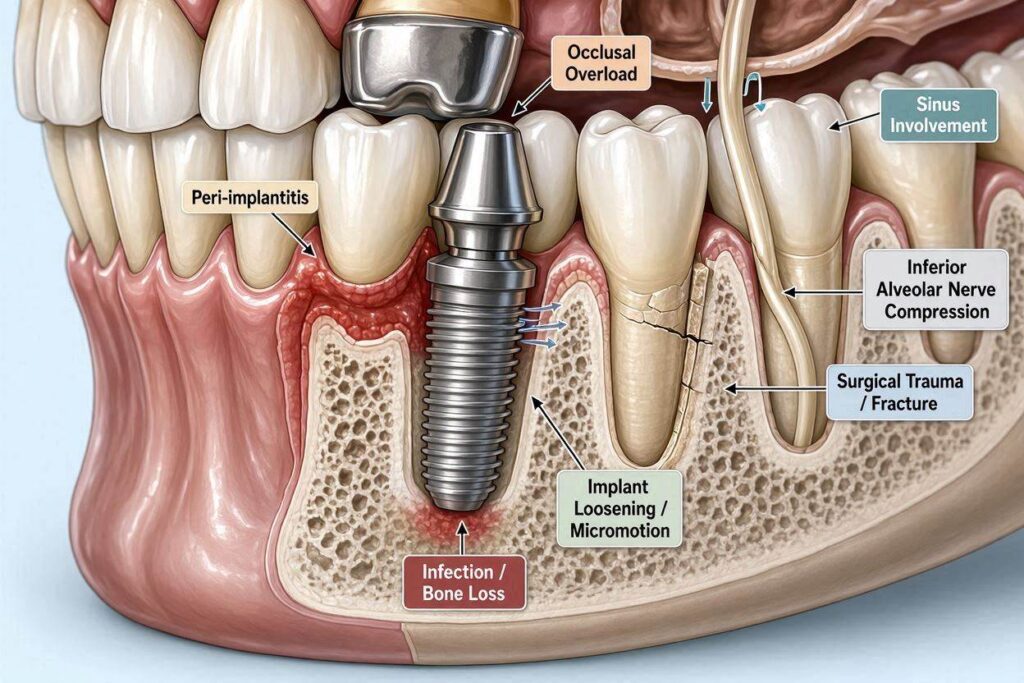
The inferior alveolar nerve, which provides sensation to the lower lip and chin, runs through the mandible in proximity to posterior implant sites. The mental nerve, a branch of the inferior alveolar nerve, exits the mandible near the premolar region. Injury to these nerves during implant surgery causes altered sensation or pain.
Nerve injury may manifest as numbness, tingling, burning, or frank pain in the lip, chin, gum, or teeth on the affected side. The onset is immediate upon resolution of local anesthesia. Most sensory disturbances from mild nerve trauma resolve spontaneously over weeks to months. Severe nerve transection, where the implant or drill has severed the nerve, produces permanent sensory changes and may cause neuropathic pain.
Prevention through careful preoperative imaging and surgical planning is paramount. Cone beam CT scanning visualizes the nerve canal in three dimensions, allowing the surgeon to plan implant placement with adequate safety margins.
Infection at the Surgical Site
Post-operative infection causes pain that differs from normal healing discomfort. Signs of infection include increasing pain after the expected peak, throbbing pain that disturbs sleep, purulent discharge from the surgical site, foul taste, swelling that increases rather than decreases after day three, and systemic symptoms such as fever or malaise.
Surgical site infection requires prompt treatment with antibiotics and possibly surgical drainage or debridement. Delayed treatment allows the infection to extend, potentially compromising the implant or spreading to adjacent anatomical spaces.
Excessive Surgical Trauma
Overly aggressive surgery, prolonged procedures, or poor tissue handling increase post-operative pain. Excessive heat generation during implant site preparation, caused by dull drills or inadequate irrigation, damages bone. This thermal injury impairs healing and increases discomfort. Patients undergoing surgery with experienced, meticulous clinicians generally experience less post-operative pain than those treated with less refined technique.
Healing Phase Complications
Problems may arise during the osseointegration period, weeks to months after surgery.
Failed Osseointegration
When the implant fails to integrate with the bone, pain may be the presenting symptom. Early implant failure typically manifests as mobility of the implant, discomfort when chewing, or a dull ache at the implant site. Radiographic examination reveals a radiolucent zone around the implant where bone should have formed. Failed implants require removal.
Overheating of the Implant During Function
Premature loading of an implant before osseointegration is complete can cause micro-motion that disrupts the healing bone-implant interface. The patient may experience pain when the implant is used for chewing. This scenario occurs when a temporary crown is placed too soon or when the patient inadvertently chews on the implant site.
Peri-Implant Mucositis
Peri-implant mucositis is an inflammatory condition of the soft tissue surrounding an implant. It is analogous to gingivitis around natural teeth. The tissue becomes red, swollen, and bleeds easily on probing. Discomfort is generally mild, consisting of tenderness or sensitivity. Mucositis is reversible with professional cleaning and improved oral hygiene. Left untreated, it may progress to peri-implantitis.
Late Complications Causing Pain
Problems can arise years after successful implant treatment.
Peri-Implantitis
Peri-implantitis is the most serious long-term complication of implant treatment. It involves inflammation of the peri-implant tissues with progressive loss of supporting bone. The condition is analogous to periodontitis around natural teeth. As bone loss progresses, the implant may develop mobility, deep pockets, and purulent discharge.
Pain from peri-implantitis is often not severe initially. Dull aching, tenderness to pressure, and bleeding on brushing are common early complaints. As bone loss advances, secondary infection may cause more acute pain. Treatment involves mechanical debridement, antimicrobial therapy, and often surgical access to clean the implant surface and regenerate lost bone where possible.
Mechanical Complications
Implant restorations involve multiple components that can fail mechanically.
Screw Loosening: The screw that secures the abutment to the implant or the crown to the abutment can loosen over time. A loose screw produces a sensation of movement, clicking, or discomfort when chewing. The crown may feel “off” or “different.” Prompt evaluation allows retightening before component fracture occurs.
Abutment or Screw Fracture: When a screw fractures, the crown becomes mobile or completely dislodged. This event is not typically painful in itself but creates an uncomfortable situation requiring component retrieval and replacement.
Crown Fracture: The crown may chip or fracture, particularly if the patient grinds their teeth or suffers trauma. A fractured crown may have sharp edges that irritate the tongue or cheek, or may cause sensitivity if the underlying abutment is exposed.
Cement-Induced Peri-Implant Disease
When a cement-retained crown is used, excess cement may be expressed below the gum line during placement. If not meticulously removed, this retained cement acts as a foreign body and bacterial reservoir. Chronic inflammation, bone loss, and eventually pain and implant failure may follow. The onset is often delayed months or years after crown delivery.
Occlusal Overload
Excessive forces on an implant, whether from a high restoration, parafunctional habits like clenching or grinding, or an unbalanced bite, can cause pain. The implant lacks the periodontal ligament that cushions natural teeth. Forces are transmitted directly to the bone. Overload may cause mechanical complications, marginal bone loss, or implant fracture.
Non-Implant Sources of Pain
Pain perceived as coming from an implant may originate elsewhere.
Referred Pain
Pain from adjacent teeth, the temporomandibular joint, or myofascial trigger points can refer to the implant area. A thorough diagnostic evaluation distinguishes implant-related pain from referred pain.
Neuropathic Pain Syndromes
Some patients develop chronic pain syndromes following dental procedures, including implant surgery. These conditions involve dysfunction of pain signaling pathways rather than ongoing tissue injury. Diagnosis is challenging and management often requires a multidisciplinary approach involving pain specialists.
When to Contact Your Implant Dentist
Certain symptoms warrant prompt professional evaluation.
- Pain that increases after day three post-surgery
- Pain that prevents sleep despite medication
- Swelling that expands beyond the surgical site
- Pus or foul-tasting discharge
- Implant mobility
- Persistent numbness or altered sensation beyond the expected anesthetic duration
- Pain when chewing that develops after initial healing
- Bleeding that is not controlled with pressure
Conclusion
Dental implant pain has many potential causes ranging from expected post-operative discomfort to serious complications requiring intervention. Normal healing pain is mild to moderate, peaks at 48 to 72 hours, and responds to over-the-counter analgesics. Pain that escalates, persists, or is accompanied by swelling, discharge, or mobility signals a problem. Early implant failure, infection, nerve injury, peri-implantitis, and mechanical complications each produce characteristic pain patterns. Timely professional evaluation of concerning symptoms prevents minor problems from becoming major ones.
Frequently Asked Questions
How long should pain last after implant surgery?
Significant discomfort typically lasts three to five days. Mild soreness may persist for one to two weeks. Pain beyond two weeks warrants evaluation.
Is it normal for the implant to hurt when I chew months after placement?
No. Pain on chewing after the implant has healed and been restored suggests a problem such as a loose component, occlusal overload, or peri-implant disease. Seek evaluation.
Can an implant cause pain years after it was placed?
Yes. Late complications including peri-implantitis, mechanical failure, or cement-induced disease can cause pain years after initially successful treatment. Regular maintenance visits detect problems early.
What pain medication is best after implant surgery?
Most surgeons recommend over-the-counter non-steroidal anti-inflammatory drugs like ibuprofen, often alternated with acetaminophen. Prescription analgesics may be provided for more extensive procedures. Follow your surgeon’s specific recommendations.
Additional Resource
For information on post-operative care and recognizing complications, consult the American Association of Oral and Maxillofacial Surgeons at www.aaoms.org. The AAOMS provides patient education materials on implant surgery recovery and warning signs.