What Is The Cost Of Laser Teeth Whitening?
A bright, white smile is one of the most sought-after features. It can make you look younger, healthier, and more confident. It is no wonder that teeth whitening is one of the most popular cosmetic dental procedures in the world. And among the various options, laser teeth whitening is often marketed as the fastest, most effective, and most dramatic.
But how much does laser teeth whitening cost? The answer is not a single number. In the United States, laser teeth whitening can cost anywhere from $300 to $1,500. The price depends on where you live, the dentist you choose, and the technology used. It is significantly more expensive than over-the-counter whitening strips or trays, but it is also more effective.
This guide will break down the real costs of laser teeth whitening. We will explain what the procedure involves, how it compares to other whitening options, what factors influence the price, and how to decide if it is worth the investment. We will also look at insurance coverage and aftercare. By the end, you will have a clear picture of what to expect and how to budget for a brighter smile.
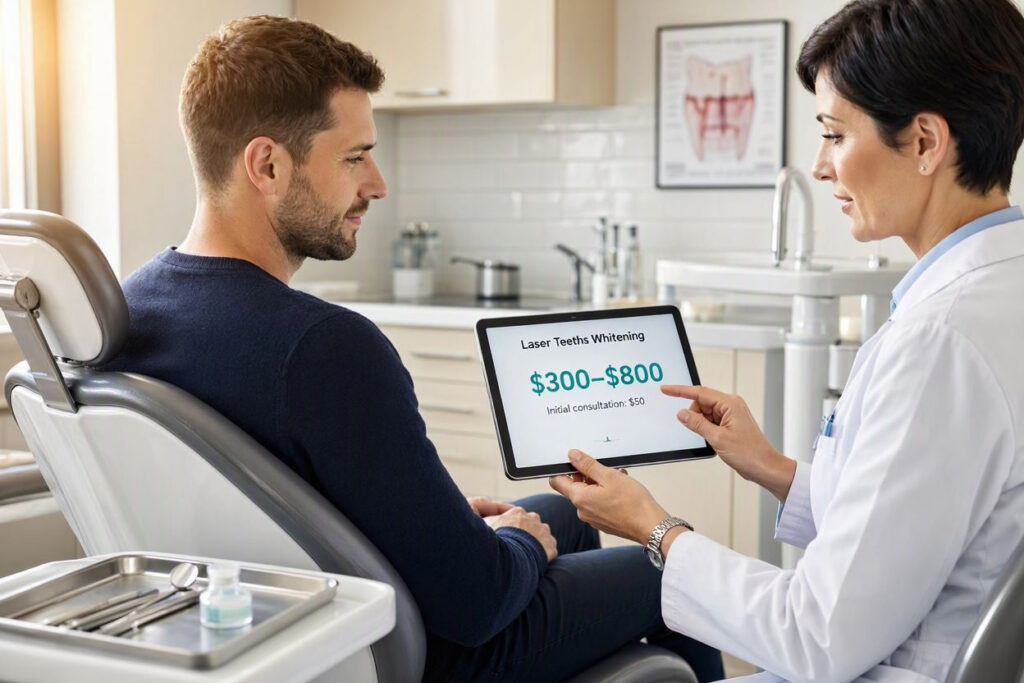
What Is Laser Teeth Whitening?
Laser teeth whitening is a professional dental procedure. It uses a high-concentration bleaching gel and a laser or LED light to accelerate the whitening process. The light activates the gel, allowing it to penetrate the enamel and break down stains more quickly than over-the-counter products.
The procedure is usually performed in a single visit. It takes about 60 to 90 minutes. The dentist or hygienist applies a protective barrier to your gums, applies the whitening gel to your teeth, and then directs the laser or light at your teeth. The gel is usually left on for 15 to 20 minutes at a time, and the cycle may be repeated two or three times.
Key Features Of Laser Teeth Whitening
- Fast: Results in a single visit.
- Effective: Can whiten teeth by several shades.
- Professional: Performed by a dentist or hygienist.
- Safe: Gums are protected.
- Customizable: The dentist can adjust the strength of the gel.
The Cost Of Laser Teeth Whitening
The cost of laser teeth whitening varies widely. Here is a breakdown of the average prices in the United States.
Table: Average Cost Of Laser Teeth Whitening
| Provider Type | Average Cost Range (USD) | Notes |
|---|---|---|
| Dentist Office (In-Office) | $500 – $1,200 | Includes the procedure and take-home trays |
| Dentist Office (Single Session) | $300 – $800 | Just the in-office procedure |
| Cosmetic Spa or Whitening Bar | $200 – $500 | Non-dental provider, less regulated |
| Take-Home Custom Trays (from Dentist) | $200 – $500 | Professional-grade, at-home use |
| Over-The-Counter Strips | $30 – $100 | Least effective, temporary results |
| LED Whitening Kit (At-Home) | $100 – $300 | Consumer device, variable results |
Important Note: Prices are for the whitening procedure alone. They do not include the cost of an initial exam or X-rays, which may be required to ensure your teeth and gums are healthy enough for whitening.
What Determines The Cost Of Laser Teeth Whitening?
Several factors influence the price of laser teeth whitening. Understanding these can help you anticipate the cost.
1. Geographical Location
Cosmetic dental fees are higher in cities with a high cost of living. Laser whitening in New York City or Los Angeles might cost $1,200. The same procedure in rural Alabama might cost $400.
2. The Dentist’s Experience And Reputation
A dentist who is known for cosmetic dentistry and has a celebrity clientele will charge more. You are paying for their expertise, their reputation, and the experience.
- General Dentist: $400 – $800
- Cosmetic Dentist: $600 – $1,200
- Celebrity Dentist: $1,000 – $2,000+
3. The Technology Used
Different types of lasers and lights are used for whitening. Some are more powerful and more expensive than others.
- LED Light: Less expensive, gentler.
- Diode Laser: More expensive, more effective.
- Plasma Arc Light: High-end, very effective.
4. The Number Of Sessions
Some dentists charge per session. Others charge a flat fee for the full treatment. A full treatment usually includes 2 to 3 cycles of gel application. If you need more sessions, the cost increases.
5. The Condition Of Your Teeth
If your teeth are heavily stained or discolored, you may need more gel or more sessions. This increases the cost. Teeth with intrinsic stains (stains inside the tooth) may not respond well to whitening. Your dentist will assess your teeth before treatment.
6. Additional Services
Many dentists include take-home whitening trays and gel with the in-office procedure. This allows you to touch up your smile at home. Some dentists charge extra for this. Always ask what is included.
7. The Type Of Practice
A boutique dental spa with luxury amenities will charge more than a basic family practice. You are paying for the experience and the environment.
Laser Teeth Whitening Vs. Other Whitening Options
Laser whitening is just one option. Let’s compare it to other methods.
Table: Cost Comparison Of Teeth Whitening Options
| Method | Average Cost Range (USD) | Effectiveness | Duration Of Results |
|---|---|---|---|
| Laser Teeth Whitening (In-Office) | $300 – $1,200 | High | 1 – 3 years |
| Professional Take-Home Trays | $200 – $500 | Moderate-High | 6 months – 2 years |
| Over-The-Counter Strips | $30 – $100 | Low-Moderate | 1 – 6 months |
| Whitening Toothpaste | $5 – $15 | Very Low | Days – Weeks |
| Whitening Mouthwash | $5 – $15 | Very Low | Days – Weeks |
| Charcoal Products | $10 – $30 | Low | Days – Weeks |
The Takeaway: Laser whitening is the most expensive option, but it is also the most effective and the fastest. Over-the-counter products are cheap but provide minimal, temporary results. Professional take-home trays are a middle ground.
Does Insurance Cover Laser Teeth Whitening?
No. Dental insurance does not cover laser teeth whitening. It is considered a cosmetic procedure. Insurance companies only cover procedures that are medically necessary. Whitening is for aesthetics, not health.
Even if you have a comprehensive dental plan, whitening is almost always excluded. You will have to pay out of pocket.
Important Note: If you have a Health Savings Account (HSA) or Flexible Spending Account (FSA), you may be able to use those funds for teeth whitening if it is prescribed by a dentist for a medical reason. However, this is a gray area. Check with your plan administrator.
What If You Don’t Have Insurance?
Since insurance does not cover whitening, everyone is a self-pay patient. Here are some ways to reduce the cost.
1. Look For Specials
Many dental offices run specials on teeth whitening. They may offer discounts for new patients, or package deals with cleanings and exams. Check local ads and websites.
2. Consider Professional Take-Home Trays
If laser whitening is too expensive, ask your dentist about custom take-home trays. They cost $200 to $500. You wear them for a few hours a day or overnight for a week or two. The results are close to laser whitening, and you can touch up as needed.
3. Use Over-The-Counter Products
If you are on a tight budget, over-the-counter strips or trays can provide some improvement. They cost $30 to $100. They are not as effective as professional whitening, but they can help.
4. Dental Schools
Some dental schools offer teeth whitening at reduced rates. The procedure is supervised by faculty. It takes longer, but the cost is lower.
5. Payment Plans
Some dental offices offer payment plans for cosmetic procedures. Ask about financing options.
6. Negotiate
Do not be afraid to ask for a discount. Some offices offer a 5% to 10% discount for cash payment. It never hurts to ask.
The Risks And Side Effects Of Laser Teeth Whitening
Laser whitening is generally safe when performed by a professional. However, there are some risks and side effects to be aware of.
Common Side Effects
- Tooth Sensitivity: This is the most common side effect. It usually goes away within a few days.
- Gum Irritation: If the protective barrier leaks, the gel can irritate your gums. This is temporary.
- Throat Irritation: If you swallow some of the gel, it can irritate your throat.
Less Common Risks
- Enamel Damage: Overuse of whitening products can weaken enamel. This is rare with professional treatment.
- Uneven Results: If you have crowns, veneers, or fillings, they will not whiten. This can lead to uneven results. Your dentist may recommend replacing them after whitening.
- Not Effective For All Stains: Intrinsic stains (from medication, trauma, or aging) may not respond to whitening. Your dentist will assess your teeth before treatment.
Important Note: Always consult a dentist before whitening. If you have untreated cavities, gum disease, or worn enamel, whitening can make the problem worse.
What Do Patients Say?
We spoke to three patients about their experiences with laser teeth whitening.
Jennifer, 34, from New York:
“I got laser whitening at my dentist’s office. It cost $800. My teeth went from a dull yellow to a bright white. It was amazing. I had some sensitivity for a day, but it went away. I would do it again.”
Mark, 45, from Texas:
“I tried the over-the-counter strips first. They did not work. I went to a whitening bar at the mall. It cost $300. The results were okay, but not as good as I hoped. I wish I had gone to a dentist.”
Maria, 28, from California:
“I got professional take-home trays from my dentist. They cost $350. I wore them for two weeks. My teeth are much whiter. It was cheaper than laser, and I can touch up whenever I want.”
Frequently Asked Questions
Q: How much does laser teeth whitening cost?
A: It typically costs $300 to $1,200 in the United States. The price depends on your location, the dentist, and the technology used.
Q: Does insurance cover laser teeth whitening?
A: No. It is considered a cosmetic procedure. Insurance does not cover it.
Q: How long do the results of laser teeth whitening last?
A: Results can last 1 to 3 years, depending on your lifestyle. Smoking, coffee, tea, and red wine can stain your teeth again.
Q: Is laser teeth whitening painful?
A: The procedure itself is not painful. You may experience tooth sensitivity for a few days afterward. This is temporary.
Q: Is laser whitening better than take-home trays?
A: Laser whitening is faster and more dramatic. Take-home trays are cheaper and allow you to touch up. Both are effective. Talk to your dentist about the best option for you.
Q: Can I whiten my teeth if I have crowns or veneers?
A: Whitening only works on natural teeth. It does not whiten crowns, veneers, or fillings. If you have these, your dentist may recommend replacing them after whitening to match your new shade.
Q: How white will my teeth get?
A: The results vary. Most people see a 2 to 8 shade improvement. Your starting shade and the type of stains you have will affect the outcome.
Conclusion
Laser teeth whitening costs between $300 and $1,200, depending on your location and the dentist you choose. It is the fastest and most effective way to brighten your smile. Insurance does not cover it, so you will pay out of pocket. If the cost is too high, professional take-home trays or over-the-counter products are cheaper alternatives. While laser whitening is an investment, the boost in confidence and the dramatic results make it worth it for many people. Always consult a dentist before whitening to ensure your teeth and gums are healthy. A brighter smile is within reach.
Additional Resources
For more information on teeth whitening and cosmetic dentistry, visit the American Academy of Cosmetic Dentistry (AACD) at aacd.com. They provide patient resources and a directory of cosmetic dentists.