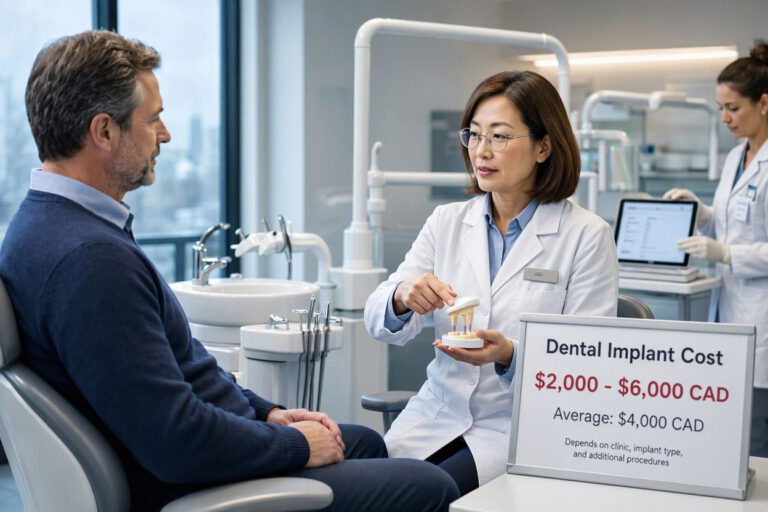
What Type of Doctor Does Dental Implants?
You have a missing tooth. You have done your research. You know that dental implants are the best long-term solution. But now you face a confusing question: who actually puts them in?
You open your phone book or search online. You see oral surgeons. You see periodontists. You see general dentists. Some ads say “implantologist.” Others say “cosmetic dentist.”
It feels overwhelming. And it should.
Choosing the wrong type of doctor for your dental implant can lead to failed osseointegration, nerve damage, or an unnatural-looking tooth. But choosing the right one gives you a permanent solution that lasts decades.
In this guide, we will cut through the marketing noise. You will learn exactly which medical professionals perform dental implants, their unique training, and how to pick the best specialist for your specific situation.
Let us clear this up once and for all.
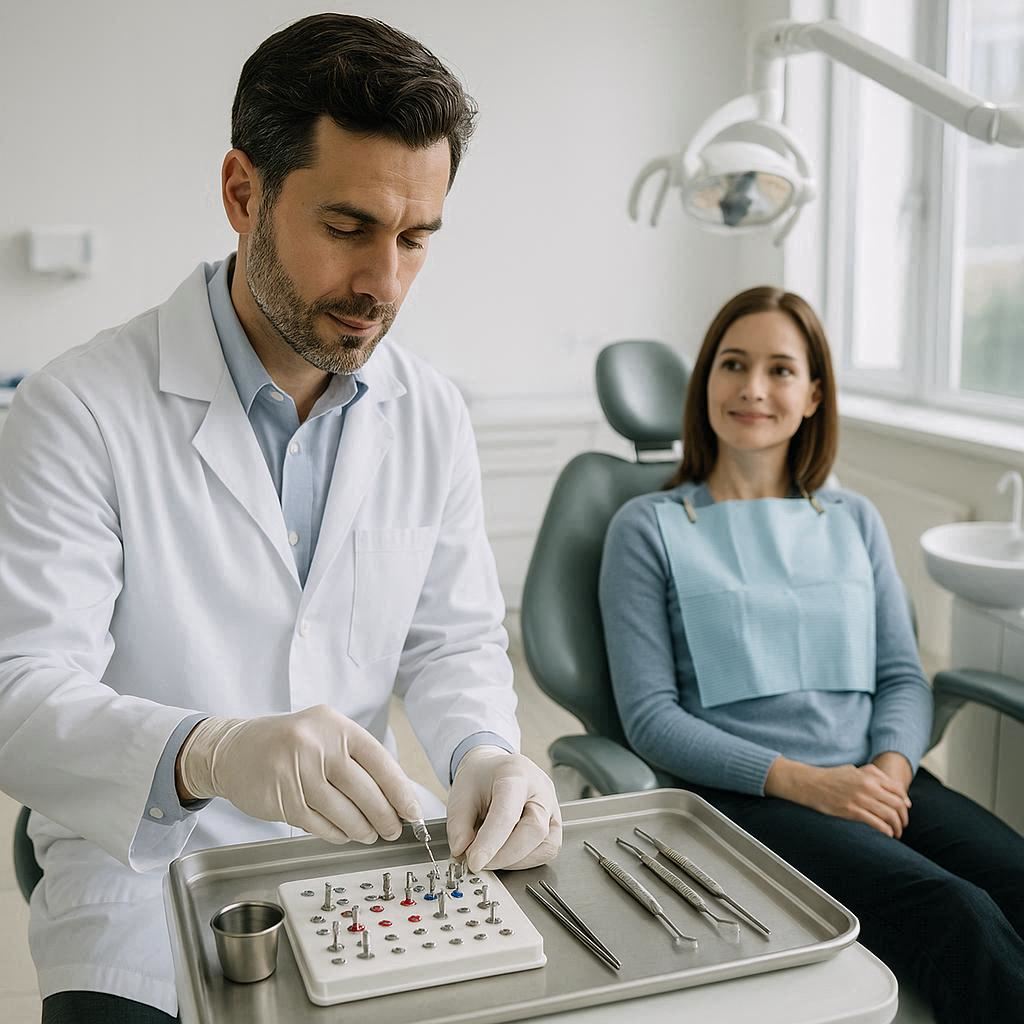
Who Is Actually Qualified? The Three Main Specialists
The short answer is that three types of doctors can place dental implants legally. Each has different training, different focuses, and different strengths.
Here is the breakdown you need.
| Type of Doctor | Years of Extra Training | Main Focus | Best For |
|---|---|---|---|
| Oral Surgeon | 4-6 years (hospital-based) | Bone, nerves, complex extraction, full arch | Difficult cases, bone grafting, sedation |
| Periodontist | 3 years | Gums, soft tissue, bone around teeth | Aesthetics, thin gums, front teeth |
| General Dentist | None (CE courses only) | Overall dentistry | Single, simple implant with good bone |
Oral and Maxillofacial Surgeons
These are the heavy hitters of implant surgery. After dental school, an oral surgeon completes four to six additional years in a hospital-based residency. They train alongside medical residents in anesthesia, internal medicine, and general surgery.
An oral surgeon understands your jawbone like a carpenter understands wood. They know exactly where the inferior alveolar nerve runs. They can remove impacted wisdom teeth and place an implant in the same appointment.
When should you choose an oral surgeon?
- You need extensive bone grafting.
- You have a sinus lift requirement.
- You are replacing a full arch of teeth (All-on-4).
- You want deep sedation or general anesthesia.
- You have a history of complicated extractions.
Periodontists
These specialists focus on the foundations of your teeth: the gums and the bone. Periodontists spend three extra years learning how to manage gum disease, regenerate lost bone, and place implants precisely.
Think of a periodontist as a micro-surgeon for your mouth. They use high-powered microscopes and magnification. They are obsessive about the soft tissue collar around your implant. This matters most in the “smile zone”—your front teeth.
When should you choose a periodontist?
- You are replacing a front tooth.
- You have thin or receding gums.
- You need a connective tissue graft.
- You want the best possible aesthetic result.
- You have a history of gum disease.
General Dentists (With Implant Training)
A general dentist completes dental school but does not have a surgical residency. However, many general dentists take hundreds of hours of continuing education (CE) courses. Some become extremely skilled at placing simple implants.
A general dentist offers convenience. You can get your extraction, your implant, and your final crown all in one office. You do not have to visit multiple specialists.
Important note: Not all general dentists place implants. Those who do often limit themselves to straightforward cases with plenty of existing bone.
When can you choose a general dentist?
- You have a single missing tooth.
- You have excellent bone density.
- You do not need bone grafting.
- The tooth is not in a highly visible aesthetic zone.
- You trust your dentist and they have done at least 50 implants.
What About an “Implantologist”?
You will see this title. It sounds official. It sounds like a board-certified specialty.
It is not.
In the United States, Canada, the UK, and Australia, “implantology” is not a recognized dental specialty. Any dentist can call themselves an implantologist after taking a weekend course.
“A title does not equal training. Always ask for numbers: how many implants did they place last year? What is their failure rate?” — Dr. James Collins, Prosthodontist
Do not reject a dentist just because they call themselves an implantologist. But do your homework. Ask specific questions about their training hours, mentorship, and complication management.
The Prosthodontist: The Forgotten Expert
We mentioned oral surgeons, periodontists, and general dentists. But there is a fourth doctor you need to know: the prosthodontist.
A prosthodontist completes three extra years of training in restorative dentistry. They do not usually place the implant itself. Instead, they restore it. They design the crown, bridge, or denture that attaches to the implant.
Think of it this way:
- The surgeon (oral or perio) puts the titanium root in the bone.
- The prosthodontist builds the visible tooth on top.
For complex full-mouth reconstruction, a prosthodontist acts as the quarterback. They coordinate with the surgeon to ensure perfect alignment and bite.
When do you need a prosthodontist?
- You need multiple implants.
- You have a full arch reconstruction.
- Your bite is complicated (TMJ issues or bruxism).
- You want a full ceramic or zirconia restoration.
Step-by-Step: Who Does What During an Implant?
To fully understand the answer to “what type of doctor does dental implants,” you need to see the entire process. This journey has three distinct phases, and different doctors can handle each one.
Phase 1: Evaluation and Planning
The doctor takes a CBCT scan (3D X-ray). They measure your bone height, width, and density. They check for sinus cavities and nerves.
Who can do this? Any dentist with a CBCT machine. But an oral surgeon or periodontist will interpret the scan with more surgical experience.
Phase 2: The Surgical Placement
This is the actual implant surgery. The doctor cuts the gum, drills a precise hole, and screws the titanium implant into your bone.
Who can do this? Oral surgeons, periodontists, and trained general dentists.
Phase 3: The Restoration (The Crown)
Three to six months later, after the implant fuses with your bone, you need the final tooth. The doctor takes an impression, orders a custom crown, and screws or cements it onto the implant.
Who can do this? General dentists, prosthodontists, and some oral surgeons or periodontists.
| Phase | Best Doctor Type | Alternative |
|---|---|---|
| Planning & CBCT | Oral surgeon or periodontist | General dentist with CBCT |
| Surgical placement | Oral surgeon or periodontist | Experienced general dentist |
| Final crown | Prosthodontist (for complex) | General dentist (for simple) |
Bone Grafting: When the Answer Changes
You may need a bone graft. This is extremely common. When you lose a tooth, the bone melts away (resorption). After six months without a tooth, you can lose 25% of your bone width.
A bone graft fixes this. The doctor takes bone from a donor, a cow, a synthetic source, or your own chin or hip.
Only specific doctors should perform major bone grafting:
- Oral surgeons are the best for large grafts (iliac crest, chin, ramus).
- Periodontists are excellent for socket preservation and small grafts.
- General dentists can do very small grafts but should refer large cases.
If your general dentist says “you need a sinus lift and a block graft from your jaw,” ask for a referral to an oral surgeon. That is not a routine procedure.
Sedation and Anesthesia: A Hidden Difference
Here is something most patients do not consider. What type of doctor can put you to sleep?
Dental implants are surgical procedures. You may feel anxious. You may want more than just local numbing.
- Oral surgeons have deep sedation and general anesthesia permits. They have an anesthesiologist or a certified nurse anesthetist (CRNA) on staff.
- Periodontists usually offer oral sedation (a pill) or nitrous oxide (laughing gas). Some offer IV sedation if they have extra permits.
- General dentists typically offer only local anesthesia and laughing gas. Very few offer IV sedation.
Important note: If you need multiple implants or have dental anxiety, choose a doctor who offers IV sedation. It is safer and more comfortable.
7 Critical Questions to Ask Before You Choose
Do not choose an implant doctor based on a Google review or a cheap Groupon. Sit down for a consultation. Ask these seven questions face-to-face.
- “How many dental implants have you placed in your career?”
*Look for 500+ for a general dentist. Look for 2,000+ for a specialist.* - “What is your failure rate?”
*Honest answer: 1-3% for lower jaw, 5-10% for upper jaw. If they say zero, they are lying.* - “What happens if the implant fails?”
They should say: “I replace it at no cost within one year.” - “Do you perform bone grafting in-house?”
If no, they will refer you elsewhere. That means two surgeons and two bills. - “Can I see before-and-after photos of your own work?”
Not stock photos. Not a company catalog. Their actual patients. - “Who places the final crown?”
If the surgeon places the implant and sends you to a separate dentist for the crown, get that coordination in writing. - “What sedation options do you offer?”
If you have anxiety, do not accept “just local.”
Cost Differences: Specialist vs. General Dentist
Money matters. We cannot ignore it. The type of doctor you choose changes the price significantly.
Here is a realistic average cost for a single dental implant in the United States (as of 2025-2026). These numbers include the surgery, the abutment, and the crown.
| Doctor Type | Average Cost (Single Implant) | Why the difference? |
|---|---|---|
| General dentist (simple case) | 3,000−4,500 | Lower overhead, no surgical facility fee |
| Periodontist | 4,500−6,500 | Specialty training, advanced gum techniques |
| Oral surgeon | 5,000−8,000 | Hospital-level training, sedation included, higher facility fees |
Do not let cost be your only factor. A failed implant from an inexperienced dentist will cost you more in the long run. You will pay for the removal, the bone graft, and a second surgery.
Common Myths About Dental Implant Doctors
Let us clear up some dangerous misinformation that floats around the internet.
Myth 1: “Only an oral surgeon can legally place implants.”
False. In most countries, any licensed dentist can place implants. The law does not restrict it to specialists. The question is not “can they” but “should they.”
Myth 2: “Periodontists only treat gum disease, not implants.”
False. Periodontists invented modern dental implant techniques in the 1970s and 80s. They are pioneers in this field.
Myth 3: “My general dentist can handle any case.”
False. General dentists have limits. A good general dentist knows their limits and refers complex cases to specialists. Be wary of a general dentist who says “I do everything.”
Myth 4: “Cheaper implants from a general dentist are the same.”
False. Lower price often means lower quality components, less scan time, or an in-house crown made by a machine instead of a lab technician. You get what you pay for.
Real-Life Scenarios: Which Doctor Should You See?
Let us walk through five common patient situations. You will see exactly which type of doctor fits each scenario.
Scenario 1: Missing Front Tooth, Healthy Gums, Lots of Bone
- Best choice: Periodontist.
- Why: The front tooth requires perfect pink gum contours. A periodontist understands the delicate soft tissue architecture. They will place the implant at the exact depth for a natural emergence profile.
Scenario 2: Missing Back Molar, Jawbone Has Melted Away
- Best choice: Oral surgeon.
- Why: You need a bone graft and possibly a sinus lift. This is real surgery near major nerves and sinus cavities. An oral surgeon has the hospital training to manage complications.
Scenario 3: All Teeth Missing (Full Arch)
- Best choice: A team approach. Oral surgeon + prosthodontist.
- Why: This is the most complex case in dentistry. The surgeon places four to six implants. The prosthodontist designs the fixed bridge. Do not let a single general dentist handle a full arch alone unless they have done hundreds.
Scenario 4: Single Missing Tooth, Perfect Bone, No Health Issues
- Best choice: Experienced general dentist (who has placed 500+ implants).
- Why: This is straightforward. You save money. You get the convenience of one office. Just verify their experience.
Scenario 5: Heavy Smoker, Diabetes, or Osteoporosis
- Best choice: Oral surgeon or periodontist only.
- Why: Medical complications increase implant failure risk. You need a specialist who understands medication interactions (bisphosphonates, for example) and healing complications.
Geographic Differences: USA, UK, Canada, Australia
The answer to “what type of doctor does dental implants” changes slightly depending on where you live.
United States
- Specialists (oral surgery, periodontics) are the most common implant placers.
- General dentists place about 35% of implants, mostly simple cases.
- Prosthodontists usually restore, not place.
United Kingdom
- Most implants are placed by general dentists with postgraduate training.
- Oral surgeons and periodontists exist but are less common in general practice.
- The General Dental Council recognizes implantology as a “skill” not a specialty.
Canada
- Similar to the US. Oral surgeons and periodontists dominate.
- Provincial regulations vary. In British Columbia, general dentists must have specific additional training to call themselves “implant dentists.”
Australia
- Specialists are heavily regulated.
- General dentists can place implants but require referral from a general dentist for complex cases.
- The ADC (Australian Dental Council) recommends specialist placement for bone grafting cases.
Your Decision Checklist: 5 Steps to the Right Doctor
You have all the information. Now let us turn it into action. Follow this five-step checklist to find your ideal implant doctor.
- Get a CBCT scan. Any doctor who places an implant without a 3D scan is dangerous. Walk away.
- Interview two different types of doctors. Do not settle for the first quote. See a periodontist AND a general dentist. Compare their plans.
- Ask for their number. “How many implants like mine have you placed?” If they hesitate or give a vague answer (“many”), go elsewhere.
- Check online board certification. For the US: American Board of Oral and Maxillofacial Surgery or American Board of Periodontology. For the UK: GDC specialist list.
- Trust your gut on communication. Does the doctor explain things clearly? Do they rush you? Do they have a plan for emergencies (weekend pain, swelling)? A skilled doctor who cannot communicate is still a bad choice.
Additional Resource: Where to Find Verified Implant Dentists
Do not rely on paid ads. Do not use “top 10” lists that are secretly sponsored. Instead, use these unbiased, professional directories:
🔗 American Academy of Periodontology (perio.org) – Search for board-certified periodontists in your area.
🔗 American Association of Oral and Maxillofacial Surgeons (aaoms.org) – Find oral surgeons with surgical implant training.
🔗 American College of Prosthodontists (prosthodontics.org) – Locate a prosthodontist for complex restorations.
Copy and paste these links into your browser. These directories only include board-certified specialists.
Disclaimer
This article provides general educational information only. It does not constitute medical advice or a doctor-patient relationship. Dental implant needs vary based on your unique bone structure, medical history, and oral health. Always consult with a licensed dental professional in your jurisdiction before making treatment decisions. The author and publisher disclaim any liability for any adverse effects arising from the use or application of information in this guide.
Conclusion
Most patients need an oral surgeon or periodontist for complex implant cases, while simple single-tooth replacements can be done by an experienced general dentist. The key difference lies in advanced training: specialists handle bone grafting, sedation, and aesthetic challenges far better than non-specialists. Always interview multiple providers, ask about their personal success rates, and prioritize skill over price.
Frequently Asked Questions (FAQ)
Q1: Can my regular family dentist do my implant?
Yes, if they have completed advanced implant training and your case is simple (single tooth, good bone, non-smoker). Always ask for their personal case count.
Q2: Who is better for implants — an oral surgeon or a periodontist?
Neither is universally “better.” Oral surgeons excel at bone grafting and complex anatomy. Periodontists excel at soft tissue aesthetics and front teeth. Choose based on YOUR specific case.
Q3: Why do some dentists refuse to place implants?
Implant placement carries surgical risks (nerve injury, sinus perforation, failure). Some general dentists choose to refer all implant surgeries to specialists to avoid these risks and focus on restorative dentistry.
Q4: Is it dangerous to let a general dentist place an implant?
Not if they are properly trained. The danger comes from low-volume providers. A general dentist who places five implants a year is risky. One who places 200+ a year is likely very skilled.
Q5: Do prosthodontists place implants or just restore them?
Most prosthodontists focus on restoration (the crown). However, some prosthodontists complete surgical training and place implants themselves. Always ask specifically.
Q6: What type of doctor does All-on-4 dental implants?
An oral surgeon typically performs All-on-4 surgery because it involves four angled implants, often with immediate loading. A prosthodontist then builds the fixed bridge.
Q7: Can a dentist remove my tooth and place an implant on the same day?
Yes, this is called “immediate implant placement.” Only experienced oral surgeons or periodontists should do this. General dentists almost always wait for healing.
Q8: How many implants should a doctor place per year to stay skilled?
Research suggests a minimum of 50 implants per year to maintain competence. Top specialists place 200-400 per year.
Q9: What if my implant fails? Who fixes it?
The original surgeon should fix it or refund you. If they cannot, an oral surgeon will need to remove the failed implant, perform a bone graft, and start over after six months.
Q10: Does insurance cover implants better with a specialist?
Usually no. Most dental insurance categorizes implants as “major restorative” with the same coverage percentage (often 50%) regardless of the provider type. Medical insurance may cover part of the surgery if bone loss results from trauma or tumor removal.