Why Do Dental Implants Cost So Much
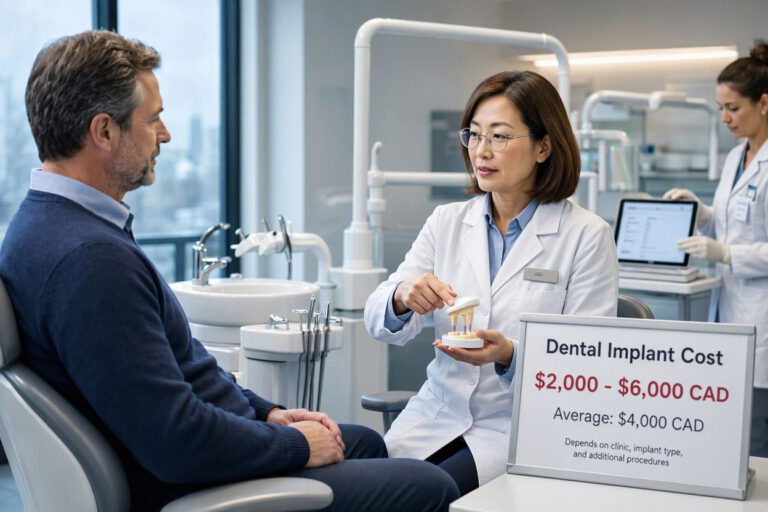
Let’s be honest for a moment. You are sitting in the dentist’s chair. You have just been told you need a dental implant. Then comes the number. It sounds more like a used car than a single tooth.
It is shocking. It is frustrating. And it is completely normal to ask yourself: Why does this cost so much?
You are not alone. Thousands of people walk away from treatment every year because of the price tag. They choose cheaper options like bridges or partial dentures. Or they simply live with a missing tooth.
But here is the truth. The price of a dental implant is not random. It is not a scam. And it is not just a “rich person’s procedure.”
Behind that number is a complex chain of medical expertise, advanced technology, premium materials, and real surgical risk. This article will break down every single dollar. No fluff. No hidden agenda. Just honest answers.
By the end, you will understand exactly where your money goes. And more importantly, you will know if an implant is truly worth it for you.
The Sticker Shock: What Does “Expensive” Really Mean?
First, let us define the problem. When people say dental implants are “too expensive,” what are they actually comparing them to?
Most people compare implants to a simple filling or a basic extraction. That is not a fair comparison. A filling takes twenty minutes. An implant takes several months and multiple specialists.
Others compare implants to dental bridges. A bridge is cheaper upfront. But a bridge also damages healthy teeth. It lasts ten to fifteen years on average. An implant can last a lifetime.
So let us look at real numbers. In the United States in 2026, a single dental implant typically costs between 3,000and3,000and6,000. That usually includes the implant post, the abutment, and the crown. It may or may not include the extraction, bone grafting, or the CT scan.
Here is a quick reality check.
| Procedure | Average Cost (USD) | Lifespan | Affects Adjacent Teeth |
|---|---|---|---|
| Dental Implant (single) | 3,000–6,000 | 20+ years (often lifetime) | No |
| Three-Unit Bridge | 2,000–5,000 | 10 – 15 years | Yes (shaving down healthy teeth) |
| Removable Partial Denture | 1,000–2,500 | 5 – 8 years | Yes (clasps can damage teeth) |
| Do Nothing | $0 upfront | N/A | Yes (bone loss, shifting teeth) |
The implant costs more today. But over twenty years, it is often the cheapest option.
Important note: These prices vary wildly by location. New York City or Los Angeles will be more expensive than rural Kansas. Dental schools offer lower prices. Corporate chains offer financing. Always ask for an itemized quote.
The Surgical Reality: It Is Not a Tooth, It Is a Medical Procedure
Many people think a dental implant is like a crown. It is not.
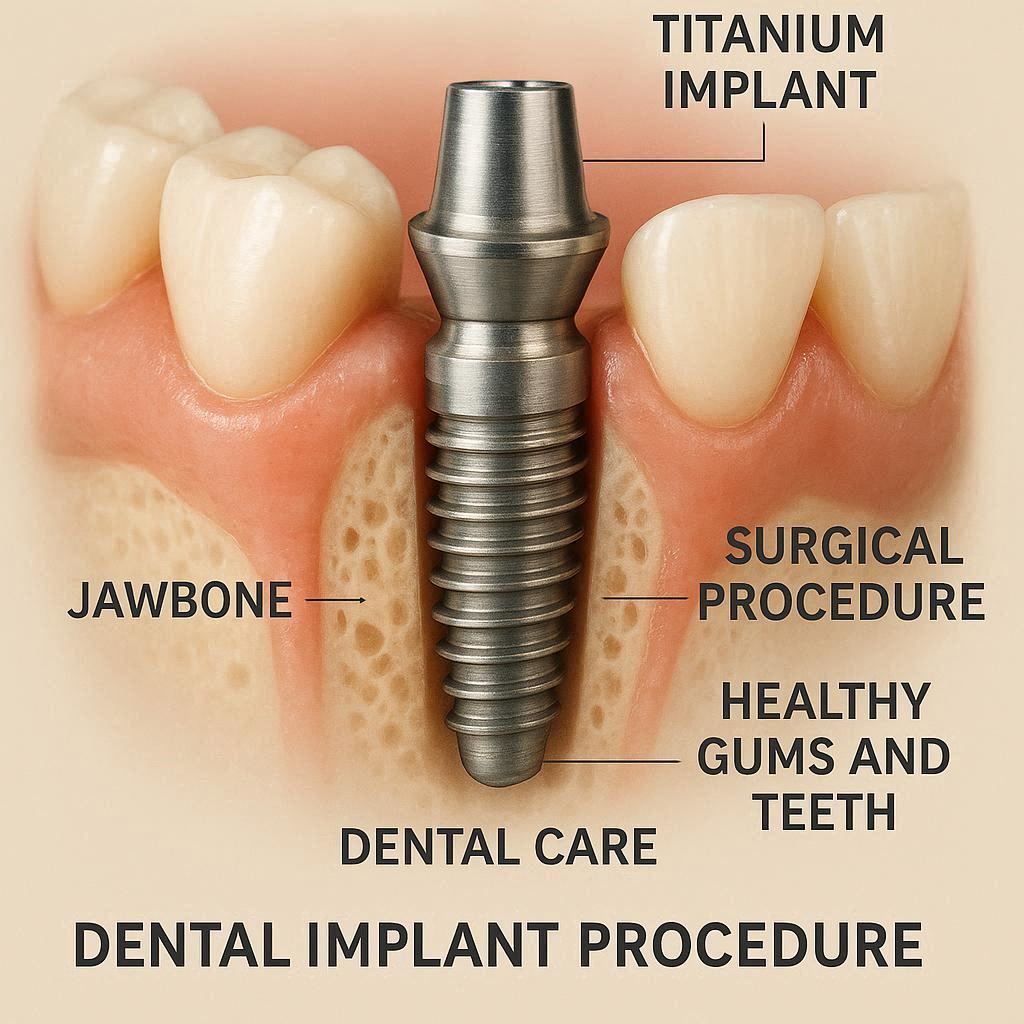
A crown is a restoration. A dental implant is a surgical prosthesis. That means a doctor is cutting into your bone. They are inserting a metal post into your jaw. That post must fuse with living tissue. This is called osseointegration.
This is real surgery. And real surgery costs real money.
Think about what happens during a typical implant placement.
- Diagnostic imaging. A CT scan of your jaw. This is not a simple x-ray.
- Sterile surgical environment. The room must be hospital-grade clean.
- Local anesthesia or sedation. Sometimes an anesthesiologist is present.
- Surgical incision. The gum is opened.
- Bone preparation. A special drill series prepares the site.
- Implant placement. The titanium post is torqued into place.
- Suturing. The gum is closed.
- Follow-up care. Multiple visits to check healing.
Would you expect a heart surgeon to work for $200? Of course not. An implant surgeon has similar training in sterility, anatomy, and surgical risk.
The Hidden Costs: Bone Grafts and Sinus Lifts
Here is where many patients get confused. You see a quote for 4,000.Thenyourdentistsaysyouneedabonegraftforanother1,500. You feel cheated.
But you are not being cheated. You simply do not have enough bone.
When you lose a tooth, your jawbone begins to melt away. This is called resorption. Within one year of losing a tooth, you can lose up to 25% of your bone width in that area.
An implant needs bone to hold it. If there is no bone, the surgeon must create bone.
- Bone graft: 500–3,000. Usually uses cadaver or synthetic bone.
- Sinus lift: 1,500–3,000. Required for upper back molars.
These are not optional upgrades. They are medical necessities. Without them, the implant will fail.
The Titanium Factor: Materials Are Not All Equal
You might think a titanium screw is a titanium screw. That is like saying a bicycle is the same as a Ferrari. Both have wheels.
Dental implants use medical-grade titanium (Grade 4 or Grade 23). This is not hardware store metal. It must be biocompatible. It must never corrode. It must encourage bone cells to grow directly onto its surface.
The surface texture of an implant is engineered at a microscopic level. Some implants have a sandblasted surface. Others have acid-etched surfaces. Some have a calcium phosphate coating. These surfaces cost millions in research and development to create.
Major implant brands include:
- Straumann (Switzerland)
- Nobel Biocare (Sweden)
- Zimmer Biomet (USA)
- Dentsply Sirona (USA)
These companies spend years in clinical trials. They test their implants on thousands of patients. They prove their implants are safe. That research costs money. That money is reflected in the price of the implant itself.
Cheap implants from unknown brands exist. They might cost 200insteadof800. But would you put a $200 unknown screw from an online marketplace into your jawbone? Probably not.
Reader note: Some dentists use “value brands” to lower costs. This is not necessarily bad. But ask your dentist which brand they use and how long it has been on the market. Ten years of clinical data is better than ten months.
The Team Behind One Tooth: You Are Paying Many Experts
Here is something most patients never realize. A single dental implant is often the work of three different professionals.
The General Dentist
They diagnose you. They take the x-rays. They create the treatment plan. They may also place the crown at the end.
The Oral Surgeon or Periodontist
This person places the implant into your bone. They are a specialist with three to six years of additional training after dental school. They know how to avoid nerves, sinuses, and blood vessels.
The Prosthodontist or Lab Technician
This person creates the crown. This is not a simple cap. It must fit perfectly. It must match the color, shape, and translucency of your other teeth. A skilled lab technician takes eight to ten years to master their craft.
You are paying for all three of these people. Even if you see only one office, that office is paying the others.
Let us break down a realistic $4,500 implant.
| Service | Estimated Cost |
|---|---|
| Implant component (titanium post) | 500–800 |
| Abutment (connector piece) | 300–500 |
| Crown (ceramic tooth) | 1,000–2,000 |
| Surgical placement fee (surgeon) | 1,000–1,500 |
| CT scan and x-rays | 300–500 |
| Sterilization and facility fee | 200–400 |
| Follow-up visits and adjustments | 200–400 |
| Total | 3,500–3,500–5,100 |
Now you see. The titanium post is actually the smallest part of the bill. You are paying for expertise, not metal.
The Technology That Protects You: CBCT Scanners and Digital Workflows
Twenty years ago, implant placement was different. The surgeon would open your gum and “guess” where the bone was. It was risky. Nerves could be damaged. Implants could be placed at the wrong angle.
Today, things have changed.
Enter the CBCT scanner (Cone Beam Computed Tomography). This is a 3D x-ray machine that costs 150,000to250,000. It rotates around your head and creates a perfect 3D map of your jaw. It shows nerves, sinuses, blood vessels, and bone density.
Your surgeon uses this map to plan your implant on a computer before they ever touch your mouth. They can measure bone width to 0.1mm. They can avoid your inferior alveolar nerve with absolute precision.
Then comes guided surgery. A custom 3D-printed surgical guide fits over your teeth. It has a metal sleeve that directs the drill exactly where it needs to go.
The result? Safer surgery. Faster recovery. Less pain. Fewer failures.
But that technology costs money. The CT scan alone is 300to500. The surgical guide is another 200to400. These are not extras. They are standard of care for modern implantology.
The Time Factor: Why Nine Months Costs More Than Two Weeks
You do not get a dental implant in one visit. You get it over several months.
Here is a typical timeline.
- Month 1: Consultation, CT scan, treatment plan.
- Month 2: Extraction (if needed) and bone graft.
- Month 3 – 6: Healing. Waiting for bone to grow.
- Month 6: Implant placement surgery.
- Month 7 – 9: Osseointegration. The bone fuses to the implant.
- Month 9: Abutment placement and impression.
- Month 10: Crown delivery.
That is up to ten months of active treatment. During that time, your dentist or surgeon sees you multiple times. They check healing. They adjust medications. They troubleshoot problems.
Each visit takes chair time. Each visit requires staff, sterilization, and supplies. Over ten months, those small costs add up.
Compare that to a dental bridge. A bridge is two visits over three weeks. Less chair time. Fewer staff hours. Lower price.
But also a shorter lifespan.
The Skill Premium: You Are Paying for Failures That Did Not Happen
This is a hard truth. Part of what you pay for is the surgeon’s experience with problems you will never see.
A skilled implant surgeon has placed thousands of implants. They have seen infections. They have seen implant failures. They have seen nerve damage from other dentists.
They know how to avoid those problems. That knowledge is not free.
Consider this scenario.
- Inexperienced dentist: $2,500 for the whole implant. Placed it slightly too close to a nerve. You have numbness in your lip for two years. The implant fails after eighteen months.
- Experienced specialist: $5,000 for the whole implant. Placed it perfectly. It lasts thirty years.
Which one is actually more expensive?
You are not paying for the implant. You are paying for the outcome.
Location, Location, Location: The Geography of Price
Where you live changes everything. This is not fair, but it is real.
| City Type | Average Single Implant Cost |
|---|---|
| Major metro (NYC, LA, Chicago) | 5,000–7,000 |
| Mid-size city (Austin, Nashville) | 4,000–5,500 |
| Small town or rural area | 3,000–4,000 |
| Dental school clinic | 1,500–3,000 |
| International (Mexico, Costa Rica) | 800–2,000 |
Why the difference? Rent, staff wages, insurance costs, and local competition.
A dental office in Manhattan pays 20,000permonthinrent.ThesameofficeinOklahomapays3,000. That difference shows up in your bill.
International dentistry is cheaper for many reasons. Lower labor costs. Lower rent. Different liability laws. It can be a good option for some patients. But remember: follow-up care is hard from 2,000 miles away. If your implant fails, local dentists may not want to touch someone else’s work.
Important note: Dental tourism can save you 50-70%. It also carries risks. Infections, poor sterility, and no legal recourse are real possibilities. Research the clinic thoroughly. Get recent patient reviews. Ask about their revision policy.
Insurance: The Great Misunderstanding
Most dental insurance is terrible for implants. This is not an accident. It is by design.
Traditional dental insurance was created for one thing: prevention and basic repair. Cleanings, fillings, extractions, and sometimes crowns. These plans have low annual maximums. Usually between 1,000and2,000 per year.
An implant costs 4,500.Yourinsurancemightcover500 of that. Then you hit your annual maximum. The rest comes from your pocket.
Some newer PPO plans offer implant coverage. But they often have a waiting period of twelve months. And they may only cover the crown portion, not the surgery.
Medicare does not cover dental implants. Medicaid covers them in some states for specific cases (like cancer survivors). Private medical insurance may cover implants if the tooth loss was caused by an accident or medical condition.
Always ask for a pre-determination. That is a formal letter from your insurance company stating exactly what they will pay. Get it before you commit to treatment.
The Cheap Implant Trap: What You Risk
You see advertisements everywhere. “Dental implants for $1,999.” “Same-day implants for half the price.” These offers are tempting. But they come with hidden risks.
The Mini Implant Problem
Mini implants are smaller than standard implants. They are about 1.8mm to 3mm wide instead of 3.5mm to 5mm. They are cheaper because they use less material and require less training to place.
But mini implants are not designed for individual tooth replacement. They were invented to help stabilize dentures. They have a much higher failure rate when used as single-tooth implants. Some studies show failure rates of 20-30% within five years.
The Same-Day Danger
True same-day implants (called immediate loading) require perfect conditions. You need thick, dense bone. You need no infection. You need a perfect bite. Most people do not qualify.
Many discount places skip the bone graft. They place an implant into weak bone. It feels solid for six months. Then it fails. Now you have lost the implant cost and the bone you had. A second implant will cost even more.
The Unbranded Implant
Some discount clinics use generic implants from countries with low regulatory standards. These implants may have poor surface technology. They may not osseointegrate properly. If the company goes out of business, your dentist cannot find replacement parts.
You are not buying a tooth. You are buying a long-term relationship with a medical device. Cheap usually means risky.
Financing and Alternatives: Making It Work For You
Okay. You understand why implants cost so much. But you still cannot afford $5,000 today.
What can you do?
1. Dental Schools
Teaching hospitals need patients for their residents. A dental student works under the supervision of experienced faculty. The treatment takes longer. But the price is often half or less.
2. CareCredit and Medical Credit Cards
These are healthcare-specific credit cards. They often offer six to twelve months of no interest if you pay on time. Be careful. If you miss a payment, the interest jumps to 27% or more.
3. In-House Membership Plans
Some dental offices offer their own discount plans. You pay a yearly fee (200to500). Then you get 15-30% off all services, including implants. This is not insurance. It is a direct discount program.
4. Health Savings Account (HSA) or Flexible Spending Account (FSA)
If you have an HSA or FSA through your employer, you can use pre-tax dollars for implants. This saves you 20-40% of the cost depending on your tax bracket.
5. Phased Treatment
You do not have to do everything at once. Many patients get the bone graft one year. The implant the next year. The crown the year after. It takes longer. But it spreads the cost.
Long-Term Value: Why Expensive is Often Cheaper
Let us do a twenty-year cost comparison. This is the most important table in this article.
| Treatment | Upfront Cost | Maintenance Over 20 Years | Replacement Cost | Total 20-Year Cost |
|---|---|---|---|---|
| Single Implant | $4,500 | Cleanings only ($2,000) | Possibly none | $6,500 |
| 3-Unit Bridge | $3,500 | Cleanings + special flossing | New bridge at year 15 ($4,000) | $9,500 |
| Removable Denture | $1,800 | Cleanings + relines ($1,000) | New denture every 8 years ($3,600) | $8,400 |
| Do Nothing | $0 | None | Bone loss + shifting teeth. Cost of future implants doubles | $6,000+ in bone grafts later |
The implant costs more today. But over twenty years, it is often cheaper or very close. And you get a better experience. No adjacent teeth are damaged. No rocking denture. No food getting stuck. No bone loss.
You are paying for a lifetime solution. Not a temporary fix.
When Is an Implant NOT Worth It?
Not everyone needs an implant. Sometimes another option is genuinely better.
You have active gum disease. Treat the disease first. Placing an implant into infected gums is like planting a tree in a swamp. It will fail.
You are a heavy smoker. Smoking reduces blood flow to the bone. Many studies show failure rates are twice as high for smokers. Some ethical surgeons will not place implants in current smokers.
You have uncontrolled medical conditions. Uncontrolled diabetes, active cancer treatment, or certain autoimmune diseases can prevent healing. Your surgeon will need medical clearance.
The adjacent teeth are already damaged. If you already need crowns on the teeth next to the gap, a bridge might be simpler and more cost-effective.
Your bone loss is extreme. Some people need $10,000 worth of bone grafting before they can even get an implant. At that point, a bridge or denture may be the realistic choice.
A good dentist will tell you when an implant is not right for you. Be suspicious of anyone who pushes implants for every single case.
Real Patient Example: Sarah’s Story
Let me tell you about Sarah. She is 52 years old. She lost her lower first molar at age 40. She got a bridge at age 41. It cost $3,200.
At age 48, the bridge failed. One of the anchor teeth had decay under the crown. That tooth could not be saved.
Now she needed:
- Extraction of the anchor tooth
- Two implants (to replace the missing molar AND the extracted anchor tooth)
- A two-implant bridge
Her total cost at age 48: $9,000.
If she had gotten a single implant at age 41 ($4,800 at that time), she would have saved the anchor tooth. She would have spent less. She would have had zero damage to healthy teeth.
She told me: “I thought I was saving money. I ended up paying double and losing another tooth.”
This is not rare. This is the hidden cost of “cheaper” dentistry.
Conclusion: The Real Value of Knowing
Let’s bring this home.
Dental implants cost so much because they combine surgical expertise, premium materials, advanced technology, and months of healing time into one procedure. You are not paying for a screw. You are paying for a permanent solution that preserves your bone, spares your healthy teeth, and can last forty years or more.
Three key takeaways:
- The upfront price of an implant is higher than a bridge or denture, but its longevity often makes it cheaper over twenty years.
- Most of the cost goes to expert surgeons, advanced imaging, custom lab work, and sterile safety measures—not the titanium post itself.
- Cheap implant deals carry real risks of failure, infection, and hidden long-term expenses that can double your total bill.
Understanding why implants cost so much does not make them affordable. But it does help you make a wise decision. And that is the most valuable thing of all.
Frequently Asked Questions (FAQ)
1. Can I get a dental implant for free or through government programs?
Almost never. Some state Medicaid programs cover implants for specific cases (like birth defects or cancer). The VA covers implants for qualifying veterans. Otherwise, free implants are not available. Your best low-cost option is a dental school.
2. How long do dental implants really last?
With good home care and regular checkups, the implant post can last 30 years to a lifetime. The crown on top lasts 10 to 20 years before needing replacement. This is much longer than bridges, which average 10 to 15 years.
3. Does insurance cover any part of dental implants?
Some PPO plans cover 15% to 50% of the crown portion. Very few cover the surgical placement. Always ask for a pre-determination. Do not assume anything is covered.
4. Is it safe to get implants in Mexico or Costa Rica?
It can be safe at accredited clinics with modern technology. Many US-trained dentists practice there. However, if you have a complication, local dentists may refuse to treat another provider’s work. Also, legal recourse is very limited. Research for six months before choosing this path.
5. Why do some dentists charge 2,000andothers2,000andothers6,000 for the same thing?
They are not the same thing. The $2,000 price usually excludes the crown, the bone graft, the CT scan, or the specialist fees. It may also use mini implants or unbranded components. Always compare itemized lists, not just total prices.
6. Can I just get one implant to replace two missing teeth?
Not usually. One implant supports one tooth. For two missing teeth next to each other, you need two implants or an implant-supported bridge (two implants with three connected crowns). A single implant with a “fake tooth” attached (called a cantilever) has a very high failure rate.
7. Does the implant surgery hurt?
The surgery itself is painless because of local anesthetic. For 2-4 days after surgery, you will have swelling and soreness similar to a tooth extraction. Most patients manage with over-the-counter ibuprofen. The real discomfort is in your wallet, not your mouth.
8. What happens if an implant fails?
The surgeon will remove it. This is a simpler procedure than placement. If there is enough bone, a new implant can be placed after 3-6 months of healing. Most failed implants are replaced at no additional surgical cost by reputable surgeons, but the new crown will cost you.
9. Can I get implants if I have osteoporosis or take bone meds?
It depends. If you take oral bisphosphonates (like Fosamax) for less than four years, the risk is low. If you take intravenous bone meds for cancer, you are usually NOT a candidate. Your surgeon must consult with your prescribing doctor.
10. How do I find a good implant dentist without overpaying?
Look for a surgeon who is a Diplomate of the American Board of Oral Implantology (ABOI) or a Fellow of the International Congress of Oral Implantologists (ICOI). Ask how many implants they place per year (look for 200+). Get three quotes. Never choose based on price alone.
Additional Resource
For verified, low-cost implant providers in your area, including dental schools and non-profit clinics:
🔗 National Association of Free & Charitable Clinics (NAFC) – www.nafcclinics.org
Use their “Find a Clinic” tool to search for dental programs near you. This is not a referral service. It is a directory of safety-net providers. Many offer sliding scale fees based on your income.
Disclaimer
This article is for educational purposes only. It does not constitute medical or dental advice. Every patient is unique. Always consult with a licensed dental professional before making treatment decisions. Prices mentioned are national averages in the United States for 2026 and may vary based on location, provider, insurance, and individual medical needs. The author and publisher are not responsible for any outcomes resulting from the use of this information.