When Does Dental Implant Pain Peak?
Undergoing dental implant surgery is a significant decision. One of the most common concerns patients have is about pain. How much will it hurt? How long will it last? Understanding the typical timeline of post-operative discomfort can help you prepare mentally and physically. This leads to a very practical question: “When does dental implant pain peak?” The answer is generally within the first 48 to 72 hours after the surgery. This guide will walk you through the expected pain timeline, explain what is normal, and help you identify when pain might signal a problem.
Understanding the Nature of Surgical Pain
Dental implant placement is a surgical procedure. It involves making an incision in the gum and drilling into the bone. Your body’s natural response to this trauma is inflammation. Inflammation causes swelling, redness, and pain. This is not a sign that something is wrong; it is a sign that your body is healing.
The intensity of the pain varies from person to person. It depends on several factors:
- The number of implants placed: A single implant is less invasive than multiple implants or a full-arch restoration.
- The location of the implant: Implants in the lower back jaw may cause more discomfort due to the density of the bone.
- The need for additional procedures: If you had a tooth extraction or a bone graft at the same time, you will likely experience more pain.
- Your individual pain tolerance: Everyone experiences pain differently.
- The skill of the surgeon: A skilled surgeon uses gentle techniques that minimize tissue trauma.
The Pain Timeline: What to Expect
Here is a typical day-by-day breakdown of what you can expect after your implant surgery.
Day 0 (The Day of Surgery):
You will be numb for several hours after the procedure. As the anesthesia wears off, you will begin to feel some discomfort. This is often described as a dull ache or pressure. It is not usually sharp pain. You should start taking any prescribed pain medication before the numbness completely disappears. This helps you stay ahead of the pain.
Day 1-2 (The Peak):
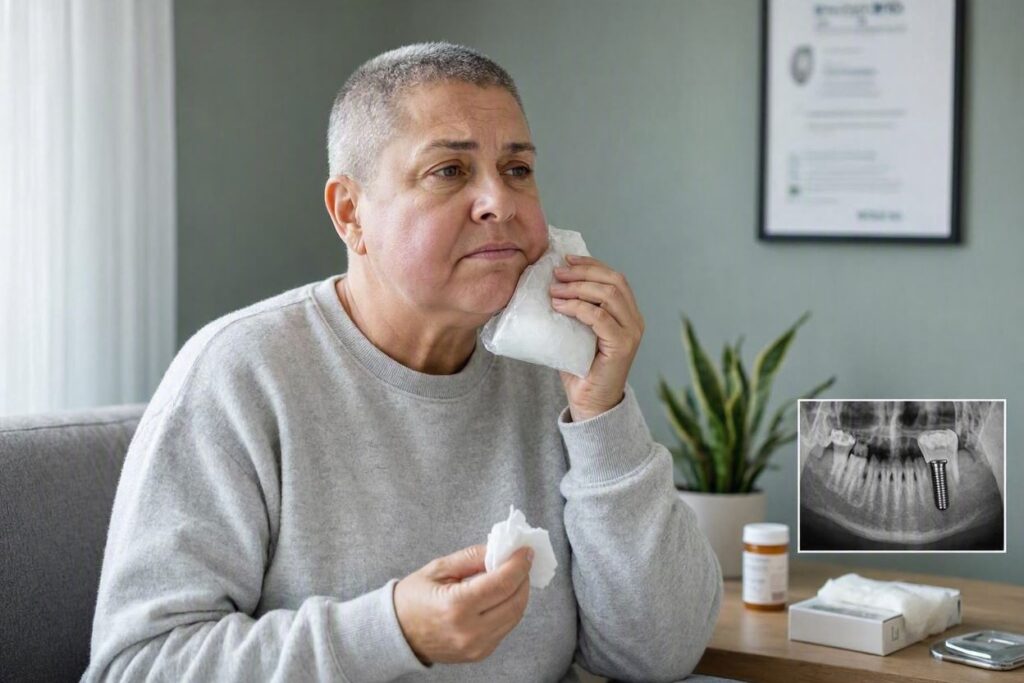
This is when the pain is at its worst. The inflammatory response is in full swing. You will likely experience the most swelling, tenderness, and aching during this period. This is when you will rely most heavily on your pain medication. Applying ice packs to the outside of your cheek can help reduce swelling and numb the area. Rest is crucial.
Day 3-4 (The Turning Point):
For most patients, the pain begins to subside noticeably by day 3 or 4. The swelling may start to go down. You may be able to switch from prescription pain medication to over-the-counter options like ibuprofen or acetaminophen.
Day 5-7 (Significant Improvement):
By the end of the first week, you should feel much better. The pain should be minimal and manageable. You may still feel some tenderness at the surgical site, but the worst is behind you.
Week 2 and Beyond:
The surgical site should feel relatively comfortable. The gum tissue is healing. You should be able to resume most normal activities. You may still feel some sensitivity if you accidentally touch the area, but the constant ache should be gone.
A Quick Reference Table
| Timeframe | Pain Level (Typical) | Symptoms | Management |
|---|---|---|---|
| Day 0 | Mild to Moderate (as numbness fades) | Dull ache, pressure. | Pain medication, rest. |
| Day 1-2 | Peak Pain | Aching, throbbing, swelling, bruising. | Prescription meds, ice packs. |
| Day 3-4 | Decreasing | Less pain, swelling starts to subside. | Over-the-counter meds. |
| Day 5-7 | Minimal | Tenderness, some bruising remains. | Over-the-counter meds. |
| Week 2+ | Very Minimal | Mild sensitivity. | None usually needed. |
Normal Pain vs. Problem Pain
It is crucial to distinguish between normal post-operative pain and pain that signals a complication.
Normal Pain:
- Gradually improves over time.
- Is manageable with medication.
- Is accompanied by swelling that peaks at day 2-3 and then subsides.
- Feels like a dull ache, pressure, or soreness.
Problem Pain (When to Call Your Dentist):
- Pain that gets worse after day 3: Pain should be improving, not getting worse. Increasing pain can be a sign of infection.
- Throbbing, severe pain that medication does not touch: This could be a sign of an abscess or a failed implant.
- Pain accompanied by fever: A fever is a classic sign of infection.
- Pain accompanied by pus or a foul taste: This indicates an infection at the surgical site.
- Pain that persists for more than two weeks: While mild soreness can linger, significant pain after two weeks is not normal.
- Nerve pain (zinging or electric shock sensations): This could indicate nerve irritation or damage.
Managing the Peak Pain Effectively
You can take steps to minimize your discomfort during the peak period.
1. Take Medication as Directed: Do not try to “tough it out.” Take your pain medication as prescribed by your dentist. If you are using over-the-counter meds, take them on a regular schedule to maintain a steady level of pain relief.
2. Use Ice Packs: Apply an ice pack to the outside of your cheek for 20 minutes on, 20 minutes off. This is most effective in the first 48 hours.
3. Elevate Your Head: When you lie down, keep your head elevated with pillows. This helps reduce swelling and throbbing.
4. Eat a Soft Diet: Stick to cool, soft foods like yogurt, smoothies, applesauce, and mashed potatoes. Avoid hot foods, which can increase bleeding and discomfort.
5. Rest: Your body heals best when you are resting. Avoid strenuous activity for the first few days.
6. Avoid Straws and Smoking: The suction from a straw can dislodge the blood clot. Smoking impairs healing and dramatically increases the risk of implant failure.
A Patient’s Reassurance
“I was so nervous about the pain. I thought it would be terrible. Honestly, it was a 4 out of 10 at its worst. It was just a dull ache. I took the ibuprofen my dentist recommended, and I was fine. The swelling was more annoying than the pain.” – Michael P., Implant Patient
Important Notes for Readers
- Do Not Wait for Pain to Take Medication: Take your pain relievers proactively, as directed.
- The Emotional Toll: Pain and discomfort can make you feel tired and irritable. This is normal. Give yourself time to rest and recover.
- Every Body Is Different: Do not compare your experience to someone else’s. Some people sail through the recovery, while others find it more challenging.
- The Long-Term Payoff: The temporary discomfort of the healing process is a small price to pay for a lifetime of a stable, functional smile.
The Bottom Line
Dental implant pain typically peaks in the first 48 to 72 hours after surgery. This is when the inflammatory response is at its most active. The pain is usually described as a dull ache or pressure, not sharp pain. It should begin to improve after the third day and be mostly resolved within a week or two. By understanding this timeline, you can prepare for the recovery period, manage your discomfort effectively, and recognize the signs that something might be wrong.
Frequently Asked Questions (FAQ)
Q: Is the pain from a dental implant worse than a tooth extraction?
A: It varies. Many patients report that the pain from a simple extraction is worse than the implant surgery. However, if the implant is placed immediately after a surgical extraction, the combined discomfort may be greater.
Q: Can I go to work the day after my implant surgery?
A: It depends on your job and your comfort level. Many patients take 1-2 days off work. If your job is physically demanding, you may need more time. If you have a desk job, you may be able to return after a day or two, but you may still feel tired.
Q: How long should I take prescription pain medication?
A: Most patients only need prescription pain medication for the first 1-3 days. After that, over-the-counter options are usually sufficient. Follow your dentist’s specific instructions.
Q: What if I have no pain at all after my implant surgery?
A: That is great news! Some patients experience very little pain. This does not mean the implant is not healing properly. It simply means your body is responding well to the surgery.
Additional Resource
For more information on managing pain after oral surgery, you can visit the American Dental Association’s patient education page: https://www.mouthhealthy.org/