Where To Start When It Comes To Dental Implants?
You have a missing tooth. Or perhaps you face an extraction and want to replace the tooth immediately. You have heard about dental implants. You know they represent the gold standard in tooth replacement. You have read about the costs, the procedures, and the impressive success rates. But now you sit at home, staring at the gap in your smile or the doomed tooth on your X-ray, and you feel paralyzed. Where do you actually begin? Who do you call first? What questions should you ask? How do you navigate from this point of uncertainty to a completed, functional, beautiful implant crown?
The starting point for a dental implant journey is not the surgical suite. It is not the dental lab. It is not even the insurance company. The starting point is information and self-education, followed by a strategic, well-planned consultation process. Patients who begin this journey informed and methodical experience less anxiety, make better decisions, and ultimately achieve superior outcomes. Those who rush in, driven by a low-price advertisement or a single recommendation without due diligence, often face complications, hidden costs, and disappointing results.
This guide serves as your comprehensive roadmap. We will walk you through every step, from the moment you decide to explore implants to the day you sit in the consultation chair with a clear plan. You will learn how to research and select the right providers, what diagnostic records are essential, what questions to ask during consultations, how to evaluate treatment plans, and how to lay the financial groundwork before any procedure begins. This is the guide that transforms a daunting, unfamiliar process into a manageable, confident journey.

Step One: Self-Assessment and Initial Research
Before you pick up the phone to schedule any appointment, take a moment for honest self-assessment and foundational research. This preliminary step saves you time, focuses your search, and prepares you to have productive conversations with dental professionals.
Evaluate your oral health status truthfully. Do you have active gum disease? Bleeding gums, persistent bad breath, loose teeth, or gum recession indicate periodontal issues that must be addressed before implant surgery. Do you have uncontrolled diabetes, a heavy smoking habit, or a history of radiation therapy to the head and neck? These conditions significantly impact healing and implant success. Are you taking bisphosphonates or other antiresorptive medications? This is a critical safety issue we discussed in the lupus article. Make a list of your medical conditions and all medications, including supplements. This list will be essential for every consultation.
Reflect on your goals. Why do you want an implant? Is it primarily for chewing function, aesthetics, speech, or to prevent adjacent teeth from shifting? How long has the tooth been missing? Longer periods of missing teeth generally mean more bone loss and a higher likelihood of needing bone grafting. What is your timeline? Are you preparing for a wedding, a major work event, or do you have the flexibility for a process that may take six to twelve months from start to finish?
Begin your online research intelligently. Search for “dental implant specialist near me,” “prosthodontist implant dentist [your city],” and “oral surgeon dental implants [your city].” Read patient reviews carefully, but with a critical eye. Look for reviews that mention specific details about the implant process, the communication style of the doctor, and how complications were handled. A practice with universally glowing, vague reviews warrants as much skepticism as one with a few negative reviews that include specific, plausible details. Visit the websites of potential providers. Look for information about their training, their implant systems, the technology they use, and before-and-after photo galleries of implant cases similar to yours.
Understanding the Different Implant Providers
The dental implant field involves several types of practitioners with different training backgrounds. Understanding who does what helps you direct your initial call appropriately. This is not about one type being universally “better” than another; it is about matching the complexity of your case with the appropriate level of specialized expertise.
A general dentist may offer implant placement, particularly in straightforward cases with good bone volume and a single missing tooth. General dentists who place implants have typically completed continuing education courses ranging from weekend seminars to year-long comprehensive programs. The quality and extent of their training vary widely. A general dentist who places a few implants per month may be perfectly competent for a simple case but may lack the experience to manage unexpected anatomical challenges or complications.
A prosthodontist is a dental specialist who has completed three additional years of advanced training after dental school, focusing on complex tooth replacement, full-mouth rehabilitation, and aesthetic restoration. Many prosthodontists both place and restore implants. They are particularly skilled at the restorative phase—designing the crown, managing the gum aesthetics, and ensuring the bite is perfect. For complex cases involving multiple teeth, significant aesthetic demands, or full-arch restorations, a prosthodontist brings invaluable expertise.
An oral and maxillofacial surgeon is a dental specialist who has completed a four to six-year hospital-based surgical residency. They are experts in tooth extraction, bone grafting, implant surgery, management of impacted teeth, and treatment of jaw pathology. For cases requiring extensive bone grafting, sinus lifts, multiple implants, or patients with complex medical histories, an oral surgeon is the go-to specialist for the surgical phase.
A periodontist is a dental specialist with three additional years of training focused on the supporting structures of the teeth—the gums and bone. Periodontists are experts in managing gum disease and are highly skilled in implant surgery, particularly in cases where the gum tissue architecture is critical for a beautiful aesthetic result. They often place implants in the aesthetic zone (front teeth) and perform soft tissue grafting around implants.
Many implant cases involve a team approach. The oral surgeon or periodontist performs the surgical placement. The general dentist or prosthodontist restores the implant with a crown. This collaborative model often yields the best results, as each specialist focuses on their area of greatest expertise.
Step Two: Scheduling the Initial Consultation
Armed with your research, select two or three providers for initial consultations. Why multiple? Implant treatment is a significant investment of money, time, and trust. Each provider brings a different perspective, training background, and proposed approach. Comparing two or three consultations reveals the consensus on your case and highlights any outliers. A provider who proposes a treatment plan dramatically different from the others demands careful scrutiny. You are not just shopping for the lowest price; you are shopping for competence, communication, and confidence.
When you call to schedule, clarify a few things upfront. Ask, “Does the initial implant consultation include any necessary X-rays, or are those billed separately?” Some practices offer a complimentary consultation with a panoramic X-ray. Others charge a comprehensive exam fee that includes a 3D cone-beam CT (CBCT) scan. Understand what is included and what the cost will be. A CBCT scan, while more expensive, provides the three-dimensional bone volume data essential for precise implant planning. A practice that routinely takes a CBCT for implant cases demonstrates a commitment to thorough diagnostics.
Ask, “Will I meet the doctor who would actually place my implant, or will I only see a treatment coordinator?” You want to meet the clinician who will hold the drill and place the fixture. A treatment coordinator can discuss finances and logistics, but the clinical decision-making and rapport-building must happen with the doctor.
Prepare for the consultation. Bring your list of medical conditions and medications. Bring your dental insurance card, if you have one. Write down your questions in advance. A prepared patient receives more detailed, focused answers. Bring a notebook and a pen, or plan to take notes on your phone. The information can be overwhelming, and you will want to compare details between consultations later.
What Happens During a Quality Implant Consultation?
A thorough implant consultation follows a predictable, comprehensive flow. If your consultation feels rushed, if the doctor glances in your mouth for thirty seconds and hands you a quote, walk away. A proper evaluation takes time and involves specific diagnostic steps.
The medical and dental history review comes first. The doctor or a trained assistant will review your health history form, asking clarifying questions about any conditions or medications that could affect healing. Expect questions about previous surgeries, allergies, smoking, alcohol use, and your oral hygiene habits.
A comprehensive oral examination follows. The doctor examines not just the missing tooth space but your entire mouth. They assess the health of your gums, check for signs of periodontal disease, evaluate the condition of adjacent teeth, examine your bite (occlusion), and look at the opposing teeth. They palpate the jawbone in the area of the missing tooth to get a preliminary sense of bone width. They may measure how much space exists between the adjacent teeth and between the upper and lower teeth when you bite. All of this information contributes to the treatment plan.
Diagnostic imaging is critical and non-negotiable for a quality implant workup. At minimum, a panoramic X-ray provides a two-dimensional overview of your jaws, sinuses, and nerve canals. A cone-beam CT (CBCT) scan is the modern standard of care for implant planning. It provides a three-dimensional, highly detailed view of the jawbone. The doctor can measure the exact height, width, and density of the available bone. They can visualize the precise location of the mandibular nerve (in the lower jaw) and the maxillary sinus (in the upper jaw), two critical anatomical structures that must be avoided during implant placement. A practice that quotes you an implant without a CBCT is operating with one eye closed.
Intraoral photographs and digital impressions or scans document the starting condition of your teeth and gums. The doctor may take a digital scan of your mouth using an intraoral scanner, which eliminates the need for traditional goopy impressions in most cases.
Finally, the doctor discusses findings and preliminary recommendations. They explain what they saw on the X-rays and during the exam. They outline treatment options, not just implants. They discuss whether bone grafting is necessary. They address the risks and benefits honestly. At the end of a quality consultation, you should have a clear, albeit preliminary, understanding of your situation and the path forward.
Step Three: Evaluating the Treatment Plan and Cost
After the examination and diagnostic review, the doctor or treatment coordinator presents a written treatment plan and cost estimate. This document is your roadmap and your financial contract. Scrutinize it carefully. A vague treatment plan is a red flag. You deserve a line-item breakdown of every procedure, every material, and every fee.
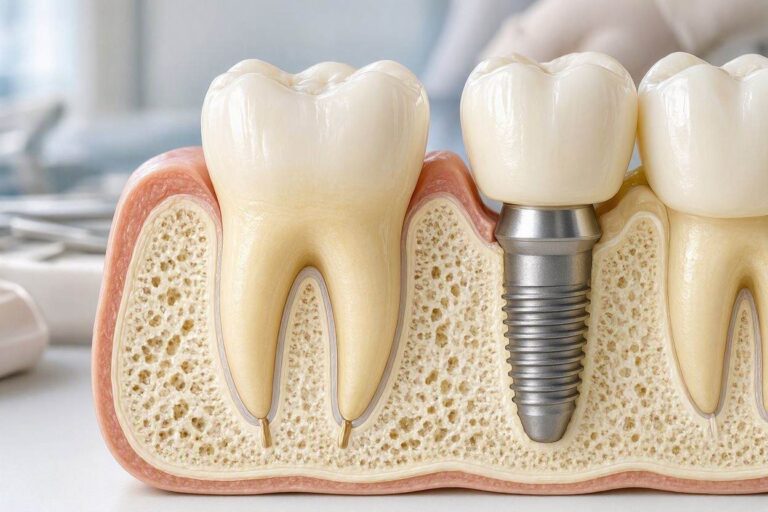
The treatment plan should clearly list each surgical procedure. Is the extraction included, if the tooth is still present? Is bone grafting itemized separately? What type of bone graft material will be used? Is a sinus lift required? Is the implant fixture itself listed, including the manufacturer? Some plans specify the implant brand (e.g., Straumann, Nobel Biocare, Astra Tech). The abutment—the connector piece between the implant and the crown—should be itemized. Is it a stock abutment or a custom CAD/CAM abutment? The implant crown should be detailed. What material? Is it a screw-retained or cement-retained crown? Are any temporary crowns or healing abutments included?
The plan should account for all diagnostic fees. The CBCT scan, the digital scans, any models. It should cover the surgical fee for the implant placement. It should specify the restorative fee for the crown and its delivery. It should mention any post-operative visits, suture removal, and follow-up care. A comprehensive treatment plan leaves no financial surprises. If something is not listed, ask: “Does this fee include [X]? If not, what will that cost?”
The timeline should be mapped out. How long after extraction before the implant can be placed? How long is the healing period before the crown is attached? Are there any staged procedures with waiting periods in between? A realistic timeline allows you to plan your life around the treatment.
Questions to Ask Before Committing
With the treatment plan in hand, you now have the opportunity to ask the crucial questions that finalize your decision. Do not be shy. A confident, experienced provider welcomes detailed questions. A provider who becomes defensive or dismissive is revealing their discomfort with transparency.
- About the Provider’s Experience: “How many dental implant procedures similar to mine do you perform per year?” “What is your personal success rate for implants in this area of the mouth?” “Can you share any complication rates or specific cases similar to mine?” “If a complication arises, such as implant failure or nerve injury, how do you manage it, and who bears the cost?”
- About the Implant System: “What brand and model of implant do you recommend for my case, and why?” “How long has this system been on the market?” “If I move or need care elsewhere in the future, will other dentists be familiar with this system and able to restore or maintain it?”
- About the Restoration: “Will my final crown look natural and match my adjacent teeth?” “Do you work with a specific dental laboratory? Can you tell me about the lab and the ceramist?” “How do you handle the case if I am not satisfied with the aesthetics of the provisional or final crown?”
- About the Financials: “Is this fee all-inclusive? If unforeseen bone grafting becomes necessary during surgery, what is the additional cost and how is that handled?” “What are your payment options? Do you offer in-house payment plans or accept third-party financing like CareCredit?” “What does your warranty or guarantee cover, and for how long? What are the exclusions?”
- About Follow-Up Care: “What is your protocol for long-term maintenance of the implant? How often should I return for check-ups?” “Who will be responsible for managing any peri-implantitis or long-term complications?”
Step Four: Financial Planning and Insurance Coordination
With your chosen provider and treatment plan, the financial groundwork begins. This step is as critical as the clinical planning. Implant treatment represents a significant financial commitment, and navigating it strategically reduces stress and makes the care accessible.
Initiate the insurance verification process. Even if the dental office runs your insurance, do your own due diligence. Call your dental insurance company directly. Give them the specific procedure codes listed on your treatment plan. Ask: “What is my annual maximum benefit? Does my plan include an implant rider or separate implant benefit? What percentage of each code is covered, and is it based on the dentist’s actual fee or a UCR fee schedule? Is there a missing tooth clause? What is my remaining annual maximum for this year?” Write down the reference number for the call, the name of the representative, and every coverage detail they provide.
Medical insurance may apply in specific circumstances. If your tooth loss resulted from a documented accident or trauma, or if implants are part of a larger medical reconstruction plan (e.g., after cancer surgery), your medical insurance may cover a significant portion of the surgical phase. This requires a dental office with skilled medical billers who can write a compelling narrative of medical necessity. Ask the practice if they have experience billing medical insurance for implant surgery.
Explore all payment mechanisms. An in-house, interest-free payment plan from the dental practice is often the most attractive option. Typically, you pay a percentage down and the balance is divided into equal monthly payments. Third-party healthcare credit providers like CareCredit offer promotional interest-free periods but carry the deferred-interest trap we discussed previously. Personal loans from a bank or credit union may offer lower interest rates for longer terms than healthcare credit cards. Using HSA or FSA funds for your out-of-pocket expenses provides tax savings. Some patients use a combination: HSA for the down payment, in-house financing for the balance.
What to Look for in a Provider: A Summary Checklist
Before we move to the final preparation, let’s consolidate the key attributes of a quality implant provider into a checklist. Use this when evaluating the practitioners you meet.
- Specialist Credentials: Is the provider a board-certified oral surgeon, periodontist, or prosthodontist? If a general dentist, what specific implant training have they completed, and what is their case volume?
- Advanced Diagnostics: Does the practice routinely use CBCT 3D scanning for implant planning, not just two-dimensional X-rays?
- Comprehensive Exam: Did the doctor perform a thorough oral cancer screening, periodontal evaluation, and occlusal analysis, not just look at the gap?
- Clear Communication: Did the doctor explain findings in understandable language, answer all questions patiently, and make you feel heard and respected?
- Detailed Treatment Plan: Is the plan itemized, comprehensive, and transparent about all costs and potential additional procedures?
- Before-and-After Cases: Did the practice show you photos of similar cases they have completed, ideally with long-term follow-up?
- Technology Investment: Does the office invest in modern technology, such as intraoral scanners, digital photography, and guided implant surgery protocols?
- Collaborative Approach: If your case requires multiple specialists, does the practice have established referral relationships and a willingness to communicate closely with the other clinicians?
- Long-Term Focus: Does the provider discuss long-term maintenance, peri-implantitis prevention, and what happens if a problem arises years later?
Step Five: Preparing Your Body for Implant Surgery
Once you have selected your provider, finalized the financial arrangements, and scheduled the surgery, your focus shifts to optimizing your body for healing. Surgical success depends not only on the dentist’s skill but on your biological capacity to heal. You can take concrete steps in the weeks leading up to surgery to improve this capacity.
If you smoke, stop. This is non-negotiable for optimal implant success. Smoking constricts blood vessels, reduces oxygen delivery to tissues, impairs white blood cell function, and dramatically increases the risk of implant failure and post-operative infection. Ideally, stop smoking at least two weeks before surgery and remain smoke-free throughout the entire healing period. Some surgeons will not place implants in active smokers due to the drastically elevated failure rate. If you cannot quit completely, even a significant reduction in smoking improves your odds.
Optimize your nutrition. Your body needs protein, vitamins, and minerals to build new bone and heal soft tissue. In the weeks before surgery, focus on a balanced diet rich in lean protein, fruits, vegetables, and whole grains. Vitamin C is essential for collagen synthesis and wound healing. Vitamin D and calcium support bone health. If your diet is deficient, consider a high-quality multivitamin, but discuss this with your physician and your implant surgeon first. Avoid excessive alcohol, which impairs immune function and dehydrates tissues.
Manage chronic conditions diligently. If you have diabetes, work with your physician to achieve tight glycemic control before surgery. Elevated blood sugar significantly impairs healing and increases infection risk. A hemoglobin A1c level below 7% is a common target for elective surgical clearance. If you have hypertension, ensure your blood pressure is well-managed.
Arrange for practical support on the day of surgery. You will likely receive some form of sedation or anesthesia. You cannot drive yourself home. Arrange for a responsible adult to accompany you to the appointment, drive you home, and stay with you for the first few hours. Prepare soft, nutritious foods in advance: yogurt, smoothies, soups, scrambled eggs, mashed potatoes, protein shakes. Have ice packs ready for post-operative swelling. Fill any prescribed medications before surgery day.
Conclusion
The journey to a dental implant begins with informed self-assessment and methodical research, progresses through thorough consultations with appropriately credentialed specialists who use advanced diagnostics like CBCT scanning, and culminates in a transparent, itemized treatment plan that leaves no financial or procedural question unanswered. Selecting a provider based not on the lowest price but on demonstrated expertise, clear communication, and a commitment to comprehensive long-term care sets the foundation for a successful, decades-long outcome. Preparing your body through smoking cessation, nutritional optimization, and medical management in the weeks before surgery maximizes your healing capacity and protects your significant investment.
Frequently Asked Questions
How many consultations should I get before deciding?
Two or three is ideal. One consultation may not give you enough perspective. More than three can lead to analysis paralysis. A second opinion validates or challenges the first, giving you confidence in your final decision.
What if my dentist says I don’t have enough bone for implants?
Do not despair. Bone grafting procedures, including socket preservation, ridge augmentation, and sinus lifts, can rebuild lost bone volume. Seek a consultation with an oral surgeon or periodontist who specializes in these procedures. In some cases, zygomatic implants (which anchor in the cheekbone) or short, wide implants may be alternatives when bone is severely deficient.
Is it better to have the surgeon and the restorative dentist be the same person or different?
Both models work well. A single provider who both places and restores the implant offers streamlined communication and a single point of accountability. A team approach, where a surgeon places the implant and a restorative dentist makes the crown, brings together two highly specialized skill sets. The critical factor is not the model but the quality of communication and collaboration.
How long should I wait after a tooth extraction to get an implant?
This varies. Immediate implant placement, where the implant is placed at the same time as the extraction, is possible in certain cases with healthy bone and no active infection. Early placement occurs 4-8 weeks after extraction, allowing soft tissue healing. Delayed placement occurs 3-6 months after extraction, allowing full bone and soft tissue healing. Your surgeon recommends the timing based on your specific situation.
Additional Resource
For a step-by-step animated guide to the dental implant process from a patient perspective, visit the American Dental Association’s patient education site: ADA MouthHealthy – Dental Implants