Who Owns Nuvia Dental Implant Center?
Nuvia Dental Implant Center has gained significant visibility through aggressive marketing and a distinctive promise: permanent teeth in twenty-four hours. If you have seen their advertisements or considered their services, you may wonder about the company behind the brand. Who owns Nuvia? What is their business model? And what should you know about the company before entrusting them with your dental implant treatment?
This guide provides factual information about Nuvia Dental Implant Center’s ownership, corporate structure, and business approach. Understanding the company behind the clinical care helps you make an informed decision about whether Nuvia aligns with your needs and values.
I researched this topic because patients deserve transparency about the healthcare providers they choose. When a company presents itself through polished marketing, understanding the business reality behind the brand helps you evaluate whether the promises match the practice. The information here comes from publicly available sources including corporate filings, press releases, and the company’s own disclosures.
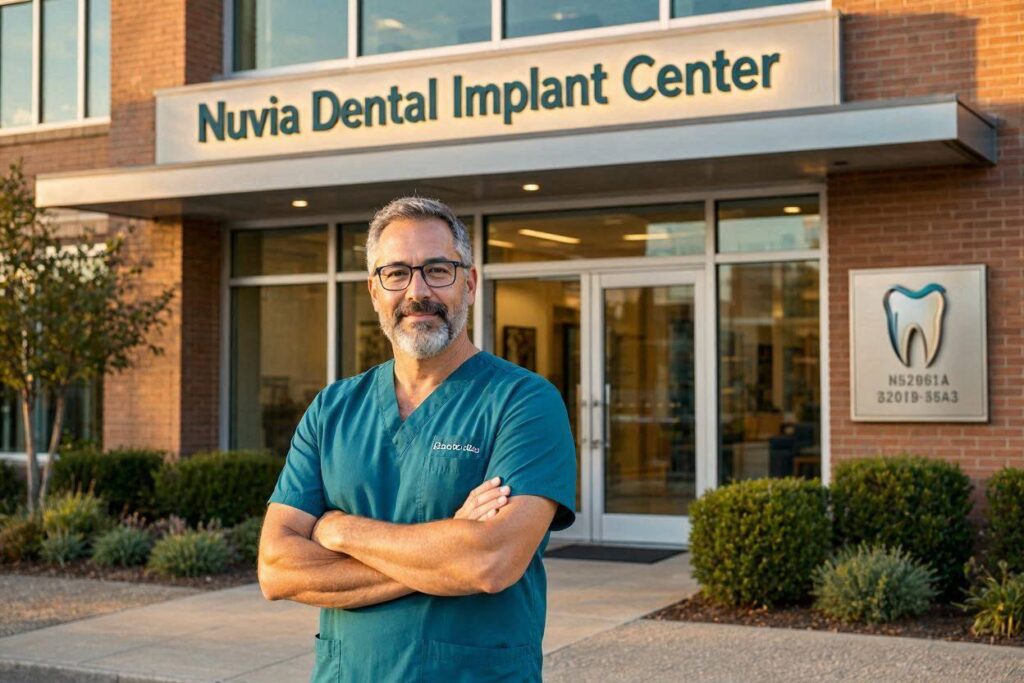
Nuvia Dental Implant Center: Company Overview
Nuvia positions itself as a dental implant center specializing in full arch restoration using the All-on-Four or similar immediate-load implant techniques. The company’s central marketing message focuses on providing patients with permanent replacement teeth within twenty-four hours of implant surgery.
The Nuvia Treatment Model
Nuvia’s clinical model centers on same-day teeth. Patients arrive for surgery, receive dental implants, and leave with a fixed temporary restoration attached to those implants, all within approximately twenty-four hours. After healing, patients return for final permanent restorations.
This immediate-load protocol differs from traditional implant treatment, which typically involves placing implants, waiting months for healing, and then creating and attaching restorations. The appeal of leaving with teeth the same day drives significant patient interest.
The company emphasizes in-house fabrication of restorations using on-site dental laboratories. This vertical integration allows the rapid turnaround central to their treatment model. Rather than sending impressions to external laboratories and waiting weeks for restorations, Nuvia produces temporaries and final restorations within their own facilities.
Geographic Presence
Nuvia operates multiple locations across the United States, with centers in states including Arizona, California, Colorado, Florida, Texas, Utah, and others. The company has expanded rapidly, opening new locations to serve growing patient demand.
Each location operates under the Nuvia brand, providing consistent treatment protocols and marketing messaging across markets. This corporate consistency distinguishes Nuvia from individual dental practices that happen to offer implant services.
Corporate Ownership Structure
Understanding Nuvia’s ownership requires examining the corporate entities behind the brand.
Private Equity Backing
Nuvia Dental Implant Center operates as a dental service organization backed by private equity investment. Private equity firms invest capital in healthcare companies with the goal of growing the business and eventually achieving a profitable exit through sale or public offering.
This ownership model means Nuvia is not owned by individual dentists practicing at its locations. The company is owned by investors who expect financial returns on their investment. This structure influences business decisions including expansion pace, marketing intensity, and operational priorities.
Private equity ownership of healthcare providers has generated discussion within the dental profession. Supporters note that investment capital enables technology acquisition, facility development, and operational efficiency that individual practices might struggle to achieve. Critics express concern that investor return requirements may influence clinical decision-making or create pressure to maximize revenue.
Dental Service Organization Structure
Nuvia operates within the dental service organization model. In this structure, a management company provides administrative, marketing, human resources, and operational support to dental practices. The dental practices themselves are owned by licensed dentists, maintaining compliance with state laws requiring professional ownership of dental practices.
The management services organization typically holds the brand, employs non-clinical staff, manages facilities, and controls the business operations. The relationship between the DSO and the clinical practice involves management fees that transfer much of the practice revenue to the DSO.
This structure allows investors to participate in dental practice economics while technically complying with regulations requiring dentist ownership of clinical practices. The exact corporate structure at Nuvia involves specific entities and arrangements not fully detailed in public disclosures.
Leadership and Management
Nuvia’s executive leadership includes professionals with backgrounds in healthcare operations, business development, and dental industry management. The clinical leadership includes experienced implant dentists who oversee treatment protocols and quality standards.
The company’s management team drives the strategic direction, expansion plans, and operational decisions that shape patient experience across all Nuvia locations. Understanding that a corporate management structure, rather than individual practitioner owners, makes key business decisions helps contextualize the Nuvia patient experience.
What the Corporate Ownership Model Means for Patients
The ownership structure affects several aspects of the patient experience that deserve consideration.
Standardization and Protocols
Corporate-owned dental implant centers typically employ standardized treatment protocols across all locations. This standardization aims to ensure consistent quality regardless of which location you visit. The company develops clinical protocols that practitioners follow, reducing variability between individual providers.
Standardization offers advantages including systematic safety practices and consistent treatment approaches. However, it may also limit individual practitioner discretion in adapting treatment to unusual patient circumstances. Understanding this balance helps you evaluate whether a standardized approach suits your specific needs.
Marketing and Patient Acquisition
Private equity-backed dental organizations typically invest heavily in marketing to drive patient volume. Nuvia’s widespread advertising reflects this business priority. Marketing costs represent a significant expense that must be covered by treatment revenue.
The marketing emphasis on twenty-four-hour teeth and life-changing transformations appeals to patients seeking rapid solutions. Patients should understand that marketing messaging, while based on actual treatment capabilities, may emphasize the most positive outcomes while minimizing discussion of risks and limitations.
Financial Considerations
Corporate dental implant centers may have different pricing structures than traditional dental practices. The business model requires generating revenue sufficient to cover not only clinical costs but also marketing expenses, management overhead, and investor returns.
Financing options often feature prominently in the patient experience, with dedicated financing coordinators helping patients navigate payment options. Third-party lending partnerships allow patients to finance treatment over extended periods, making expensive procedures accessible through monthly payments.
Employment Model for Clinicians
Dentists working at Nuvia locations are typically employees or contractors rather than practice owners. This employment model differs from traditional dental practices where the treating dentist owns the practice and makes independent clinical and business decisions.
Employee dentists may have less autonomy than practice owners but also benefit from administrative support, established protocols, and freedom from business management responsibilities. The quality of clinical care depends on the individual dentist’s skills and ethics, regardless of employment model.
Comparing Nuvia to Traditional Implant Practices
Understanding how the corporate model compares to traditional practice helps you evaluate your options.
Traditional Private Practice Model
In traditional private practice, the dentist placing your implants typically owns the practice. They make independent decisions about treatment approaches, materials, and laboratory relationships. Their reputation directly affects their practice success, creating personal accountability for outcomes.
Private practitioners may have more flexibility to customize treatment to individual patient needs. They may also have more variable training and experience, as no corporate entity standardizes their protocols. The quality of care depends entirely on the individual practitioner’s skills and ethics.
University and Hospital-Based Care
Some patients receive implant treatment through dental schools or hospital-based programs. These settings often involve care by residents under faculty supervision. Treatment costs may be lower than private practice or corporate centers, but timelines extend significantly due to the educational context.
University settings offer evidence-based care following current research. Multiple providers with academic expertise review treatment plans. These programs suit patients who can accommodate longer treatment timelines and are comfortable with care involving supervised trainees.
The Right Choice Depends on Your Priorities
Neither corporate nor traditional practice models are inherently superior. Corporate centers may offer standardized protocols, sophisticated marketing-presented patient experiences, and streamlined financing. Traditional practices may offer personalized care, long-term relationships with a single provider, and individual practitioner accountability.
Your priorities should guide your choice. Patients valuing rapid treatment and structured patient experiences may find corporate centers appealing. Patients valuing long-term relationships with a single practitioner and highly individualized care may prefer traditional private practice.
Questions to Ask at Nuvia or Any Implant Center
Regardless of where you seek implant treatment, certain questions help you evaluate the provider.
Clinical Questions
Who will actually perform my surgery? What are their specific qualifications and experience with full arch implant cases? How many cases like mine have they completed? What complications have they managed?
Understanding the individual treating clinician’s experience matters more than the corporate brand. Request information about the specific dentist who will perform your procedure.
Outcome Questions
What is your success rate for cases like mine? How do you define and measure success? What happens if my implants fail or I experience complications? Who bears financial responsibility for addressing complications?
Clear answers about outcomes and complication management indicate transparency and accountability.
Financial Questions
What is the total cost of treatment including all phases? What does financing look like, and what are the long-term costs including interest? What guarantee or warranty applies to my treatment? What would require additional payment beyond the quoted fee?
Comprehensive financial understanding prevents surprises and supports informed decision-making.
Follow-Up Questions
What follow-up care do you provide after treatment? Who do I contact if I have concerns after hours or on weekends? How do you handle implant maintenance over the years following treatment?
Long-term support matters as much as initial treatment. Understand the ongoing care relationship before committing.
Frequently Asked Questions About Nuvia Dental Implant Center
Who actually owns Nuvia Dental Implant Center?
Nuvia operates as a dental service organization with private equity backing. The specific investment firms and corporate entities involved are not fully detailed in public materials. The company uses a management services organization structure common among corporate dental groups.
Are Nuvia dentists employees of the company?
Dentists practicing at Nuvia locations are typically employees or contractors of the clinical practice entity, which operates in relationship with the management services organization. They are generally not owners of the overall company.
Is Nuvia a franchise?
Nuvia locations appear to be corporate-owned rather than franchised, though the company’s public disclosures do not fully clarify this distinction. The consistent branding and protocols suggest centralized corporate control rather than independent franchise ownership.
How does Nuvia’s corporate structure affect my care?
Corporate structure may influence treatment standardization, marketing emphasis, financing options, and the employment relationship of treating clinicians. Clinical outcomes depend on the skills and ethics of individual treating dentists regardless of corporate structure.
Should I be concerned about private equity ownership of a dental practice?
Private equity ownership creates different incentives than dentist-owned practices. Investors seek financial returns, which may influence business decisions. However, many privately owned dental practices also prioritize profitability. The key question is whether clinical quality and patient welfare remain the primary priority regardless of ownership model.
How can I research a dental implant provider’s ownership?
State dental board records show the licensed dentists associated with a practice. Corporate filings with state business registries may reveal ownership information. Direct questioning during consultation should produce transparent answers about practice ownership and structure.
Conclusion
Nuvia Dental Implant Center operates as a private equity-backed dental service organization, part of a growing trend toward corporate ownership in dentistry. The company’s ownership structure influences its standardized treatment protocols, marketing approach, and business operations. Individual dentists at Nuvia locations typically work as employees or contractors rather than practice owners. Understanding this corporate context helps patients evaluate whether Nuvia’s model aligns with their preferences for dental implant care, alongside consideration of the treating clinicians’ individual qualifications and experience.