Will Drinking Result In Oral Ulcers?
You wake up after a night of drinking with a familiar discomfort. Your mouth feels raw. A quick exploration with your tongue finds a tender spot, and by midday, a full-blown ulcer has formed on the inside of your cheek or lip. You wonder whether the alcohol caused it or whether the timing was simply a coincidence. The connection between drinking and oral ulcers is real, though it is not as direct as cause and effect in every case.
Alcohol affects the mouth in multiple ways that create conditions favorable for ulcer formation. It dehydrates the oral tissues, irritates the delicate mucosa, depletes essential nutrients, and can trigger immune responses that lead to tissue breakdown. For some people, a night of drinking reliably predicts a mouth ulcer within the following day or two. For others, the connection is less consistent. Understanding how alcohol contributes to ulcer development helps you make informed choices and take preventive steps.
What Oral Ulcers Are and Why They Develop
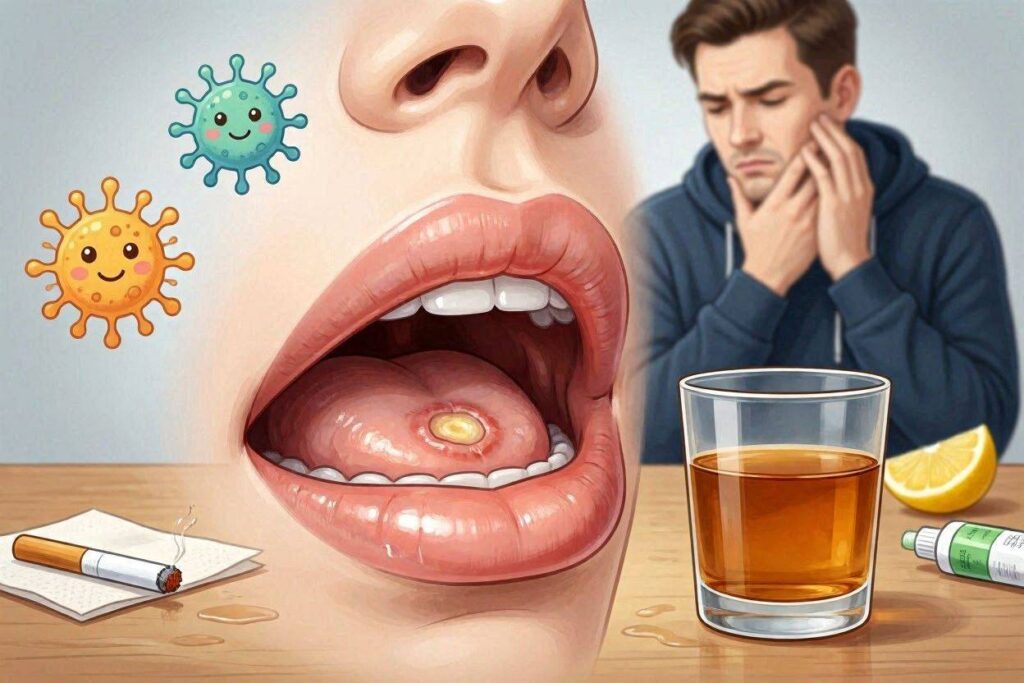
Oral ulcers, commonly called canker sores or aphthous ulcers, are breaks in the lining of the mouth. They appear as round or oval sores with a white, yellow, or gray center surrounded by a red border. They hurt, sometimes intensely, and they make eating, drinking, and talking uncomfortable for days.
The Common Triggers
Mouth ulcers arise from a variety of triggers. Physical trauma, biting the inside of the cheek, a sharp tooth edge, or aggressive brushing, can start one. Chemical irritation from sodium lauryl sulfate in toothpaste, acidic foods, or alcohol can damage the mucosa. Nutritional deficiencies, particularly in vitamin B12, iron, folic acid, and zinc, impair the body’s ability to maintain healthy oral tissue. Stress and fatigue alter immune function and increase susceptibility. Hormonal changes in women can trigger outbreaks. Food sensitivities and allergies can provoke an immune reaction in the oral tissues.
Alcohol can act as a trigger through several of these pathways simultaneously.
How Alcohol Affects the Oral Environment
Alcohol is not a benign substance when it comes to the delicate tissues of the mouth. Its effects are multiple and interconnected.
Direct Irritation and Tissue Damage
Ethanol, the type of alcohol in beverages, is a chemical irritant. When it contacts the lining of the mouth, it can cause direct damage to the epithelial cells. High-concentration alcohol, such as spirits, is particularly irritating. The higher the proof, the more aggressive the effect.
Alcohol denatures proteins in the cell membranes of the oral mucosa. This disrupts the protective barrier function of the tissue. The cells become more permeable and more vulnerable to further damage from other irritants. Repeated exposure to alcohol can cause chronic inflammation of the oral lining, a condition that makes the tissue more susceptible to ulceration from even minor triggers.
Dehydration of Oral Tissues
Alcohol is a diuretic. It increases urine production and leads to overall body dehydration. The mouth, which depends on adequate hydration to maintain its protective mucus layer and saliva flow, is particularly affected. A dry mouth is a vulnerable mouth.
Saliva contains protective factors including enzymes, antibodies, and minerals that help maintain the integrity of the oral mucosa. When saliva flow decreases, these protective factors are diminished. The tissues become dry, fragile, and more easily damaged. A dry mouth after drinking is not just uncomfortable; it is a state of reduced protection for the oral lining.
Nutritional Depletion
Chronic alcohol consumption interferes with the absorption and metabolism of several nutrients essential for oral health. Vitamin B12 absorption is impaired because alcohol damages the stomach lining and reduces the production of intrinsic factor, which is necessary for B12 uptake. Folic acid metabolism is disrupted. Zinc levels are often low in chronic drinkers. Iron deficiency can result from poor diet and from gastrointestinal bleeding associated with alcohol use.
These nutrients are critical for cell division and tissue repair. The lining of the mouth turns over rapidly, with new cells constantly replacing old ones. When the raw materials for this process are deficient, the tissue becomes thin, fragile, and slow to heal. An ulcer that would heal quickly in a well-nourished person may persist and enlarge in someone with alcohol-related nutritional deficiencies.
Immune System Effects
Alcohol has complex effects on the immune system. Acute intoxication suppresses immune function temporarily. Chronic heavy drinking causes long-term immune dysregulation. The balance of pro-inflammatory and anti-inflammatory signals is disrupted.
In the mouth, this immune disruption can manifest as an exaggerated inflammatory response to minor irritants. The body may overreact to a small area of epithelial damage, creating a larger, more inflamed ulcer than would otherwise occur. The healing process is also impaired because immune cells needed for tissue repair do not function optimally.
Types of Alcoholic Beverages and Their Effects
Not all alcoholic drinks affect the mouth equally. The type of beverage, its alcohol concentration, its acidity, and its other ingredients all influence the risk of ulcer formation.
Spirits and High-Proof Alcohol
Whiskey, vodka, gin, rum, and other spirits contain the highest concentrations of ethanol, typically forty percent or more. These are the most directly irritating to the oral mucosa. Drinking spirits neat, without mixers or ice, exposes the tissues to undiluted alcohol. The burning sensation that accompanies a sip of straight spirits is a signal that the mucosa is being irritated.
People who drink spirits regularly, particularly if they hold the liquid in their mouth or swish it, may develop chronic irritation of the cheeks, tongue, and palate. This sets the stage for ulcers to form more easily.
Wine
Wine presents a double threat to the oral mucosa. It contains ethanol and is also acidic. The combination of alcohol and acid is more damaging than either alone. Red wine, with its tannins and other compounds, can be particularly irritating for some individuals. White wine tends to be more acidic and can erode tooth enamel and irritate soft tissues.
Some people report that wine, more than other alcoholic beverages, triggers their mouth ulcers. This may be related to the sulfites used as preservatives, which can provoke reactions in sensitive individuals. Others react to the histamines in red wine.
Beer
Beer generally has a lower alcohol concentration than wine or spirits, typically four to six percent. Its direct irritating effect is therefore less. However, beer is often carbonated, and the carbonation adds acidity. Some beers also contain gluten, which can trigger an immune reaction in people with gluten sensitivity or celiac disease, and oral ulcers can be a manifestation of that reaction.
Mixed Drinks and Cocktails
Cocktails often combine spirits with acidic mixers such as citrus juice, soda, or tonic water. The combination of high-proof alcohol and acidic mixers creates a particularly hostile environment for the oral mucosa. Sugary mixers add another problem. Sugar feeds the bacteria in the mouth, and bacterial overgrowth can contribute to inflammation and ulcer formation.
Indirect Ways Drinking Leads to Ulcers
Beyond the direct effects of alcohol on the oral tissues, drinking can contribute to ulcer formation through behavioral and situational factors.
Trauma During Intoxication
Alcohol impairs coordination and judgment. People who are intoxicated are more likely to bite their cheek or lip accidentally while eating or talking. They may chew on ice or hard objects without noticing the damage they are doing. They may brush their teeth aggressively or forget to brush altogether. These minor traumas, which a sober person would either avoid or recover from quickly, can become the starting point for an ulcer.
Intoxicated people also eat foods they might otherwise avoid. Late-night snacks are often salty, crunchy, or spicy, all of which can irritate the oral mucosa. The combination of impaired awareness and dietary indiscretion creates multiple opportunities for mucosal injury.
Dehydration and Dry Mouth
As noted, alcohol dehydrates. A night of drinking often ends with a dry mouth that persists into the following day. Sleeping with a dry mouth exposes the oral tissues to prolonged irritation. The protective effects of saliva are absent for hours. Bacteria proliferate. The tissues dry out and become more susceptible to cracking and ulceration.
Poor Nutrition and Irregular Eating
Heavy drinking often displaces nutritious food. Calories come from alcohol rather than from nutrient-dense meals. The day after drinking, appetite may be suppressed, or food choices may lean toward quick, processed options rather than the fruits, vegetables, and proteins that support oral health. This nutritional shortfall compounds the direct effects of alcohol.
Stress and Disrupted Sleep
Alcohol disrupts sleep architecture. Even if a person sleeps for a full night after drinking, the quality of that sleep is poor. REM sleep is suppressed, and sleep is fragmented. The body does not get the restorative rest it needs.
The day after drinking, the combination of poor sleep, dehydration, and possibly a hangover places the body under stress. Stress is a well-established trigger for mouth ulcers in susceptible individuals. The stress response alters immune function and can tip the balance toward inflammation and tissue breakdown.
Who Is Most at Risk
Not everyone who drinks develops mouth ulcers. Individual susceptibility varies based on several factors.
People with a History of Recurrent Aphthous Ulcers
If you are prone to mouth ulcers even without drinking, alcohol is more likely to trigger an outbreak. Your threshold for ulcer formation is already lower than average. The additional irritation, dehydration, and nutritional disruption from alcohol may push you over the edge when it would not affect someone without this predisposition.
Individuals with Nutritional Deficiencies
People whose diets are marginal, whether due to poverty, disordered eating, chronic illness, or heavy drinking itself, are more vulnerable. If your B12, iron, or folate levels are already low, the additional nutritional disruption from alcohol can be the tipping point. Vegetarians and vegans, who are at higher risk for B12 deficiency, may be particularly susceptible.
Those with Autoimmune or Inflammatory Conditions
Conditions such as Crohn’s disease, ulcerative colitis, celiac disease, and Behçet’s disease can cause oral ulcers as part of their symptom picture. Alcohol can exacerbate these conditions, triggering both intestinal symptoms and oral ulcers simultaneously. People with these diagnoses should be particularly cautious about alcohol consumption.
Smokers and Tobacco Users
Smoking and drinking often go together. Tobacco is itself an irritant to the oral mucosa. The combination of alcohol and tobacco is synergistic in its damaging effects. Smokers who drink heavily have significantly higher rates of oral mucosal disease than either smokers or drinkers alone.
People with High Stress Levels
Stress lowers the threshold for ulcer formation. If you are already under significant stress, whether from work, relationships, finances, or other sources, alcohol can provide a temporary escape but ultimately adds physiological stress to the body. The rebound from alcohol’s depressant effects can leave you more stressed than before.
Distinguishing Alcohol-Related Ulcers from Other Conditions
Not every sore in the mouth after drinking is a simple aphthous ulcer. Several other conditions can produce similar symptoms and should be recognized.
Oral Thrush
Heavy alcohol use, particularly when combined with poor nutrition and a compromised immune system, increases the risk of oral candidiasis, a fungal infection commonly called thrush. Thrush appears as creamy white patches that can be wiped away, leaving a red, sometimes bleeding surface underneath. It can cause a burning sensation and discomfort that mimics an ulcer. Unlike aphthous ulcers, thrush is a fungal infection that requires antifungal treatment.
Lichen Planus
Oral lichen planus is an inflammatory condition of unknown cause that produces white, lacy patches or red, erosive areas in the mouth. Alcohol can trigger flare-ups in people with this condition. The lesions may be mistaken for multiple ulcers. Lichen planus is a chronic condition managed with topical steroids and avoidance of triggers.
Oral Cancer
A non-healing ulcer that persists for more than three weeks should be evaluated for oral cancer. Alcohol consumption, particularly when combined with tobacco use, is a major risk factor for oral squamous cell carcinoma. An ulcer caused by cancer may not be particularly painful in its early stages, which distinguishes it from the typically painful aphthous ulcer. Any persistent oral lesion requires professional evaluation.
Herpes Simplex Lesions
Cold sores caused by the herpes simplex virus can appear inside the mouth, though they more commonly occur on the lips. Alcohol consumption can suppress immune function and trigger a herpes outbreak in susceptible individuals. These lesions begin as blisters and progress to ulcers.
Preventing Alcohol-Induced Mouth Ulcers
If you know that drinking triggers mouth ulcers for you, preventive strategies can reduce or eliminate the problem.
Hydrate Before, During, and After Drinking
Drink a full glass of water before you begin drinking alcohol. Alternate alcoholic beverages with water throughout the night. Drink water before going to bed. Rehydrate aggressively the next day. The goal is to minimize the dehydrating effect of alcohol on your oral tissues.
Eat Before and While Drinking
Food in the stomach slows the absorption of alcohol. It also provides nutrients that support tissue health. A meal that includes protein, healthy fats, and complex carbohydrates before drinking provides a foundation. Snacking on nutrient-dense foods during a drinking session is better than drinking on an empty stomach.
Avoid Holding Alcohol in Your Mouth
Sip and swallow. Do not swish wine around your mouth like mouthwash. Do not hold spirits in your mouth before swallowing. Minimize the contact time between alcohol and your oral mucosa.
Choose Lower-Alcohol Beverages
Beer and wine spritzers are less irritating than straight spirits. Diluting spirits with plenty of non-acidic mixer, such as water or a low-acid juice, reduces the alcohol concentration contacting your tissues. Avoid or minimize high-proof shots.
Limit Acidic Mixers
If you drink cocktails, choose mixers that are less acidic. Coconut water, milk, or cream-based mixers are gentler on the mouth than citrus juice or soda. If you do drink acidic beverages, rinse your mouth with plain water afterward.
Rinse Your Mouth After Drinking
Before bed after drinking, rinse your mouth thoroughly with plain water. This removes residual alcohol, sugars, and acids from the oral surfaces. Do not brush your teeth immediately after drinking acidic beverages, as the enamel is temporarily softened, and brushing can cause erosion. Wait at least thirty minutes, then brush gently.
Supplement Sensibly
If you know your diet is inadequate or if you have had deficiencies identified by blood tests, talk to your doctor about supplementation. Vitamin B12, folic acid, iron, and zinc are the most relevant nutrients for oral health. Do not self-prescribe high-dose supplements without medical guidance, as excess intake of certain nutrients can be harmful.
Manage Stress Proactively
If drinking is related to stress relief, consider alternative stress management strategies that do not damage your oral tissues. Exercise, meditation, adequate sleep, and social connection all reduce stress without the side effects of alcohol.
Conclusion
Drinking alcohol can result in oral ulcers through direct irritation of the mouth lining, dehydration of oral tissues, nutritional depletion, and immune system effects that make the mucosa more vulnerable to breakdown. The risk is higher with high-proof spirits and acidic beverages, and it is compounded by behaviors during intoxication, such as accidental cheek biting and poor food choices, as well as by underlying factors like stress and pre-existing nutritional deficiencies. Prevention focuses on hydration, moderating alcohol intake, rinsing the mouth after drinking, and maintaining adequate nutrition.
FAQ
How soon after drinking can a mouth ulcer appear?
An ulcer triggered by alcohol typically appears within twenty-four to forty-eight hours after drinking. The initial irritation and tissue damage set the stage during and immediately after drinking, and the ulcer develops as the inflammatory response progresses.
Can one night of drinking cause a mouth ulcer?
Yes. A single episode of heavy drinking can cause enough irritation, dehydration, and tissue damage to trigger an ulcer, particularly in someone who is prone to them. The risk is higher with spirits, acidic mixers, and inadequate hydration.
Why do I always get mouth ulcers after drinking wine?
Wine combines alcohol, acidity, sulfites, and, in red wine, tannins and histamines. The combination is particularly irritating to the oral mucosa. If wine consistently triggers ulcers, you may be sensitive to one or more of these components. Switching to lower-acid or sulfite-free wines, or drinking less wine, may help.
Are mouth ulcers a sign of alcohol intolerance?
Not typically. Alcohol intolerance usually manifests as flushing, nausea, headache, or respiratory symptoms rather than oral ulcers. However, if you consistently develop mouth ulcers after drinking even small amounts of alcohol, you may have an unusual sensitivity.
Can quitting drinking stop recurrent mouth ulcers?
If alcohol was a significant trigger for your ulcers, reducing or eliminating it may substantially decrease the frequency of outbreaks. However, if you have other triggers such as stress, food sensitivities, or nutritional deficiencies, ulcers may continue from those causes even after you stop drinking.
Is it safe to drink alcohol when I have an active mouth ulcer?
Drinking alcohol with an active ulcer will irritate the exposed tissue and cause significant pain. It will also likely delay healing. It is best to abstain from alcohol until the ulcer has healed completely.
Does beer cause fewer mouth ulcers than spirits?
Generally, yes. Beer has a lower alcohol concentration and is less directly irritating than spirits. However, beer’s carbonation adds acidity, and some beers contain gluten, which can be problematic for sensitive individuals. The effect varies from person to person.
When should I see a doctor about mouth ulcers after drinking?
See a doctor or dentist if an ulcer persists for more than three weeks without healing, if you develop ulcers very frequently, if the ulcers are unusually large or painful, or if they are accompanied by other symptoms such as skin rashes, joint pain, or gastrointestinal problems.
Additional Resource
For more information about oral health and the effects of alcohol, visit the Oral Health Foundation at dentalhealth.org. This charity provides evidence-based patient information on mouth ulcers, oral cancer risk factors, and maintaining oral health.