Would Daycare Cover The Cost Of Braces?
If you’re a parent, you know that childcare costs add up fast. Between daycare fees, food, clothing, and healthcare, your budget is stretched thin. So when your child’s dentist mentions that they might need braces, it’s natural to wonder: would daycare cover the cost of braces?
It’s a fair question. After all, daycare is a significant expense, and if you’re paying hundreds or even thousands of dollars a month, you’d hope it might include some health benefits. But the truth is, daycare does not cover orthodontic treatment. Daycare is a childcare service, not a health insurance provider. Braces are a medical and dental expense, not a childcare expense.
That said, there are some situations where daycare might indirectly help—through flexible spending accounts, dependent care credits, or employer benefits. And there are other ways to get financial help for braces if you’re a parent.
This guide will explain exactly what daycare does and doesn’t cover, why braces aren’t included, and what you can do to afford orthodontic treatment for your child. We’ll cover insurance, government programs, payment plans, and practical money-saving tips. By the end, you’ll have a clear plan for getting your child the smile they need—without breaking the bank.

What Does Daycare Actually Cover?
Let’s start with the basics. Daycare—also called childcare, nursery, or preschool—provides supervision and early education for young children while parents work or study. What’s included varies by provider, but here’s a general idea.
Typically Included in Daycare Fees
- Supervision and care during operating hours
- Age-appropriate activities and play
- Basic meals and snacks (sometimes)
- Nap time and rest periods
- Developmental learning (letters, numbers, social skills)
- Diaper changes and potty training (for toddlers)
Sometimes Included (Extra Fee)
- Transportation to and from school
- Field trips
- Special classes (music, art, language)
- Extended hours (early drop-off, late pick-up)
- Formula or specialized meals
Not Included in Daycare Fees
- Medical care (except basic first aid)
- Dental care
- Orthodontic treatment
- Prescription medications
- Health insurance
- Specialist therapies (speech, occupational, physical)
Important: Daycare is not a health insurance plan. It does not cover braces, dental implants, or any other medical procedure.
Why Daycare Doesn’t Cover Braces
There are several reasons why daycare doesn’t cover orthodontic treatment.
Daycare Is Not Insurance
Daycare providers are licensed childcare facilities. They are not insurance companies. They don’t have the infrastructure or legal authority to cover medical or dental expenses.
Braces Are a Medical Expense, Not a Childcare Expense
Braces are orthodontic treatment. They correct dental and jaw issues. They are prescribed by dentists and orthodontists. They are not part of routine childcare.
Daycare Fees Cover Care, Not Treatment
When you pay for daycare, you’re paying for supervision, education, and daily care. Your fees don’t include medical procedures.
Legal and Regulatory Reasons
Daycare providers are regulated by childcare licensing agencies, not health insurance regulators. They can’t offer medical coverage even if they wanted to.
Note: If a daycare claims to cover braces, be very skeptical. It’s likely a misunderstanding or a scam.
When Daycare Might Indirectly Help with Braces
While daycare doesn’t directly cover braces, there are some indirect ways it might help your family’s finances.
Flexible Spending Accounts (FSAs)
If your employer offers a Dependent Care FSA, you can use pre-tax dollars to pay for daycare. But you can’t use the same funds for braces. However, if your employer offers a separate Health FSA, you can use that for braces.
How it works:
- Dependent Care FSA: Up to $5,000 per year (or $2,500 if married filing separately) for daycare.
- Health FSA: Up to $3,200 per year (2025 limit) for medical and dental expenses, including braces.
Note: You can have both accounts. They are separate.
Employer Benefits
Some employers offer benefits that help with childcare and healthcare costs. For example:
- On-site daycare with subsidized fees
- Childcare stipends that free up money for other expenses
- Health insurance that includes orthodontic coverage
- Wellness programs that offer discounts on braces
Tax Credits
The Child and Dependent Care Credit helps offset daycare costs. The Child Tax Credit provides additional money. While these don’t directly pay for braces, they can free up funds in your budget.
State Programs
Some states offer childcare subsidies for low-income families. If you qualify, you might pay less for daycare, leaving more room in your budget for braces.
Important: These are indirect benefits. Daycare itself does not cover braces.
What Actually Covers Braces?
Now that we’ve established what doesn’t cover braces, let’s look at what does.
Dental Insurance
Most dental insurance plans cover orthodontic treatment. Coverage varies, but here’s what’s typical:
| Coverage Type | Typical Amount |
|---|---|
| Children | 50% of cost, up to $1,000 – $2,500 lifetime max |
| Adults | Sometimes covered, often with age limits |
| Waiting Period | 6 – 12 months |
| Pre-Authorization | Often required |
Tip: Call your insurance company and ask:
- Is orthodontic treatment covered?
- What is my lifetime maximum?
- Do I need pre-authorization?
- Are there age limits?
Medicaid and CHIP
Medicaid and the Children’s Health Insurance Program (CHIP) cover orthodontic treatment for children under 21 if it’s deemed medically necessary. Coverage varies by state.
How to apply: Contact your state Medicaid office or visit medicaid.gov.
State Children’s Health Programs
Some states have their own programs for children’s dental care. Check with your state health department.
Dental Schools
Dental schools offer orthodontic treatment at reduced rates. Students work under supervision. You can save 30% to 50%.
Community Health Centers
Many community health centers offer sliding scale fees based on income. They may offer orthodontic services or referrals.
Payment Plans
Most orthodontists offer interest-free payment plans. You might pay $150 – $300 per month.
Health Savings Accounts (HSAs) and Flexible Spending Accounts (FSAs)
You can use HSA or FSA funds to pay for braces. These accounts let you pay with pre-tax dollars, saving you 20% – 30%.
Charitable Organizations
Some non-profits help families afford braces. Examples include:
- Smile for a Lifetime: Provides free braces to children in need.
- Dental Lifeline Network: Helps elderly, disabled, and medically compromised individuals.
- Local charities: Many communities have organizations that help with dental costs.
Cost of Braces for Children: What to Expect
If your child needs braces, here’s what you can expect to pay.
| Brace Type | Average Cost |
|---|---|
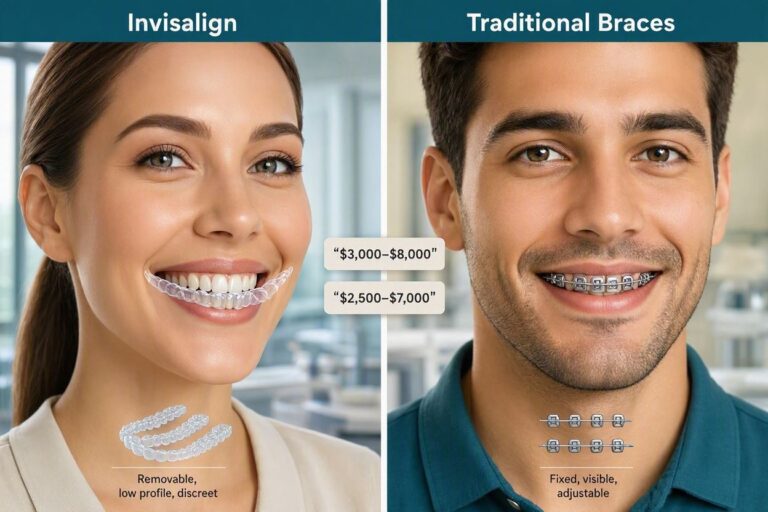
| Metal Braces | $3,000 – $6,000 |
| Ceramic Braces | $4,000 – $8,000 |
| Invisalign Teen | $4,000 – $7,500 |
| Lingual Braces | $5,000 – $13,000 |
Note: These prices are for the full treatment, including retainers (in most cases). Prices vary by region and provider.
Additional Costs
- Retainers: $200 – $600
- Extractions: $150 – $500 per tooth
- Palatal expander: $500 – $1,500
- Emergency visits: $50 – $150 per visit
How to Afford Braces for Your Child
You don’t have to pay full price. Here are practical strategies.
Use Dental Insurance
If you have dental insurance, use it. It can cover 50% of the cost, up to a lifetime maximum.
Apply for Medicaid or CHIP
If you’re low-income, your child may qualify for free or low-cost braces through Medicaid or CHIP.
Visit a Dental School
Dental schools offer orthodontic treatment at reduced rates. It takes longer, but you save a lot.
Ask About Payment Plans
Most orthodontists offer interest-free plans. You might pay $150 – $300 per month.
Use HSA or FSA Funds
These accounts let you pay with pre-tax dollars. That’s a 20% – 30% savings.
Look for Charitable Programs
Organizations like Smile for a Lifetime provide free braces to children in need. Check if your child qualifies.
Negotiate with the Orthodontist
Ask for discounts. Many offices offer:
- Family discounts (10% – 20% for multiple children)
- Upfront payment discounts (5% – 10%)
- Referral bonuses
- Seasonal promotions
Choose Metal Braces
Metal braces are the cheapest option and just as effective as ceramic. If you’re on a budget, choose metal.
Consider a Dental Membership Plan
Some clinics offer in-house membership plans. You pay an annual fee and get discounted treatments.
Real Quotes from Parents
“I asked my daycare if they covered braces. They laughed. But then they told me about a dental school nearby that offered treatment for $2,500. My daughter got her braces there.” — Angela M., Ohio
“My son qualified for Medicaid. His braces were completely free. We had to wait six months, but it was worth it.” — Maria S., Texas
“I used my Health FSA to pay for my daughter’s braces. I saved about 25% because I paid with pre-tax dollars.” — David R., Utah
“I negotiated with the orthodontist. I paid upfront and got 10% off. I also got a family discount because my second child needed braces too.” — Jennifer L., Florida
These stories show that with research and flexibility, you can afford braces for your child.
Daycare vs. Dental Insurance: What’s the Difference?
It’s easy to confuse daycare and dental insurance, especially if you’re paying for both. Here’s a clear comparison.
| Factor | Daycare | Dental Insurance |
|---|---|---|
| Purpose | Childcare and supervision | Health and dental coverage |
| Covers Braces? | No | Often, up to a lifetime max |
| Covers Cleanings? | No | Yes, usually 100% |
| Covers Fillings? | No | Yes, usually 50% – 80% |
| Monthly Cost | $500 – $2,000+ | $20 – $100 |
| Who Provides It? | Licensed childcare providers | Insurance companies |
| Tax Benefits | Dependent Care FSA, Child Care Credit | Health FSA, HSA, tax deduction |
Bottom line: Daycare and dental insurance serve completely different purposes. Don’t expect one to cover the other.
Frequently Asked Questions About Daycare and Braces
Will daycare cover the cost of braces?
No. Daycare does not cover braces or any other medical or dental treatment.
Can I use my daycare FSA to pay for braces?
No. Dependent Care FSAs can only be used for childcare expenses. You need a Health FSA or HSA for braces.
Does Medicaid cover braces for children?
Yes, in many states. Medicaid covers orthodontic treatment for children under 21 if it’s medically necessary. Coverage varies by state.
How can I afford braces for my child?
Use dental insurance, Medicaid, dental schools, payment plans, and charitable programs. Negotiate with the orthodontist and choose metal braces.
Are braces covered by CHIP?
CHIP covers dental care for children, including orthodontics in some states. Check your state’s program.
What if I can’t afford braces at all?
Look into dental schools, community health centers, and non-profit organizations. Some offer free or sliding-scale care.
Does my employer’s daycare cover braces?
No. Employer daycare is still daycare. It doesn’t cover medical or dental treatment.
Can I use my HSA for my child’s braces?
Yes. Braces are an eligible expense for HSA funds, even for dependents.
Are there charities that help with braces?
Yes. Smile for a Lifetime, Dental Lifeline Network, and local charities help families afford braces.
How much do braces cost for children?
Metal braces cost $3,000 – $6,000. Ceramic braces cost $4,000 – $8,000. Invisalign Teen costs $4,000 – $7,500.
Important Notes for Parents
- Don’t assume daycare covers braces. It doesn’t.
- Check your dental insurance. Many plans cover orthodontics for children.
- Apply for Medicaid or CHIP. If you’re low-income, your child may qualify.
- Ask about payment plans. Most orthodontists offer them.
- Use HSA or FSA funds. These accounts save you 20% – 30%.
- Get multiple quotes. Prices vary widely.
- Start early. The American Association of Orthodontists recommends a first evaluation by age 7.
Conclusion: Daycare Won’t Cover Braces, But Help Is Available
Daycare does not cover the cost of braces. It’s a childcare service, not a health insurance plan. But that doesn’t mean you’re on your own. Dental insurance, Medicaid, dental schools, payment plans, and charitable programs can all help. With research and flexibility, you can afford braces for your child. Their smile is worth it.
Additional Resources
For more information on affording braces for your child, visit the American Association of Orthodontists at aaoinfo.org or Smile for a Lifetime at smileforalifetime.org.